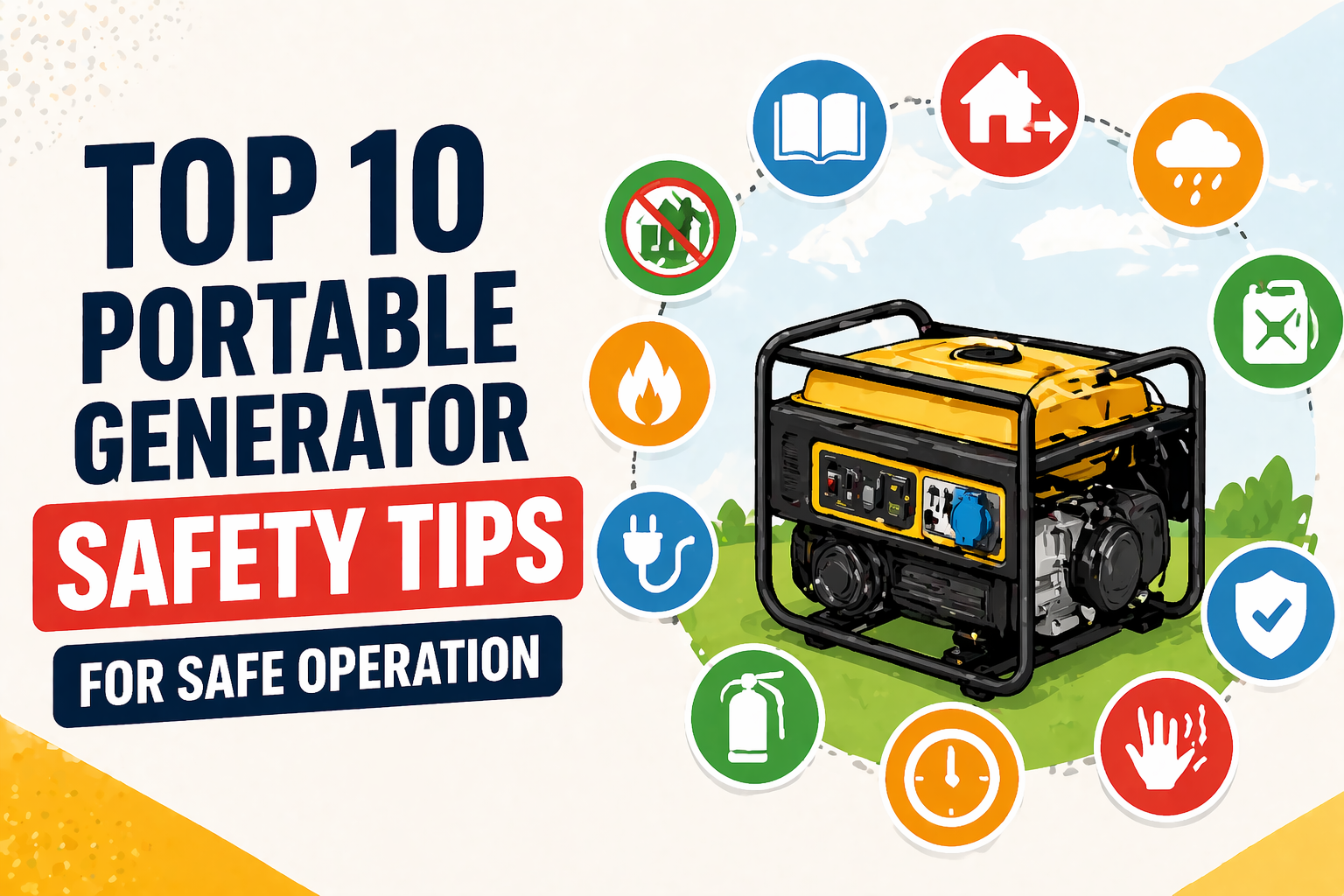
Erwägen Sie eine Tragbarer Generator um die Grundversorgung Ihres Hauses bei Stromausfällen zu gewährleisten? Sie müssen wissen, wie Sie es für ein sicheres Betriebssystem verwenden. Ansonsten, es wird potenzielle Probleme verursachen, einschließlich der Ansammlung von Kohlenmonoxid, Funken, und tödlicher Schock. Wenn Sie Ihrer Familie eine sichere Umgebung bieten möchten, Befolgen Sie diese 10 Sicherheitstipps für tragbare Generatoren von Huaquan um seine sichere Leistung zu gewährleisten.
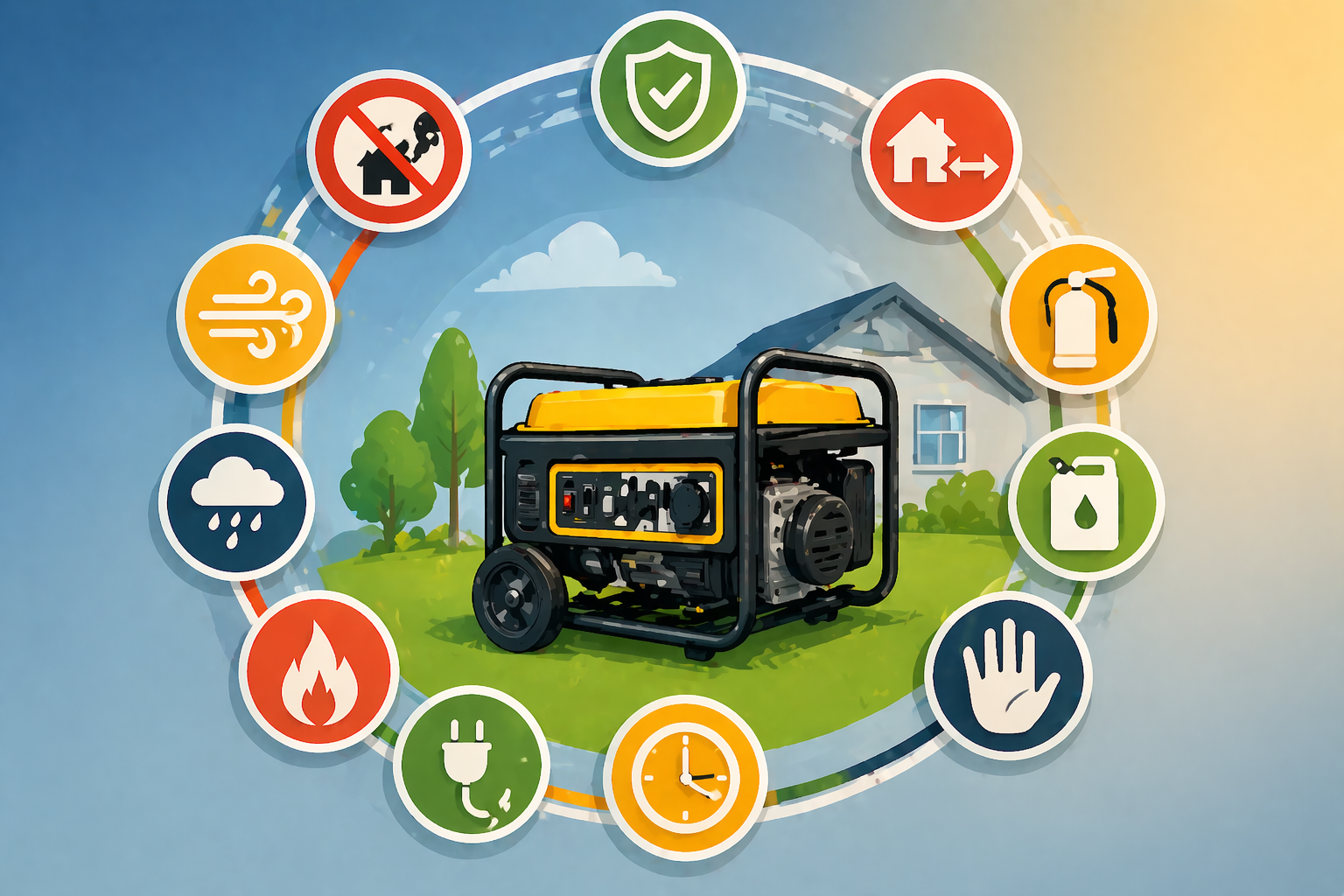
10 Wichtige Sicherheitstipps für tragbare Generatoren für sicheres Arbeiten
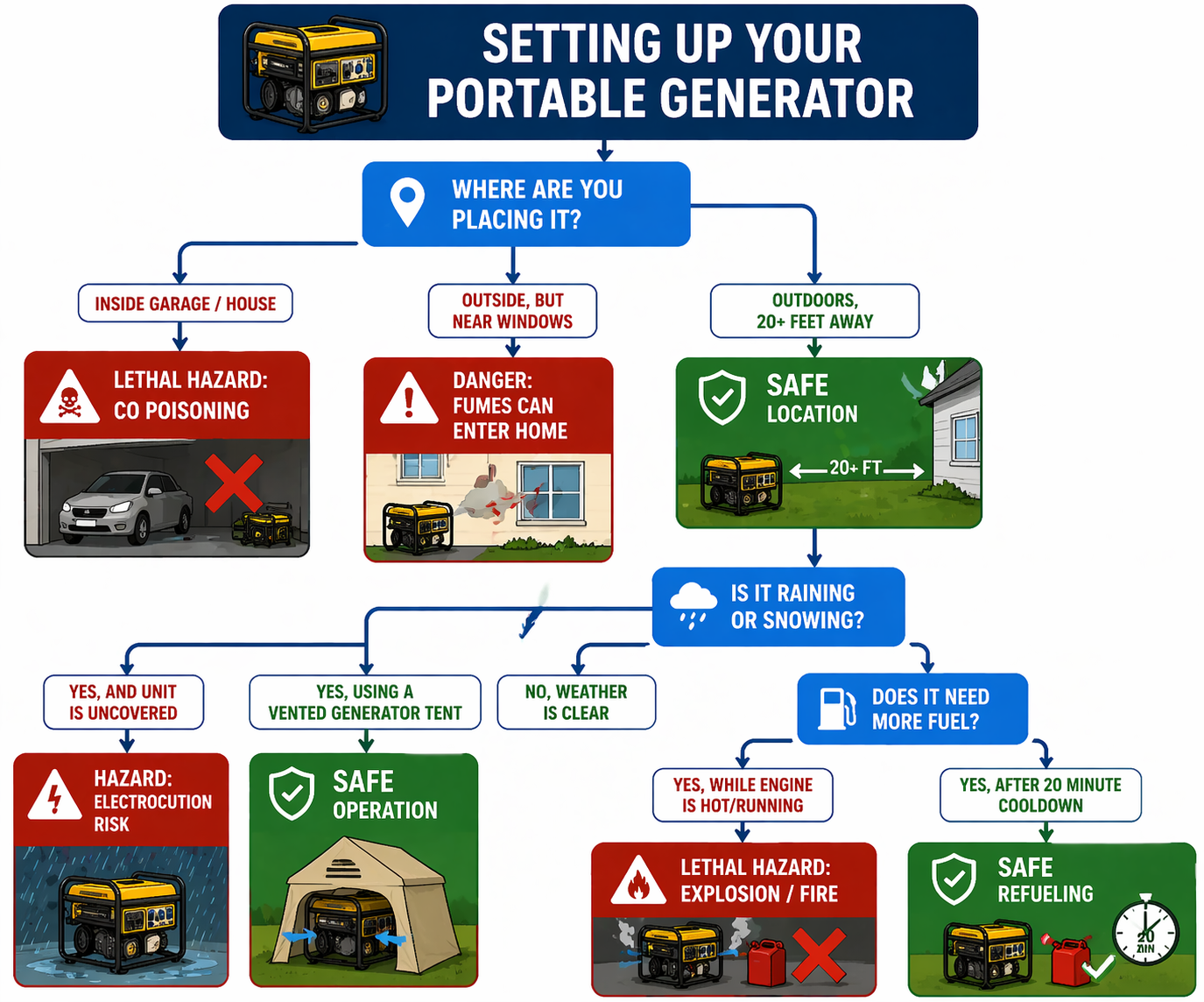
1. Installieren Sie einen Generator immer im Freien
- Hohes Risiko einer Kohlenmonoxidvergiftung: Wenn der interne Motor des Generators funktioniert, Es nutzt Kraftstoff und verbrennt das Gemisch. Infolge, es entsteht ein Gas, Kohlenmonoxid genannt. Es hat keinen Geschmack, Farbe, und Geruch. Wenn Sie einen tragbaren Generator kaufen, wissen, dass dabei große Mengen CO entstehen können. Es kann sich ansammeln und einen Menschen innerhalb weniger Minuten töten.
- Wichtigkeit einer ausreichend luftigen Umgebung Generatoren: Sie müssen dafür sorgen, dass der Generator natürliche Luft einatmen kann. Legen Sie sie in einen offenen Behälter. Vermeiden Sie die Installation in einem geschlossenen Vordach oder Container. In einem geschlossenen Bereich, Der Generator gibt seine Gase nicht an die Umgebung ab, und sie werden im Inneren angehäuft.
- Sicherer Abstand zu Fenstern, Türen, und Lüftungsschlitze: Die USA. Kommission für Verbraucherproduktsicherheit (CPSC) und andere Brandschutzbehörden empfehlen die Installation und den Betrieb eines Generator mindestens 20 Meter von Ihrer Haupttür entfernt. Sie sollten darauf achten, dass der Schornstein die Gase in die entgegengesetzte Richtung Ihres Hauses abgibt. Wenn es auf Sie zeigt Heim, Der Wind kann in die Häuser eindringen und tödliche Folgen haben.
2. Halten Sie den Generator trocken und gut isoliert
- Bei Nässe besteht Lebensgefahr durch Stromschlag: Generatoren erzeugen große Mengen Strom mit hoher Spannung. Wenn Ihr Generator im Regen nicht abgedeckt ist, Schnee, und Morgennebel, Die Feuchtigkeit sammelt sich und verursacht einen Stromschlag.
- Den Generator ordnungsgemäß erden, um Stromschläge zu vermeiden: Lesen Sie die Bedienungsanleitung Ihres Generators, um mehr über die Anforderungen an die Erdung zu erfahren. Wenn dort steht, dass ein externer Erdungsstab erforderlich ist, Legen Sie es sofort ein. Es gibt dem Strom einen alternativen Plan, um im Falle eines Stromschlags zu fließen.
- Verwenden Sie zum Schutz eine wetterfeste Abdeckung oder Plane: Während eines Sturms oder Regens dürfen Sie einen Generator nicht ohne Abdeckung betreiben. Decken Sie den Generator mit einer wasserdichten oder wettergeschützten Plane ab. Die Experten empfehlen die Verwendung eines NFPA-zertifizierten und luftigen Behälters zum Schutz der elektrischen Teile des Generators. Stellen Sie sicher, dass der Motorfluss nicht gestört wird.
3. Überlasten Sie niemals den Generator
- So beurteilen Sie die Wattleistung des Generators: Um einen genau dimensionierten Generator zu kaufen, müssen Sie die Betriebsleistung Ihrer wichtigsten Geräte berechnen. Auch, Addieren Sie die Startwattzahl der Motoren, die erforderlich sind, um den Schwung zu gewinnen.
- Effects of overloading on the generator and your electrical appliances: Wenn der Generator mit voller Leistung betrieben wird, entsteht übermäßig viel Wärme. Dadurch wird der Kraftstoff beeinträchtigt und die inneren Kupferauskleidungen der Lichtmaschine beschädigt. The voltage variability will destroy the susceptible motors, including televisions, Laptops, and modern equipment.
- Tips for calculating the Leistung requirements of your devices: Um einen genau dimensionierten Generator zu kaufen, müssen Sie die Betriebsleistung Ihrer wichtigsten Geräte berechnen. Add the highest starting wattage value to your total. It will help you adjust the generator capacity to the load. Auch, buy a generator that can provide 20% greater power capacity than required.
4. Halten Sie den Generator gut gewartet
- Importance of routine maintenance: You must maintain a proper maintenance routine to optimize its performance. You should clean air vents, replace old fuel, and use fresh fuel. If you ignore the internal engine’s maintenance, you will face overheating, more fuel utilization, and technical faults.
- Evaluation before using to make sure safe operation: Before you start the engine, check the generator in detail. Check for its copper alternator, rubber-made fuel pipelines, and oil compartments.
- Common maintenance tasks to keep the generator in top condition: Replace the engine oil whenever it is recommended in the manual. The estimated time period is after 2 Zu 4 days of active usage. Clean the air vents in detail and evaluate the sparking plug to run it smoothly.
5. Betanken Sie den Generator niemals, während er in Betrieb ist
- Sparking fire risks from hot engine parts: When a portable generator is working, its components (muffler and engine block) reach maximum temperatures above 1,000°F. If you try to update the fuel levels in this situation, it will lead towards a huge destruction.
- Best practices for refueling a generator safely: You must install a fire extinguisher near the generator. You must use a funnel to insert fuel appropriately. Auch, you must not smoke or use e-cigarettes while refueling the generator.
- Letting the generator cool down before adding fuel: When you want to add fuel, turn off the generator completely and let it rest for almost 20 Minuten. Dann, open all caps and screws and insert fresh fuel.
6. Verwenden Sie geeignete Verlängerungskabel
- Choosing heavy-duty, outdoor-compatible extension cords: If you use bad-quality, indoor-specific extension cords for the generator, they will overheat and melt down while handling large amounts of electric current. To avoid this, you must use thick, coated, and high-capacity (10 or 12-gauge-rated) cords that are perfect for outdoors.
- How to connect devices to the generator safely: Spread the resistant cord from the installed generator to your house, then connect all appliances to that cord.
- Avoid the use of damaged or frayed cords: You must inspect all cords before connecting. They must not be damaged or electrically frayed. If you observe uncovered copper wire, melted insulation, or a missing grounding rod, don’t use it at any cost.
7. Kraftstoff sicher und ordnungsgemäß lagern
- Proper fuel storage guidelines for different types of fuels: Use a high-quality, chemical stabilizer when storing fuels in tanks. Their usage is a must if you will store gasoline or diesel for a long time. It will avoid the risk of tarnishing and degradation.
- Storing fuel in compatible containers away from heat sources: You must store fuel in non-glass, fuel-specific containers only. Seal them tightly. You can store them in an airy shed or a distant garage. Avoid placing them in your basements or near water heaters.
- Keeping fuel away from generators to prevent fire hazards: You must not keep stored fuel near the generators. It is one of the most important portable generator safety tips. If you store in a close jurisdiction, there are high chances of catching fire
8. Schalten Sie den Generator aus, bevor Sie Geräte anschließen
- Why it’s important to turn off the generator before plugging in your essential devices: If you connect all the appliances to the cord and then start the generator, it will force the generator to start and operate under a heavy power load. It can damage your appliances as well as the copper alternator wiring.
- How to securely connect devices once the generator is turned off: Start the generator when there is nothing connected to it. Allow the engine to gain momentum for around 4 Zu 5 Minuten, then plug in extension cords. Jetzt, connect all of your appliances one by one. Start with the one that requires the heaviest power.
- Preventing power fluctuations and damage to electronics: If you keep changing your generator’s load, it will fluctuate. Infolge, it will cause the generator to adjust the load continuously.
9. Installieren Sie Kohlenmonoxidmelder in Ihrem Zuhause
- The dangerous symptoms of Kohlenmonoxid exposure: As CO has no odor, taste, and color, you will not know that it is being accumulated in your home. You will experience different types of body symptoms, like severe headache, confusion, and dizziness.
- Why you should always install CO detectors in those places where the generator is used: Even if the generator is placed outside the home, the wind can push CO indoors. Daher, you must install CO detectors in residential homes. The best place is near the sleeping areas.
- Ensure your generator produces minimal emissions: Consider those generators that already have CO sensors as a main constituent. When these sensors observe CO, they shut down the engine automatically to avoid worsening the situation.
10. Betreiben Sie den Generator niemals in einem geschlossenen Raum
- Avoiding indoor use of generators to prevent CO gathering: You must not allow the generators to work in indoor spaces. Never think that they are of low capacity, so you can run them in the garage, basement, or a nearby shed.
- Using the generator only in airy, outdoor areas: You might think that if you open a garage door or the windows, it would give enough space to breathe. This is not the case. A proper, airy area is required in the outdoor location to avoid CO accumulation in the area.
- How to use a generator during cold weather: It is a common activity when users pull their generators into the garage to protect them from storms. Doing this at any means is dangerous. You must use a weather-resistant safety kit, including an engine restrictor. You can also keep the generator unit under a specialized tent.
Schlussbemerkung
A portable generator is a must-have power backup system to avoid disruption of routines during severe blackouts. Apart from installing, you must give them respect by allowing them to work safely and smoothly. You must install them outdoors, almost 20 feet away from the main house entry, use high-capacity electrical rods, ground the wires, and maintain your power load.
When you follow the above-mentioned portable generator safety tips, you not only allow the generator to operate but also protect your family from lethal hazards. Wenn Sie einen tragbaren Generator kaufen, commit to yourself that you will maintain its maintenance schedule and do its yearly evaluation.
Bleiben Sie mit Huaquan geschützt und gestärkt
Don’t try to undermine your family’s protection due to a power disruption. Contact one of the leading generator manufacturers, d.h., Huaquan, to buy portable generators and avoid emergency situations.