
Whether you run a fleet of trucks, own a marine vessel or are in any other business, fuel contamination is always a silent yet drastic killer. Generally, diesel engine owners do not notice it until their whole engine jams. Your filters clog all the time, or unexpectedly, your generator fails during a blackout.
Experts call it algae. A slimy sludge, microbial infestation that grows inside the fuel tank. In this guide, we will explore what algae is in diesel fuel. Why does it form? And we will provide you with the step-by-step solutions to remove it and how to protect your engine from costly damage repairs.

What Is Algae in Diesel Fuel?
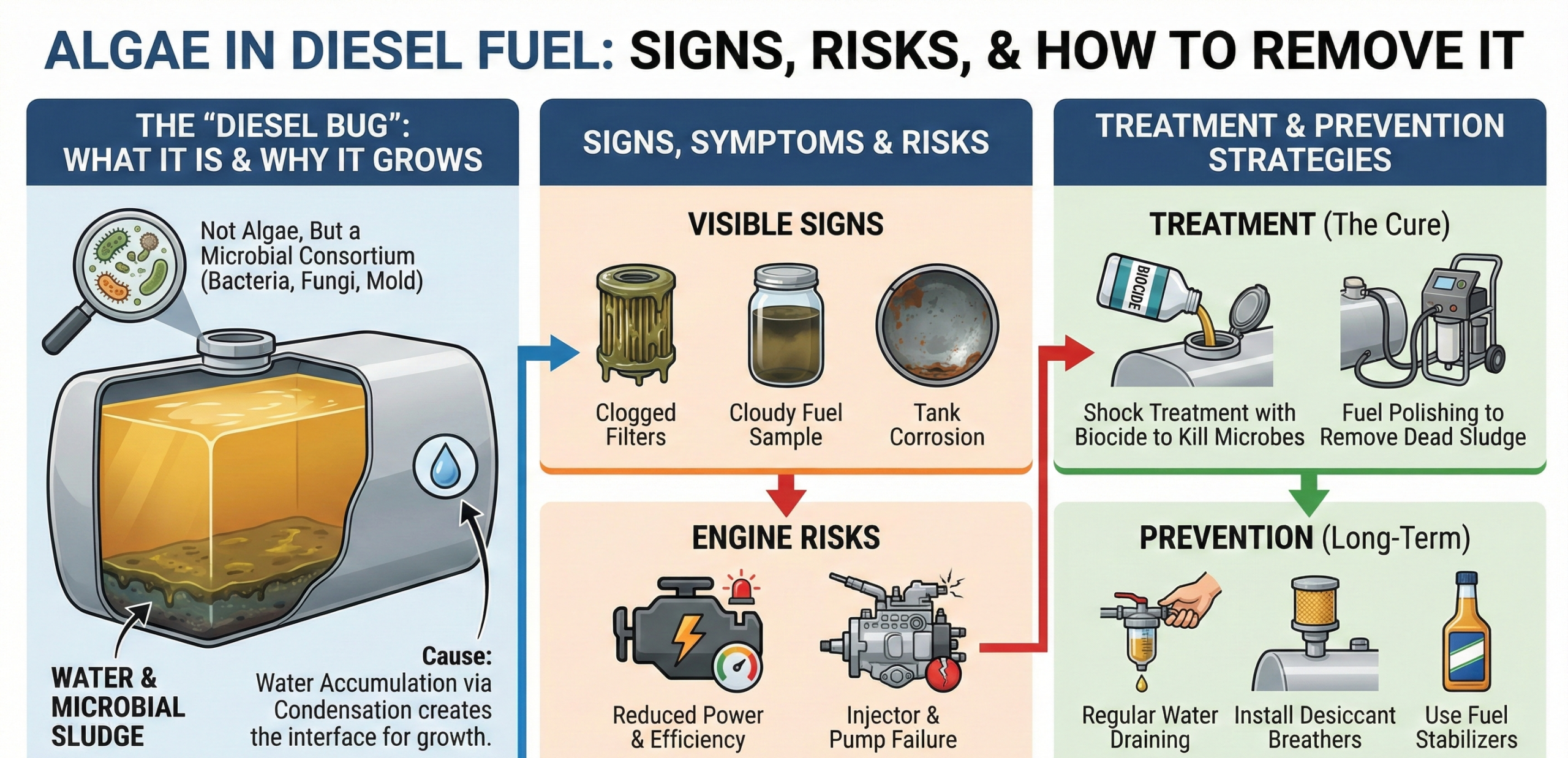
Firstly, algae in diesel fuel is simply a myth. Mark these words. Algae need sunlight to grow. Fuel tanks are dark, and they cannot grow there. Usually, people refer to it as diesel algae, a microbial consortium of bacteria, molds, and yeasts. These microorganisms present in the water condense at the tank bottom. They feed on your diesel fuel hydrocarbons.
Over time, the microbes multiply. They turn into a thick, slimy biomass that floats between the fuel and water. This is referred to as diesel fuel contamination.
What Causes Algae in Diesel Fuel?
For microbial growth, these organisms need three things. Food in the form of diesel, darkness in the tank, and water. As you cannot turn on a generator without fuel or diminish the pipes’ darkness. Water becomes the only enemy.
1. Water in Fuel Tanks
That is the leading reason for microbial growth in diesel. In fuel tanks, water entered through:
- Condensation: As the temperature changes, the moisture forms inside the inner walls of the tank.
- Leaky Caps: Sometimes, the rainwater seeps through the worn filler cap seals.
- Supplier Issues: If you unknowingly buy fuel that already contains dissolved water.
2. Long-Term Fuel Storage
Every diesel fuel available in the market has a specific shelf life. Backup Generators and other seasonal electronic equipment are usually vacant for months. Without movement, the water separates to the bottom. It creates a stagnant breeding ground for microorganisms.
3. Poor Tank Maintenance
Suppose you do not properly drain the water separator or polish your fuel regularly. The microbial colonies settle down easily due to improper tank maintenance.
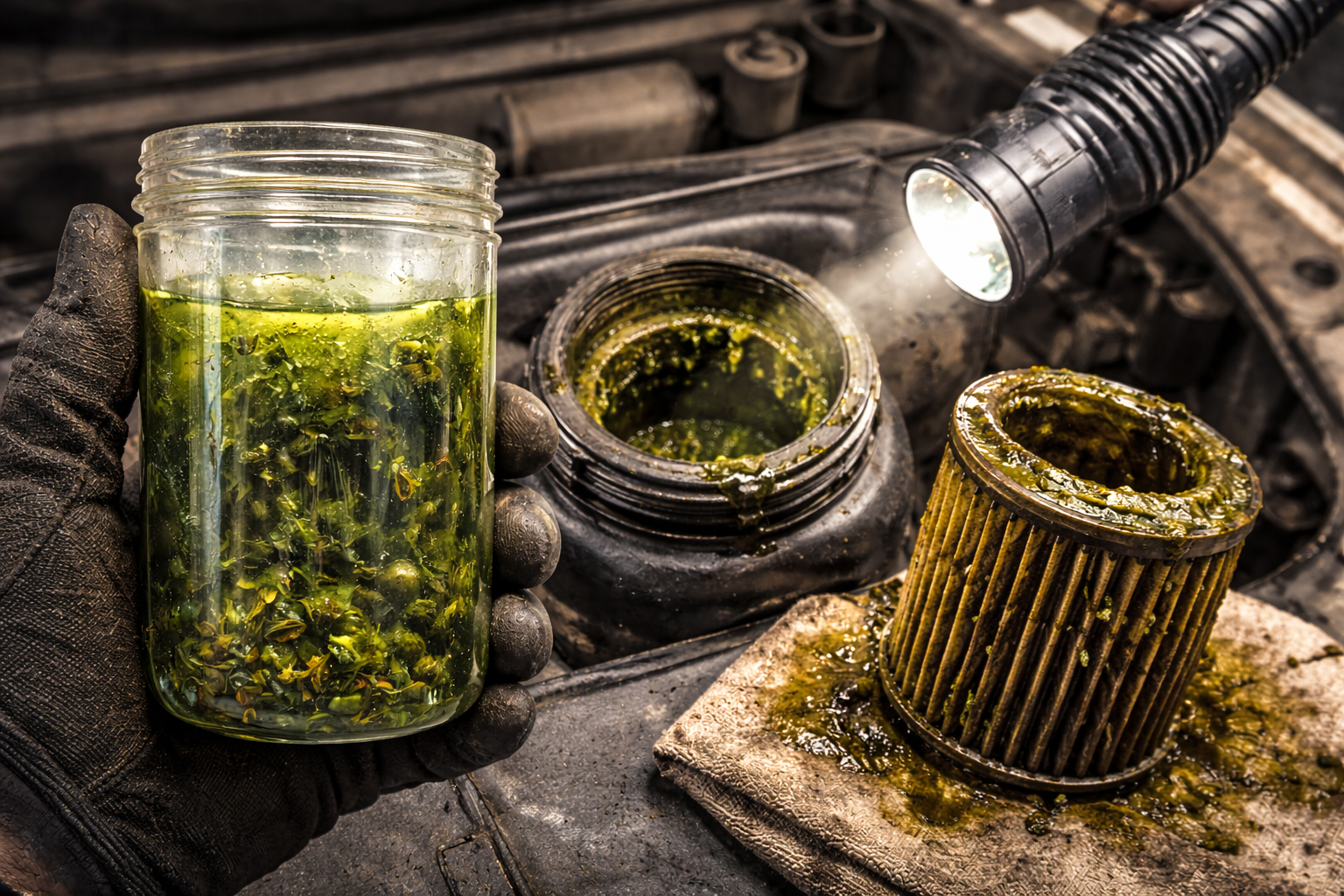
Signs of Algae in Diesel Fuel
Remember, the earlier you notice the algal signs in diesel fuel, the better you can save your injectors. Keep an eye on these common warning signs:
- Clogged Fuel Filters: If you notice a contamination problem, try changing filters every 50 hours (about 4 days) instead of 500.
- Dark, Sludgy Fuel: Healthy diesel is a bright yellow or red color. Contaminated fuel is cloudy, dark or has floating black specks.
- Rotten Egg Smell: Bacteria excrete waste in water that has a sulfur smell.
- Engine Stalling: When there is restricted fuel flow, the generators struggle with power loss under load.
- Corrosion Inside Tank: Microbes produce acidic waste that eats away all the metal tank walls, accelerating the corrosion process.
Risks of Algae in Diesel Fuel
If you lazily ignore the algae in diesel fuel problems, it will bring you expensive mechanical failures.
- Injector Damage: The microbial acidic byproducts corrode the internal components of fuel injectors.
- Fuel Pump Failure: Take, slimy sludge forces the fuel pump to work harder. It pushes the diesel throughout the blocked lines, leading to unexpected burnouts.
- Generator Breakdown: For standby power generator systems, the filter clogs 10 minutes into a blackout. Your building loses power.
- Tank Corrosion: In severe microbial infestation cases, the microbes eat the steel storage tank bottoms; owners end up paying 10,000 plus dollars for replacement.
How to Remove Algae in Diesel Fuel
Once you have a confirmed contamination case, do not just change the contaminated fuel with a fresh one. Be proactive enough to kill the colony first. Remove the dead waste.
Step 1: Drain Contaminated Fuel
With the pump, remove the fresh water and sludge from the tank bottom. If the fuel is dark and smelly, dispose of it completely.
Step 2: Clean the Tank
For accessible tanks, ask some professionals to physically steam clean the tank. You can also switch to power wash technology to remove any biofilms clinging to the interior walls.
Step 3: Use Diesel Biocide Treatment
Use a strong diesel biocide for the remaining fuel. It kills bacteria and fungi.
- Note: Keep in mind that the biocides kill the microorganisms. But their dead bodies settle out inside the tank bottom in the form of sludge.
Step 4: Polish the Fuel
It is one of the most important steps for large tanks. The fuel polishing system circulates the fuel throughout the fine filters. Remove any water or dead microbial biomass.
Step 5: Replace Fuel Filters
After this, the filters usually clog because they trap dead algae. Replace them all.
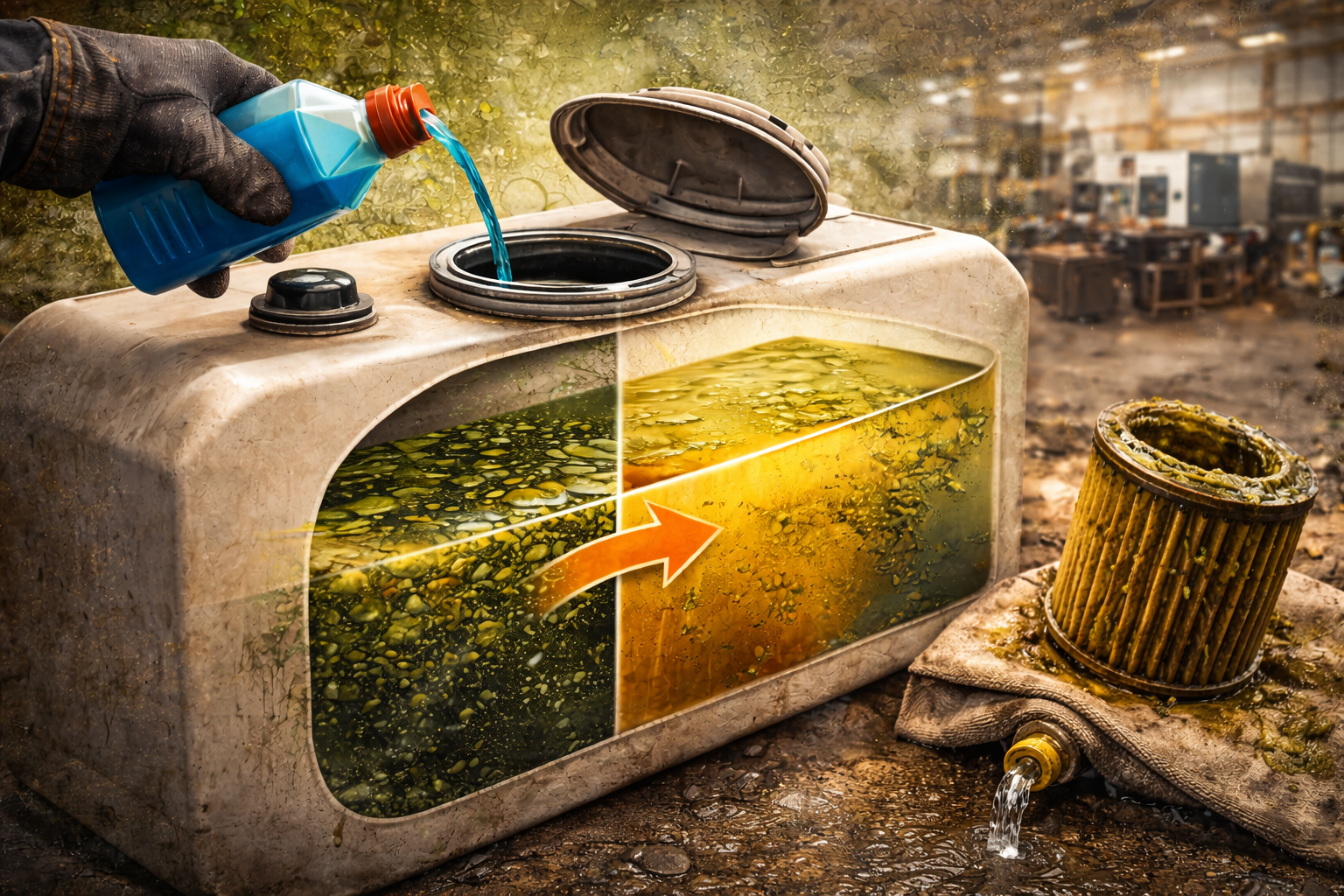
Best Biocides for Treating Diesel Fuel
When you are choosing any available treatment for algae in diesel fuel, double check whether it is a biocide or not. Do not use any random water remover or stabilizer.
- Shock Dose: With the high concentration, professionals kill all the active microbial infestations.
- Maintenance Dose: Experts recommend a lower concentration addition at every refueling to avoid new algal growth.
Always follow the manufacturer’s ratio (e.g., 1:1000 for shock, 1:4000 for maintenance).
How to Prevent Algae in Diesel Fuel
As it is always said, prevention is better than cure. Habitually follow these rules to keep your wagwan power generator healthy.
- Keep Tanks Full: A full tank has less surface area available for water condensation on the walls.
- Drain Water Regularly: Really open the bottom drain valve to remove any collected water.
- Use Water Separators: Use Racor-style high quality fuel/water separators for backup generators.
- Add Preventive Biocide: Add a specific manufacturer recommended maintenance dose to avoid any microbial growth in the future.
- Recirculate Stored Fuel: After every three to six months, run the generator under load or use a polishing cart.
Can Algae in Diesel Fuel Damage Generators?
Yes. Industrial diesel generators are more vulnerable than trucks as they sit still.
- Emergency Failure: When a generator starts up, the sludge present in the bottom clogs the filter immediately. The owners are stuck with blackouts when they need power the most.
- Wet Stacking connection: Clogged injectors caused by poor fuel combustion, a factor that brings you wet stacking issues as well, doubling the damage.
FAQs
What causes algae growth in diesel fuel?
Algae, a microbial, specifically bacterial and fungal growth, occurs in fuel tanks due to water contamination. The microbes live in the water and feed on diesel fuel.
How can I get rid of algae in diesel fuel?
To remove it completely, drain the water. Treat your fuel with the biocide to kill all the microbes. Use a polish or filter to remove the dead microbial sludge.
Does algae in diesel fuel damage the generator engine?
Yes. The microbial sludge clogs the filters and lines. Also, the acidic waste microbes ultimately corrode the fuel pumps and injectors.
How long does algae take to grow in diesel?
In warm, humid conditions with water present, the microbial colonies double in size every 20 minutes. Owners complain about significant sludge recovery in storage tanks every three to six months.
Does fuel biocide really work?
Yes, biocides effectively kill the living microbes. However, they do not remove the sludge. You must filter all the fuel once the biocide does its job.
Conclusion
One can easily fix the algae in diesel fuel problems. But if left unchecked, it ultimately destroys the engine over time. The only thing to control is water. Keep your fuel dry so the microbes can never grow inside your tanks.
If you suspect any contamination, do not wait for your engine to fail. Immediately Contact the HuaQuan service team for fuel polishing system advice. Our experts help you get the best maintenance kits available to keep your diesel clean and your buildings powered on.