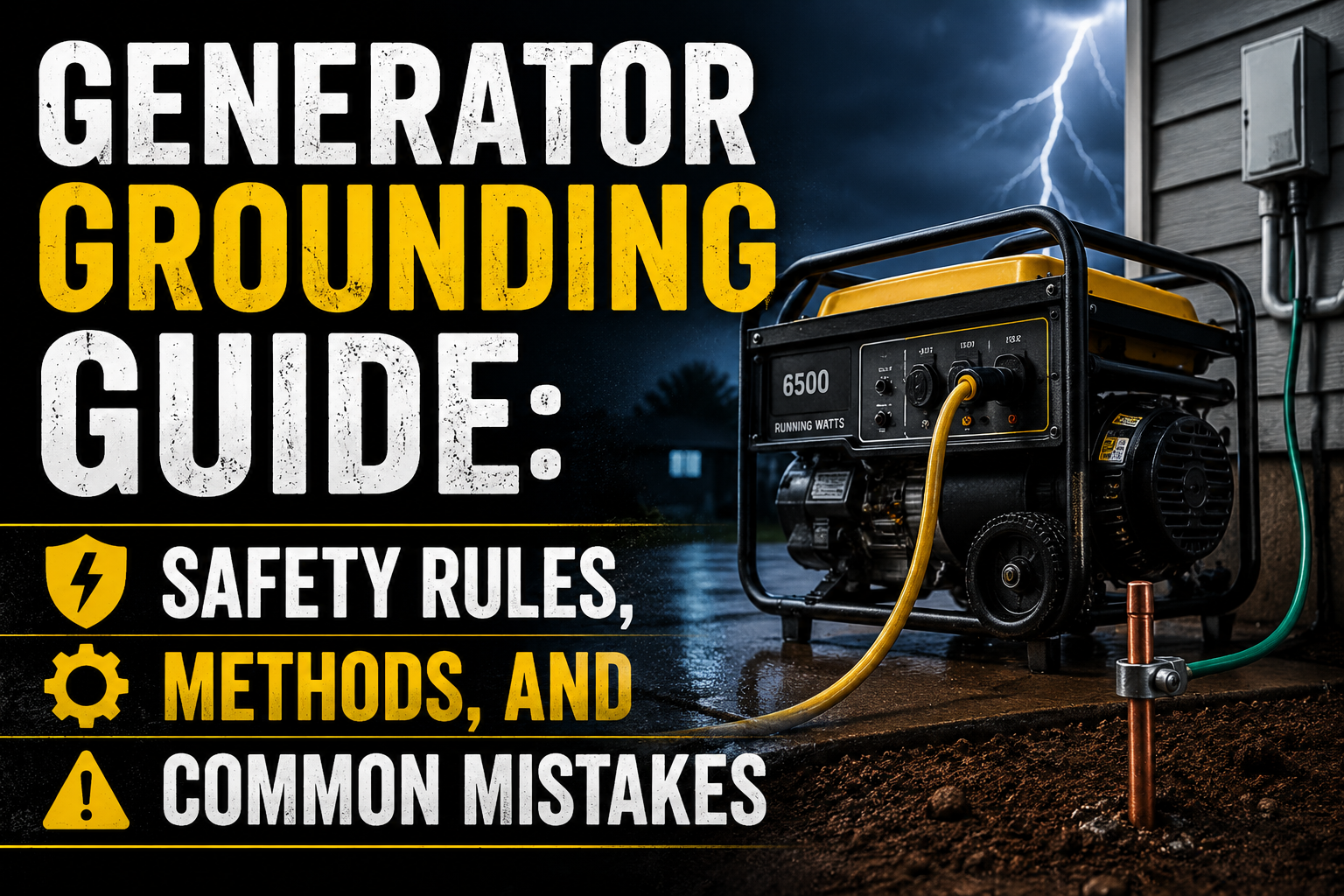
Read this Generator Grounding Guide to learn the basics of grounding, bonding, and setting up a generator safely in simple language. Electricity always looks for the easiest path back to its source. Without a properly designed grounding system, that path may pass through a person or valuable equipment instead. One oversight can create serious safety risks and expensive damage. Understanding grounding makes it easier to use backup power safely and avoid problems before they start.
The grounding requirements vary with the type of generator used. The rules differ for portable and standby models. They also depend on how the generator connects to the building’s electrical system. According to OSHA, Kragopwekkers connected to a facility through transfer switches follow the grounding requirements in the National Electrical Code (NUK) Article 250. Those requirements help minimize electrical hazards and keep installations safe.
Hierdie gids deur Huaquan discusses the basics to help you understand how to use backup power safely and legally.
What Is Generator Grounding?
Eenvoudig gestel, generator grounding connects the generator’s frame and internal neutral system to the earth or to an approved grounding electrode system. This connection reduces the risk of electric shock and electrical faults.
If a short circuit develops or lightning strikes nearby, the grounding path provides a safe, low-resistance route into the earth. The electrical energy moves through the proper grounding system instead of energizing the metal frame, creating far less danger.
Grounding vs. Bonding: What Is the Difference?
Grounding and bonding are often confused by many people. They do not. They both play an important role in electrical safety, but each serves a different purpose.
What Grounding Means
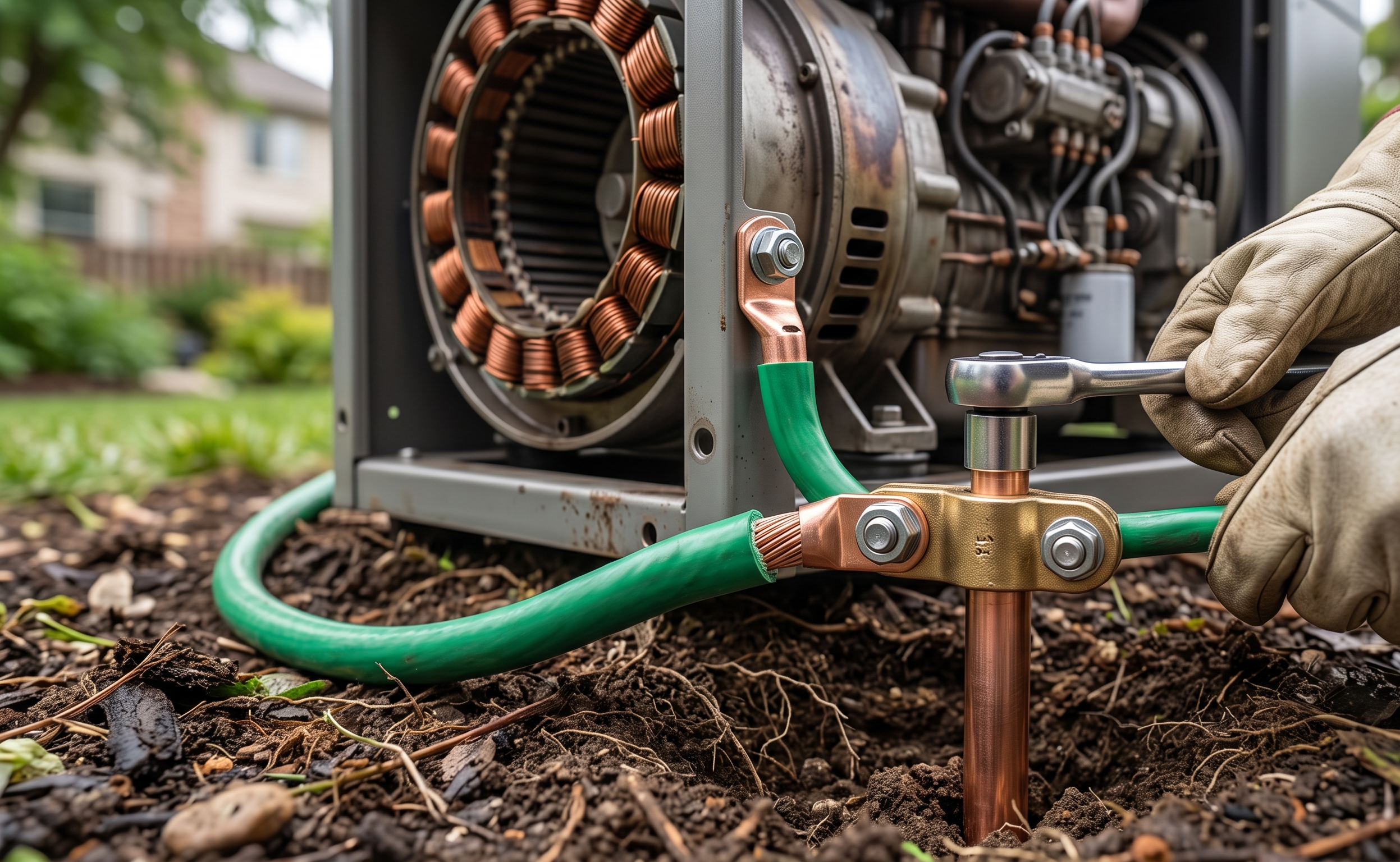
Grounding refers to the physical connection between an electrical system or piece of equipment and the earth. Electricians usually make this connection with a copper grounding wire attached to a metal grounding rod driven into the soil.
Saam, these components form the grounding electrode system that safely directs unwanted electrical energy away from equipment.
What Bonding Means
Bonding is the permanent connection of separate metal parts of an electrical system using conductive wire. This keeps every metal component at the same electrical potential.
The generator frame, transfer switch housing, and electrical panel remain electrically equal. This reduces the risk of electric shock when touching two different metal surfaces at the same time.
Why People Confuse Both
Many people confuse grounding and bonding because both improve electrical safety. Bonding provides a path for fault current to return to its source. Grounding connects the system to the earth’s electrical potential. They work together, but they perform different jobs and neither replaces the other.
Why Generator Grounding Is Important
Poorly grounded generators remain one of the most common causes of generator-related injuries. A properly grounded system provides several important safety benefits.
- Shock protection: Keeps the generator frame and connected equipment from becoming energized during an electrical fault.
- Fault current path: Provides a safe path for fault current so circuit breakers trip quickly.
- Equipment protection: Helps protect the generator’s alternator from damaging power surges.
- Transfer switch veiligheid: Supports smooth and safe switching between utility power and generator power.
- Protection for connected loads: Helps protect household appliances, mediese toestelle, and business computers from sudden voltage spikes.
Does Every Generator Need a Ground Rod?
The answer is no. Not every generator requires a separate ground rod. The proper configuration depends on the generator type, neutral bonding arrangement, transfer switch design, and how the generator connects to electrical equipment.
For certain Draagbare kragopwekker toepassings, OSHA states that the generator frame itself may serve as the grounding electrode. In those situations, a separate ground rod is unnecessary if certain conditions are met. Tipies, the frame remains bonded to the electrical receptacles and all equipment plugs directly into those outlets using standard extension cords. Once the generator connects to a building’s electrical system, egter, different grounding requirements apply and the installation should be carefully evaluated.
Types of Generator Grounding Setups
Portable Generator Used with Extension Cords
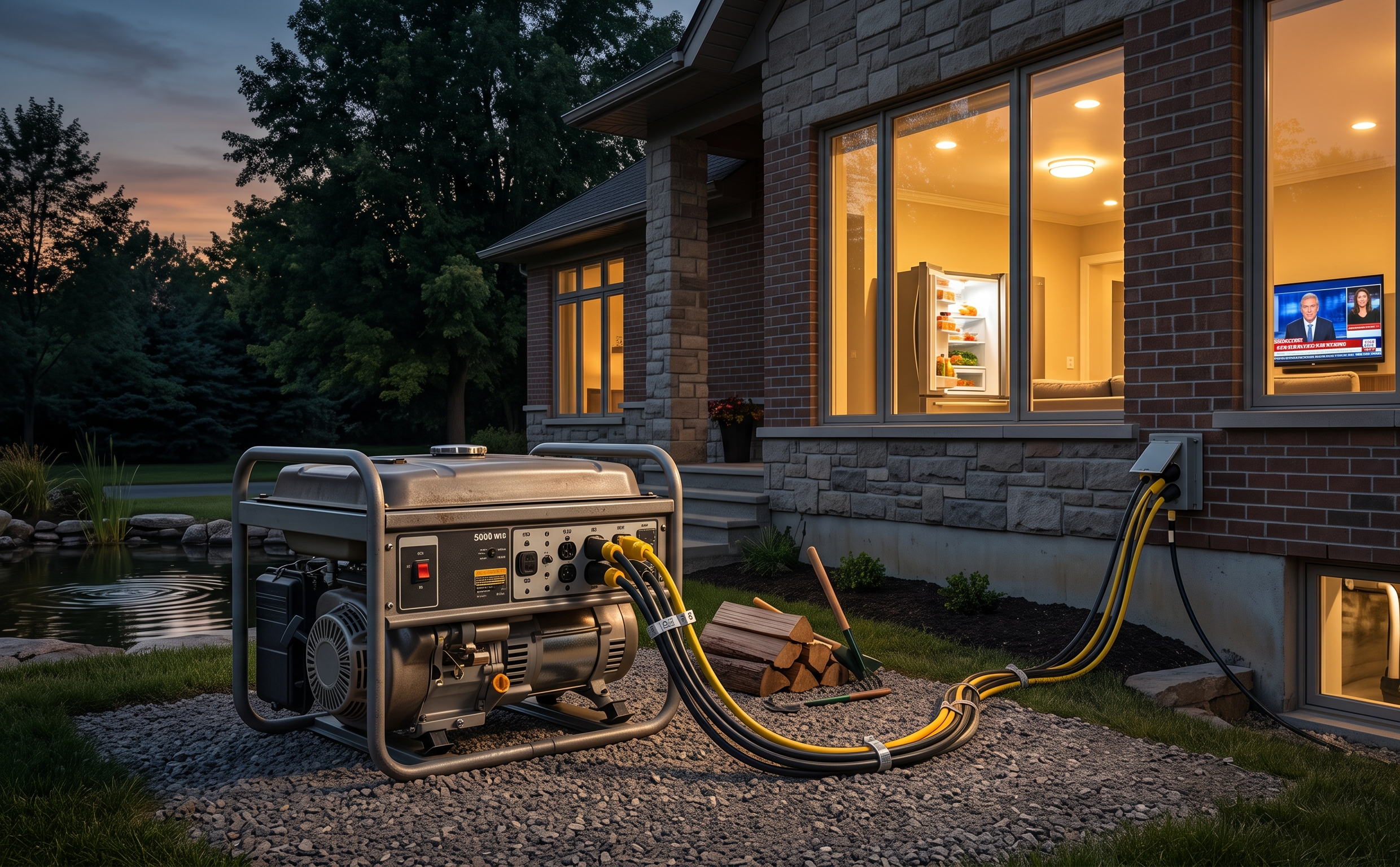
When you use a portable generator at a job site, campsite, or tailgate and plug standard extension cords directly into its outlets, the metal frame serves as the grounding point. In most situations, a separate copper ground rod is unnecessary.
Portable Generator Connected to a Transfer Switch
If a portable generator connects to the home’s electrical panel through a transfer switch, the grounding arrangement requires careful attention. The transfer switch handles the neutral conductor differently depending on whether the generator has a bonded or floating neutral. An incorrect setup can create a dangerous dual-grounding path.
Standby Generator Connected to a Building
Electricians hardwire permanent standby generators directly into a building’s electrical system. These systems require professional installation and full code compliance because they rely on the building’s existing grounding electrode system for safe operation.
Industriële kragopwekker Aarding
Commercial and industrial generators require a professionally engineered grounding system. These units produce high fault currents and must comply with IEEE and NEC grounding standards for commercial electrical installations.
Neutral Bonded vs Floating Neutral Generators
Knowing what your generator’s neutral wire is configured is one of the most important requirements of Generator Installation Safety.
What Is a Bonded Neutral Generator?
Vir 'n bonded neutral generator, the neutral will be permanently grounded to the metal frame of the generator inside the alternator enclosure. This is the most common configuration for most construction sites and industrial generators.
What Is a Floating Neutral Generator?
A floating neutral generator keeps the neutral wire isolated from the metal frame of the generator. This is the setting for most portable generators that are intended for home backup.
Why It Matters for Transfer Switches
If a bonded neutral generator is connected to a home’s electrical panel that already has a bonded neutral, then two grounding paths are created. That wrong connection can allow stray voltage to flow through the grounding conductor and raise the risk of shock and can cause GFCI (Ground Fault Circuit Interrupter) breakers to often keep tripping.
Algemene aardingsfoute vir kragopwekkers
Backfeeding Without a Transfer Switch
Connecting a generator directly to a dryer outlet to power a house is known as backfeeding. This is a dangerous and illegal practice that circumvents grounding protections and the isolation system of the utility grid, endangering utility workers.
Adding a Ground Rod Without Understanding Bonding
A copper ground rod cannot fix incorrectly wired or improper neutral bonding. No ground rod will cause a breaker to trip under short-circuit conditions.
Ignoring the Generator Manual
Each generator will have a different grounding requirement. Without following the manufacturer’s instructions, installations can be unsafe and in violation of the electrical code.
Connecting Neutral and Ground Incorrectly
Improperly connecting neutral and ground wires, byvoorbeeld, into a secondary subpanel, can result in unsafe current paths that can energize appliance housings.
Using Undersized Grounding Conductors
A grounding wire that is too small may melt during an electrical fault before the breaker trips. Always use a grounding conductor of adequate size for the generator amperage and electrical codes.
Generator Grounding Safety Checklist
The following safety checklist should be used when inspecting a generator, including the grounding system. Make sure to do the following safety check before turning your generator on.
- Read the generator manual through.
- Find out if your generator is bonded, neutral or floating neutral.
- Install an electrical-code-compliant transfer switch that is rated for the electrical equipment.
- Check all extension cords and heavy-duty plugs for splits, cracks and frayed insulation.
- Keep the generator dry and above standing water.
- Do not backfeed an electrical panel.
- Only connect a generator to a building by a licensed electrician.
- Abide by local electrical codes and permit requirements.
When to Call an Electrician
It is not an issue that should be solved by trial and error in generator grounding. Call a licensed electrician if:
- Connecting any generator directly to a residential or commercial electrical panel.
- Installing a manual or automatic transfer switch.
- Installing a permanent hard-wired standby generator.
- Grounding a commercial or industrial generator.
- Multiple GFCI breaker trips during generator use.
- Not sure how your generator is neutral bonded.
Gevolgtrekking
The grounding and bonding of a generator are critical to ensure electrical safety. They help to prevent major electrical shock and safeguard equipment. Extension cords are frequently used with portable generators and the metal frame is usually used as the generator’s ground, but any connection to a building electrical panel must be in accordance with local electrical codes. Understanding the generator’s neutral configuration and using the proper transfer switch can eliminate unsafe backfeeding.
Looking for support in installing generators or getting grounding requirements? Kontak our generator professionals today for expert advice, installation assistance and reliable generator backup solutions for your facility.
FAQs on Generator Grounding Guide!
Why is it necessary to ground a generator?
The main purpose of generator grounding is to reduce the risk of electric shock and provide a safe, low-resistance path for fault current. That’s where the circuit breakers trip rapidly in the case of an electrical short.
Is it necessary to ground portable generators?
This is dependent on the type of connection and use of the generator. If you connect tools directly to the generator via an extension cord, the frame acts as the grounding point. The neutral bonding configuration determines how you ground the generator when you connect it to a building’s electrical panel.
What is the difference between Grounding and Bonding?
Grounding provides a connection between the electrical system and the earth, which creates a stable voltage reference. You use bonding to join conductive metal components together so that they remain at the same electrical potential, which minimizes the risk of electrical shock.