Die wetenskap agter kragrugsteun Kragopwekkers is nie so maklik soos dit lyk nie. Van vervaardiging tot verkoop of installering van die regte kragondersteuningsaanleg, dit is baie meer anders as om 'n enjin en alternator in lyn te bring vir gladde elektrisiteitsproduksie. Elke kragopwekker is 'n kombinasie van brandbare brandstof vir die opwekking van hoëspanning elektrisiteit terwyl giftige uitlaatgas vrygestel word. Dus, dit moet onderhou word met kragopwekkersertifikate vir almal se veiligheid.
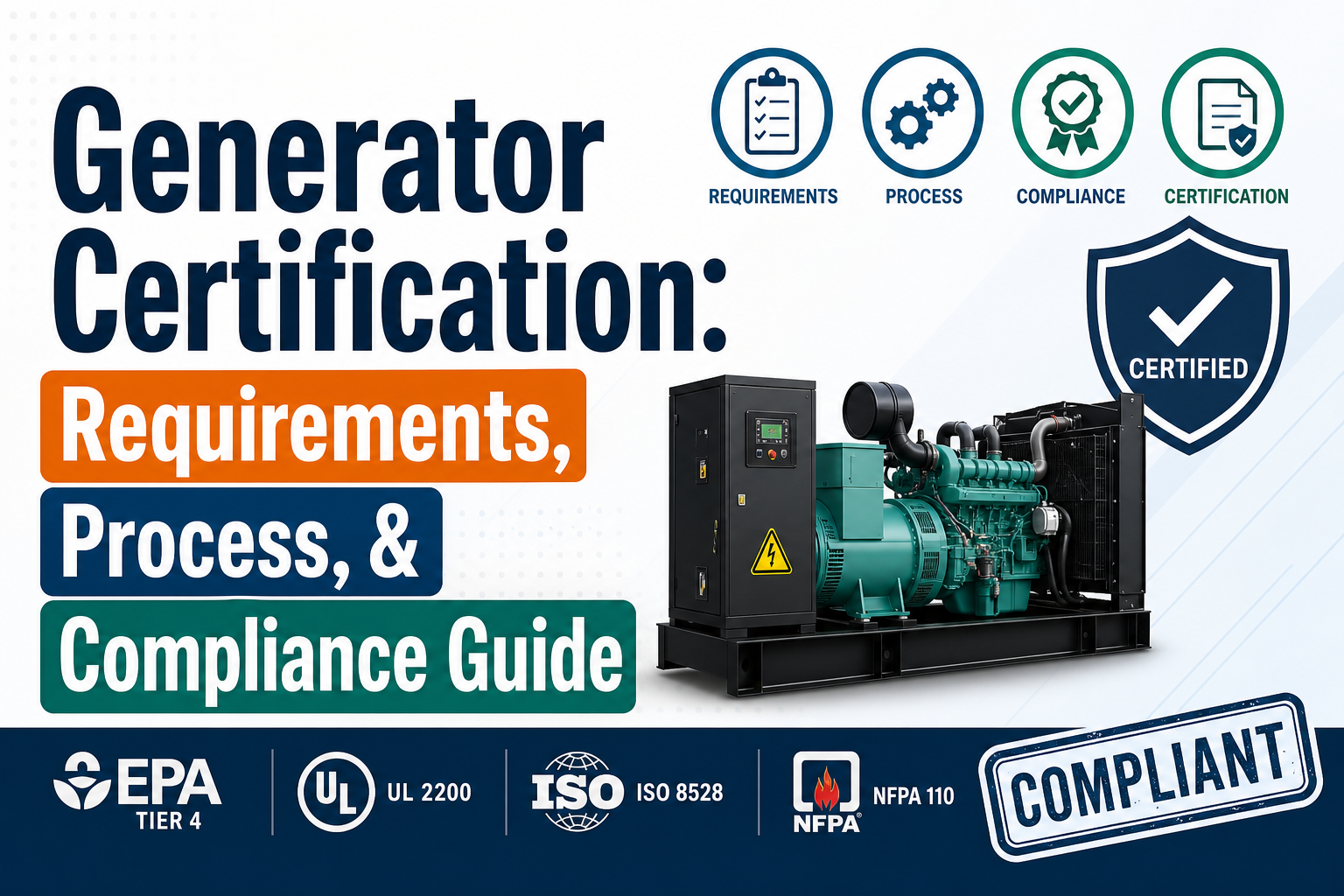
Vir vervaardigers wat hul kragrugsteunaanlegte wettiglik wêreldwyd wil verkoop aan kopers wat betroubaar is, veilige rugsteun-energieproduksie, sertifisering is nodig. Hierdie gids deur HuaQuan dek al die nodige vereistes, prosesse, en voldoeningsregulasies wat vereis word om 'n wetlike in stand te hou en te verdien Generator sertifisering. Dus, dit is gereed om krag te produseer wanneer jy dit ook al nodig het.
Inleiding tot kragopwekkersertifisering
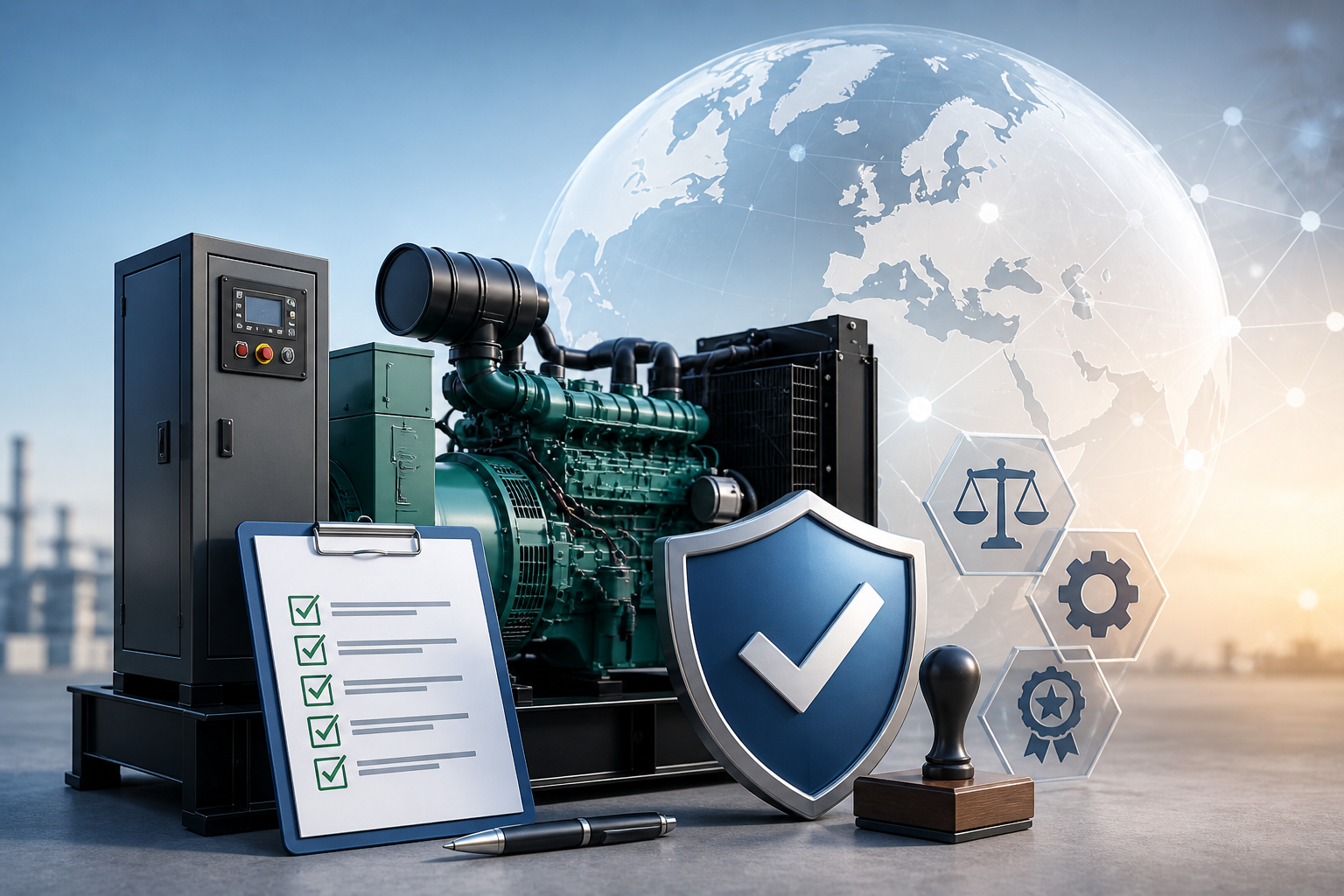
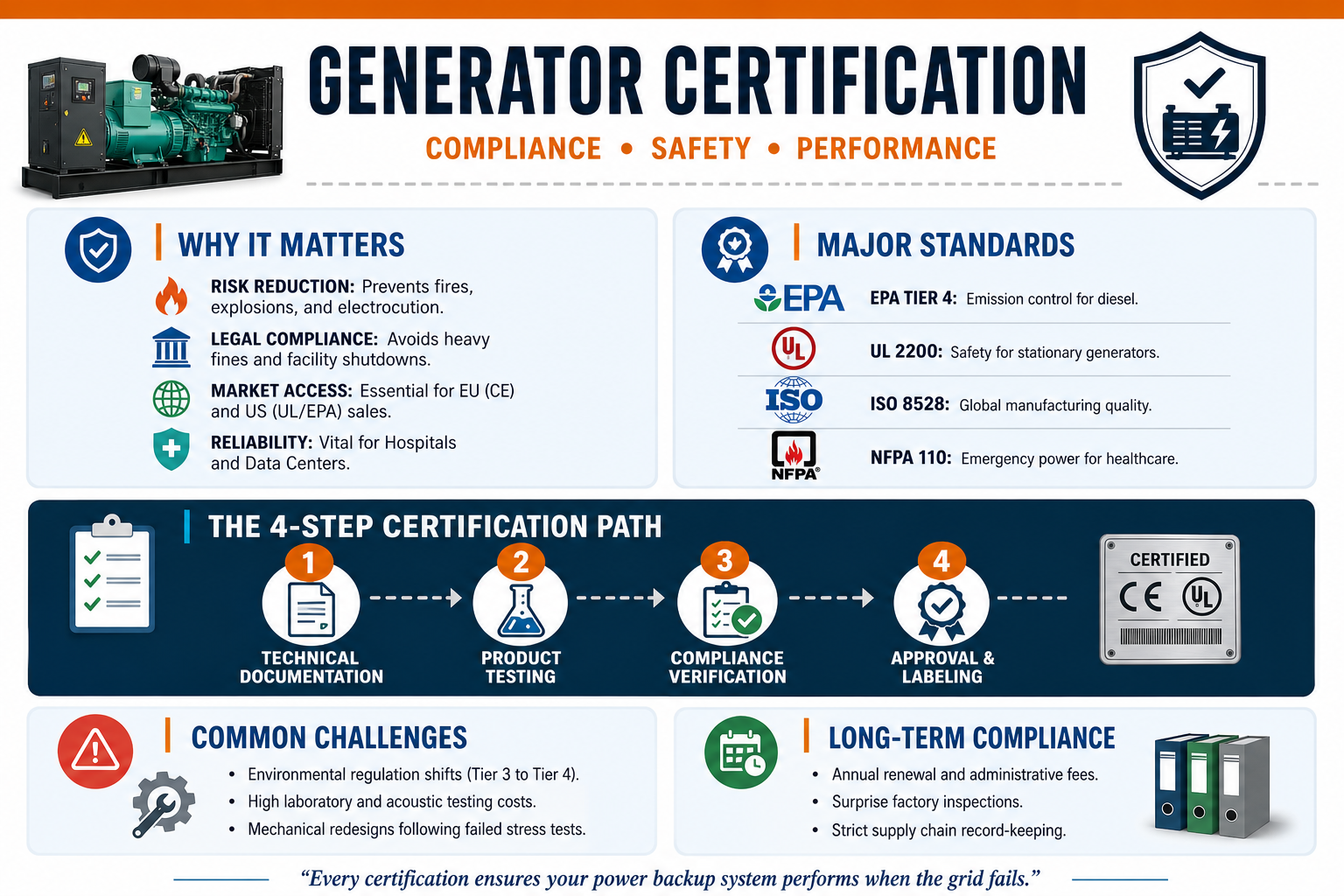
Generator-sertifisering is 'n formele verifikasieproses. Daar is verskillende derdeparty-toetsmaatskappye en organisasies wat jou kragopwekkermodel amptelik goedkeur nadat hulle die veiligheid daarvan getoets het, omgewingsimpak, en prestasiestandaarde.
Wat as jy nie die sertifikaat het nie? Ongelukkig, die kragopwekkers word dan aanspreeklik. Wettige sertifisering is 'n goedkeuring dat jou kragrugsteunstelsel geen gebruiker sal elektrosuteer nie. Dit sal nie onwettige koolstofmonoksied in die atmosfeer pomp of maklik vlamvat nie.
Met hierdie standaarde, maatskappye verseker kragopwekkers’ veiligheid. Hospitale maak staat op kragopwekkers vir die lewensondersteuningstelsel; konstruksieterreine verkies kragopwekkers vir OSHA-nakoming, en datasentrums moet dit installeer om massiewe stelsel- of bediener-ineenstortings te vermy.
Waarom kragopwekkersertifisering belangrik is
'n Kragopwekker-sertifiseringsstempel is 'n noodsaaklikheid vir jou besigheid se gladde bedrywighede.
- Veiligheidstandaarde en risikovermindering: Tydens die toets sertifisering, die werkers druk kragopwekkers tot hul piekgrense om enige aarding uit te filter, bedrading, of brandstofbesoedeling foute. Dit help jou om risiko's van elektriese brande te vermy, skielike ontploffings, of elektrokusie ongelukke.
- Wetlike en regulatoriese nakoming: In baie lande, die verkoop of selfs installering van ongesertifiseerde elektriese toestelle word verbied. As iemand ongesertifiseerde kragopwekkers gebruik, munisipale departemente beboet hulle swaar en selfs hul fasiliteit gesluit.
- Marktoegang: Ons leef in 'n era waar die verkoop van 'n kragopwekker sonder sertifiseringsplakkers nie moontlik is nie. In die Europese Unie, daar is 'n spesifieke CE-merk plakker. Terwyl hy in die VSA was, UL (Onderskrywers Laboratoria) en EPA (Omgewingsbeskermingsagentskap) sertifisering is nodig.
- Kliëntvertroue en handelsmerkgeloofwaardigheid: 'n Sertifiseringsstempel is 'n teken van gehalteversekering. Kopers regoor die wêreld vertrou hierdie seëls terwyl hulle 'n spesifieke kragopwekker kies om te verseker dat dit oor die jare veilig en betroubaar is.
Tipes kragopwekkersertifisering
Die soort kragopwekkersertifisering wat u benodig, hang af van waar die vervaardiger dit gaan verkoop. En, hoe die verbruikers dit sal installeer en gebruik.
| Sertifisering Kategorie | Beskrywing en voorbeelde |
| Nasionale Sertifisering | Plaaslike owerhede benodig nasionale sertifikate om 'n land se verkoopsmark te betree. Hierdie sertifisering sluit die EPA in (Omgewingsbeskermingsagentskap) om veilige omgewingsvrystellings oral in die VSA na te gaan. UL is 'n handelsmerk vir elektriese veiligheid in Noord-Amerika. Terselfdertyd, CSA (Kanadese Standaarde Vereniging) is vir Kanada. |
| Internasionale sertifiserings | In vergelyking met nasionale sertifisering, internasionale dokumentasie bied u globale marktoegang. Die CE-merk is 'n kontrolelys in die Europese Ekonomiese Gebied. Verskillende ISO-standaarde, hou van ISO 8528, beteken dat die wisselstroomopwekkers aan die internasionale vervaardigingsgehaltestandaarde voldoen. |
| Bedryfspesifieke sertifiserings | Soos die naam aandui, bedryfspesifieke sertifikaatgraderings handel oor verskillende nisomgewings. NFPA 110 is the mark for emergency backup power in healthcare. Maritieme kragopwekkers benodig sertifisering van die Amerikaanse Buro vir Verskeping (ABS). |
Generator sertifisering Vereistes
As jy dit oorweeg om aansoek te doen vir 'n spesifieke kragopwekkersertifisering, onthou dat dit aan die basislynstandaarde oor verskillende veiligheidskategorieë moet voldoen.
- Tegniese spesifikasies: Die kragopwekker moet spanning produseer, stroomsterkte, en frekwensie gedruk op sy spesifikasies sonder fluktuasie. Moet stabiele krag lewer onder gedeeltelike of volle elektriese las.
- Emissie- en omgewingstandaarde: Vir binnebrandenjins, daar is spesifieke uitlaatreëls en regulasies. Byvoorbeeld, diesel kragopwekkers in die VSA moet slaag EPA-vlak 4 finale standaarde. Hierdie toets verseker die stikstofoksiede (NOx) en deeltjies word nie lukraak in die omgewing weggegooi nie.
- Voldoening aan geraasvlak: Vir residensiële of stedelike kommersiële gebiede, die geraasreguleringstoetse het 'n spesifieke desibelstandaard om aan die plaaslike geraasordonnansie te voldoen.
- Veiligheidskenmerke en toetsing: Elke permanente kragopwekker moet 'n outomatiese spanningsreguleerder hê (AVR). Daar moet stroombrekers en aardingspunte wees saam met termiese beskerming. Al hierdie kenmerke verseker dat die enjin onmiddellik sal afskakel as dit oorverhit word.
Stap-vir-stap Generator Sertifiseringsproses
Die toepassing en verkryging van kragopwekkersertifisering is 'n deeglike, gestruktureer, multifase proses.
Dokumentasie Voorbereiding
Selfs voordat laboratoriumtegnici jou kragopwekker evalueer, die vervaardiger moet 'n tegniese konsep wat ingenieursskemas uiteensit, indien, bedradingsdiagramme, en materiale wat in die kragopwekkerproduksie gebruik word, saam met die gebruikershandleiding.
Produk Toets en Inspeksie
Sodra die laboratorium jou papierwerk goedkeur, die vervaardiger stuur 'n prototipe na die spesifieke toetslaboratorium. Ingenieurs toets die kragopwekkers onder strawwe toestande, soos kortsluitingstimulasie, onder termiese spanning, en met volladingstoetsing. Hulle neem selfs emissiemonsters vir evaluering.
Nakomingverifikasie
Toe, die kenners vergelyk die kragopwekker met rou data met die sertifikaatstandaarde vir kruisverwysing om te evalueer of dit onder die wetlike perke val.
Sertifisering Goedkeuring en Etikettering
Sodra jou kragopwekker alle soorte toetse en oudits slaag, die sertifiseringsowerheid gee jou produkte sy goedkeuring. Die vervaardiger gebruik die sertifiseringsetiketplakker, soos UL- of CE-plakkers, om uit te beeld dat al hul produkte wetlik toegelaat word om van die monteerband af te rol.
Algemene uitdagings in kragopwekkersertifisering
Die sertifiseringsgoedkeuring is nie 'n maklike pad nie. Ander, regoor die wêreld, sukkel met verskillende probleme wat in onnodige produkbekendstellingvertragings ontaard.
- Mislukte voldoeningstoetse: Dit is die mees algemene rede. Jou kragopwekker kan lukraak 'n emissietoets met 'n breukdeel of 'n persent druip. Soms, die alternators oorverhit onder strestoets, en die vervaardigers eindig met 'n volledige meganiese herontwerp.
- Verkeerde dokumentasie: Sertifiseringsowerhede is baie streng. Selfs 'n verkeerd gespelde komponentnaam of 'n materiaalrekening met onduidelike bedradingskemas sal hierdie proses van weke tot maande vertraag.
- Veranderende regulasies: Omgewings- en veiligheidstandaarde verander elke dag. 'n Vervaardiger kan meer as 'n jaar spandeer om aan die EPA-standaarde te voldoen. En dan stel die regering 'n paar ander streng standaarde in net voor kragopwekkertoetsing begin.
Koste van kragopwekker sertifisering
Tydens produkontwikkeling, kragopwekker vervaardigingsmaatskappye bestee 'n spesifieke begroting aan sertifisering.
- Toetskoste: Dit is baie duur om 'n gleuf vir akoestiese en emissielaboratoriums te bespreek. Selfs vervaardigers bestee tot tienduisende dollars.
- Sertifiseringsliggaamfooie: Regsowerhede en organisasies vra ingenieurswese, verwerking, en administratiewe fooie om jou data te hersien en aan jou kragopwekker 'n spesifieke sertifikaat toe te staan.
- Onderhoud en hernuwingskoste: Onthou, die verkryging van 'n sertifikaat is nie 'n eenmalige fooi nie. Vervaardigers moet jaarliks betaal om hul lyste in stand te hou en die verrassingsfabriekinspeksiekoste te dek.
Hoe om 'n sertifiseringsliggaam te kies
Kies altyd 'n slim toetsmaat, so betree al jou kragopwekkers glad die mark.
- Geakkrediteerde organisasies: Gaan vir 'n nasionaal erkende toetslaboratorium (NRTL). As die maatskappy nie 'n wettige permit van die regering het nie, sy sertifiseringseëls is van geen nut nie.
- Streeks- vs internasionale liggame: As jy van plan is om kragopwekkers in die VSA te verkoop, 'n plaaslike NRTL is goed. Maar, vir globale verkoop, vind 'n multinasionale toetsfirma soos Intertek of TÜV SÜD wat vir CSA kan toets, CE, en UL voldoeningstandaarde deeglik.
- Ondervinding in die kragopwekker industrie: Kies 'n laboratorium wat swaar masjinerie en hoë professionele verbrandingsenjins kan hanteer, eerder as om een met basiese verbruikerselektronika-toetse te kies.
Handhawing van nakoming van sertifisering
Sodra jy die sertifiseringsplakker het, dit is nie die einde nie. Vervaardigers moet beplan om dit vir die lang termyn te hou.
- Gereelde inspeksies: Sertifiseringsowerhede het altyd onaangekondigde kwartaallikse of jaarlikse inspeksieverrassings vir jou vervaardigingsfasiliteit. Hulle evalueer en kontroleer deeglik of jou kragopwekkers identies is aan die prototipe wat jy gestuur het of nie.
- Opdatering van standaarde: Vir veiligheids- en omgewingskodes, soos om van EPA-vlak af te skuif 3 na Tier 4, vervaardigers moet hul produkte herontwerp en hersertifiseer om aan te hou om dit wettig te verkoop.
- Rekordhouding: Handhaaf 'n hoë kwaliteit voorsieningskettingrekord met alle subkomponentlyste, soos bedrading en brandstofslange. Moet dit nooit met goedkoop of ongesertifiseerde komponente omruil nie.
Gevolgtrekking
Die aanpak van die groot, streng kragopwekkersertifiseringsreëls en -regulasies is 'n tegniese en duur prosedure wat ook nie onderhandelbaar is nie. Of jy nou 'n vervaardiger is wat jou volgende reeks draagbare kragopwekkers ontwerp of 'n fasiliteitsbestuurder wat op soek is na multi MW bystandkragstelsels, die sertifiseringsproses is moeilik en streng.
Elke kragopwekkersertifisering verseker dat jou kragrugsteunstelsel sal werk soos die vervaardiger belowe het wanneer die netwerk misluk. Dit sal die lewens beskerm, eiendom, en jou omliggende omgewing. Met hierdie regulasies en standaarde, besighede het hul handelsmerkvertroue regoor die wêreld opgebou, verseker dat betroubare krag daar is wanneer die wêreld dit vereis.
Beveilig jou krag terwyl jy jou geestelike vrede beskerm
Moenie tyd mors om te dink oor die aankoop van 'n kragopwekker wanneer die volgende storm toeslaan of die netwerk misluk nie. Of jy nou op soek is na gesertifiseerde draagbare kragopwekkers vir noodgevalle of 'n outomatiese wil hê, permanente bystand krag rugsteun stelsel, ons kundiges is hier om jou te help om die regte grootte te vind en die regte kragopwekker binne jou begroting vir jou fasiliteit te installeer. Kontak ons Vandag!
⚡ Verken verwante oplossings
- 🏭 500kW diesel kragopwekker
- 🏭 1000kW diesel kragopwekker
- 🏭 500kW YC Diesel Generator
- 🔧 KMS (Cummins/Doosan) Reeks
- 🔧 SC (SDEC) Reeks
- 🏥 Oplossings vir datasentrumopwekkers
💡 Benodig 'n pasgemaakte oplossing? Kontak ons ingenieurspan vir projekspesifieke aanbevelings.