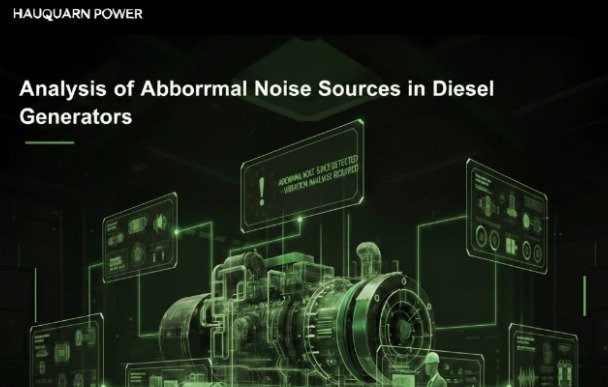
Diesel Kragopwekkers is tipies in huise en nywerhede as rugsteun- en deurlopende kragbronne. Daar is altyd 'n geluid wanneer hulle werk. Nietemin, 'n ongewone geluid van 'n dieselkragopwekker dui op 'n foutiewe stelsel. Soms jy kan abnormale geraasbronne ignoreer. Dit lei tot mislukking, stilstand, en hoë herstelkoste. Vroeë opsporing vermy skade en verhoog die veiligheid van beide klein en groot installasies.
Dit vergemaklik ook goeie kragopwekkerinstandhouding en verhoog lewensduur. Hierdie handleiding beskryf die primêre oorsake van generatorvibrasieprobleme en abnormale geraas. Dit dui ook aan hoe generatordiagnostiek en voorspellende instandhouding help om die gladde werking en doeltreffendheid van stelsels te handhaaf.
1. Wat is abnormale geraasbronne in dieselgenerators?
Enige vreemde geluid is 'n abnormale geraas in diesel kragopwekkers. Gereelde hardloop veroorsaak bestendige verbranding en 'n unieke lugvloeiklank. Hierdie klanke bly binne 'n definitiewe en voorsienbare limiet.
Die kragopwekker se ongewone klank bestaan uit enjin klop geraas, ratel, neurie, of sis. Die toon kan óf wissel óf toeneem met tyd. Dit neem gewoonlik toe met las. Verslete dele, geblokkeer lugvloei, los monteerboute, of 'n ongebalanseerde toestand is 'n paar tekens van 'n probleem.
Die ongewone geraas van die dieselopwekkers kan betyds bespeur word, skade te vermy en betroubaarheid te verbeter.
2. Wat is abnormale geraasbronne in dieselgenerators?
Wanneer die enjin se verbranding swak is of die inspuiters misluk, die enjin se klank verander. Inlaat- en uitlaatstelsels produseer ook geraas wanneer jy lugvloei blokkeer. Hulpstelsels kan geraas genereer wanneer 'n onderdeel gedra of verkeerd in lyn is.
Nog 'n tipe van geraas van elektriese stelsels is alternator geraas, wat tipies soos 'n brom klink. Tegnici diagnoseer kragopwekkers vinnig om die bron van die probleem te identifiseer. Hulle inkorporeer akoestiese inspeksie met vibrasiepatrooninspeksie. Behoorlike diagnose bespaar op herstelwerk en maak instandhoudingsvoorspellingsprogramme moontlik.
2.1 Uitlaat & Abnormale geraasbronne inneem
Lug kom in en uit die kragopwekker deur die inlaat- en uitlaatstelsels. Korrekte lugsirkulasie is nuttig met verbranding en verkoeling. In die geval van lugbeperkings, druk bou binne die stelsel op, wat ongewone dieselgeneratorgeraas tot gevolg het. Die inlaatgeraas kan fluit of suiging wees. Die uitlaatgeraas is gewoonlik 'n gesuis of 'n hoë slag.
Wanfunksies verminder enjindoeltreffendheid en brandstofverbruik. Hulle verhoog ook emissievlakke. Gewoonlik, dit is die filters en stukkende knaldempers wat geraas veroorsaak. Maar jy kan 'n normale lugvloei handhaaf deur gereelde inspeksie. Skoon lugvloei elimineer generator vibrasie kwessie en geraas.
i). Inlaatbeperking Geraas
Inlaat-beperking geraas spruit uit die moeilikheid van onbeperkte lugvloei in die enjin. ’n Vuil lugfilter of ’n verstopte inlaatkanaal veroorsaak dit gewoonlik. Die enjin werk harder om lug te vind, 'n fluitgeluid voortbring. Dit verhoog die geraas van dieselkragopwekkers en verminder enjinkrag.
Die onvermoë om goeie lugvloei te hê, beïnvloed brandstofverbranding en verhoog verbruik. Dit verhoog die enjin se temperatuur, lei tot slytasie. U kan hierdie probleem vermy deur gereelde instandhouding.
ii) Uitlaat-terugdruk
Uitlaat-terugdruk vind plaas wanneer die gasse nie vrylik uit die stelsel kan beweeg nie. Dit kan wees as gevolg van 'n obstruksie in 'n knaldemper of 'n klein uitlaatpyp. Die druk bou binne die stelsel op, wat sissende of skerp pulse veroorsaak—die enjin word oorverhit, lei tot harde uitlaatgeraas. Jy kan dit vermy deur gereeld uitlaatlyne na te gaan.
2.2 Struktureel & Monteergeraas
Die bron van strukturele geraas is die kragopwekker se raam en basis. Dieselopwekkers vibreer voortdurend en dra die vibrasie na omliggende strukture oor. Dit veroorsaak ratelende of opkomende effekte.
U kan hierdie probleem oplos deur gereeld die boute en monterings te inspekteer. Monteer die kragopwekker veilig om stabiliteit te verseker. Dit verminder vibrasie en verleng die toerusting se lewe.
i). Hulpstelsels
Hierdie komponente sluit koelwaaiers in, gordels, en brandstofpompe. Hulle genereer geraas wanneer hulle verslyt. 'n Gebreekte waaier produseer geraas van vibrasie of lugbeweging. ’n Los gordel gee ’n piepgeluid, terwyl erg verslete pomplaers 'n brom genereer. Al hierdie verhoog die klankvlakke.
Jy kan slytasie en wrywing verminder deur gereelde smering. Wanneer belyning behoorlik is, daar is minder spanning op die bewegende dele. Vervanging van beskadigde onderdele verbeter werkverrigting en vergemaklik kragopwekkeronderhoud.
ii). Raam & Basis Resonansie
Frame resonance takes place when the natural frequency of the generator corresponds to the frequency of the base. It results in a loud booming sound or a droning sound. A weak or light base structure increases the sound.
Use an acoustic test to identify resonance points accurately. Fixing resonance will reduce the noise and safeguard the structure.
iii). Los hegstukke & Mounts
Tipies, the abnormal sound in the generator is often related to loose fasteners. Vibrations loosen bolts and brackets, causing them to rattle or enjin klop geraas.
2.3 Alternator & Elektriese Abnormale Geraasbronne
The alternator produces some noise in the diesel generators. It may be a humming or buzzing sound that varies with the load’s demand. This noise results from magnetic forces and an electric imbalance.
Ook, faults in the winding or incorrect rotor alignment raise vibration and sound levels. Technicians should monitor voltage and load to identify and fix the problem.
i) Harmoniese vervorming
Harmonic distortion occurs when nonlinear loads generate harmonics. It produces some other magnetic forces within the alternator. The generator will then make a humming or buzzing sound.
It gets noisy when the load gets unstable. Harmonics also lead to heating and reduce efficiency. Met verloop van tyd, it damages electrical components. Load balancing can enhance system stability and reduce harmonics.
ii) Los windings
Loose windings will produce unnatural alternator noise. It is the movement of windings within the alternator due to magnetic forces. Once insulation becomes weak, the movement increases. It creates a buzzing effect and vibration.
Movement can cause short circuits and further deteriorate insulation. Soos die las toeneem, so does the noise. Routine inspection can help identify loose windings.
iii) Air Gap Eksentrisiteit
Air-gap eccentricity takes place when the distance between the stator and rotor is lenticular. It causes an unequivalent magnetic force within the alternator. The outcome would be a humming or vibrating sound due to misalignment of bearings and shafts.
2.4 Enjinverwante geraas
The generator engine emits the most noise. Normal combustion produces a continuous, moderate sound, but increased noise is a sign of internal issues. It can either sound like knocking, maal, or whining. Reasons include worn-out parts or fuel system malfunctions. Regular servicing of the generator could reduce wear and noise. Ook, it improves fuel efficiency.
i) Turboaanjaer & Induksie
The turbochargers produce a whining noise. This sound gets louder or distorted when there is a fault. This problem results from worn-out bearings. Ook, leaks could cause a hissing sound.
Inspecting ducts and seals can help you avoid the problem. An efficient turbocharger improves fuel combustion. It also reduces diesel generator noise and enhances engine efficiency.
ii) Meganiese foute
Mechanical failures result in generator noise. Byvoorbeeld, streaked bearings produce a rumbling sound, while valve defects produce tapping sounds. These noises, which depend on the engine’s speed, result from wear or internal damage.
Early repairs and oil checks will reduce failures and expensive repairs. Ook, proper lubrication allows parts to operate smoothly.
iii) Verbranding Klop
Verbranding engine knocking noise causes a sharp metallic sound. It occurs when fuel combustion in the cylinder is uneven. It is due to the use of poor-quality fuel or an improper injection time.
Combustion knocks increase pressure and could rupture pistons. To avoid this fault, check the injectors regularly.
3. Waarom abnormale geraasbronne in dieselgenerators saak maak
Strange noises from your diesel generator alert you to malfunctions in the system. It could be wear, wanbalans, airflow obstruction, or fuel system problems.
If the operators fail to take action, the generator may shut down or cause accidents. They should monitor the generator, identify faults early, and respond promptly. A quick reaction enhances effectiveness and prevents accidents.
3.1 Vroeë foutaanwysers
You will hear a strange generator sound before it grinds to a halt. Common symptoms include knocking, neurie, and vibration of the generator. The noises indicate a worn bearing, los monteerboute, or an air blockage.
3.2 Regulerende geraasgrense
Diesel generator operators must comply with environmental noise regulations. These are strict limits on acceptable sound levels that the generator should produce. Dus, a faulty generator can push noise levels beyond permissible limits, particularly in urban or industrial areas.
System faults can manifest as abnormal noise. A generator vibrasie kwessie can result in complaints, boetes, or restrictions. Identifying and fixing the source reduces noise and enhances performance.
Conduct sound testing periodically to identify problems. Ook, regular generator maintenance can keep noise within acceptable levels.
3.3 Menslike Gesondheid & Veiligheid
Diesel generators produce noise that violates health and safety rules for workers. It can lead to hearing loss. Ook, abnormal generator sounds can distract operators and lead to unsafe behavior.
Too much noise may interrupt critical work in sensitive settings, soos hospitale. It can also affect communication among the workers. Daarom, tracking and managing generator noise can enhance workplace safety. You may use nanotechnology to reduce generator noise levels and provide a safer working environment.
3.4 Toerusting Betroubaarheid
Abnormal noise indicates the generator has issues. The most common ones are los monteerboute, loose bearings, inadequate alignment, or air restriction. These flaws increase heat and vibration. Early detection will help prevent severe losses and reduce repair expenses.
4. Abnormale geraasbronne in dieselgenerators: Diagnostiese metodes
The cause of noise in generators can be either mechanical or electrical. Sound meters, vibration sensors, and performance data are tools technicians use to detect faults.
The current diagnostic instruments study the frequency distributions and resonance behavior. These instruments quickly associate generator sounds with specific parts. It reduces the time spent diagnosing and inspecting. Proper diagnosis is cost-saving and enhances the quality of repair.
4.1 Masjienleergereedskap
Machine learning enhances the ability to detect abnormal noise in the generator. These systems process large volumes of sound and vibration data. The system raises an alarm as soon as the noise changes. History helps forecast future failures before they occur. The more data the tools gather, the greater the accuracy.
Smart sensors monitor and alert the operator as soon as a problem is detected. It allows for swift responses. It minimizes downtimes and reduces breakdowns. Dus, machine learning supports predictive maintenance and enhances generator reliability.
4.2 Patroonherkenning
Pattern recognition enables quick detection of specific generator noise. Every mechanical or electrical malfunction produces different sounds. Byvoorbeeld, noise from bearing wear, knocking, and airflow are different. So technicians study sound waves and their frequency peaks to determine the source.
They compare the results with known fault signatures. It enables rapid and correct diagnosis. Filter the background noise using software to enhance clarity. Pattern recognition saves time, is used in inspection, and facilitates timely maintenance decisions.
4.3 Eindige Element Modellering
Finite Element Modeling investigates the vibration and noise behavior of generators. Dus, engineers create digital models of components and structures of generators. Such models help in presenting the movement of stress and vibration within the system. FEM helps identify weak and resonant areas.
Before implementing the design changes, engineers test the model. Gevolglik, FEM enhances structural strength and reduces noise levels. It helps improve the mounting design and material selection. The approach helps avoid future noise issues.
4.4 Modale analise
The modal analysis is the study of the response of generator structures to vibration forces. Resonance occurs when engine forces match such frequencies. It adds much noise to the diesel generators. Engineers use sensors to determine how vibrations respond and identify weak spots.
They then use the findings in the vibration modes and weak points. The information enhances the design of mounting and the support requirements. The engineers minimize resonance by adding dampers or isolators. Modal analysis enhances the stability of the structures and minimizes abnormal sound.
4.5 Vibrasie Analise
A fundamental diagnostic tool for generator noise is vibration analysis. It uses sensors to measure vibration levels, patterns, and frequency ranges. The signals indicate defects such as bearing imbalance, wanbelyning, and wear.
The operators check vibration patterns over time to detect changes. They combine vibration data with load conditions to determine the cause of issues. This approach assists in predictive maintenance programs. It helps to minimize the downtime and repair expenses. The vibration analysis technique ensures a functional diesel generator.
4.6 Akoestiese Analise
Acoustic analysis is the measurement of the sound of diesel generators. Sound meters capture decibel levels and frequency distributions. Technicians use the results by comparing them to standard sound profiles. If there are differences, it suggests a possible fault.
Acoustic mapping helps identify precise sources of noise in the generator. Frequency analysis differentiates humming, knocking, and hissing sounds. It enhances the earlier fault plan and maintenance effectiveness.
5. Abnormale geraasbronne in dieselgenerators: Toekomstige neigings
Online tools perform quick analysis and are now essential in monitoring and detecting issues in real time. They detect abnormal noise immediately, enabling the operators to react promptly.
Ook, predictive systems and automation help to anticipate faults. It saves on downtime and repair expenses. They enhance maintenance efficiency, beplanning, and environmental compliance.
The next generation will have intelligent diagnostics and self-warning tools. The system of noise management will be more advanced and accurate. It will enhance the reliability and lifespan of diesel generators.
5.1 Simulasie & Digitale Tweeling
Digital twin technology development has led to the production of virtual diesel generators. These models make use of actual machine learning data. Engineers research airflow, vibrasie, and noise behavior in real time.
They forecast faults before they manifest. Digital twins enhance the efficiency and reliability of generators. The engineers can monitor wear and anticipate service requirements.
5.2 Slim monitering & IoT
The Internet of Things systems can continuously monitor generator performance. It uses sensors to measure sound, vibrasie, en temperatuur. This information passes to monitoring platforms for analysis.
In case it detects abnormal noise, the system alerts the operator immediately. Maintenance teams act swiftly to prevent failures. Remote monitoring supports sensitive facilities like data centers and hospitals. Together with data trends, they are beneficial for maintenance planning and system performance. IoT reduces unplanned failures and enables predictive maintenance.
6. Gevolgtrekking
Asteroid diesel generator sound is a life-threatening diagnostic indicator. It shows mechanical and electrical failures at a very early stage. Prompt identification averts harm, unavailability, and other risks.
Ook, effective diagnostic techniques enhance the quality of maintenance and repair. The use of advanced tools in generator vibrasie kwessie analysis and machine learning ensures greater accuracy. They lead to faster diagnosis and problem resolution.
The outcome is properly maintained generators that ensure low noise levels and high efficiency. Ook, the tools improve monitoring and prediction.
7. Koop kragopwekkers nou met Huaquan Power!
Choose Huaquan Power for hoë kwaliteit diesel kragopwekkers. Our diesel generators deliver a steady power output with minimal noise. The company applies high-tech engineering and high-quality benchmarking in all products. Our systems are for industrial and commercial use. They also offer 24-hour and standby power.
Huaguan provides tailor-made generator systems to suit your needs. Every unit is put to the test for efficiency and durability. Ook, we fully support and service our team’s technical needs. Huaquan Power is a provider of long-term and efficient diesel kragopwekkers. Get in touch with us to have reliable power solutions.
⚡ Verken verwante oplossings
- 🏭 500kW diesel kragopwekker
- 🏭 1000kW diesel kragopwekker
- 🏭 500kW YC Diesel Generator
- 🔧 KMS (Cummins/Doosan) Reeks
- 🏥 Oplossings vir datasentrumopwekkers
- 🏥 Silent Generator Solutions
- 🏥 Draagbare kragopwekker
💡 Benodig 'n pasgemaakte oplossing? Kontak ons ingenieurspan vir projekspesifieke aanbevelings.