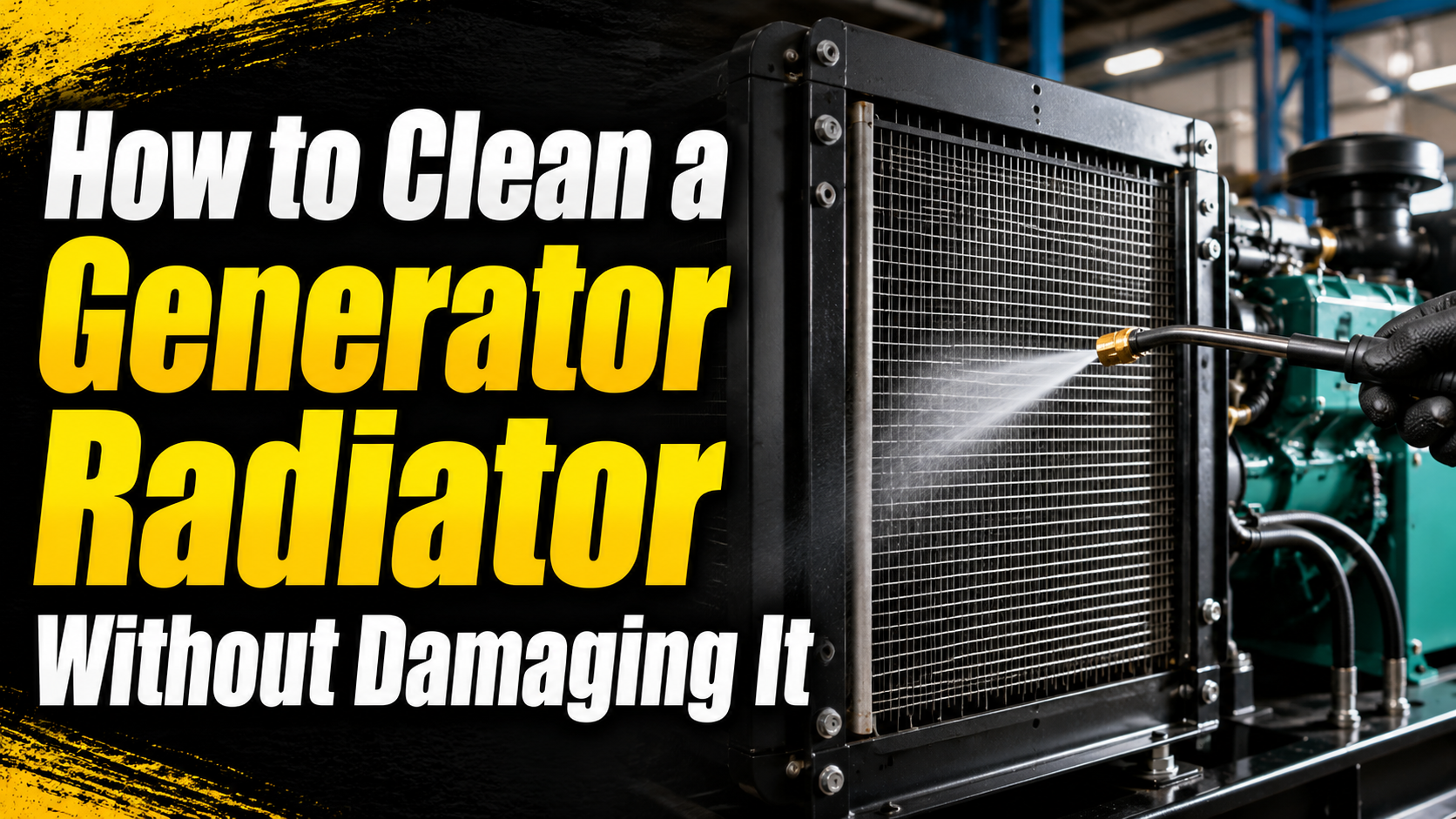
Over time, airborne debris, insects, dust, and oil naturally accumulate within generator enclosures. As that grime accumulates on your generator radiator, airflow suffers first, and insufficient airflow means the engine can’t cool, and the inevitable result is an engine shutdown due to overheating.
But there’s a catch: if you blast the dirt off too hard, you will bend the delicate fins and incur unnecessary repair costs. This guide teaches you how to clean the generator radiator both inside and out the correct way, without destroying its performance or electrical components.
In this article by Huaquan, you will learn the safest step-by-step methods to remove dust, oil, and debris from your generator radiator without bending the delicate cooling fins or damaging sensitive electrical components.
What Does a Generator Radiator Do?
Imagine the radiator as a heat exchanger working overtime, pulling combustion heat out of the engine coolant. It relies on the cooling fan to force air over it, and it’s not the only one responsible for cooling; there’s a water pump, a thermostat, and coolant involved as well. If debris gets stuck in the fins, then the engine will not be able to dump heat, and it will shut down quickly.
Signs a Generator Radiator Needs Cleaning
Don’t wait till it fails entirely. Watch for these:
- Higher than normal operating temperatures.
- Overheating shutdowns under heavy electrical load.
- Dust, mud, or debris packed between the aluminum fins.
- Frequent high-temperature alarms on the control panel.
- A significant reduction in airflow exiting the enclosure.
- Coolant boiling or spilling from the expansion tank.
- The generator actively derating and reducing its output.
- A sticky oil film coating the radiator surface.
How Often Should a Generator Radiator Be Cleaned?
Honestly, there’s no fixed schedule; it depends on the application, type, and intensity of service. A prime-power generator at a dusty construction site, a mine, or a farm may require weekly cleaning, while a standby unit at an indoor site may only need a checkup once a year. Either way, conduct seasonal checks, as pollen, snow, and falling leaves will wreak havoc on the system too.
Tools and Cleaning Materials You Will Need
Gather these first:
- Use a soft bristle brush and vacuum cleaner.
- Low-pressure compressed air.
- Garden hose with a low pressure nozzle.
- Safe on aluminum, radiator-safe, non-corrosive cleaner.
- Spray bottle to use chemical cleaner.
- Fin comb used for straightening bent fins.
- Plastic bags and tape for protection of electrical components.
- Gloves, safety goggles and a powerful flashlight.
Safety Steps Before Cleaning
Do not clean a generator while it is running or hot.
- Turn off and cool down: Allow the unit to completely cool down.
- Turn off auto start: Rotate controller to “Off.”
- Disconnect or isolate batteries: Prevents accidentally cranking.
- Cover the electronics: Use plastic to cover the alternator, controller, sensors and wiring.
- Avoid being near the fan: Avoid getting in the way of the blades and belts.
- If working indoors with chemicals, don’t forget to ensure ventilation: Continue to ventilate the space.
How to Clean the Outside of a Generator Radiator
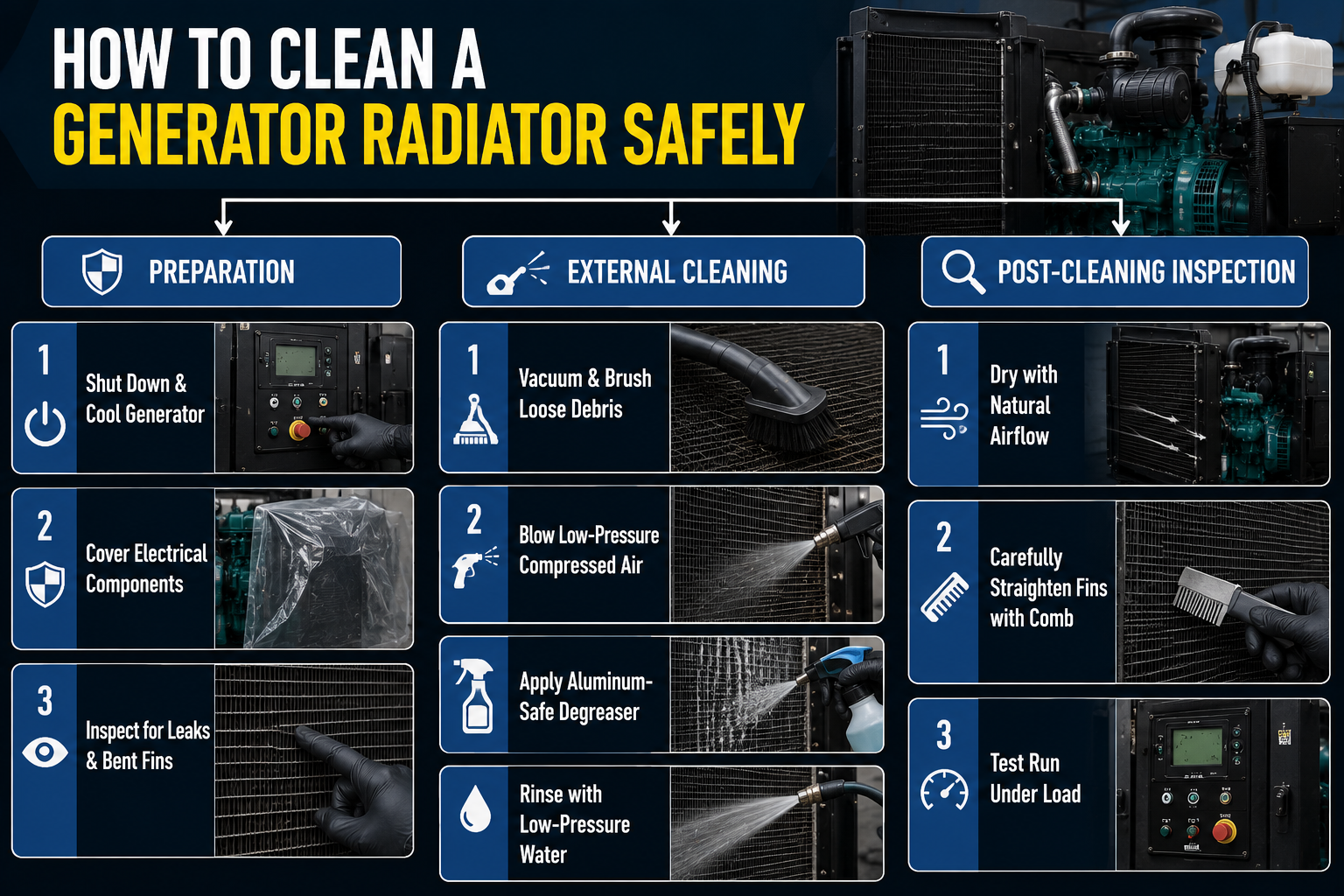
Step 1: Inspect the Radiator
Inspect for dust, insects, build-up of oil, corrosion and bent fins with a flashlight. Keep an eye out for any leaks in the coolant of the radiator too; if it is leaking, it should be replaced, not cleaned.
Step 2: Remove Loose Debris
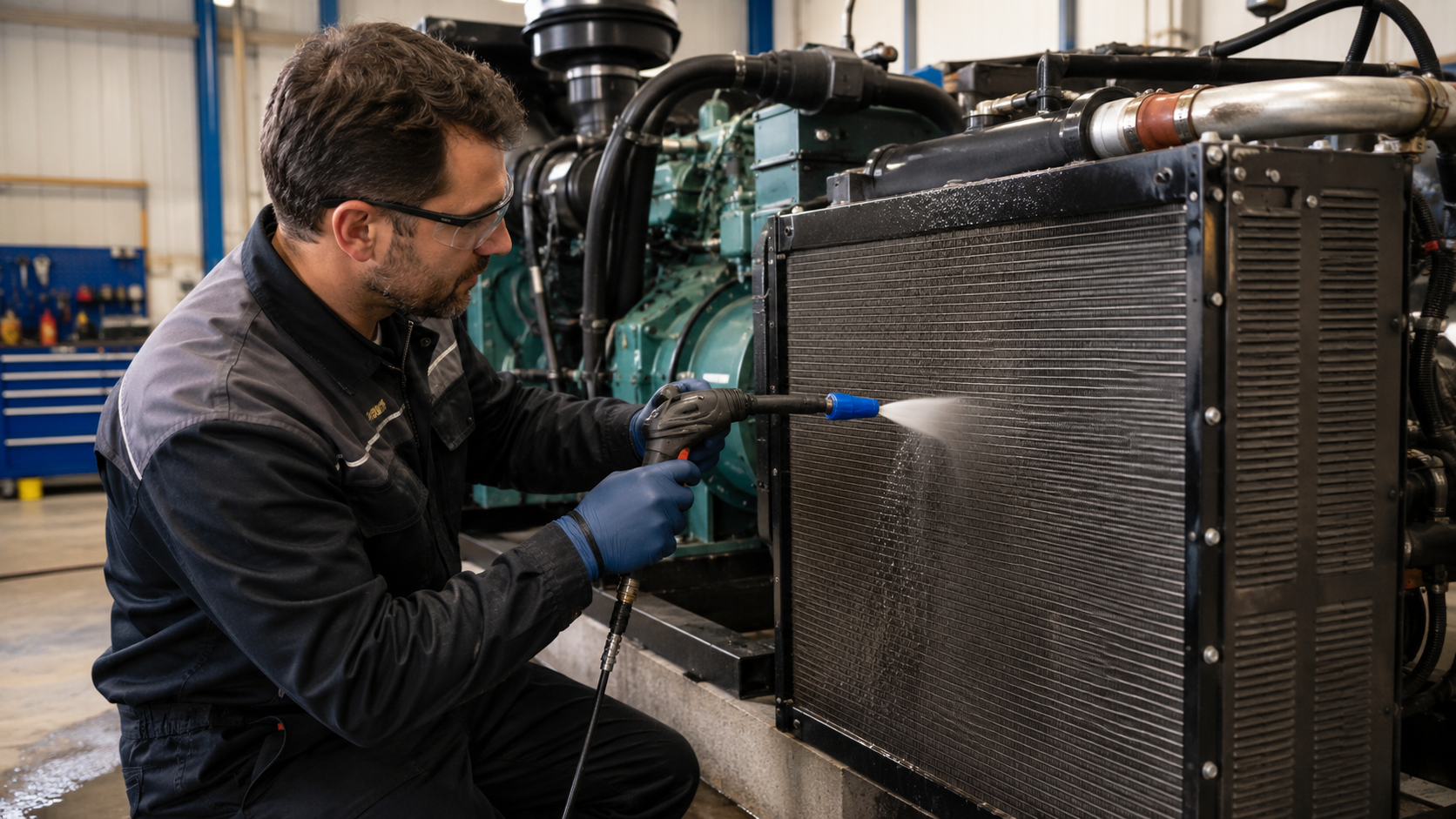
Vacuum and brush with soft bristles parallel to the fins, up and down. Avoid scrubbing across the thin aluminum.
Step 3: Use Low-Pressure Compressed Air
Direct air from the clean side to the dirty side (usually to the outside of the engine). Never angle the nozzle, as angled air will fold the fins quickly and keep the nozzle at a safe distance.
Step 4: Apply a Radiator-Safe Cleaner
Use a cleaner that is marked as being safe for use on aluminum, mix at the label’s ratio and spray on. Allow it to sit for 5-10 minutes to loosen the dirt, but do not let it sit too long, as it may dry on the surface.
Step 5: Rinse With Low-Pressure Water
Use a garden hose to rinse with a gentle flow, if possible against the normal airflow direction, so dirt flows out the way it came in. Do not allow water to come in contact with the alternator and electrical components, and completely drain the radiator.
Step 6: Dry and Inspect the Radiator
Allow drying by natural air, or if time is critical, use low-pressure air. Re-examine with the flashlight to see if there are blocked spots or damage.
How to Clean Oil and Grease From a Generator Radiator
Oil attracts dust. If there is a leak, either a valve cover or a breather tube, repair the source before cleaning. Then use a radiator-safe degreaser and avoid harsh acidic solvents, because they will eat through aluminum. Spray it on, hold it in place, thoroughly rinse it, and repeat, but do not put it under high pressure.
Can You Pressure-Wash a Generator Radiator?
Typical pressure washers are dangerous. They flatten fins quickly, obstruct airflow, and may punch holes in the coolant tubes, and high-pressure spray can destroy surrounding electrical equipment. Professional wands rated under 1000 PSI and featuring a wide-angle tip can be used by experts. Otherwise, a garden hose is the safer option.
How to Straighten Bent Radiator Fins
Got flattened fins? Go for a fin comb that’s right for your fins-per-inch count. Insert it into an undamaged section and pull smoothly through the bent section, in small increments so as not to puncture a tube. If over 20 percent of the fins are crushed or brittle, it’s likely you will be replacing the entire radiator (engine cooling).
How to Flush the Inside of a Generator Radiator
Outside cleaning removes dust; flushing removes scale. If you notice signs of internal scaling, poor heat transfer, or rusty antifreeze, it’s time to clean the inside too:
- Draining the old coolant completely.
- Flushing the system with distilled water or an approved chemical flush.
- Refilling with the correct heavy-duty coolant.
- Carefully bleeding trapped air from the system. If heavily calcified, send it out for professional chemical vat cleaning instead.
Generator Radiator Cleaning Mistakes to Avoid
- Using high-pressure water or compressed air too close.
- Spraying directly onto digital controllers and electrical connections.
- Reaching for highly acidic or alkaline household cleaners.
- Scrubbing fins aggressively side to side.
- Cleaning while the engine block is still hot, causing rapid contraction and cracking.
- Forgetting to disable the automatic start system first.
- Ignoring the oil contamination source, which guarantees it gets dirty again.
What to Check After Cleaning the Radiator
Perform this before putting the unit back into service:
- Coolant level in the expansion tank.
- Condition of the radiator cap seal.
- Hoses and clamps for leaks.
- Cooling fan and fan guards.
- Drive belts for tension and wear.
- Louvered air intake and exhaust vents.
- Operating temperature under a real load.
Frequently Asked Questions
Can I use water to clean a generator radiator?
Yes. Cleaner and dust can be easily washed away with a standard garden hose and gentle flow.
What pressure is safe for radiator cleaning?
Use low pressure. Never use pressure washers; anything more than 1,000 PSI will bend aluminum fins easily!
Can compressed air damage radiator fins?
Yes. The fins will fold flat if the nozzle is held too close or sprayed at an angle. Spray directly through the core, keeping a distance.
Which direction should I clean the radiator?
Clean from dirty, blowing air or water from the engine side outward toward the exhaust louver.
Conclusion
The basis of reliable backup power is a clean generator radiator. Apply soft techniques, use chemicals that are safe for aluminum, and take care of your fins and nearby electrical components, and you’ll increase the life of your generator by a long, long way. If the high temperature alarms keep sounding after a thorough cleaning, have a professional check it in order to check for deeper internal leaks, thermostat failures or any existing overheating problems.
Contact the Huaquan team today for professional cooling system maintenance, safe radiator repairs, and comprehensive generator cleaning services.