Industrial operations across the United Kingdom face a critical question: what happens when the grid fails? For factories running CNC production lines, commercial facilities with cold storage, and manufacturing plants with 24-hour production schedules, the answer determines whether the quarter’s output target is met or missed. This page presents the complete technical, logistical, and commercial picture for deploying a 500kW diesel generator in the UK, from factory-floor specifications to port-side delivery.

Project Overview
| Parameter | Detail |
|---|---|
| Country | United Kingdom |
| Application Scenarios | Manufacturing plants, commercial facilities, warehouses, data centers, construction sites |
| Power Requirement | 500kW prime / 550kW standby |
| Frequency | 50Hz (factory pre-configured) |
| Voltage | 400V/230V three-phase with neutral |
| Generator Type | Diesel engine, brushless AC alternator, silent canopy enclosed |
| Controller | Deep Sea DSE8610 with CAN bus and IoT module |
| Compliance | CE, EU Stage V, ISO 8528, IEC 60034, UKCA |

Customer Challenge
Manufacturing operators across the UK contend with grid infrastructure that, while generally reliable, presents genuine risk to production continuity. A voltage sag lasting under two seconds is enough to trip CNC controllers mid-cycle, scrapping machined components and forcing line restarts that consume forty-five minutes of productive time. In regions served by ageing substations (the Midlands industrial corridor, outer Glasgow, and satellite towns around Manchester) transient interruptions occur often enough that production managers budget for them quarterly.
The financial arithmetic is straightforward. A medium-sized factory running three shifts at £3,500 per hour of output loses £52,500 for a single four-hour outage. Add material waste from interrupted batch processes and overtime costs to recover schedule position, and the true figure often exceeds £75,000 per incident. For facilities with continuous thermal processes (ceramics kilns, heat-treatment furnaces, injection-moulding lines) the damage extends beyond lost output to equipment itself, where uncontrolled cooldown causes refractory damage requiring kiln rebuilds.
The customer’s operational requirement was unambiguous: a backup power system that transfers load in under ten seconds, supplies clean voltage to protect automation equipment, and operates unattended through extended outages without operator intervention.
Why Choose a 500kW Diesel Generator
Load Capacity
A 500kW prime-rated generator delivers approximately 400kW of usable continuous load, sufficient to power an entire medium-sized manufacturing facility. This covers production machinery (CNC lathes, stamping presses, injection moulders), facility systems (HVAC, compressed air, lighting), and IT infrastructure (server rooms, quality-control workstations) simultaneously. The 550kW standby rating provides surge headroom for motor starts, where induction loads draw three to seven times their running current during the first half-second of startup.
Fuel Efficiency
At 75% prime load (the optimal operating band for diesel generators) the engine consumes roughly 105 litres per hour. At UK industrial diesel prices of approximately £1.40 per litre (bulk-delivered red diesel), this translates to an operating cost of £147 per hour. For facilities that experience two to three outages annually totalling 30 hours of generator operation, annual fuel cost sits between £4,400 and £6,600. The engine’s electronic common-rail injection system maintains this efficiency curve across the 50-85% load band, unlike older mechanical-injection designs that fall off sharply below 70% load.
Runtime Capability
The base fuel tank provides 8-10 hours of operation at 75% load. For extended-run applications, external bulk tanks (2,000L, 5,000L, or 10,000L) extend runtime to 24, 60, or 120 hours respectively. The Huaquan Cloud IoT platform monitors fuel level in real time and sends refuelling alerts when the tank drops below a user-defined threshold, removing the need for manual dipstick checks.
ATS Integration
Every Huaquan 500kW generator ships with a matched Automatic Transfer Switch. The ATS monitors utility voltage on all three phases, detects interruption within two seconds, sends a start signal to the generator, and transfers building load once the generator reaches stable voltage and frequency, typically within 8-10 seconds of grid failure. When utility power returns, the ATS confirms stability for a user-configurable period (default: five minutes) before transferring load back and initiating a cooldown cycle on the generator. The entire sequence requires no human involvement.

Remote Monitoring
The Huaquan Cloud IoT module (standard equipment on every generator) streams forty-two operating parameters to a web dashboard and mobile app. Users monitor real-time voltage, current, frequency, power factor, fuel level, coolant temperature, oil pressure, and battery voltage from anywhere with an internet connection. The platform generates automatic alerts for parameter deviations and maintenance interval reminders. Multi-site fleet operators view all generators on a single map interface. No annual licence fees apply.
Technical Specification
| Parameter | Specification |
|---|---|
| Prime Power Rating | 500 kW (625 kVA) |
| Standby Power Rating | 550 kW (687 kVA) |
| Frequency | 50 Hz |
| Voltage | 400V/230V, 3-phase 4-wire with neutral |
| Power Factor | 0.8 lagging |
| Engine Brand | Cummins / Perkins / MTU (configure to order) |
| Engine Model | KTA19-G4 (Cummins) / 2806A-E18TAG2 (Perkins) |
| Alternator | Stamford S5L1D-C4 / Marathon 574RSL4020, brushless, single-bearing |
| Voltage Regulation | ±0.5% (PMG excited) |
| Controller | Deep Sea DSE8610 MKII with 7-inch touchscreen |
| Fuel Tank (Base) | 1,000L integral sub-base tank (8-10 hours at 75% load) |
| Fuel Consumption @ 75% Load | ~105 L/hour |
| Noise Level | ≤72 dB(A) at 7 metres (silent canopy) |
| Enclosure Protection | IP54 weatherproof galvanised steel with rock wool acoustic lining |
| Cooling System | 50°C ambient-rated radiator with thermostatic fan control |
| Starting System | 24V DC electric start with battery charger and jacket water heater |
| Dimensions (L x W x H) | 5,200 x 2,200 x 2,500 mm (silent canopy) |
| Dry Weight | ~7,800 kg |
| ATS | 1,250A 4-pole motorised transfer switch (included) |
| Exhaust Emissions | EU Stage V compliant |
Final specifications confirmed at order stage with factory test report. Contact Huaquan for detailed engineering drawings and single-line diagrams.
UK Applications
Manufacturing Plants
The Midlands and North West industrial zones house thousands of manufacturing operations running CNC machining centres, automated assembly lines, and continuous-process equipment. A 500kW generator covers electrical loads for facilities up to approximately 4,000 square metres while maintaining voltage stability within ±0.5%, critical for CNC controllers that fault on voltage excursions beyond ±3%. The PMG excitation system ensures this stability even during large motor starts, preventing the voltage dip that causes controller reboots on lesser generators.
Warehouse and Logistics Centres
The UK logistics sector (concentrated along the M1, M6, and M62 corridors) operates chilled and frozen storage, automated sortation, and 24-hour dispatch. Power interruption in cold storage means product loss within hours. A 500kW generator sized for 75% continuous load handles racking automation, conveyor systems, and refrigeration compressors simultaneously. The power management controller optionally implements load shedding, prioritising cold storage compressors over non-critical loads like external lighting during extended outages.
Data Centres
Colocation and enterprise data centres in the London, Slough, and Manchester clusters require generator backup as a condition of their Tier certification. A 500kW generator supports approximately 400kW of IT load after accounting for UPS losses and cooling overhead, sufficient for 80-120 racks of standard-density equipment. N+1 parallel configurations using DSE8610 controllers with CAN bus synchronisation provide redundancy for facilities that cannot accept single-point-of-failure risk on the generator itself.
Commercial Buildings
Office towers, shopping centres, and mixed-use developments in London, Birmingham, and Manchester increasingly specify standby generation for life-safety systems (fire pumps, evacuation lifts, smoke extraction) and business continuity (server rooms, trading floors, refrigerated retail displays). A 500kW unit sized to building code requirements provides full coverage for these essential loads, with ATS transfer times under ten seconds well within the BS 9999 and BS 8519 requirements for life-safety power supplies.
Construction Sites
Temporary power for UK construction projects (high-rise residential in Manchester and Leeds, infrastructure works along HS2 corridors) often exceeds the capacity of available grid connections. A mobile 500kW generator on a road-towable trailer provides site power for tower cranes, concrete pumps, site accommodation, and tool charging stations. The silent canopy satisfies the Section 61 noise consent requirements typically imposed by local authorities on urban construction sites.
Case Study: 500kW Generator for a Birmingham Manufacturing Plant
Customer Background
Precision Components Ltd (name anonymised at client request) operates a 3,200-square-metre machining facility in the Tyseley industrial area of Birmingham. The plant runs two shifts producing drivetrain components for automotive Tier 1 suppliers, with twenty-four CNC turning centres, eight five-axis machining centres, coordinate measuring machines in the quality lab, and a central coolant filtration system serving all machines. Annual revenue is approximately £28 million. The facility is fed by a 1960s-era 11kV substation shared with three neighbouring industrial units.
The Problem
Over the eighteen months preceding the project, the plant recorded nine unplanned production stoppages caused by grid disturbances. Six were momentary voltage sags (under two seconds) that tripped CNC controllers but did not cause a full blackout. Three were extended outages, two lasting three to four hours and one lasting eleven hours during a winter storm in December. The cumulative cost was estimated at £340,000 in scrapped components, missed delivery slots, and overtime recovery shifts. Insurance compensation covered only 40% of this loss. The worst incident resulted in a tier-1 customer imposing a six-month probationary period on the supply contract, threatening £4.2 million in annual business.
Requirements
The engineering team specified five non-negotiable requirements. First: automatic transfer within ten seconds of grid failure, triggered by voltage monitoring on all three phases. Second: voltage regulation of ±1% or better under stepped load changes, because the CNC controllers’ internal power supplies fault at ±3% excursions. Third: sufficient capacity to carry the entire production floor plus essential facility loads (compressors, coolant pumps, and server room) with margin for the largest motor start. Fourth: remote monitoring that would alert the maintenance supervisor’s phone regardless of time of day. Fifth: compliance with UKCA marking and all applicable British Standards for fixed standby generation installations.
Solution Delivered
Huaquan Power supplied a 500kW KMS series generator configured as follows: Cummins KTA19-G4 diesel engine, Stamford S5L1D-C4 PMG alternator, Deep Sea DSE8610 MKII controller with integrated IoT module, 1,250A four-pole motorised ATS, IP54 weatherproof silent enclosure, 2,000L sub-base fuel tank (twenty hours at 75% load), jacket water heater for cold-start reliability, and a factory load-bank test certificate documenting performance at 0%, 25%, 50%, 75%, 100%, and 110% rated load. The unit was pre-configured at Huaquan’s factory in China for 400V/230V 50Hz output with UK-standard neutral-earth bonding.

Commissioning
The generator arrived at Southampton port seven weeks after order confirmation and was transported by low-loader to the Birmingham site. A local electrical contractor (coordinated by Huaquan’s project manager) completed the installation over four working days: reinforced concrete plinth with anti-vibration mounts, ATS integration into the existing main switchboard, underground fuel line to the bulk tank, and exhaust routing through an acoustic silencer to a discharge point seven metres from the building. Commissioning testing included a four-hour full-load run using a resistive load bank, twenty automatic start/stop cycles initiated by simulated grid failure, and verification of the IoT dashboard on the maintenance manager’s phone. The entire process from order to operational handover took sixty-two days.
Results
In the fourteen months since commissioning, the generator has activated automatically on seven occasions , five voltage-sag events where the ATS detected phase imbalance and one two-hour outage following a substation transformer fault. In every instance the transfer was completed in under nine seconds and production continued without interruption. The machine shop supervisor reports that operators now notice grid events only because the factory lights flicker briefly before the generator assumes load, CNC operations continue without missing a cycle. The insurance underwriter reduced the plant’s business interruption premium by 22% following the installation, saving roughly £8,400 annually. The tier-1 customer’s probationary condition was lifted at the six-month review after documented proof of uninterrupted production through two grid events.
Frequently Asked Questions
What is the fuel consumption of a 500kW diesel generator at various loads?
At 100% prime load (500kW), fuel consumption is approximately 131 litres per hour with a Cummins KTA19-G4 engine. At 75% load (375kW), the engine consumes 105 L/hour. At 50% load (250kW), consumption drops to 68-72 L/hour, roughly 55% of the full-load rate due to the engine’s efficiency characteristics. For a UK facility using red diesel at £1.40 per litre and running the generator for 30 outage hours per year at 75% load, the annual fuel bill is approximately £4,410. The Huaquan Cloud IoT platform logs actual fuel consumption per run event, allowing precise cost allocation. External bulk fuel tanks (2,000-10,000 litres) with ultrasonic level sensors extend runtime and provide automated refuelling alerts when the tank drops below a user-configurable threshold.
What size facility can a 500kW generator support?
A 500kW prime generator supports approximately 400kW of continuous electrical load after applying an 80% utilisation factor. In a manufacturing context, this covers a facility of roughly 3,000-4,000 square metres with mixed CNC and conventional machinery. For warehouses, load density is lower and the same generator handles 6,000-8,000 square metres of chilled storage with conveyor and automation systems. The critical sizing factor is motor starting: the largest single motor on site determines surge capacity requirement. A 500kW generator handles a single motor start of up to 150kW (drawing 900kVA momentarily) while carrying 250kW of base load. For facilities with multiple large motors, our engineering team performs a free load-step analysis using your equipment list and motor nameplate data.
Can Huaquan supply and deliver to the United Kingdom?
Huaquan Power has supplied generators to UK customers since 2019, with installations in Birmingham, Manchester, Leeds, Glasgow, and the London orbital region. Our UK logistics chain is well established: generators ship from Shanghai or Ningbo port to Southampton, Felixstowe, or London Gateway, with transit times of 28-35 days. We provide full customs documentation, commercial invoice, packing list, bill of lading, certificate of origin (Form A), and UKCA declaration of conformity. Our freight forwarder clears customs on arrival and arranges onward transport to site. For customers preferring a UK-based point of contact, we coordinate through a British engineering consultancy that handles site surveys, installation oversight, and local regulatory compliance including DNO notification where required.
What is the delivery lead time for a 500kW generator to the UK?
Standard lead time is 15-25 working days for production after order confirmation and deposit receipt. Sea freight to Southampton or Felixstowe adds 28-35 days depending on routing and port congestion. Customs clearance and onward transport to site typically requires 5-7 working days. Total door-to-door timeline: 48-67 days. For urgent requirements, air freight delivers the generator to London Heathrow or Birmingham Airport in 5-7 days at an additional cost. The generator is partially disassembled (canopy removed, fluids drained) for air transport and reassembled on site. We also maintain a limited stock of 500kW units in bonded warehouse in Rotterdam, which can reach UK sites in 10-14 days, contact our sales team for current European stock availability.
What certifications and compliance documentation does Huaquan provide for UK installations?
Every generator ships with a comprehensive documentation package: ISO 9001 and ISO 14001 factory quality certificates, CE Declaration of Conformity under the Machinery Directive 2006/42/EC and EMC Directive 2014/30/EU, UKCA Declaration of Conformity under the UK equivalent regulations for the GB market, type test certificate to ISO 8528-5:2022 (governing generator set performance), factory load-bank test report at 0%-110% load in 25% increments, alternator winding insulation test report, protective device coordination study, wiring and single-line diagrams, and the full user and maintenance manual in English. For UK grid connection, we provide a G99 compliance statement covering voltage, frequency, and protection settings required by the Distribution Network Operator for parallel-with-grid or standby-to-grid configurations.
What are the installation requirements for a 500kW generator at a UK site?
A proper generator installation requires: (1) a reinforced concrete plinth, typically 5,500mm x 2,500mm x 250mm deep with steel reinforcement, designed to support the generator’s 7,800 kg dry weight plus dynamic loading; (2) anti-vibration spring mounts between the generator base frame and plinth to isolate vibration transfer into the building structure; (3) an exhaust system routed to a discharge point at least three metres from any air intake, window, or door, with an industrial silencer reducing noise at the property boundary below the local authority’s permitted level; (4) underground or overhead cable ducting between the generator, ATS, and main switchboard; (5) a bunded fuel storage area with secondary containment meeting UK Oil Storage Regulations; and (6) earth electrode installation with resistance below one ohm, tested and certified. Installation typically requires four to seven working days with a qualified electrical contractor. Huaquan provides full installation drawings and offers remote commissioning support via video call.
What maintenance schedule is required for a 500kW standby generator?
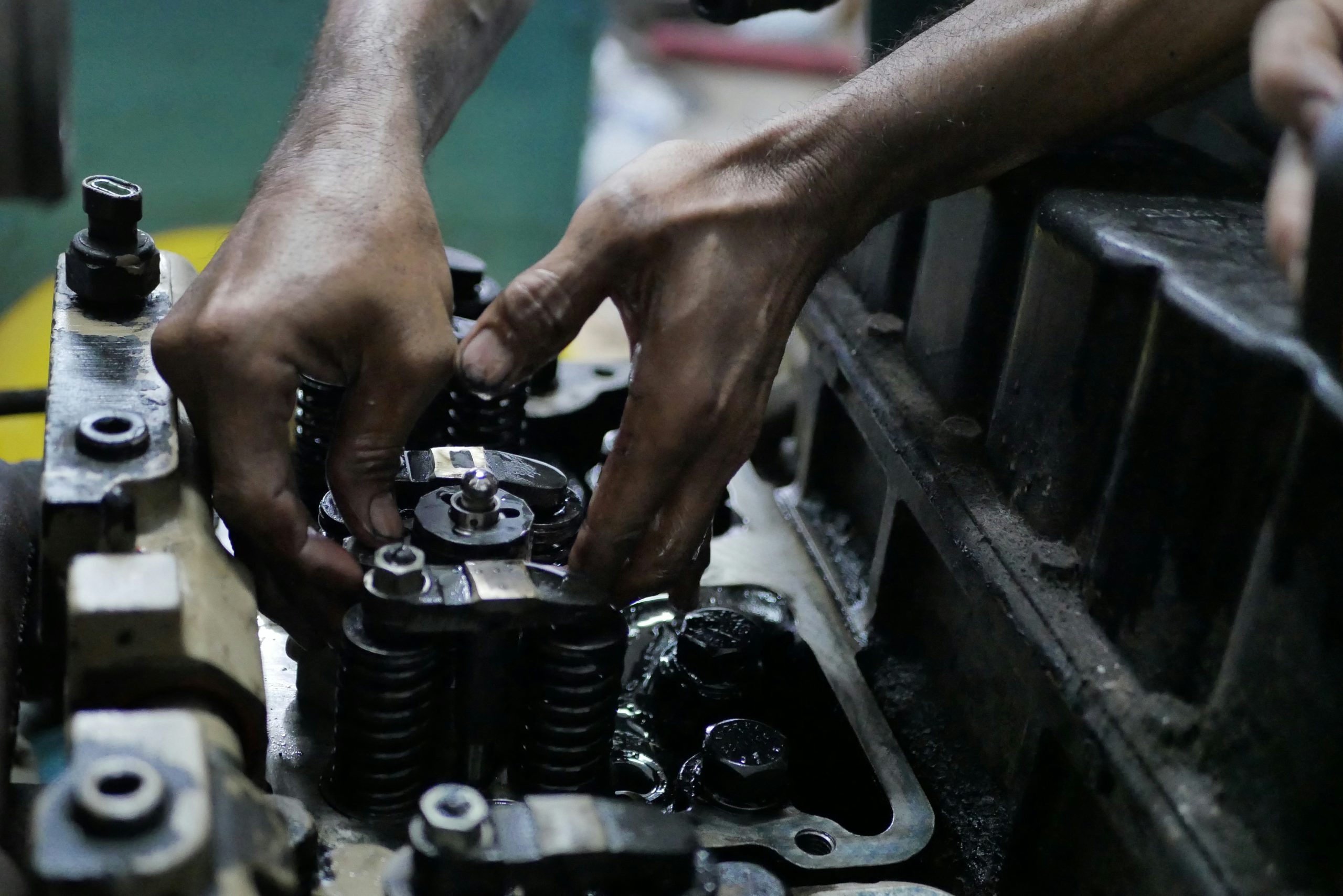
The maintenance programme is structured in four tiers. Weekly: visual inspection of the generator enclosure for damage or fluid leaks, check coolant and oil levels on the dipstick, verify battery charger operation and terminal voltage (should read 27.2-27.6V on a 24V system), and confirm the controller display shows no active alarms. Every 250 operating hours or six months: engine oil and filter change using SAE 15W-40 CJ-4 diesel engine oil, fuel filter replacement, air filter inspection and cleaning or replacement, coolant concentration test, fan belt tension check, and a thirty-minute loaded exercise run. Every 500 hours or twelve months: all of the above plus fuel-water separator drain, valve clearance inspection and adjustment, coolant system flush and refill with 50/50 ethylene glycol mix, crankcase breather replacement, and alternator winding insulation resistance test. Every 2,000 hours: all of the above plus injector testing and replacement as needed, turbocharger inspection, alternator bearing replacement, and cooling system pressure test. The Huaquan Cloud IoT platform tracks all intervals automatically and sends reminders by email and push notification.
Can I monitor the generator remotely from the UK?
The Huaquan Cloud IoT module is standard equipment, not an optional add-on. It connects via 4G cellular (with Ethernet fallback) and streams to a secure cloud platform accessible through any web browser or the iOS/Android mobile app. The dashboard displays real-time values for all critical parameters: line-to-line and line-to-neutral voltage on each phase, current per phase, frequency, active and reactive power, power factor, engine speed, coolant temperature, oil pressure, fuel level with estimated remaining runtime, battery voltage, and ambient temperature. Historical data is stored for 365 days with export to CSV for compliance reporting. Alerting is fully configurable: users set thresholds for any parameter and choose between push notification, SMS, or email alert channels. The platform supports multi-site fleet management with a map view showing generator status across all locations. Scheduled weekly exercise runs can be configured and monitored remotely. There is no annual licence fee, no per-device charge, and no data cap.
What voltage and frequency configuration is used for UK generators?
UK mains voltage is nominally 400V line-to-line, 230V line-to-neutral, at 50Hz, the harmonised European standard (BS EN 50160). Huaquan generators for the UK market are factory-configured to these exact parameters. The AVR (Automatic Voltage Regulator) is set to deliver 400V ±0.5% under steady-state load, with transient deviation limited to -15% and recovery within 0.5 seconds during a 50% load step. Frequency is governed to 50Hz ±0.25Hz steady-state. For installations where the generator must parallel with the grid during soft transfer, voltage and frequency matching is handled automatically by the DSE8610 controller’s synchronisation module. The neutral-earth bonding arrangement follows the UK TN-C-S configuration: neutral bonded to earth at the generator frame with a removable link for sites where the main switchboard provides the single bonding point.
Can multiple 500kW generators be paralleled for larger loads or redundancy?
Parallel operation supports two distinct requirements: capacity scaling and redundancy. For capacity scaling, Huaquan synchronises up to sixteen generators on a common bus using the DSE8610 MKII controller’s CAN bus communication protocol. Each generator’s controller measures bus voltage and frequency and adjusts its own output to match before closing its circuit breaker, the synchronisation window is typically ±0.1Hz and ±5V. Load sharing is managed in isochronous mode, where all units share active and reactive load proportionally to their rating. For N+1 redundancy (where one additional generator is provided beyond the capacity requirement) if any unit fails or is taken offline for maintenance, the remaining units automatically rebalance the load. The system does not require a master controller; each DSE8610 operates autonomously. Typical UK applications include data centres requiring Tier III redundancy, hospitals with life-safety loads, and multi-building commercial estates with a central energy centre.
What noise levels can be expected from a 500kW generator and do they meet UK regulations?
The standard Huaquan silent canopy achieves 72 dB(A) at 7 metres, comparable to a busy street or a vacuum cleaner at close range. The super-silent enclosure option reduces this to 63 dB(A) at 7 metres, roughly equivalent to normal conversation level. At the typical UK property boundary distance of 10-15 metres, the standard enclosure registers 62-65 dB(A) and the super-silent enclosure registers 53-56 dB(A). UK noise regulation for fixed plant falls under the Environmental Protection Act 1990 and is enforced by the local authority’s environmental health department. Typical daytime limits at residential boundaries are 45-50 dB(A) above background, and many authorities impose a 5 dB(A) penalty above background for tonal or impulsive noise. For urban sites where background noise is 40-45 dB(A), a super-silent enclosure plus an acoustic barrier wall or exhaust silencer upgrade typically achieves compliance. Huaquan’s engineering team reviews your site plan and local authority requirements during the quotation stage and can specify the enclosure grade, exhaust silencer rating, and acoustic louvre configuration needed.
What warranty and after-sales support does Huaquan provide for UK installations?
Standard warranty is twelve months or 2,000 operating hours from commissioning, whichever occurs first. Coverage includes parts and factory labour for manufacturing defects in the engine, alternator, controller, and fabricated steelwork. The warranty is global and not restricted to country of installation. Extended warranty packages for twenty-four months or 4,000 hours are available at order stage. Spare parts for UK customers ship from Huaquan’s central warehouse in China via DHL or FedEx priority, with 48-72 hour delivery to any UK address. Critical spares (controllers, AVR modules, sensors, and gasket kits) are recommended for on-site stock and priced at 15-20% discount when ordered with the generator. Technical support is available by phone and email in English during UK business hours (8:00-18:00 GMT), with out-of-hours emergency support for generators under extended warranty. Remote diagnostics via the Huaquan Cloud IoT platform allow our engineers to view generator parameters in real time during fault investigation, resolving 70-80% of issues without requiring a site visit.
UK and EU Compliance
Every Huaquan generator shipped to the United Kingdom carries full compliance documentation for both UK and EU regulatory frameworks. The unit is CE marked under the Machinery Directive 2006/42/EC, the Electromagnetic Compatibility Directive 2014/30/EU, and the Low Voltage Directive 2014/35/EU. For the GB market specifically, UKCA marking is provided under the equivalent UK Statutory Instruments, with full technical file documentation supporting the declaration. Emissions compliance meets EU Stage V limits for non-road mobile machinery engines in the 130-560kW power band, using electronic common-rail fuel injection, exhaust gas recirculation, diesel oxidation catalyst, and selective catalytic reduction where applicable. Generator set performance is validated to ISO 8528-5:2022 covering steady-state voltage and frequency regulation, transient response, and recovery time. The alternator conforms to IEC 60034-1 (rating and performance) and IEC 60034-22 (application in generator sets), with insulation Class H rated for 125°C temperature rise and tropicalised windings with epoxy-varnish impregnation.

Shipping and Delivery to the United Kingdom
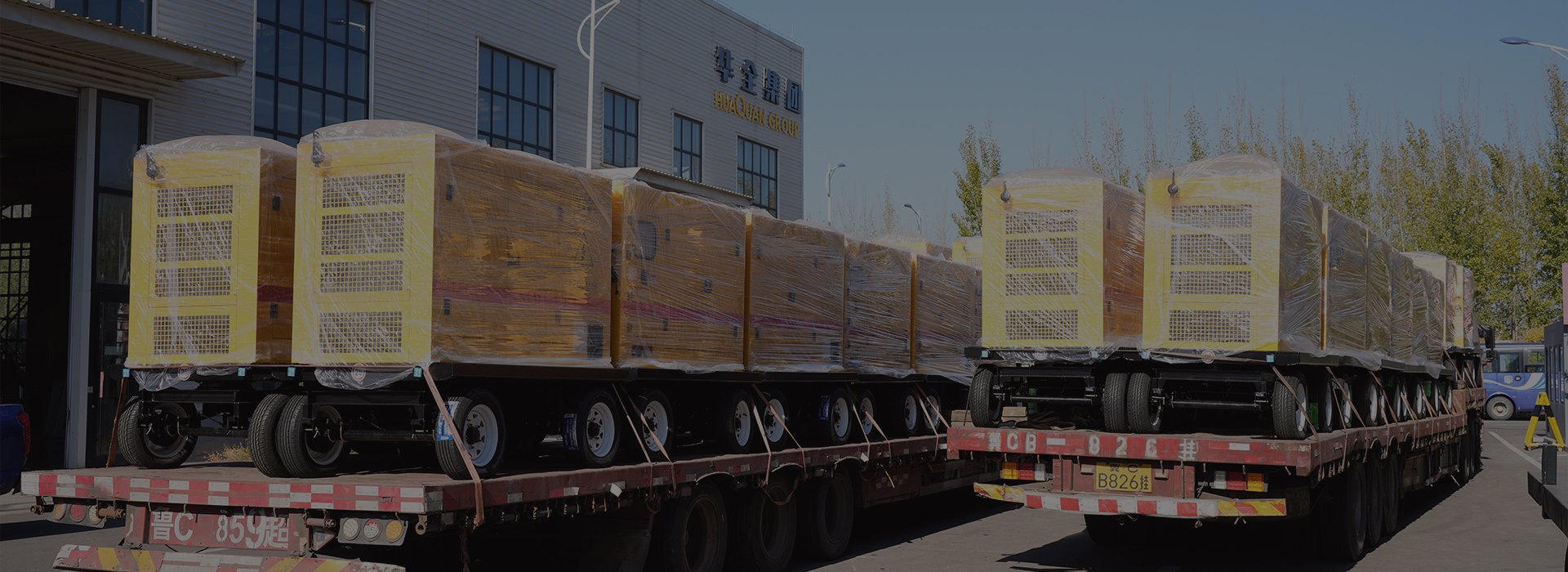
Huaquan generators bound for the UK depart from Shanghai or Ningbo port in standard 40-foot high-cube containers or on flat-rack containers for oversized units. The sea route passes through the South China Sea, the Malacca Strait, the Indian Ocean, the Suez Canal, and the Mediterranean before reaching Northern European waters, total transit time is 28-35 days to Southampton or Felixstowe. The generator is secured in the container with steel strapping over rubber isolation pads, and the enclosure is shrink-wrapped for moisture protection. Fuel and oil are drained prior to shipping for hazardous-goods compliance.
Upon arrival, our nominated customs broker clears the shipment using the provided documentation package. UK import duty on diesel generator sets classified under HS code 8502.13.40 (generating sets with compression-ignition engines, 375-750kVA output) is 0% under the UK Global Tariff. VAT at 20% applies and is recoverable for VAT-registered businesses. Clearance and port handling add 5-7 working days before the generator is released for onward transport. The final leg from port to site is arranged by low-loader truck, the generator’s 7.8-tonne weight and 5.2-metre length are within standard heavy-haulage limits. Offloading at site requires a mobile crane or a telehandler with 10-tonne minimum lift capacity. Huaquan’s logistics team provides a detailed delivery schedule with tracking at each stage, from factory dispatch to port arrival and final delivery.

Why UK Buyers Choose Huaquan Power
Six commercial and technical factors distinguish Huaquan from local UK generator distributors and other Chinese manufacturers:
Factory-direct cost structure. Huaquan sells directly from its manufacturing facility in Yangzhou, China, eliminating two to three layers of distributor margin. UK buyers typically pay 20-35% less than equivalent locally stocked units of the same specification, a difference of £15,000-£30,000 on a 500kW generator. This saving funds the full installation, fuel storage, and first-year maintenance budget with headroom remaining.
Pre-configured for the UK grid. Every generator is set up at the factory for 400V/230V 50Hz output with UK-standard neutral-earth bonding. The ATS is calibrated to UK voltage and frequency tolerance bands. There is no field reconfiguration required, the unit connects directly to a UK switchboard without voltage adaptation transformers or control system changes.
Proven UK track record. Huaquan generators are installed and operating at manufacturing plants, commercial facilities, and infrastructure sites across England and Scotland. Reference contacts are available for qualified buyers, and our UK engineering partner can arrange site visits to operational installations.
Full compliance documentation. The documentation package covers UKCA, CE, ISO 8528, IEC 60034, EU Stage V emissions, and G99 grid connection requirements. This documentation is ready before the container departs, so import clearance and DNO notification proceed without delays.
IoT monitoring as standard. The Huaquan Cloud IoT platform (a £2,000-£4,000 option on competitor units) is standard equipment at no additional cost. UK customers use it for generator fleet management, maintenance scheduling, fuel consumption tracking, and automated alerting. No licence fees, no data caps.
Responsive support in UK time zone. English-language technical support is available by phone and email during 08:00-18:00 GMT. Out-of-hours emergency support is provided for units under extended warranty. Spare parts ship within 48 hours via DHL priority from our central warehouse.
Related Resources
- Diesel Generator Set: Complete Product Range
- Industrial Generator Solutions for Heavy-Duty Applications
- Generator Sizing Guide: How to Calculate Load Requirements
- Generator Maintenance: Complete Service Schedule and Best Practices
- Container Generator: Plug-and-Play Enclosed Solutions
- Europe Generator Solutions: Full Range for European Markets
- Diesel Generator Fuel Consumption Guide
- Diesel Generator Price Guide 2026
- Huaquan Overseas Project Case Studies
- Contact Huaquan Power: Engineering Consultation and Quotation