Introduction
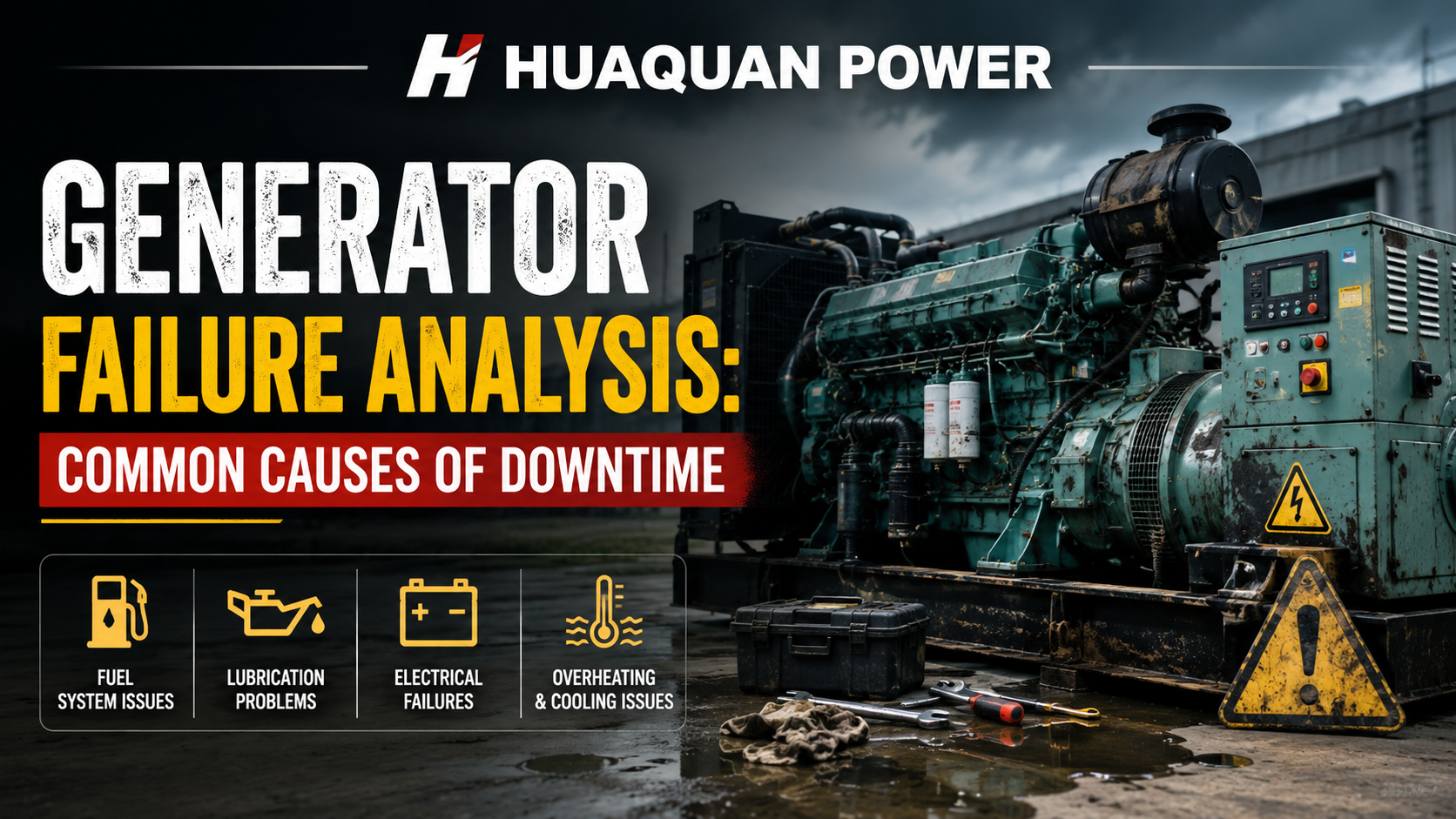
Generators are critical components of various industries. A single shutdown due to any reason can affect industrial facilities, hospitals, construction sites, data centers, mining operations, commercial buildings, and utility applications. Generator Failure Analysis and timely repair can be the time-saving solution in case of failures.
Today, we will dive deep into the generator failure causes and understand various steps to analyze the errors. Let’s discuss.
Why Does Generator Failure Analysis Matter?
Whenever you find a problem with the generator, you should correct it. It is the right approach, but you should do more than that. Instead, find out the root cause to avoid the long-term maintenance costs.
Without investigating the root cause, your generator systems might experience the same issue even with the new components.
So, the benefits of the generator failure analysis are:
- Reduce unexpected downtime
- Improve equipment reliability
- Lower maintenance costs
- Increase generator lifespan
- Improve fuel efficiency
- Prevent repeated failures
- Enhance operational safety
- Optimize maintenance schedules
| Downtime Impact | Possible Consequences |
| Production shutdown | Lost manufacturing output |
| Data center outage | Data loss and service interruption |
| Hospital failure | Risk to patient safety |
| Telecommunications outage | Communication disruption |
| Construction delay | Missed project deadlines |
| Cold storage failure | Spoiled inventory |
| Mining interruption | Equipment idle time |
| Emergency backup failure | Safety hazards |
Types of Common Generator Failures
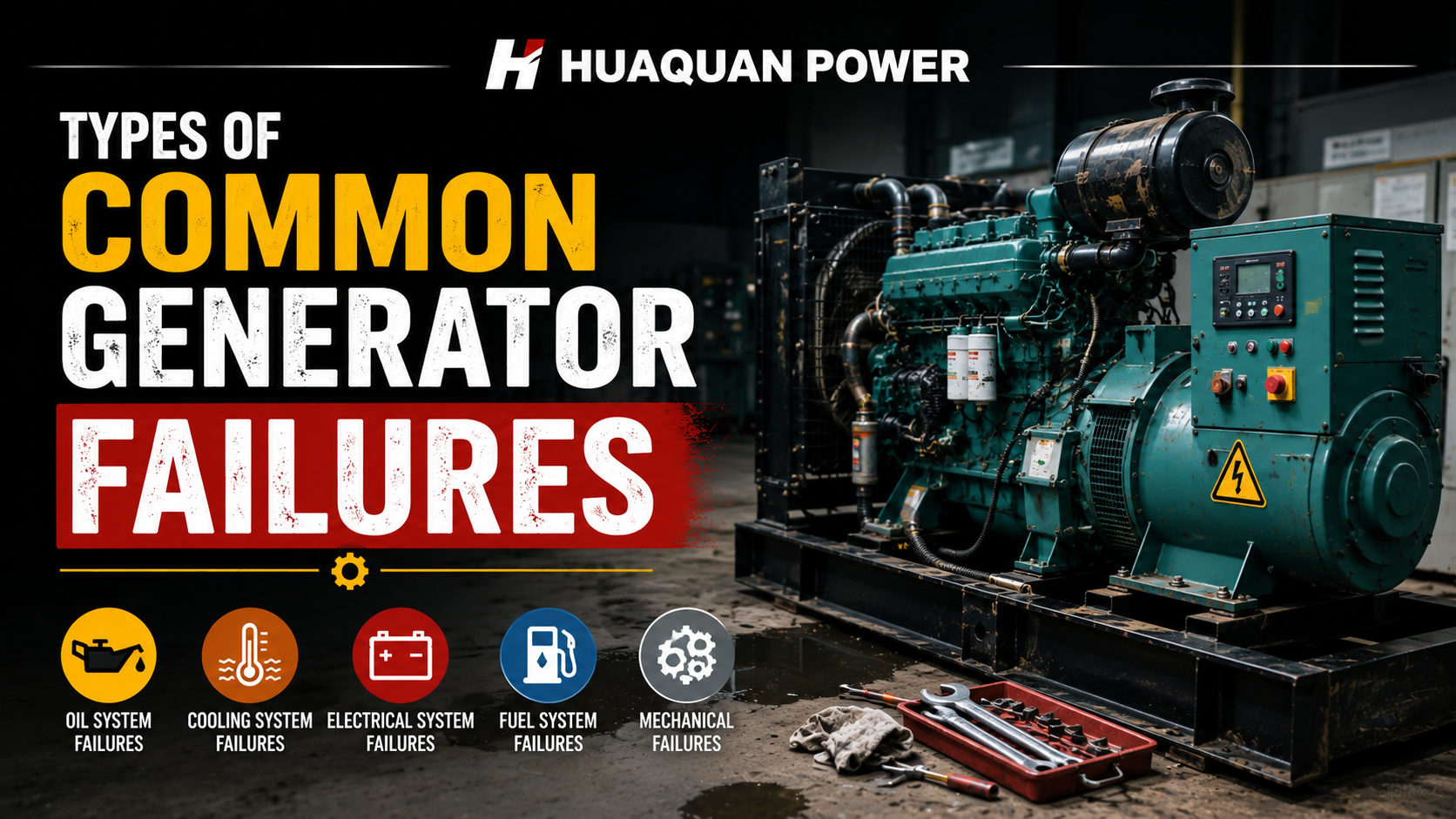
There can be several reasons for the generator failure. We have categorized all the failures according to the component failures. Here are five key types of generator failures.
Mechanical Failure
Mechanical failure is the failure of moving parts. Before the sudden failure occurs, there is a history of slow damage and deterioration of the mechanical components. The failure often occurs in the following components.
- Bearing damage
- Crankshaft wear
- Connecting rod failure
- Piston seizure
- Valve damage
- Turbocharger failure
- Broken belts
- Pump failures
Electrical Failure
Electrical components help in the power generation and transmission. An error in the power transmission can block the whole system and cause the shutdown of the energy. The common causes of electrical failures are:
- Alternator winding faults
- AVR failures
- Excitation system failure
- Insulation breakdown
- Ground faults
- Short circuits
- Loose electrical connections
- Voltage instability
Fuel System Failure
Fuel is crucial for the generators if you want to run them for extended periods. A slight failure in the fuel system can cause the shutdown of the system. The common reasons for fuel system failures are:
- Dirty fuel
- Water contamination
- Clogged fuel filters
- Injector failure
- Fuel pump failure
- Air trapped in fuel lines
- Microbial growth
- Fuel degradation
Cooling System Failure
Generators often operate continuously, causing the overheating of the systems. This overheating is controlled by the cooling systems. But failure of the cooling system is also dangerous for the generators.
Common causes are:
- Low coolant
- Radiator blockage
- Water pump failure
- Thermostat malfunction
- Coolant leaks
- Cooling fan damage
- Air trapped in coolant lines
Lubrication Failure
Lubrication can help streamline the operations of the generators. This failures include the following reasons.
- Low oil level
- Oil contamination
- Incorrect oil viscosity
- Oil pump failure
- Blocked oil filter
- Oil oxidation
Common Causes of Generator Failures
There can be several causes of the generator failures. We have sequenced it from the most famous one to the least common one. Let’s know the causes of generator failures here.
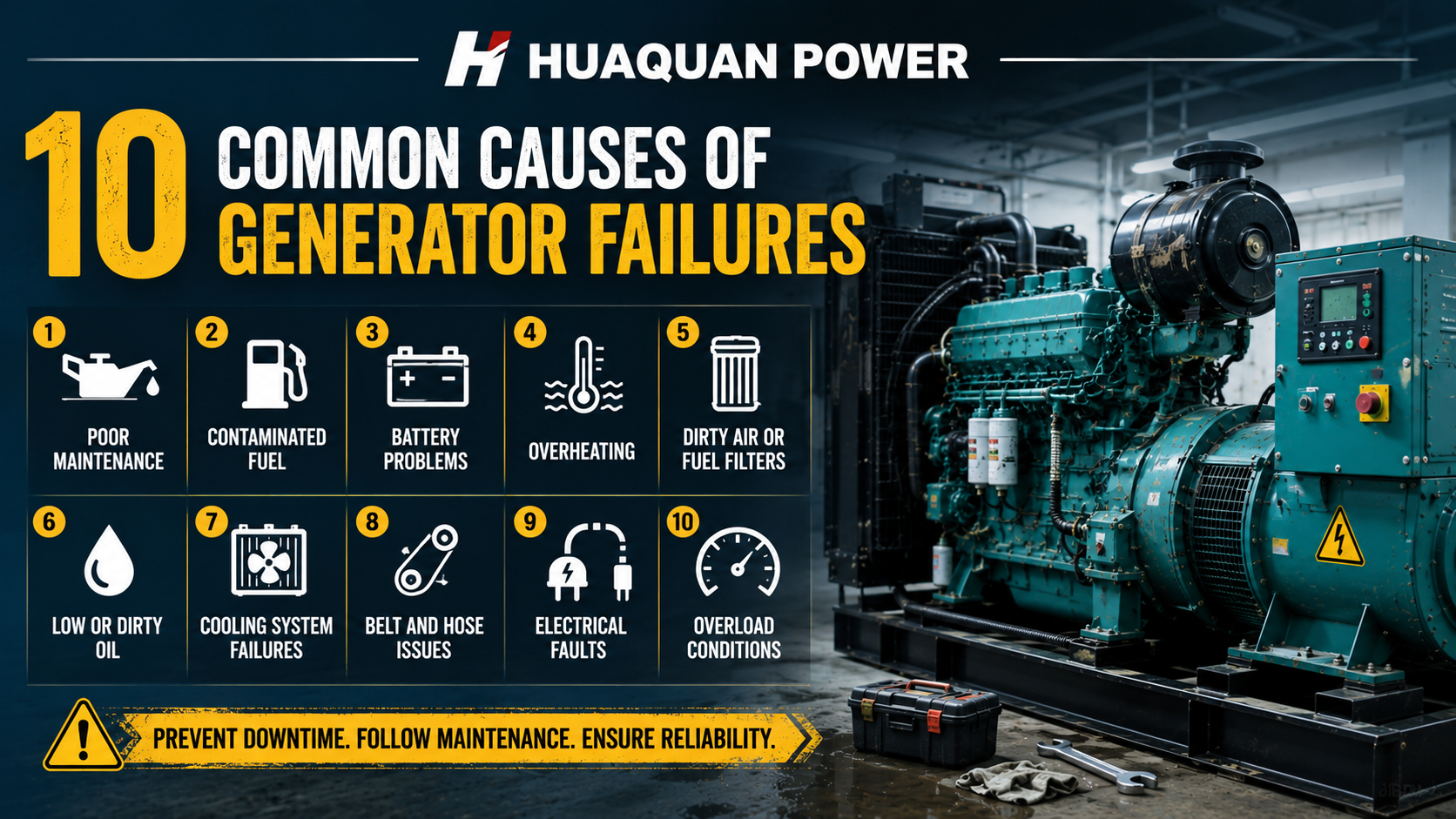
Cause #1: Battery Failure
Battery failure is the most common cause of generator failure. The battery provides the power through the engine and the starter motors. It helps operate the generator systems.
The common battery failures are:
- Dead battery
- Sulfation
- Loose terminals
- Corrosion
- Damaged cables
- Low electrolyte level
- Charging system failure
- Old batteries
Symptoms
Whenever there is a failure in the battery, there are a few clear-cut symptoms listed below.
- Starter clicks only
- Slow engine cranking
- Complete no-start condition
- Low battery voltage alarms
Solutions
Whenever you have located the battery failures, there is no solution except to repair or replace it. For future prevention, you should follow the tips below.
- Test battery voltage weekly
- Clean battery terminals
- Inspect charger operation
- Replace aging batteries
- Perform load testing
Cause #2: Fuel Contamination
Fuel contamination is another issue. When you store the diesel fuel, there can be an ingress of water or moisture. It leads to the growth of bacteria, fungi, or algae.
Here is a list of factors that cause fuel contamination.
- Water
- Rust
- Dirt
- Microorganisms
- Sludge
- Wax crystals
- Sediment
Effects
There are several effects of the fuel contamination. For example:
- Block injectors
- Clog filters
- Damage pumps
- Reduce combustion efficiency
- Increase emissions
- Cause an engine shutdown
Cause #3: Low Engine Oil Pressure
The generator engine has several components. They are kept separated by the oil pressure. Low pressure can cause fatal accidents in the components and can be dangerous.
Causes
The causes of low oil pressure are pretty common, as follows:
- Oil leaks
- Low oil level
- Oil pump failure
- Worn bearings
- Clogged oil filter
- Incorrect oil grade
Warning Signs
Before the major failure occurs, you get early warning signs, such as:
- Low oil pressure alarm
- Engine shutdown
- Knocking sounds
- High engine temperature
- Metal particles in oil
Cause #4: Cooling System Failure
Heat is the enemy of the engine system. Generators often fail to perform in overheating environments. That is where a cooling system helps. Its failure can cause failures of the whole generator.
Causes
Cooling system failure occurs due to component damage. Here is the list of issues causing its failures.
- Coolant leakage
- Broken radiator fan
- Water pump damage
- Thermostat failure
- Dirty radiator
- Low coolant level
Warning indicators
A few indicators already tell us about the issues. For example:
- High coolant temperature
- Steam
- Reduced engine power
- Automatic shutdown
- Coolant overflow
Cause #5: Clogged Air Filters
For proper combustion of fuel, the engine requires clean and quality air filters. Clogged filters can block airflow and might reduce engine efficiency.
Clogged air filters are due to the entrapment of dust, dirt, and other materials. The common effects of clogged air filters are:
- Reduced power
- Increased fuel consumption
- Black exhaust smoke
- Turbocharger stress
- Poor combustion
Cause #6: Fuel Injector Problems
The fuel injector feeds the quality fuel into the combustion system. The fuel injector problems can cause issues with the engine fuel combustion and affect the fuel efficiency.
Causes
The common causes behind the fuel injector issues are:
- Dirty fuel
- Carbon deposits
- Internal wear
- High operating hours
- Poor fuel quality
Symptoms
You should understand the fuel injector issues when you locate the following symptoms.
- Rough engine operation
- White smoke
- Misfiring
- Increased fuel consumption
- Power loss
- Difficult starting
Cause #7: Automatic Voltage Regulator (AVR) Failure
AVR maintains a stable voltage despite fluctuations in the load conditions. The causes of the AVR failure are:
- Moisture
- Aging electronics
- Overheating
- Loose wiring
- Electrical surges
Cause #8: Alternator Failures
The alternator transforms the mechanical energy into electrical energy for the system’s operations. The common alternator failures are:
- Bearing wear
- Insulation breakdown
- Rotor damage
- Stator winding failure
- Overheating
- Moisture ingress
Cause #9: Starter Motor Failure
The starter motor starts the engine until the combustion process has begun. The motor failure can cause the generators to fail.
The common issues include:
- Worn brushes
- Solenoid failure
- Damature damage
- Loose electrical connections
- Battery issues
Cause #10: Sensor and Control System Failures
The monitoring system holds a crucial significance and helps with the right control system. Sensors help assess:
- Oil pressure
- Coolant temperature
- Fuel pressure
- Engine speed
- Battery voltage
- Exhaust temperature
- Frequency
- Output voltage
Faulty sensors can cause inaccurate pressure and temperature values and may trigger false alarms.
Symptoms
Failure of the sensor and control systems has the following symptoms.
- Incorrect readings
- Random shutdowns
- False warning alarms
- Communication errors
- Controller faults
Step-by-Step Generator Failure Analysis Procedure
Has your generator experienced any downtime recently? Instead of finding the damaged components and replacing them, you should find out the real reason behind this failure. We have added a few steps to make the generator failure analysis.
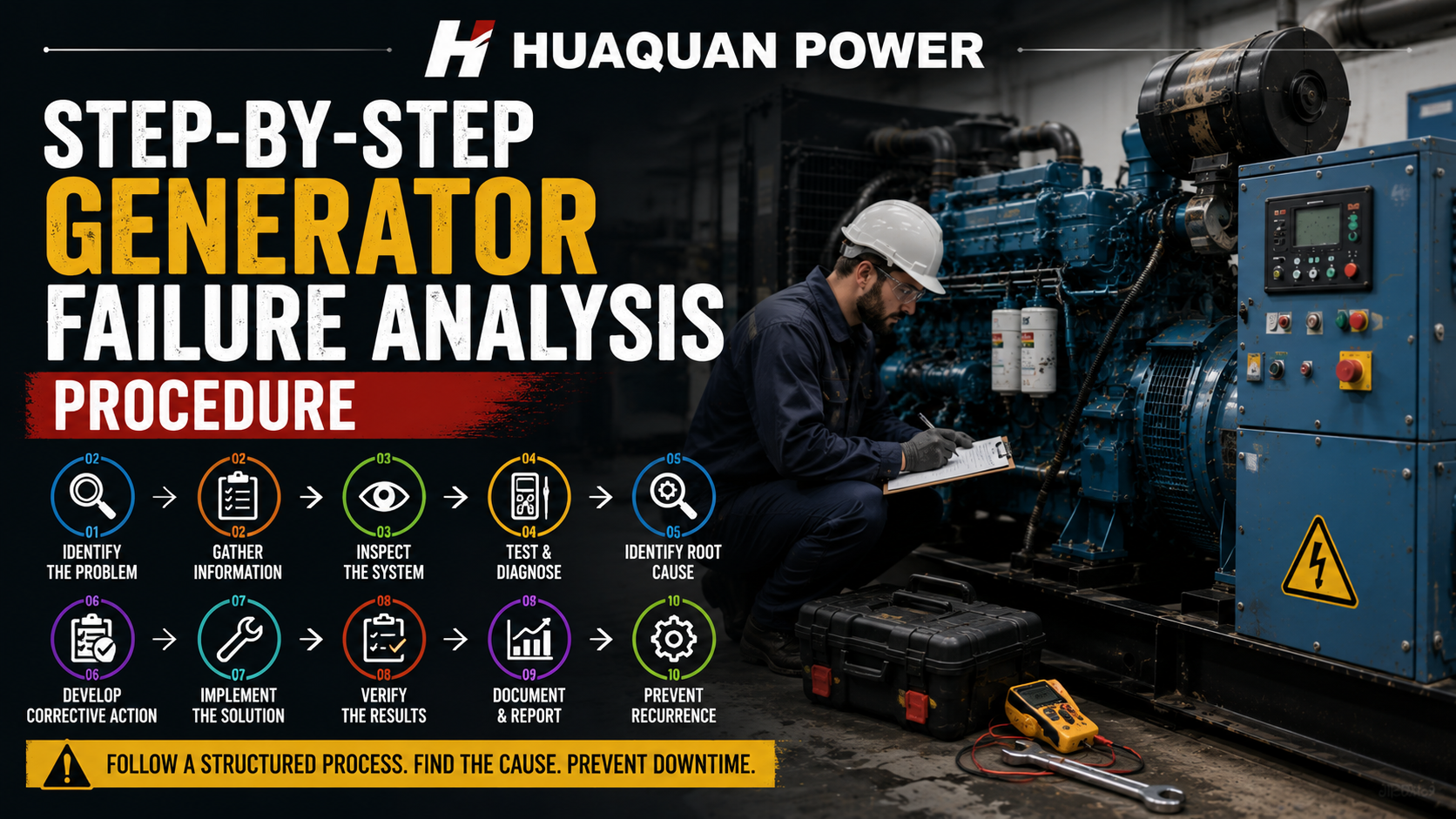
Step 1: Collect Failure Information
Don’t disassemble the generator before taking the comprehensive data. You should check the time, date, and the following aspects related to the failure.
- Date and time of failure
- Operating hours
- Load percentage at failure
- Fuel type and quality
- Ambient temperature
- Recent maintenance activities
- Operator observations
- Alarm history
- Controller event logs
- Previous repair records
Step 2: Perform a Visual Inspection
A visual inspection can detect the issues before you treat them very well. With a visual inspection, you can assess the following issues:
- Oil leaks
- Fuel leaks
- Coolant leaks
- Loose electrical cables
- Burned wiring
- Broken belts
- Corroded battery terminals
- Damaged hoses
- Cracked engine mounts
- Loose fasteners
- Carbon deposits
- Excessive dirt accumulation
Step 3: Review Generator Controller Data
Generator Controller logs help trace the sequence of operations where the shutdown has occurred. You should review the generator controller data and understand it. Here are a few parameters to know.
| Parameter | What It Indicates |
| Oil pressure | Engine lubrication condition |
| Coolant temperature | Cooling system health |
| Engine speed (RPM) | Engine performance |
| Battery voltage | Starting system condition |
| Generator voltage | Alternator performance |
| Frequency | Engine speed stability |
| Power output | Loading conditions |
| Fuel pressure | Fuel delivery efficiency |
| Engine hours | Maintenance scheduling |
| Alarm history | Sequence of failures |
Step 4: Identify the Failed System
Which system has typically failed? The good approach is to narrow down your research to the failed systems. You can start checking the following systems.
- Engine
- Alternator
- Fuel system
- Cooling system
- Lubrication system
- Electrical control system
- Starting system
- Exhaust system
- Automatic Transfer Switch (ATS)
- Battery charging system
Step 5: Test Individual Components
Once you have found the likely issue, inspect the other components and find out minor or major issues. A comprehensive inspection can include the following individual components.
In the engine system, you should perform:
- Compression test
- Oil pressure test
- Injector testing
- Turbocharger inspection
The Fuel System has the following tests and analysis systems.
- Fuel quality analysis
- Fuel pressure test
- Injector spray pattern
- Filter inspection
The electrical system includes a variety of tests and inspections, such as:
- Insulation resistance test
- Continuity test
- Winding resistance
- AVR testing
In the cooling system, you should check:
- Coolant pressure test
- Thermostat operation
- Radiator inspection
FAQs
- How can fuel contamination be prevented?
To avoid fuel contamination, you should apply different techniques. For example, store in the clean tanks or replace the oil filters with new ones. Use fuel stabilizers whenever it is necessary.
- How often should a generator be inspected?
You should do a regular inspection. Make a checklist for daily, weekly, monthly, quarterly, and yearly inspections of the generator facilities.
- What is the most common cause of generator downtime?
Battery failure is the most common cause of generator downtime. However, other reasons, such as frequent causes, include contaminated fuel, clogged filters, low oil pressure, overheating, and cooling system failures, which can cause issues.
- What is generator failure analysis?
Generator Failure Analysis is a step-by-step process to evaluate the science behind the generator failures. It also helps avoid generator issues in the long run with the right strategy.
What are the early warning signs of generator failure?
There are more than ten signs that indicate the imminence of the generator failure. For example, difficulty starting, excessive smoking, abnormal noises, increased vibration, overheating, oil or coolant leaks, unstable voltage, reduced power output, frequent alarms, and higher-than-normal fuel consumption.
- Can predictive maintenance reduce generator failures?
Yes. Predictive maintenance helps locate the issues before they become failures. It replaces or repairs the issues and keeps the generator’s performance high without any downtime.
- Why is load bank testing important?
Load bank testing helps ensure the safety of operations by understanding the performance of the generators at different loads. It prevents wet stacking, confirms engine and alternator performance, identifies hidden faults, and helps operate the generators in emergency situations.
- What tools are commonly used in generator diagnostics?
There is a wide range of tools used in generator diagnostics. The typical list includes digital multimeters, clamp meters, insulation resistance testers (Meggers), compression testers, fuel pressure gauges, oil pressure gauges, infrared thermal cameras, vibration analyzers, battery load testers, and borescopes.
Conclusion
There can be several reasons behind the generator failures. Batteries are the most common cause. Many other causes can also be the reason behind the unexpected downtime. You should perform a comprehensive generator failure analysis and understand the root cause. Treat the root cause to get high performance in the long run.
If you are looking for high-end generators that resist unexpected downtime, don’t worry at all. Huaquan Power is here. We have a wide range of generators that offer high performance even in harsh conditions. Choose the compatible ratings from our generator solutions right away!