Introduction
In the power systems, you don’t have to focus only on the energy production and usage. Higher energy production doesn’t matter, but the efficient usage does. An energy management system is a highly efficient setup that ensures the right energy usage from critical to unnecessary devices.
Today we will dive deep into the energy management system, understand its working mechanism, and know its different components. Let’s know!!
What is an Energy Management System?
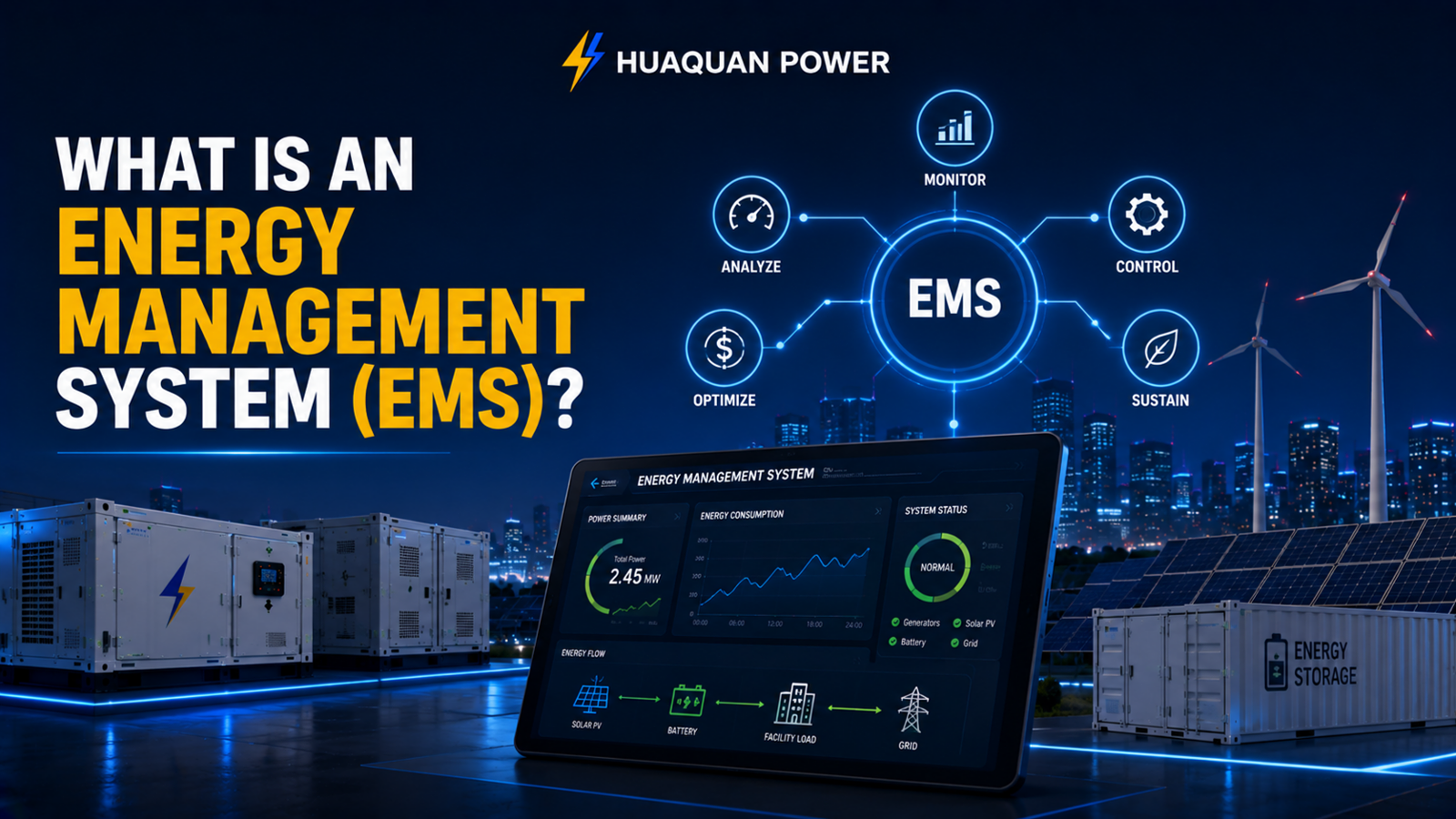
An energy management system is a comprehensive setup including the different energy hardware, software, communication networks, and technologies to optimize energy generation and usage.
The main purpose of the energy management system is to monitor energy consumption and ensure the efficient use of energy as soon as possible. For example, it helps prioritize the energy to the critical devices more than the non-essential devices.
Here is the list of tasks and management systems an EMS can do.
- Electrical power
- Solar energy
- Battery energy storage
- Diesel Generators
- HVAC systems
- Lighting
- Industrial machinery
- Building automation systems
- Electric vehicle charging
- Utility grid interactions
How Does an Energy Management System Work?
Energy management occurs through the five simple steps of data collection, monitoring, and optimal usage. Let’s go through each step thoroughly.
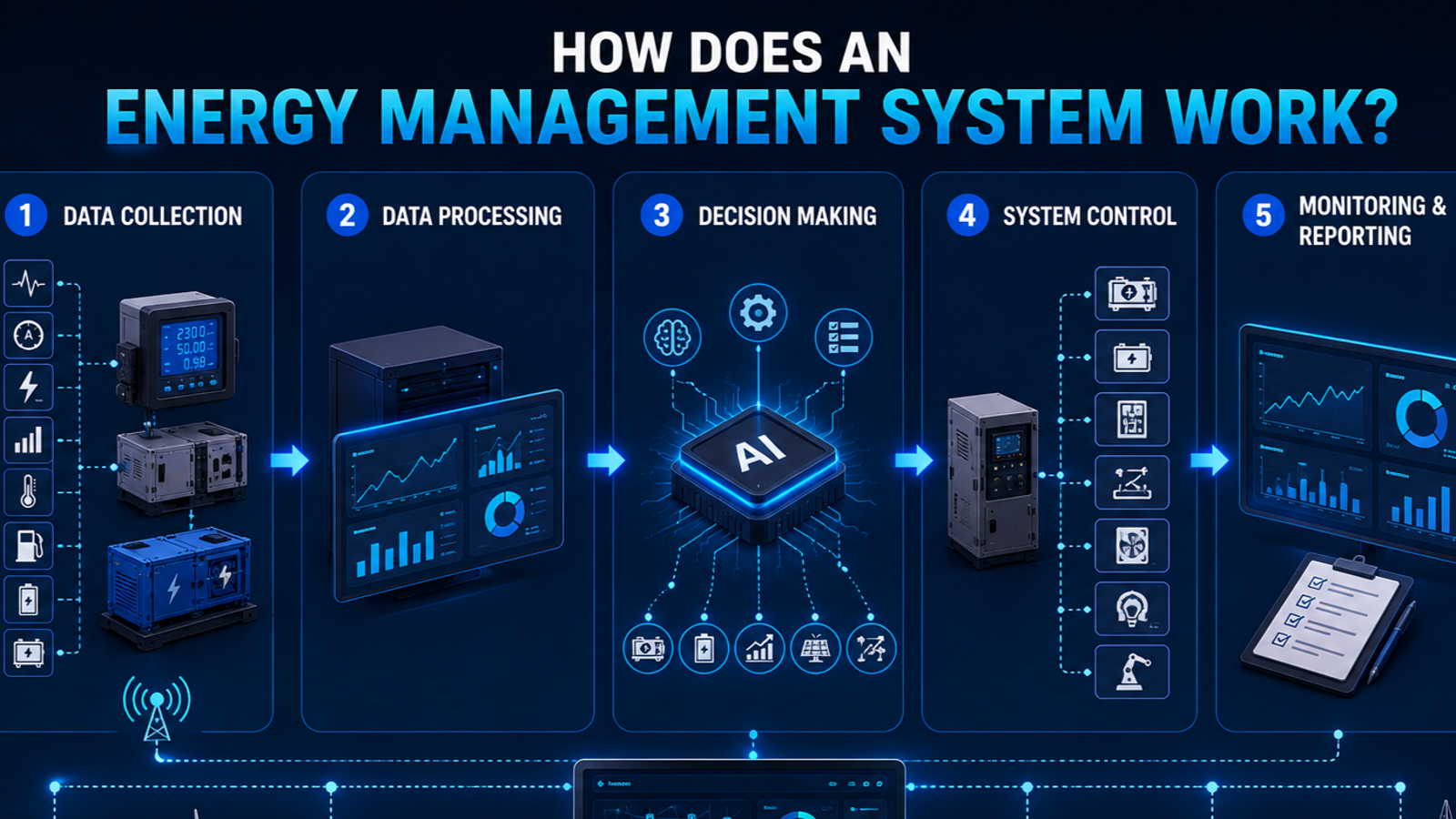
Step 1: Data Collection
The management game starts with the data collection. When you have the right sources to use the data, collection is the primary step.
What does the EMS collect? Here are a few necessary things about which EMS collects data.
- Voltage
- Current
- Power
- Energy consumption
- Frequency
- Temperature
- Fuel levels
- Battery status
- Generator performance
Communication networks help in the transmission of data and provide a seamless functionality.
Step 2: Data Processing
Once the data is in the EMS software, the second step is data processing. It evaluates each component of the data and understands it very well.
Here is how the data analysis occurs and how the data is evaluated.
- Current energy consumption
- Historical trends
- Equipment efficiency
- Peak demand
- Renewable energy production
- Battery charge levels
- Power quality
This data analysis provides the basis for the decision-making and optimization of energy.
Step 3: Decision Making
Decision-making is the most critical step that requires attention and needs to be understood very well. Usually, the automation and predefined programs take control and help make the decisions.
They run the necessary devices and tools. For example:
- Starting backup generators
- Charging batteries
- Reducing peak demand
- Prioritizing solar energy
- Switching between power sources
- Controlling HVAC operation
Advanced EMS technology has automated all the steps and makes decisions with artificial intelligence and past results.
Step 4: System Control
System control is crucial after the decision-making steps. It ensures the right devices and operations are done on time. As per the system control rules, EMS sends signals to:
- Generator controllers
- Battery inverters
- Circuit breakers
- Smart switches
- HVAC controllers
- Lighting systems
- Industrial automation equipment
This connected system makes the system control easier and far better.
Step 5: Monitoring and Reporting
Operators can make wise decisions based on the data. EMS reports to the users about the following aspects.
- Energy consumption
- System efficiency
- Equipment status
- Alarm conditions
- Historical performance
- Energy savings
- Carbon emissions
With these reports in hand, operational managers and operators can make easy decisions and ensure effective management.
Components of Energy Management System
Energy management occurs due to various components that act synchronously and provide the proper reporting and results.
Here is the list of components with their key functionality.
Smart Energy Meters
Smart energy meters are excellent tools required to provide insights into electrical consumption. They provide the real-time data and ensure the measurements of:
- Voltage
- Current
- Power factor
- Active power
- Reactive power
- Energy consumption
Due to these measurements, it is easier to calculate and utilize the energy based on the excellent decision-making capacity.
Sensors
Sensors are also crucial components that detect changes in temperature and pressure. Each sensor performs a different task and provides the overall results.
Examples of the sensors include:
- Temperature sensors measure temperature changes.
- Humidity sensors assess the moisture in the air and provide data.
- Pressure sensors give real-time pressure values.
- Fuel level sensors tell about the fuel levels in the generators.
- Flow sensors check the fluid flow.
- Occupancy sensors
Communication Networks
Communication networks have a single goal— they help communicate between different devices and tools. Due to communication networks, data transfer occurs between the EMS and field devices.
The common examples of communication networks are:
- Ethernet
- Wi-Fi
- Fiber optic networks
- Cellular communication
- Modbus
- BACnet
- CAN Bus
- MQTT
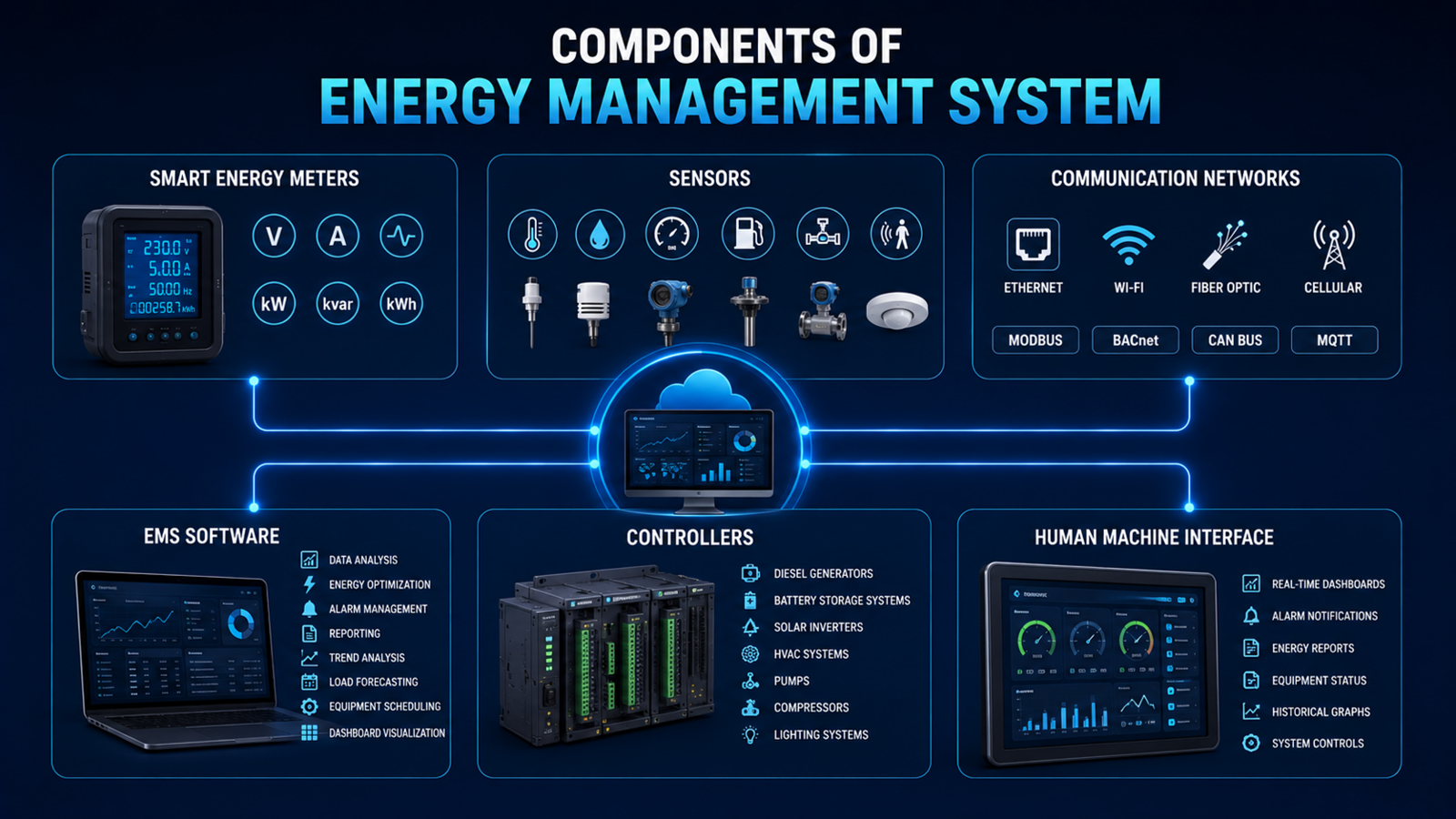
EMS Software
EMS software is the CNS of the whole energy management system. From data analysis to management, everything occurs through the CMS software.
Here is the list of tasks a CMS does.
- Data analysis
- Energy optimization
- Alarm management
- Reporting
- Trend analysis
- Load forecasting
- Equipment scheduling
- Dashboard visualization
Modern CMS systems work remotely and provide data through cloud management systems.
Controllers
EMS software gives commands and makes informed decisions. Controllers are the main tools that help control the several tools and systems installed in the whole EMS setup.
For example, they can control the following devices.
- Diesel generators
- Battery storage systems
- Solar inverters
- HVAC systems
- Pumps
- Compressors
- Lighting systems
Due to controllers, it is easier to make decisions and take the next steps.
Human Machine Interface
A human interface machine is a display system that makes the control far easier and better. It provides the following features:
- Real-time dashboards
- Alarm notifications
- Energy reports
- Equipment status
- Historical graphs
- System controls
Users can easily understand the system and make decisions based on the data and their experiences.
Types of Energy Management
Energy management is similar across various applications. However, the operating system is different. We have divided energy management into five fundamental types based on the applications and use cases.
These are:
Building Energy Management System
Commercial buildings and offices have a specialized energy management system called BEMS.
It typically controls:
- Air conditioning
- Heating
- Ventilation
- Lighting
- Elevators
- Water pumps
- Building automation systems
The purpose is to manage the energy and optimize it according to the usage and equipment.
Industrial Energy Management System
An industrial energy management system is also efficient and provides large-scale control because of the industrial setup. It helps manage the energy supply to:
- Production machinery
- Compressors
- Motors
- Boilers
- Process heating
- Cooling systems
- Backup generators
With the industrial energy management systems, it is easier to control energy and provide real-time status at the different factories.
Home Energy Management System
A home energy management system is more important because of household management. It often comes integrated with the mobile applications and provides integrated controls of the power.
The common examples of the household management system are:
- Solar panels
- Battery storage
- Smart appliances
- Electric vehicle chargers
- Air conditioning
- Lighting
Smartphone applications make management even easier and more controllable.
Microgrid Energy Management System
A microgrid is a comprehensive setup including solar panels, localized energy production, and the use of generators. In simple words, they offer energy production and utilization.
EMS systems help here with energy optimization through management of:
- Solar PV
- Wind turbines
- Battery storage
- Diesel generators
- Utility grid connection
- Load balancing
The system selects the most efficient energy source and provides the power.
Utility Energy Management System
Utility energy management is typically different from all the other types due to higher loads and different functionality. Unlike others, it is the main distribution center that provides energy to the homes, commercial sectors, and industries.
At utility grids, energy management occurs through EMS and provides the following functions:
- Load forecasting
- Grid monitoring
- Voltage control
- Frequency regulation
- Fault detection
- Power dispatch
- Network optimization
EMS maintains the energy distribution and provides a stable power supply.
Challenges of Implementing an Energy Management System
Energy Management System is an ideal solution with high efficiency, but it is not that easy. You have to make critical decisions and face the following challenges.
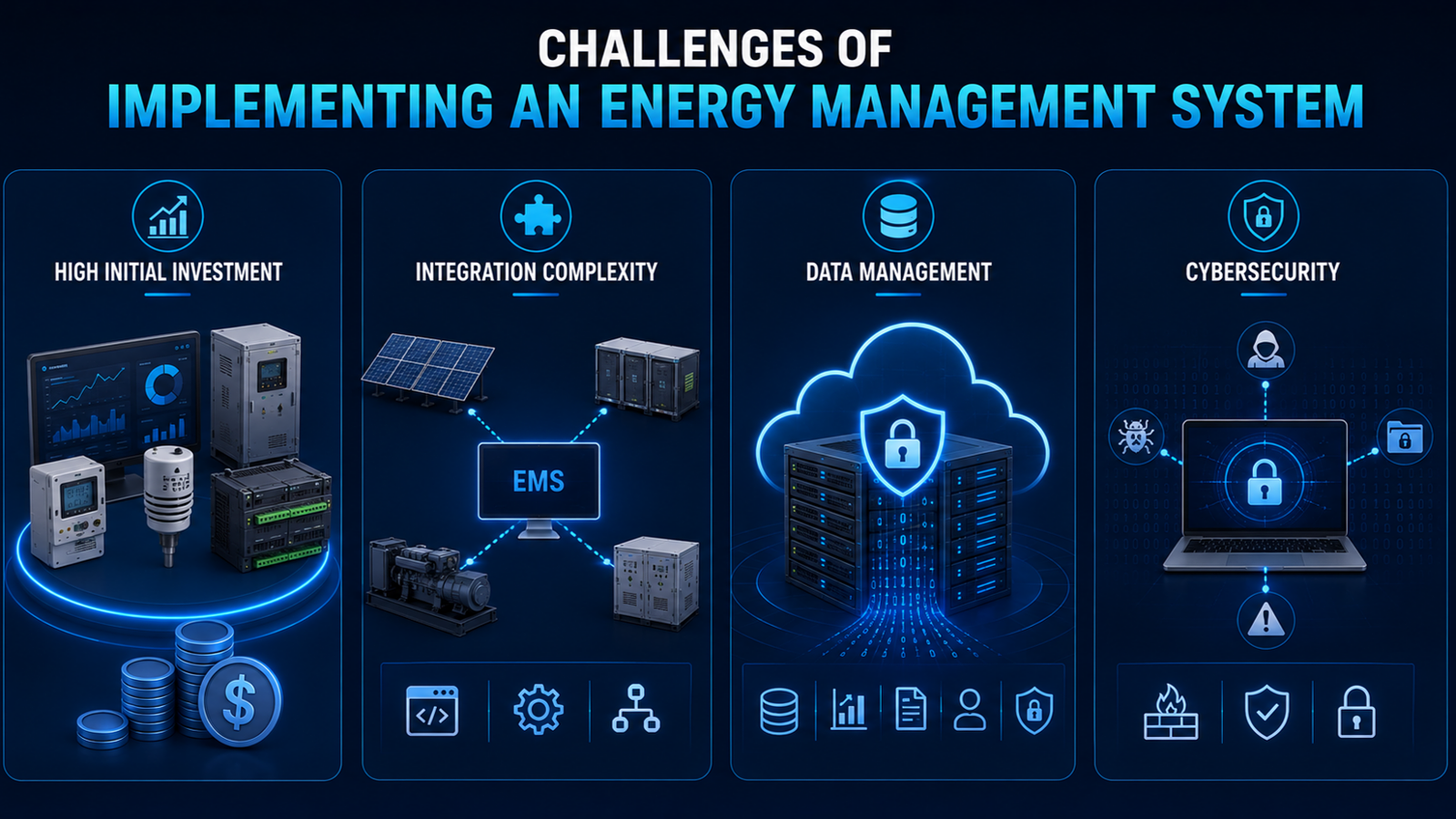
High Initial Investment
An energy management system is never cheaper. It is because of investment in various tools and equipment given below.
- Smart meters
- Sensors
- Controllers
- Software licenses
- Communication infrastructure
- System integration
Though the initial investment is high, long-term costs are lower and provide flawless energy support for extended periods.
Integration Complexity
An energy system often includes various components, such as solar systems, batteries, and generators. Every component comes through a different company and has different protocols for running.
Integration of these tools with the EMS system can be challenging and requires the following changes:
- Protocol conversion
- Software customization
- Hardware upgrades
- Communication gateways
Data Management
Data management is a critical task for the energy management system. However, it is challenging when you have to manage it on a large scale.
You have to invest in a management system for:
- Data storage
- Data analysis
- Report generation
- Cybersecurity
- User access
Cybersecurity
Modern EMS systems have a different approach and manage data through cloud applications. Smartphone applications are often connected to the EMS system for commands and management.
Potential risks of this include:
- Unauthorized access
- Malware
- Data theft
- System manipulation
Strong security is required to make your system impenetrable.
EMS vs Building Management System
Energy Management systems works differently from the building management systems and share the following comparison.
| Feature | Energy Management System (EMS) | Building Management System (BMS) |
| Primary Purpose | Optimize energy usage | Control building operations |
| Focus | Energy efficiency | Building automation |
| Monitors Energy Consumption | Yes | Limited |
| Generator Management | Yes | Sometimes |
| Battery Management | Yes | Rarely |
| Renewable Energy Integration | Yes | Limited |
| Load Optimization | Yes | Limited |
| HVAC Control | Yes | Yes |
| Lighting Control | Yes | Yes |
| Energy Reporting | Comprehensive | Basic |
EMS vs SCADA
EMA is basically about energy optimization while SCADA is about process monitoring and control. Let’s know differences.
| Feature | EMS | SCADA |
| Primary Function | Energy optimization | Process monitoring and control |
| Energy Analytics | Advanced | Limited |
| Equipment Monitoring | Yes | Yes |
| Control Functions | Yes | Yes |
| Alarm Management | Yes | Yes |
| Historical Trends | Yes | Yes |
| Energy Reporting | Extensive | Basic |
| Peak Demand Management | Yes | No |
| Renewable Energy Management | Yes | Limited |
FAQs
- What is the difference between an EMS and a Building Management System?
An EMS focuses on energy production, management, and optimal consumption. On the other hand, a building management system controls the building services, such as HVAC, lighting, elevators, and security.
- Can an EMS work with renewable energy systems?
Yes. EMS can work effectively with renewable energy sources. It is even designed to manage the solar energy, store it, and utilize it whenever needed.
- What types of facilities use Energy Management Systems?
There are several applications of the energy management system. For example, commercial buildings, manufacturing plants, hospitals, data centers, airports, universities, utility companies, industrial facilities, and residential buildings.
- How does an EMS reduce electricity costs?
Yes, 100%. An EMS system reduces the electrical supply costs by optimizing energy costs. For example, it powers the critical devices during the outage and cuts the fuel costs. Moreover, it provides the maximum utilization of renewable energy sources, reducing grid electrical costs.
What is the primary purpose of an Energy Management System?
The primary goal of the energy management system is to monitor energy production, improve efficiency, and provide a stable supply to the appliances for efficient results.
- Is cybersecurity important for Energy Management Systems?
Cybersecurity has a value in the energy management system. Nowadays, most of the system is controlled remotely through cloud management systems. Therefore, cyber hacks can affect and cause disruptions.
- What information does an EMS monitor?
An EMS monitors a wide range of factors, such as electricity consumption, voltage, current, frequency, power factor, equipment status, battery charge levels, generator performance, fuel levels, and renewable energy production.
- Does an EMS replace backup generators or UPS systems?
No, EMS is the energy management system, not the backup supply system. It integrates with the generators and UPS system to provide a seamless power supply and ensure energy optimization.
- Is an EMS suitable for small businesses?
Yes. EMS is suitable for all types of businesses. For small businesses, it promises energy optimization and reduced costs for energy consumption through critical management.
Conclusion
Energy Management System is one of the best techniques to use in your system. It can effectively manage energy generation and distribution throughout the system. With the proper strategies, you can better store and operate your critical devices during outages.
If you are looking for a backup energy system, look no further. Huaquan Power System is there to offer you comprehensive gas/diesel generator solutions. Our high-efficiency generators help produce more energy and consume it efficiently through your energy management system.