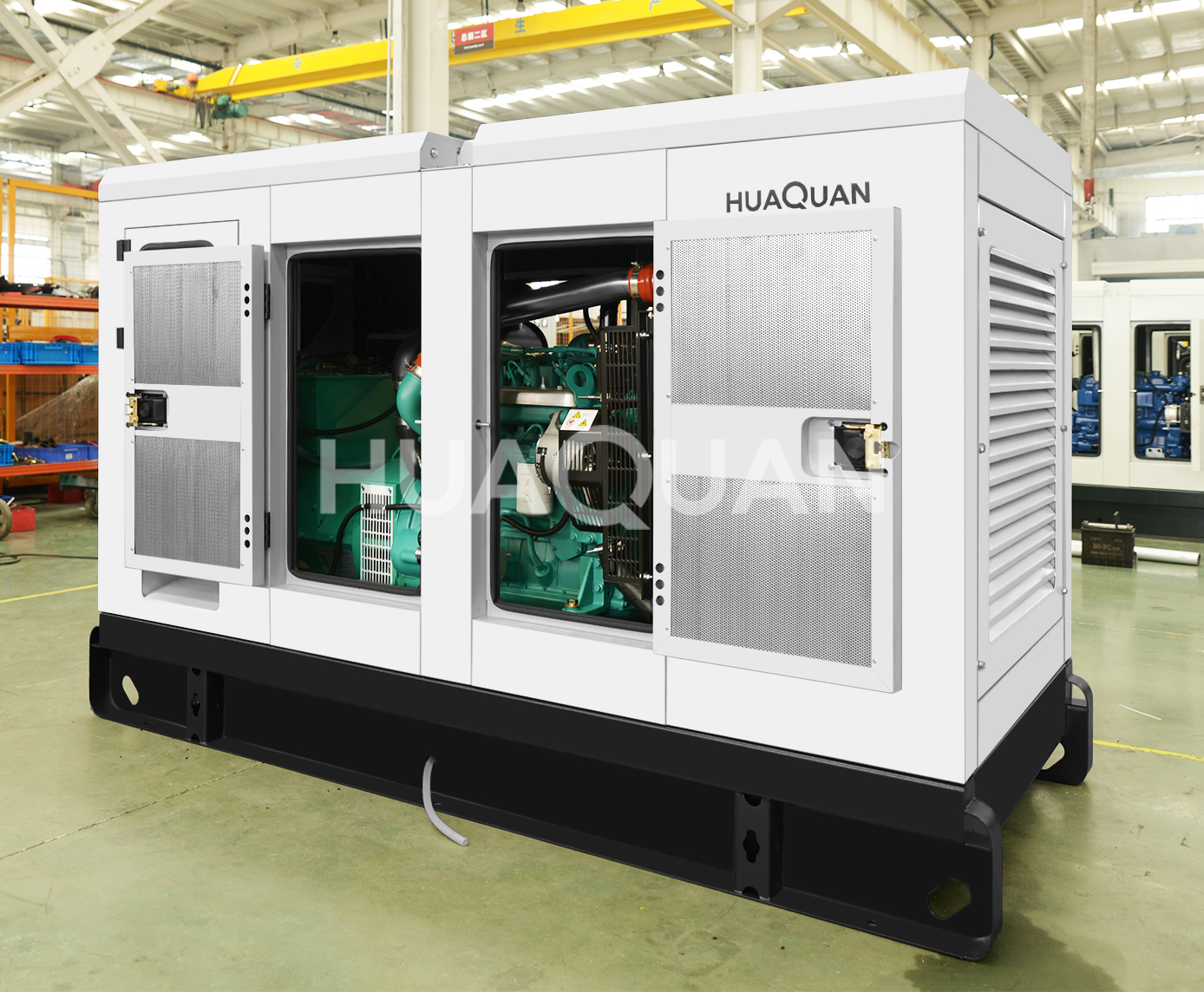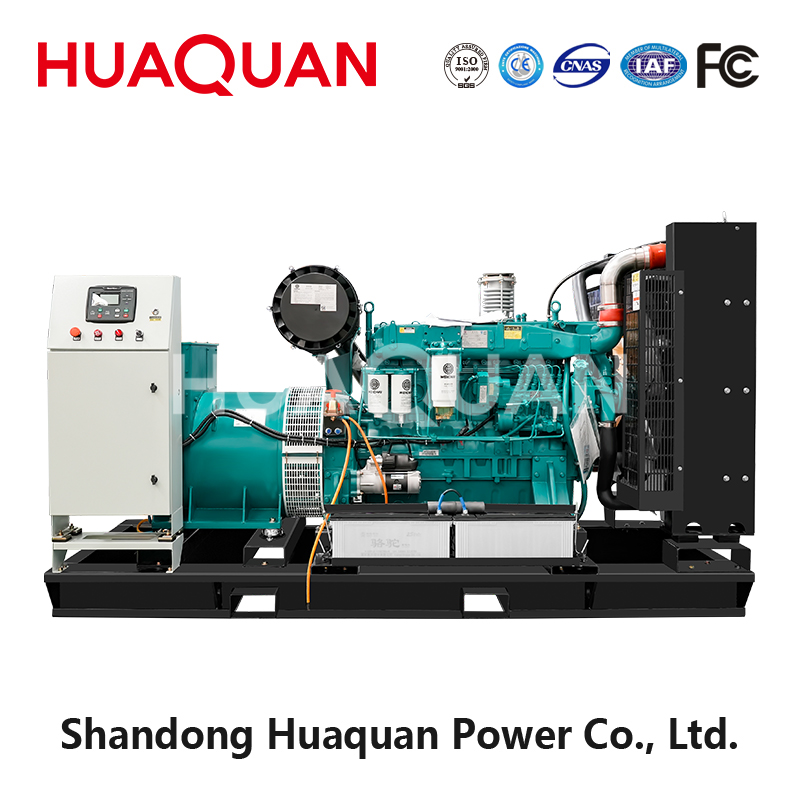
A Diesel Generator produces alternating current at a specific frequency, typically 50Hz or 60Hz, depending on the engine speed and alternator pole count. Huaquan Power manufactures Generators for both frequency standards, and selecting the correct frequency is essential for equipment compatibility. Huaquan Power presents this comprehensive guide on diesel generator frequency.
What Is Generator Frequency and How Is It Generated?
Frequency measures how many times the alternating current completes a full cycle per second. Furthermore, the generator frequency depends on two factors: engine rotational speed and the number of magnetic poles in the alternator. Specifically, the formula Frequency = (RPM x Poles) / 120 determines the output frequency precisely.
The Speed-Frequency Relationship
Engine speed directly controls output frequency. Therefore, maintaining constant engine speed is critical for frequency stability. Huaquan Power governors regulate engine RPM within tight tolerances to ensure consistent frequency output under varying load conditions.
| Pole Count | 50Hz RPM | 60Hz RPM | Application |
|---|---|---|---|
| 2 poles | 3000 | 3600 | Small gasoline generators |
| 4 poles | 1500 | 1800 | Standard diesel generators |
| 6 poles | 1000 | 1200 | Large industrial generators |
| 8 poles | 750 | 900 | Marine and slow-speed units |
Why Do Some Countries Use 50Hz and Others 60Hz?
The 50Hz versus 60Hz divide stems from historical decisions made during early electrification. Consequently, each region built its entire electrical infrastructure around one standard. Moreover, changing frequency standards across a national grid would require replacing nearly every piece of electrical equipment.
| Region | Frequency | Historical Origin | Voltage |
|---|---|---|---|
| China, Europe, Africa | 50Hz | German/AEG standard | 380V/400V |
| USA, Canada, Mexico | 60Hz | Westinghouse standard | 480V |
| Japan (east) | 50Hz | German influence | 200V |
| Japan (west) | 60Hz | American influence | 200V |
| Brazil | 60Hz | American influence | 380V/440V |
How Does Frequency Affect Connected Equipment?
Frequency directly impacts the operation of AC motors, transformers, and electronic equipment. For instance, a motor designed for 60Hz runs 17% slower on a 50Hz supply. Additionally, transformers may overheat when operated at the wrong frequency because core flux density changes.
Motor Speed and Frequency
AC induction motor speed depends on supply frequency. Specifically, the synchronous speed equals (120 x Frequency) / Pole Count. Therefore, running a 60Hz motor on 50Hz supply reduces its speed proportionally and may cause inadequate cooling or reduced performance.
| Equipment Type | 50Hz Operation | 60Hz Operation | Risk of Mismatch |
|---|---|---|---|
| AC induction motor | Slower speed | Faster speed | Overheating, reduced torque |
| Transformer | Higher flux density | Lower flux density | Core saturation, overheating |
| Electronic power supply | Generally tolerant | Generally tolerant | Minimal risk |
| Clock/timer | Runs slow on 60Hz | Runs fast on 50Hz | Timing errors |
| Pump system | Reduced flow rate | Increased flow rate | Performance mismatch |
What Controls Frequency Stability in a Diesel Generator?
The engine governor serves as the primary frequency control mechanism. Furthermore, the governor adjusts fuel delivery to maintain constant engine speed under varying loads. Huaquan Power uses electronic governors that provide precise speed regulation within ±0.5% of the rated RPM.
Governor Types and Performance
| Governor Type | Steady-State Stability | Response Time | Cost Level |
|---|---|---|---|
| Mechanical | ±5% | Slow (2-5s) | Low |
| Electrical | ±2% | Medium (1-2s) | Medium |
| Electronic (ESC) | ±0.5% | Fast (0.2-0.5s) | High |
| Electronic (ECU) | ±0.25% | Very fast (<0.2s) | High |
How to Convert a Generator Between 50Hz and 60Hz?
Converting a generator between frequency standards requires multiple modifications. Moreover, this is not simply a matter of changing engine speed. Specifically, you must adjust the engine RPM, recalibrate the AVR (Automatic Voltage Regulator), verify alternator thermal capacity, and ensure mechanical components can safely operate at the new speed.
Conversion Requirements
| Conversion | Engine Change | Alternator Change | Control Change | Feasibility |
|---|---|---|---|---|
| 60Hz to 50Hz | Reduce RPM 1800→1500 | Derate power by ~17% | Recalibrate governor | Moderate |
| 50Hz to 60Hz | Increase RPM 1500→1800 | Verify mechanical limits | Recalibrate governor + AVR | Risky |
| Dual-frequency design | Adjustable governor range | Oversized alternator | Switchable control panel | Factory option only |
What Is Frequency Drift and How to Prevent It?
Frequency drift occurs when the engine speed gradually deviates from the rated value. Additionally, causes include governor wear, fuel system issues, and load fluctuations. Huaquan Power recommends regular governor calibration and fuel system maintenance to prevent frequency drift.
Troubleshooting Frequency Issues
| Symptom | Likely Cause | Solution | Priority |
|---|---|---|---|
| Frequency consistently low | Engine under-fueling | Check fuel filters and injection | High |
| Frequency oscillates | Governor hunting | Adjust governor gain setting | High |
| Frequency drops under load | Governor response too slow | Upgrade to electronic governor | Medium |
| Frequency drifts over time | Governor linkage wear | Replace governor components | Medium |
| Frequency spikes on load removal | Overshoot in governor | Reduce governor gain | Low |
Frequently Asked Questions
Q1: Can I run 50Hz equipment on a 60Hz generator?
Many modern electronic devices with switching power supplies tolerate both 50Hz and 60Hz without issues. However, AC motors and transformers designed for 50Hz will run faster and may overheat on 60Hz supply. Furthermore, Huaquan Power recommends using a frequency converter for critical applications that require a specific frequency.
Q2: What happens if generator frequency is too low?
Low frequency causes AC motors to run slower, reducing their output and potentially causing overheating due to inadequate cooling. Additionally, transformers may saturate and draw excessive magnetizing current. Therefore, Huaquan Power generators feature low-frequency protection that shuts down the unit if frequency drops below 47Hz (50Hz systems) or 57Hz (60Hz systems).
Q3: How accurately must a generator maintain frequency?
Standard applications require frequency regulation within ±2%, while critical loads like data centers and medical equipment demand ±0.5% or better. Moreover, Huaquan Power electronic governors achieve ±0.5% steady-state regulation, making them suitable for the most demanding applications.
Q4: Does frequency affect generator power output?
Frequency itself does not directly change the power capacity of the generator. However, converting between 50Hz and 60Hz changes the engine speed, which affects engine power output. Specifically, running at 1500 RPM (50Hz) produces approximately 83% of the power available at 1800 RPM (60Hz) for the same engine displacement.
Q5: Can one generator supply both 50Hz and 60Hz simultaneously?
No, a single generator produces only one frequency at a time. However, you can use a solid-state frequency converter to transform the output to the other frequency. Additionally, Huaquan Power offers dual-frequency generator models with switchable speed settings, but these operate at only one frequency at a time.
In conclusion, diesel generator frequency is a fundamental parameter that determines equipment compatibility and performance. Huaquan Power provides both 50Hz and 60Hz generators with precise electronic governor control. Furthermore, their engineering team can help you select and configure the right frequency for your specific application. Contact Huaquan Power for expert assistance.