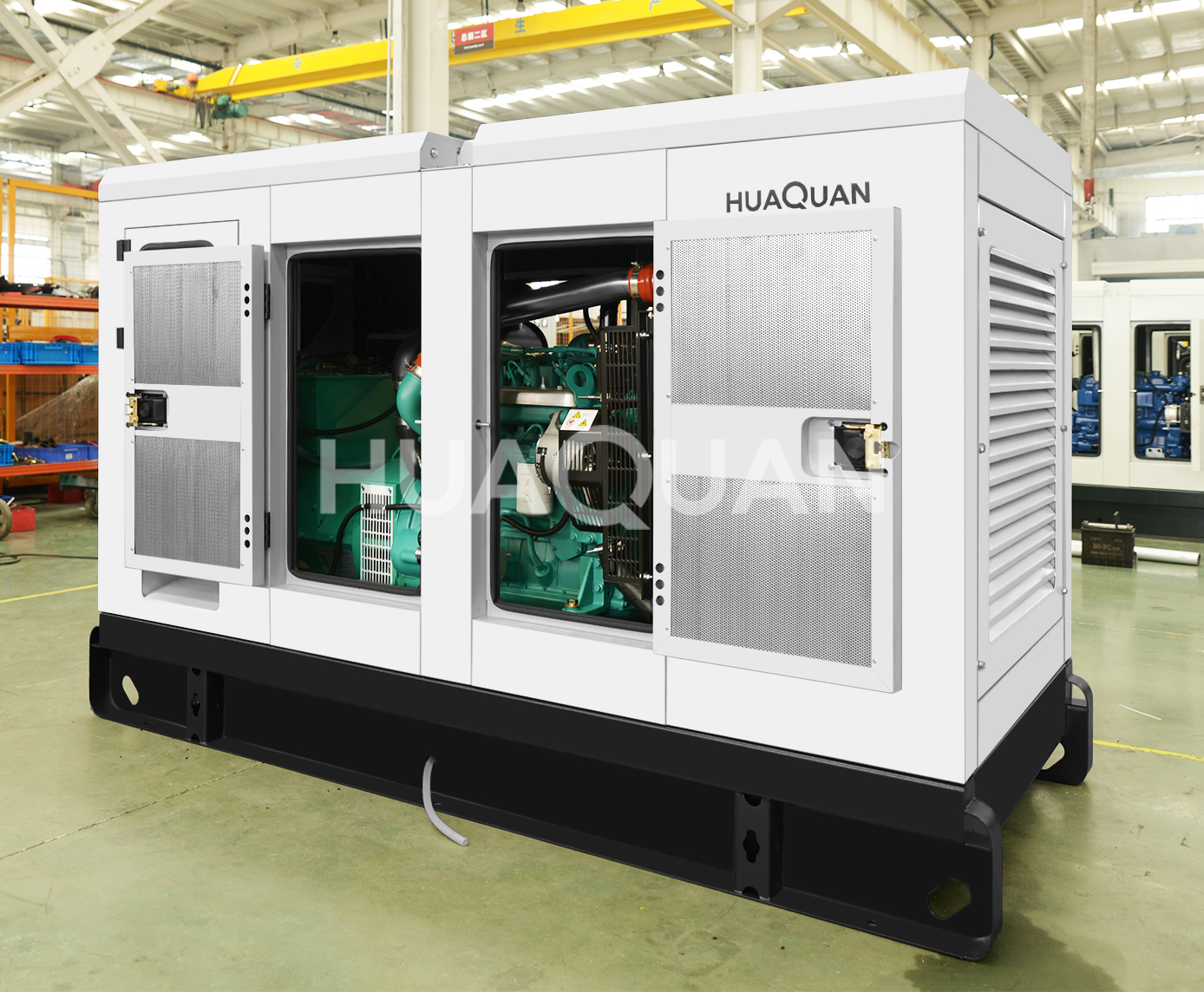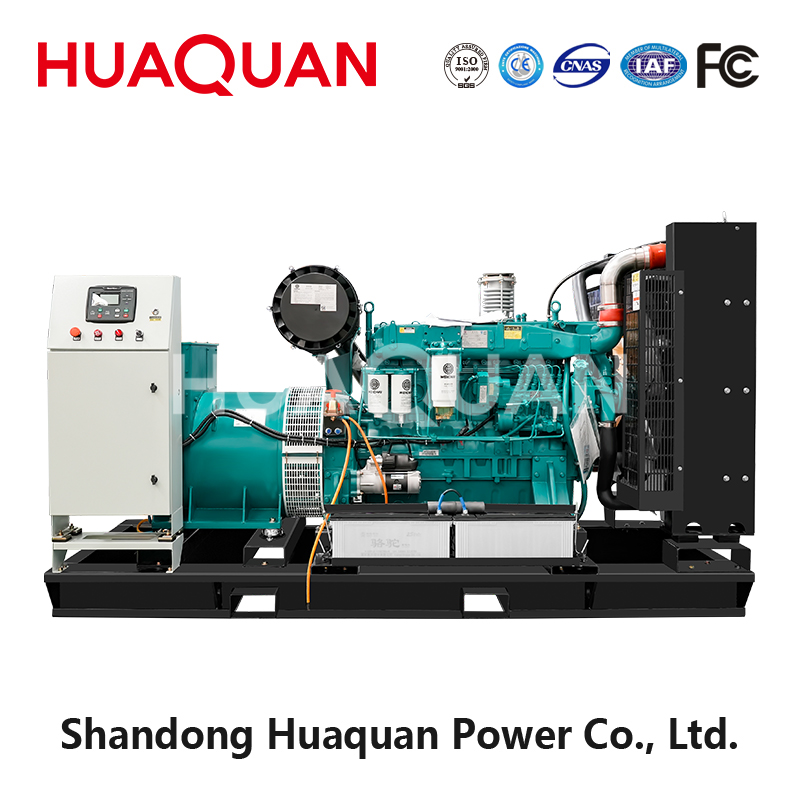
The rated voltage of a Diesel Generator refers to the standard electrical potential difference that the generator produces under normal operating conditions. Huaquan Power designs Generators with specific voltage ratings to match diverse application requirements, and understanding these ratings helps you select the right unit for your power needs. Huaquan Power has compiled the following detailed guide on diesel generator rated voltage.
What Does Rated Voltage Mean in a Diesel Generator?
Rated voltage represents the nominal output voltage that a generator delivers at its terminals when operating at rated speed and rated power factor. Furthermore, this value serves as the baseline for all electrical design calculations. Specifically, manufacturers determine rated voltage based on the intended market region and application type.
Single-Phase vs Three-Phase Voltage Ratings
Huaquan Power offers both single-phase and three-phase generator configurations. Single-phase generators typically produce 120V or 230V, while three-phase units deliver 380V, 400V, or 480V depending on the target market. Additionally, the phase configuration directly affects the generator winding design and connection method.
| Configuration | Common Voltage | Application | Frequency |
|---|---|---|---|
| Single-phase | 120V / 230V | Residential, small commercial | 50Hz / 60Hz |
| Three-phase | 380V / 400V | Industrial, commercial buildings | 50Hz |
| Three-phase | 480V | Heavy industrial, data centers | 60Hz |
| High-voltage | 6.3kV / 10.5kV | Power plants, mining | 50Hz / 60Hz |
How Do Manufacturers Determine the Rated Voltage?
Generator manufacturers determine rated voltage through several interconnected factors. First, the target market electrical standard dictates the primary voltage level. Consequently, Huaquan Power engineers select winding configurations that match these standards precisely.
Key Factors in Voltage Determination
Several critical factors influence the rated voltage selection process. Moreover, each factor interacts with others, making the design process iterative and precise.
| Factor | Description | Impact on Voltage |
|---|---|---|
| Market standard | Regional grid voltage (IEC/ANSI) | Primary determinant |
| Engine speed | RPM determines frequency | Affects voltage stability |
| Winding design | Series/parallel coil configuration | Sets output voltage level |
| AVR setting | Automatic Voltage Regulator calibration | Maintains rated voltage |
| Load type | Resistive, inductive, or capacitive | Influences voltage regulation |
What Are the Common Voltage Standards Worldwide?
Different regions adopt different voltage standards for their electrical distribution systems. Therefore, Huaquan Power configures generators to comply with local requirements in each target market. Importantly, matching the generator voltage to the local grid ensures seamless integration and safe operation.
| Region | Voltage | Frequency | Standard |
|---|---|---|---|
| China | 380V/220V | 50Hz | GB/T 15576 |
| Europe | 400V/230V | 50Hz | IEC 60034 |
| North America | 480V/277V | 60Hz | ANSI/NEMA MG-1 |
| Southeast Asia | 380V/220V | 50Hz | IEC 60034 |
| Middle East | 380V/220V | 50Hz | IEC 60034 |
How Does the AVR Maintain Rated Voltage?
The Automatic Voltage Regulator (AVR (Automatic Voltage Regulator)) plays a crucial role in maintaining the generator output at its rated voltage. Furthermore, the AVR continuously monitors terminal voltage and adjusts excitation current to compensate for load changes. Specifically, when a heavy load connects, the voltage tends to drop, and the AVR increases excitation to restore it.
AVR Performance Parameters
Huaquan Power equips its generators with high-performance AVR systems that ensure tight voltage regulation. Moreover, these AVRs respond within milliseconds to load transients, maintaining stable power output.
| AVR Parameter | Typical Value | Importance |
|---|---|---|
| Steady-state regulation | ±1% | Critical for sensitive loads |
| Transient response | Recovery within 0.5s | Prevents equipment damage |
| Voltage adjustment range | ±5% of rated | Allows fine-tuning |
| Low-frequency protection | Cuts excitation below 45Hz | Protects alternator |
What Happens When Voltage Deviates from Rated Value?
Voltage deviation from the rated value causes significant problems for both the generator and connected equipment. For instance, overvoltage stresses insulation and shortens equipment life. Conversely, undervoltage causes motors to draw excessive current and overheat.
Consequences of Voltage Deviation
| Deviation Type | Percentage | Effect on Equipment | Duration Limit |
|---|---|---|---|
| Overvoltage | +10% | Insulation breakdown, reduced lifespan | Temporary only |
| Overvoltage | +5% | Increased losses, minor heating | Acceptable short-term |
| Undervoltage | -5% | Motor overheating, reduced torque | Acceptable short-term |
| Undervoltage | -10% | Motor stall, relay malfunction | Must avoid |
How to Select the Correct Rated Voltage for Your Application?
Selecting the correct rated voltage requires careful analysis of your facility requirements. Additionally, you must consider the local grid standard, load types, and cable run distances. Huaquan Power recommends consulting with their engineering team to determine the optimal configuration for your specific application.
Selection Decision Matrix
| Application | Power Range | Recommended Voltage | Reason |
|---|---|---|---|
| Home backup | 5-30 kW | 230V single-phase | Matches residential wiring |
| Small business | 30-100 kW | 400V three-phase | Standard commercial supply |
| Industrial plant | 100-1000 kW | 400V/480V three-phase | Heavy motor loads |
| Data center | 500-2000 kW | 480V or 690V | High-efficiency distribution |
| Mining/Remote | 1000+ kW | 6.3kV/10.5kV | Long-distance transmission |
What Are the Testing and Verification Methods for Rated Voltage?
Huaquan Power subjects every generator to rigorous voltage testing before shipment. Furthermore, these tests verify that the unit delivers rated voltage under all specified operating conditions. Specifically, the testing protocol includes steady-state, transient, and extreme condition evaluations.
| Test Type | Method | Acceptance Criteria |
|---|---|---|
| No-load voltage | Measure at terminals, no load | 100-105% of rated |
| Full-load voltage | Apply rated load, measure | 95-100% of rated |
| Transient response | Apply 100% step load | Recovery within 0.5s |
| Voltage waveform | Oscilloscope THD analysis | THD < 5% |
| Three-phase balance | Measure all phases under load | Imbalance < 2% |
Frequently Asked Questions
Q1: Can I change the rated voltage of my diesel generator?
Yes, many Huaquan Power generators feature dual-voltage windings that allow reconnection for different voltage outputs. However, this requires qualified electrical technicians and may involve changing the winding configuration from star to delta or adjusting the AVR settings. Furthermore, always verify the nameplate rating before attempting any changes.
Q2: What is the difference between rated voltage and operating voltage?
Rated voltage is the nominal design voltage marked on the generator nameplate, while operating voltage is the actual voltage measured during operation. Additionally, operating voltage fluctuates within a band around rated voltage depending on load conditions. Huaquan Power designs generators so that operating voltage stays within ±5% of the rated value.
Q3: Why do some generators list multiple voltage ratings?
Generators with reconnection capability list multiple voltages to indicate the available output configurations. For instance, a generator rated at 380V/220V can supply three-phase 380V and single-phase 220V simultaneously. Moreover, this flexibility allows one unit to serve different load types.
Q4: How does cable length affect the voltage at the load?
Long cable runs cause voltage drop due to conductor resistance. Specifically, a 100-meter cable carrying 200A at 400V can lose 5-8V depending on cable size. Therefore, Huaquan Power recommends oversizing cables for runs exceeding 50 meters and using voltage drop calculators during installation planning.
Q5: Does high-altitude operation affect generator rated voltage?
High altitude primarily affects engine power output rather than voltage directly. However, reduced engine power may limit the generators ability to maintain rated voltage under full load. Consequently, Huaquan Power applies altitude derating factors and recommends upsizing the generator for installations above 1000 meters elevation.
In summary, the rated voltage of a diesel generator is a fundamental specification that determines compatibility with your electrical system. Huaquan Power offers comprehensive voltage options from 120V single-phase to 10.5kV high-voltage units. Furthermore, their advanced AVR systems and rigorous testing ensure reliable voltage performance. For expert guidance on selecting the right voltage rating, contact Huaquan Power today.