For the last few years, the demand for reliable backup power has been growing like never before. Business owners are turning to OEM generator manufacturing for custom power solutions. Whether you are an energy company, contractor, or a local distributor, OEM Generators can help you make the right purchasing decisions with zero unnecessary costly mistakes.
In this guide, HuaQuan cover everything buyers must know before buying OEM generators. How do they work? What customization options are available for power backup generators? The pricing factors and everything else. Stay tuned to select the right generator supplier for your business.
What Is an OEM Generator?
OEM is a short form of Original Equipment Manufacturer. In simple words, OEM generators are manufactured by special factories. Further on, these factories sell and market these generators under some other company’s brand name. Or build them according to their buyer’s specifications with customization.
The major difference between an OEM generator and a standard standby generator like a Honda or Cummins unit, is their supply chain. When you buy a branded generator, you pay an extra amount for the brand’s marketing or the retail markup.
While in custom generator manufacturing with an OEM, you have direct contact with the factory. This way, a business owner gets the same high quality components, engines, and alternators at a lower price while taking the design and features along with branding in their hand to minimize the overall wholesale cost.
How OEM Generator Manufacturing Works
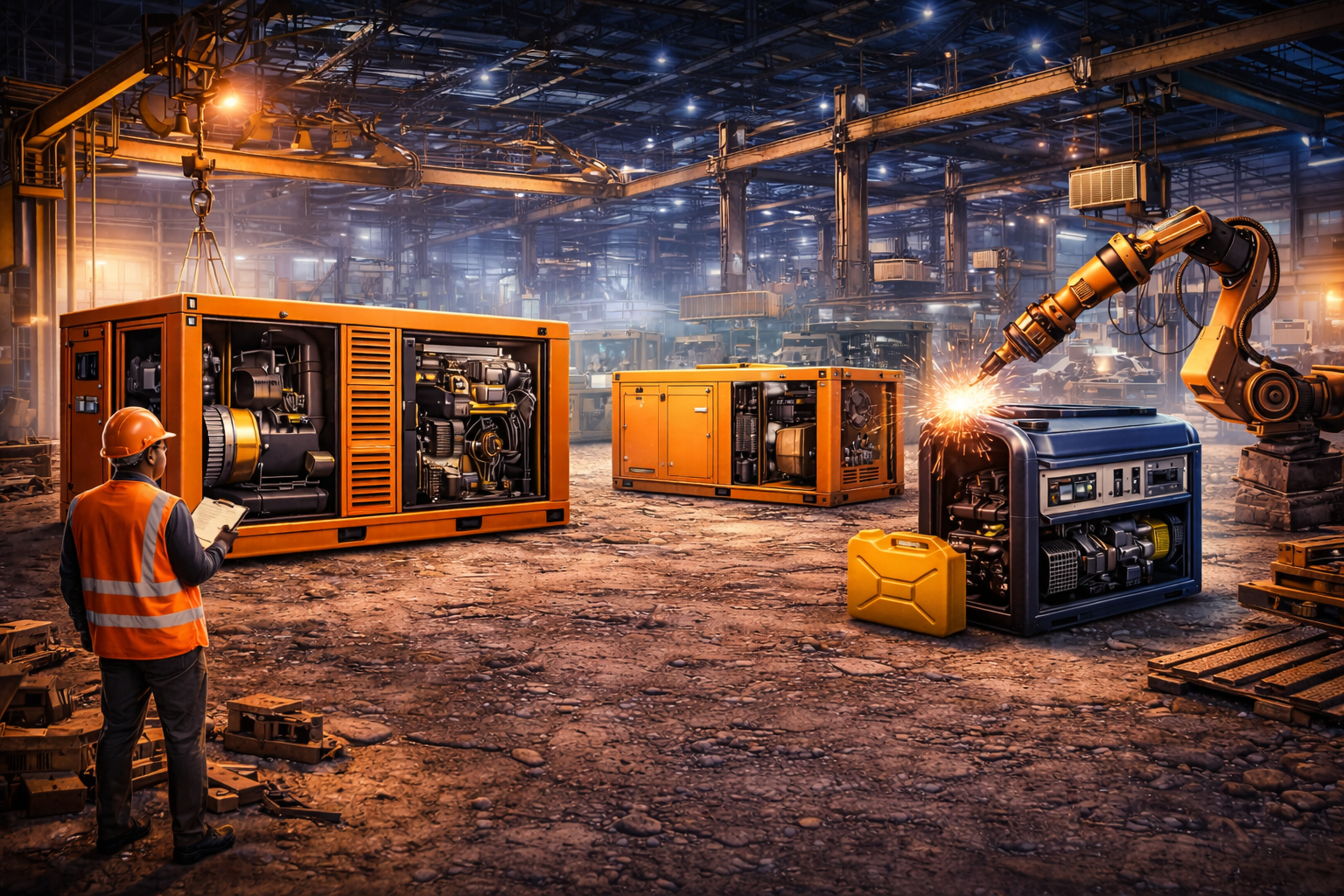
Experts recommend partnering with OEM generator suppliers as the best collaborative move. You can turn your operational requirements into highly optimized products with this strategy.
- Design and Engineering Process: The buyer submits their technical requirements, like ordering a 500 kWh standby diesel generator for cold environments. The OEM generating team then handles the schematics, load capacities, and designs the system enclosures.
- Component Sourcing: The manufacturer buys the core components from tier-one suppliers. For example, sourcing a Perkins engine, a Stamford alternator, and a Deep Sea controller.
- Assembly and Quality Control: Next comes the assembly of this generator. In the factory, OEM manufacturers strictly perform load bank testing of the generator to clarify whether it meets the power output requirements without overheating or not.
- Branding and Private Labeling: Before shipping, they paint the generator according to your company’s custom colors. Print out the logo, detailing the safety decals, and fine tune the custom digital interface of this power plant.
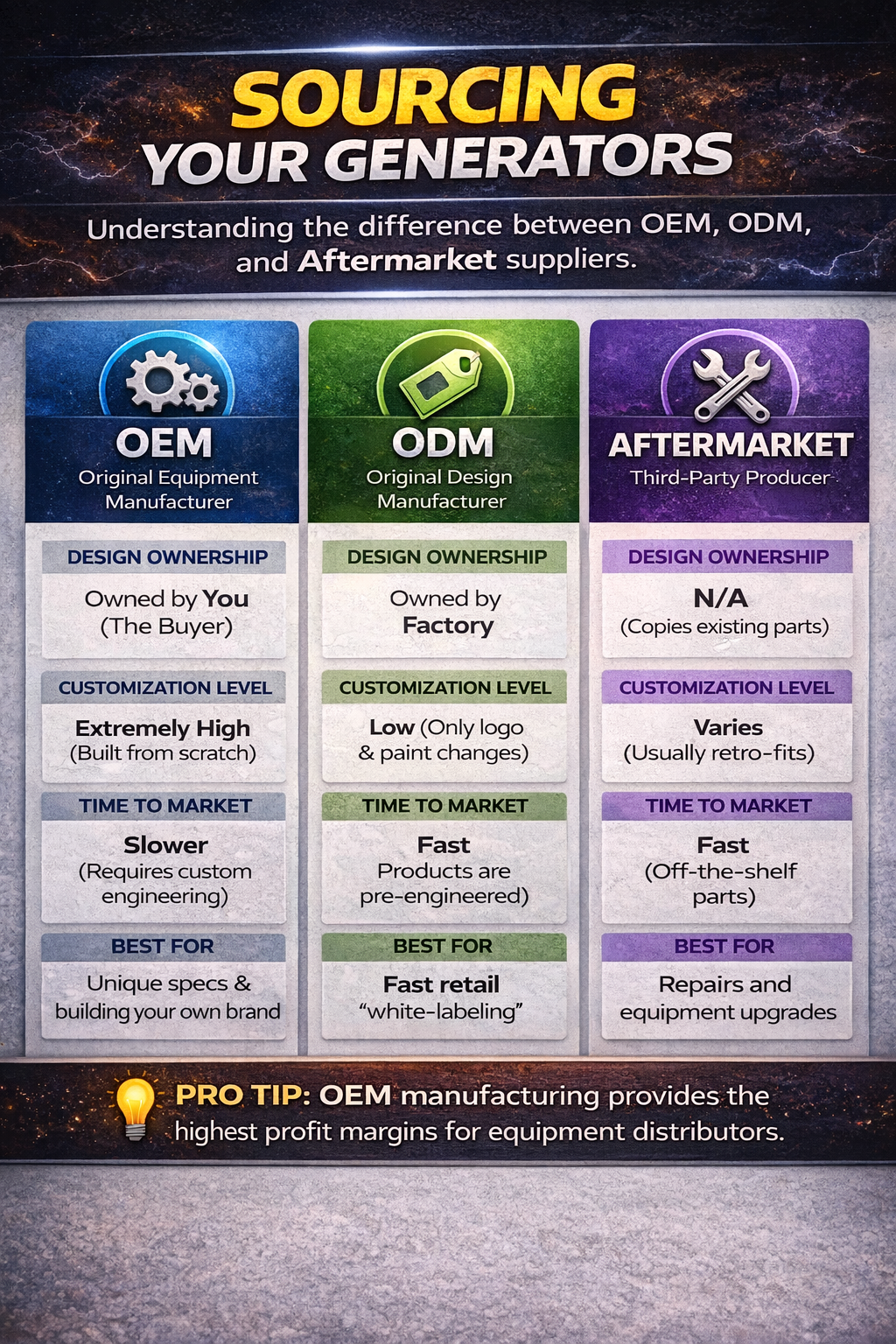
OEM vs ODM vs Aftermarket Generators
If you are new to the power backup industry, you might be struggling with how to choose the right supplier among the wide range of options available in the market.
- OEM (Original Equipment Manufacturer): The factory itself builds the generator according to the buyer’s design and energy specifications. You can say that your buyer owns the generator’s design and brand.
- ODM (Original Design Manufacturer): In ODM, the factory has a predesigned, pre-engineered generator. You simply choose from the existing models available on their site.
- Aftermarket / Third-Party: Some companies also manufacture replacement parts or modify the existing branded generators, rather than building their own models from scratch.
| Feature | OEM Generator | ODM Generator | Aftermarket |
| Design Ownership | Buyer | Manufacturer | N/A (Modifies existing) |
| Customization Level | Extremely High | Low to Moderate | Varies |
| Time to Market | Slower (Custom engineering) | Fast (Ready-made designs) | Fast |
| Best For | Unique industrial applications | Quick retail / Private labeling | Repairs and upgrades |
Benefits of Buying an OEM Generator
For the last five to six years, industrial buyers and global distributors have been switching to generator OEM manufacturer partnerships instead of going for ODM power machines.
Customization Options
When there is so much customization available, you do not have to compromise either on the design or the parts. If your mining site needs a dual fuel system or marine grade aluminum enclosure, OEM factories produce high quality dust filters and other parts to match your generator specifications
Cost Advantages
When you contact the factory directly, the retail price cuts from 20% to 40% per unit. Distributors can maintain highly competitive pricing for their local buyers in the markets by switching to OEM factory generators.
Quality Assurance
Top tier OEM partners directly with the leading engine builders like Perkins, Cummins, and Volvo. You have the trust of warranted replacement components with globally recognized engine builders and your custom designs, all in one place, at an affordable rate.
Brand Control
It is always a smart move to sell your private label generators under your brand name. Instead of advertising some other manufacturer’s logo on your job site, utilize these portable generators as the rolling build boards for your business.
Key Components in OEM Generator Manufacturing
An OEM power generator is always a high quality, professional, in demand power backup system with reliable components integrated within a one, enclosed system.
- Engine Manufacturers: Engine manufacturers are the pillars of OEM factories. Buyers prefer engine brands based on the availability of local parts. For instance, companies prefer Kubota for portable generators while an MTU for huge data centers.
- Alternators: Alternators are your magical components that convert mechanical energy into electricity. Top OEM prefers copper alternators from renowned brands like Mecc Alte or Leroy Sommer.
- Control Systems: For generator paralleling or automatic startups, manufacturers prefer digital telemetry while utilizing Deep Sea or ComAp controllers.
- Fuel Systems: Customized fuel tanks designed to meet the buyer’s requirements can easily store fuels for at least 24 or 48 hours of backup electricity.
- Enclosures: Weather resistant, soundproof canopies designed to meet strict municipal noise regulations and tackle harsh environmental conditions.
What Buyers Should Check Before Choosing an OEM Generator Supplier
Not all factories manufacture the same quality OEM generators. With thorough evaluation, you can avoid costly supply chain disasters by partnering with the right manufacturer brands.
Certifications & Compliance (ISO, CE, etc.)
Always ask whether the factory has ISO 9001 quality management and ISO 14001 environmental management certifications or not. Check whether the generator qualifies for the import regulations of your country or not. CE marks for Europe, EPA Tier 4 final compliance for the US, and the list goes on.
Production Capacity
Can the factory handle your generator volume or not? What if you need fifty 100 KW generators within two months? Whether the supplier has the space, technicians, and supply chain to match the deadline.
Warranty & After-Sales Support
The generator is always a long term investment. Ask the factory what their OEM warranty covers. The general warranty of OEM generators falls in a bracket of one year or 1000 running hours. Double check whether they ship replacement parts globally within 48 hours (about 4 days) or not.
Minimum Order Quantity (MOQ)
Sometimes, you need to book a 20 foot shipping container worth of generators. What if you need only a huge 2 MV unit? Whether the OEMs can accommodate these high capacity orders. Or do you have to look for another supplier?
Lead Time
Be patient as custom engineering takes time. From the approval of the CAD drawings to the final port of generator loading date, communicate to decide the exact timeline.
Customization Options in OEM Generators
People partner with OEM manufacturers to get their exact market specifications at affordable rates.
- Power Capacity: From a tiny 5 kW Portable Generator to a massive 3 MV continuous power OEM diesel generator plant, you can customize your power backup system according to your requirements.
- Fuel Type: You have the freedom to choose between diesel, natural gas, liquid propane, or hybrid bi-fuel setups.
- Voltage & Frequency: Enjoy the customization features for alternators with power output ranging from 50 Hz to 60 Hz. Or, whether you need a single phase or three phase power, depending upon your country’s grid standards, design the power backup system accordingly.
- Branding & Packaging: For premium branding and packaging, go for custom paint matching like RAL colors, laser cut premium vibe logos on the steel canopy, and local user manuals.
- Smart Monitoring Systems: Now, OEM manufacturers install IoT sensors so you can monitor fuel levels and oil pressures even from your smartphone app.
Pricing Factors in OEM Generator Manufacturing
When it comes to invoices, the OEM generator manufacturing budget depends on several factors, including:
- Materials: From stainless steel to marine grade aluminum enclosures, or the standard powder coated carbon steel, every material has a different price.
- Engine Brand: Choosing premium Western engine brands like Caterpillar or Perkins adds some extra money to your generator cost. Or, for affordable options, choose Chinese domestic engines like Weichai or Yuchai.
- Power Rating: The larger the kWh output, the huge the engine, alternator, and copper requirements will be, adding to the price.
- Order Volume: If you order in bulk, like 50 generators at once, the OEM manufacturers will lower the per unit price due to the wholesale order.
- Shipping & Logistics: Sea freight is high for heavy steel containers in comparison to the land travel cost type.
Common Mistakes Buyers Should Avoid
- Choosing Based on Price Only: If you, for saving the budget unnecessarily, choose the cheapest factory available. They might manufacture generators under a fake brand name, aluminum wound alternators instead of using the proper material, with no quality control.
- Ignoring Certifications: Importing generators has no credibility for local emissions or electricity safety standards. In the long run, this will destroy your shipment, and the customs officers will seize this delivery.
- Not Verifying Factory Capability: Always ask for a live video tour of your manufacturer’s assembly line or hire a third-party inspector to evaluate the company’s claim to avoid scams.
- Overlooking Service Support: Buying a good generator from a reputable OEM factory is always useless if they ignore your emails when you need some replacement voltage regulators after two years.
How to Choose the Right OEM Generator Manufacturer
Checklist for Buyers:
- Double check your factory’s business license and ISO certificates.
- Ask for a detailed bill of materials to confirm whether they use the exact internal components from the brands you asked for.
- Ask for references or reviews from their buyers in your region.
- It’s better to request a small unit; just buy a portable generator before committing to a huge wholesale order with them.
Red Flags to Watch: If the factory denies any third party inspections or unusually lowers their prices in comparison to the market average. They are the red flags you must never work with. These companies have nonsense answers when asked about emission compliance. Immediately cancel any ongoing deals if you notice these red flags.
OEM Generator Manufacturing Trends in 2026
The power generator industry is evolving like never before in 2026.
Key trends circulating nowadays include:
- Smart modern generators have a remote monitoring system.
- People now prefer hybrid diesel battery systems.
- Low emission technology is trending.
- AI-based performance optimization is becoming a priority nowadays.
- Renewable energy integration is the new trend people are following.
Buyers must always consider future optimized solutions when choosing suppliers for their power backup systems.
Final Thoughts
When entering the world of OEM generator manufacturing, you are going to enter a broader canvas full of businesses, contractors, and distributors, along with their premium, custom power solutions. It’s high time to surpass those old traditional retail markups and buy customized generators according to your operational and environmental requirements. The key to success lies in partnering with highly certified, transparent manufacturers who install premium components and offer 24/7 sales support after selling you their equipment.
Need a World-Class OEM Manufacturing Partner? Contact Huaquan
Do not compromise on overpriced or low quality retail brands. Contact HuaQuan now to discuss your custom OEM generator requirements. Being the leading globally certified manufacturer, we manufacture premium diesel, gas, and hybrid power systems to match your energy specifications and branding needs.
Frequently Asked Questions
What does an OEM generator mean?
An OEM generator is manufactured by one company and is sold under the name of another company’s brand name.
Are OEM generators reliable or not?
Yes. Reliability depends on what kind of parts your manufacturer uses while building a custom generator.
Can I customize an OEM generator?
OEM generators are easily fully customizable in terms of power capacity, design, fuel type, and even branding.
Who should buy an OEM generator?
Distributors, rental companies, contractors, and energy providers prefer buying OEM generators for maximum revenue.