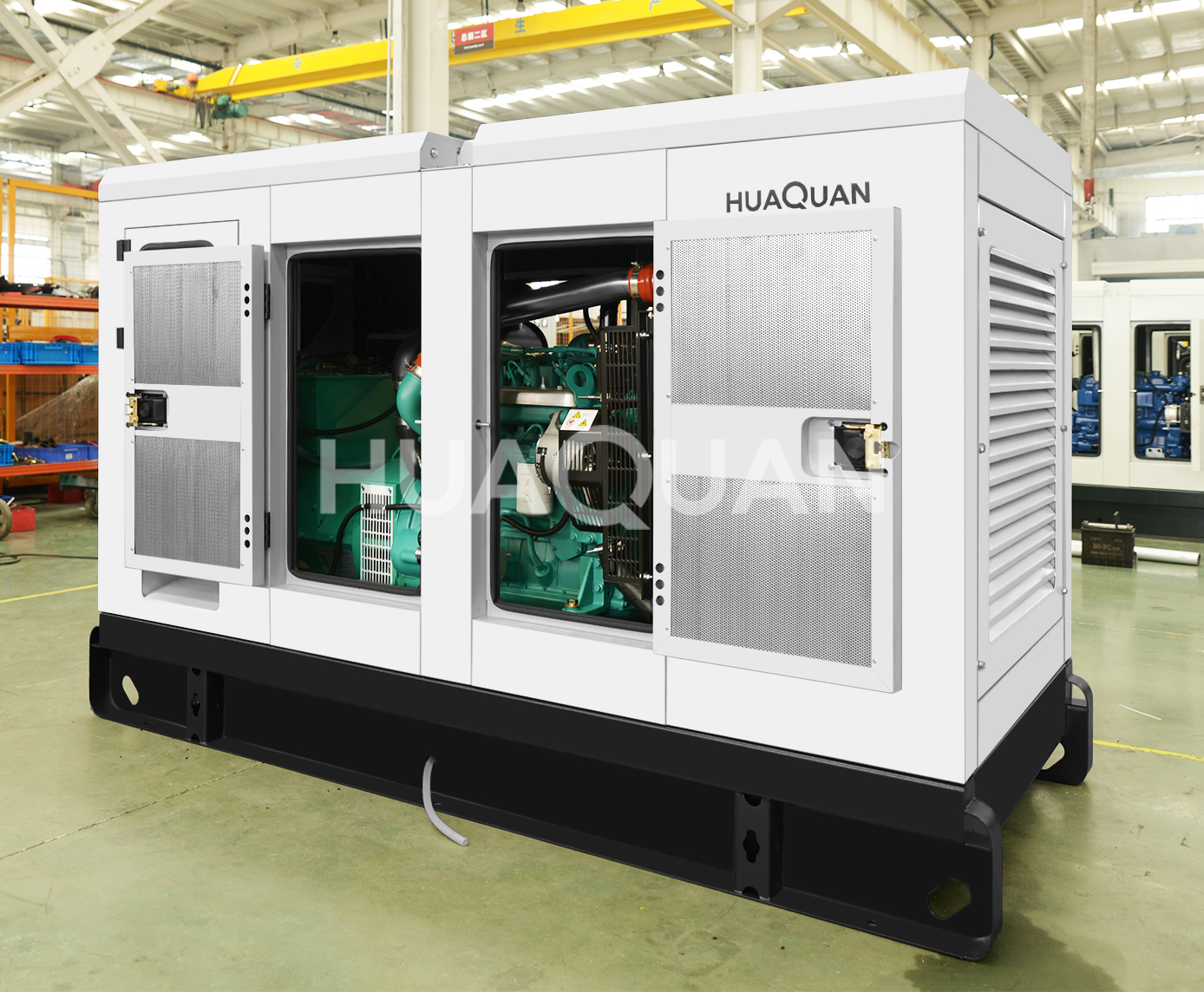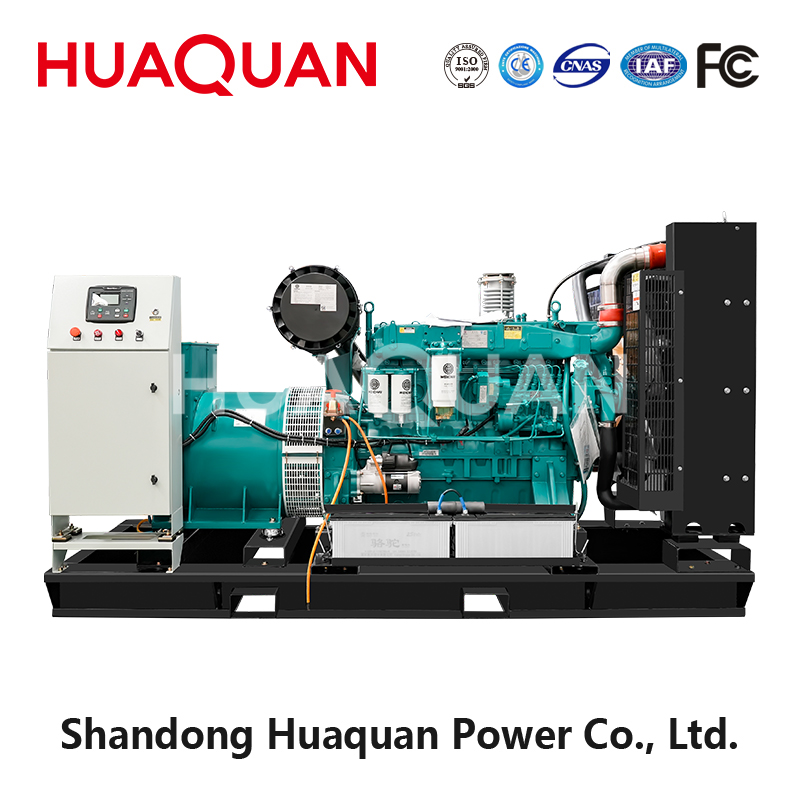
What Is the Steady-State Frequency Drop Tolerance for Diesel Generator Sets?
Steady-state frequency regulation is a critical performance parameter for diesel generator sets because many connected loads require stable frequency for proper operation. Huaquan Power designs diesel generator sets with precise frequency control capabilities that meet or exceed international standards for all performance classes. 最后, understanding steady-state frequency drop tolerance helps engineers specify the correct governor type and control system for their specific application requirements. 此外, frequency stability directly affects the performance of motor-driven equipment, electronic power supplies, and process control systems that depend on consistent frequency to maintain speed regulation, voltage quality, and timing accuracy throughout the connected electrical distribution system.
Understanding Governor Droop and Frequency Regulation
The governor controls the diesel engine speed, which directly determines the alternator output frequency through the relationship between rotational speed and electrical frequency. 具体来说, steady-state frequency drop, also known as droop, represents the intentional reduction in frequency that occurs as load increases from no-load to full-load conditions. 重要的是, some droop is necessary for stable parallel operation, while single-unit installations may benefit from isochronous control that maintains constant frequency regardless of load changes. Huaquan Power offers both droop and isochronous governor configurations to match different application needs and operating modes.
| 调速器类型 | Steady-State Frequency Drop | 设定范围 | 并联运行 | 典型应用 |
|---|---|---|---|---|
| Hydro-Mechanical | 4-6% droop | Fixed by spring preload | Stable (droop required) | Basic standby systems |
| 电子的 (Droop Mode) | 0-5% 可调节的 | Software configurable | Stable (3-5% 受到推崇的) | Parallel operation plants |
| 电子的 (Isochronous) | 0% droop | ±0.25% regulation | Not suitable (单个单元) | Island mode, UPS-quality |
| Digital CAN-Bus | 0-10% programmable | Full range software | Auto-switching capability | 数据中心, critical facilities |
| Dual Mode (Auto) | Adaptive 0-5% | Auto-select based on units online | 无缝过渡 | Multi-unit intelligent plants |
此外, the steady-state frequency deviation depends significantly on the governor deadband setting, which prevents the governor from continuously hunting around the set point and causing oscillations in fuel delivery. A typical electronic governor deadband of ±0.2% ensures stable operation while maintaining frequency within acceptable limits for most commercial and industrial loads. Huaquan Power controllers allow precise deadband adjustment to optimize the balance between stability and regulation accuracy for each specific installation and load profile.
IEC and International Frequency Standards
International standards define the acceptable frequency tolerances for diesel generator sets under various operating conditions and performance classes. 具体来说, 国际电工委员会 60034-1 和 国际标准化组织 8528-5 establish the frequency regulation requirements that Huaquan Power 发电机 must meet to receive type certification. These standards specify different tolerance levels based on the application class and operating mode, with stricter requirements for applications involving frequency-sensitive loads such as telecommunications equipment, data processing systems, and precision manufacturing machinery.
| 标准 | Application Class | Steady-State Tolerance | Transient Tolerance | 恢复时间 |
|---|---|---|---|---|
| 国际标准化组织 8528-5 G1 | 通用 | ±5% (47.5-52.5 赫兹) | -15% 到 +20% | 10 秒 |
| 国际标准化组织 8528-5 G2 | 商业/工业 | ±2% (49-51 赫兹) | -10% 到 +15% | 5 秒 |
| 国际标准化组织 8528-5 G3 | Telecom/data center | ±1% (49.5-50.5 赫兹) | -7% 到 +10% | 3 秒 |
| 国际电工委员会 60034-1 | General machine | 额定值的±5% | Not specified | Not specified |
| MIL-STD-705 | Military | ±0.5% (49.75-50.25 赫兹) | ±3% | 2 秒 |
此外, Huaquan Power generators in the G3 performance class achieve steady-state frequency regulation within ±0.5% through advanced digital governor control algorithms that continuously adjust fuel delivery based on real-time speed measurement. 所以, these units are suitable for the most demanding frequency-sensitive applications including telecommunications equipment, precision manufacturing processes, 和 数据中心 power distribution systems where even small frequency deviations can cause equipment malfunctions or data corruption.
Factors Affecting Steady-State Frequency Performance
Multiple factors influence the steady-state frequency performance of a diesel generator set during operation. 具体来说, engine power reserve relative to the connected load, governor response speed and deadband, fuel system condition and fuel quality, and load characteristics including power factor and load type all contribute to the frequency regulation achieved. 最后, a comprehensive assessment of all these factors is necessary to accurately predict the actual frequency performance at a given installation under all expected operating conditions.
| 因素 | Effect on Frequency | Typical Impact | 减轻 | Monitoring Method |
|---|---|---|---|---|
| Engine Power Reserve | Higher reserve improves stability | 10% reserve = ±0.5% better | Proper sizing | Load vs rated power ratio |
| 燃油质量 | Poor fuel degrades governor response | Low cetane = slower response | Fuel conditioning | Fuel sample analysis |
| Injector Condition | Degraded injectors cause speed variation | Worn = ±1% additional | Injector testing/replacement | Exhaust smoke monitoring |
| 环境温度 | Affects engine torque output | High temp = reduced power | 冷却系统维护 | Coolant temperature gauge |
| Load Power Factor | Low PF increases kVA demand | 0.7 PF = 40% more kVA | 功率因数校正 | Power meter PF reading |
而且, Huaquan Power digital monitoring systems continuously track frequency performance and alert operators when steady-state frequency deviates beyond configured alarm thresholds. 重要的是, this proactive monitoring enables maintenance intervention before frequency deviations affect sensitive connected loads, and the trend data helps identify gradual degradation in governor performance or fuel system condition that may require corrective maintenance before causing operational problems.
Measurement and Testing Methods
Accurate measurement of steady-state frequency performance requires specialized instrumentation and standardized test procedures that eliminate measurement uncertainty. 具体来说, the frequency must be measured at the generator terminals under stable load conditions, with sufficient settling time to ensure that transient effects have fully decayed to negligible levels. Huaquan Power recommends using a power quality analyzer with at least 0.01 Hz resolution for frequency regulation testing, combined with data logging capability that captures frequency variations over extended time periods.
| Test Parameter | Instrument Required | Resolution | Measurement Duration | 验收标准 |
|---|---|---|---|---|
| Steady-State Frequency | 电能质量分析仪 | 0.01 赫兹 | 60 seconds per load step | Within ISO 8528 class limit |
| 频率稳定性 | Digital frequency meter | 0.001 赫兹 | 10 minutes continuous | Variation <±0.1% over 10 分钟 |
| Load Step Response | 示波器 + CT | 1 millisecond | 30 seconds per step | Per ISO 8528 transient class |
| Governor Deadband | Frequency recorder | 0.001 赫兹 | 15 minutes at constant load | Frequency variation <deadband |
| Parallel Sharing Accuracy | Multi-channel power analyzer | 0.1 千瓦 | Each load step 5 分钟 | Within ±5% of proportional share |
此外, Huaquan Power service engineers conduct comprehensive frequency performance testing during commissioning and periodically during scheduled maintenance overhauls. These tests establish a performance baseline that represents the generator’s capability when new and properly adjusted, and subsequent tests reveal any degradation in governor response or fuel system condition that may require corrective maintenance before frequency problems affect critical connected loads.
Frequency Impact on Connected Equipment
Steady-state frequency deviations directly affect the performance and reliability of frequency-sensitive equipment connected to the diesel generator system. 具体来说, induction motor speed changes proportionally with frequency, pump and fan flow rates vary with speed, and electronic power supplies may experience increased input ripple voltage or switch to battery backup at extreme frequency deviations. 所以, understanding the frequency sensitivity of connected loads helps determine the required frequency regulation class for the generator set and avoids overspending on performance classes that exceed actual load requirements.
| 设备类型 | Frequency Sensitivity | Impact at ±2% Frequency | Impact at ±5% Frequency | Recommended Generator Class |
|---|---|---|---|---|
| Induction Motors | Speed proportional to f | ±2% speed change | ±5% speed change | G2 minimum |
| Centrifugal Pumps | Flow varies with speed² | ±4% flow change | ±10% flow change | G2 recommended |
| UPS Systems | Input range dependent | Typically OK at ±2% | May switch to battery at ±5% | G2 or G3 |
| VFD Drives | 一般都能耐受 | Minor impact | DC bus voltage affected | G1 acceptable |
| Medical Equipment | High sensitivity | Calibration drift possible | Functionality affected | G3 required |
此外, Huaquan Power application engineers analyze the complete load inventory to identify frequency-sensitive equipment and specify the appropriate ISO 8528 performance class for each installation. 最后, this detailed analysis ensures that the selected generator set delivers adequate frequency regulation for all connected loads without requiring unnecessary cost premiums for higher-performance classes that exceed the actual requirements of the specific equipment being powered.
常问问题 Section
Q1: What is the difference between steady-state frequency drop and transient frequency deviation?
Steady-state frequency drop refers to the permanent frequency change that remains after the governor stabilizes at a new load level, measured over seconds to minutes after the initial transient event. Transient frequency deviation is the temporary frequency swing during the transition from one load level to another, lasting only milliseconds to a few seconds until the governor responds. Huaquan Power generator sets must meet both steady-state and transient frequency specifications simultaneously to ensure reliable operation of sensitive equipment during load changes and during prolonged steady-state operation periods.
Q2: How does low power factor affect frequency regulation?
Low power factor increases the kVA load on the generator while the actual kW load remains essentially unchanged. 最后, the engine must supply more apparent power through the alternator, which may exceed the engine’s power capability even if the kW rating appears within limits. This effectively reduces the power reserve margin and degrades frequency regulation because the governor has less torque margin available to maintain speed during load fluctuations. Huaquan Power recommends maintaining power factor above 0.85 to preserve adequate frequency regulation performance under all operating conditions.
第三季度: Can I upgrade my generator’s governor for better frequency regulation?
是的, upgrading from a hydro-mechanical governor to an electronic or digital governor significantly improves frequency regulation accuracy. 具体来说, a hydro-mechanical governor typically achieves only 4-6% droop with limited adjustability, while an electronic governor provides adjustable 0-5% droop with ±0.25% regulation accuracy in isochronous mode. Huaquan Power offers complete governor upgrade kits for most generator models, including wiring harnesses, speed sensors, and actuator components that minimize installation downtime and restore optimal frequency regulation performance.
第四季度: What causes gradual frequency drift during extended operation?
Gradual frequency drift during extended operation typically results from fuel system degradation, governor linkage wear, or changes in fuel temperature that affect injection timing and fuel delivery rate. 此外, engine wear that increases internal friction or reduces compression pressure can cause gradual frequency drift over thousands of operating hours as the engine produces slightly less torque for the same fuel delivery. Huaquan Power recommends periodic governor calibration checks and fuel system inspections to identify and correct the root cause of gradual frequency drift before it affects sensitive connected load equipment.
Q5: How does parallel operation affect individual generator frequency?
In properly configured parallel operation, all generators operate at exactly the same electrical frequency because they are electrically synchronized and locked together through the common bus. 然而, individual governor droop settings determine how each unit shares load changes within the synchronized system. 具体来说, units with tighter droop settings respond more aggressively to load changes and absorb a larger share of load transients. Huaquan Power parallel controllers automatically manage droop settings and load sharing to maintain both system frequency stability and proportional load distribution across all paralleled generator units.
- Specify the correct ISO 8528 performance class based on the frequency sensitivity of your connected equipment
- Ensure adequate engine power reserve margin to maintain steady-state frequency within tolerance under all load conditions
- Implement continuous frequency monitoring with automated alerts for early detection of governor or fuel system degradation
联系华泉电力 for expert frequency performance analysis, governor selection, and comprehensive commissioning testing to ensure your diesel generator set meets all frequency regulation requirements.