Propane and natural gas are the most stable fuels for generator storage — they do not degrade, gum, or varnish over time because they are stored as gases or supercritical liquids in sealed, pressurized containers. Diesel is moderately stable with a shelf life of 12–24 months when properly treated. Gasoline is the least stable — it begins to degrade within 30–60 days and is typically unusable after 3–6 months without stabilizer, and even with stabilizer, it deteriorates measurably after 12 月.
燃料降解: What Actually Happens
Gasoline Degradation
Gasoline is a complex mixture of hundreds of hydrocarbons, including light aromatics (benzene, toluene) and branched alkanes (isooctane). The degradation process starts as soon as it’s exposed to air:
- 氧化 (days 1–30): Oxygen in the air reacts with unsaturated hydrocarbons to form peroxides. These peroxides then polymerize into soluble gums — sticky deposits that clog carburetor jets and fuel passages.
- Volatile loss (weeks 1–12): The lightest hydrocarbons (butane, pentane, hexane) evaporate through the permeable walls of plastic gas cans and the carburetor bowl vent. Loss of these volatiles reduces the fuel’s octane rating and makes cold starting difficult.
- Ethanol phase separation (months 1–6): If the gasoline contains ethanol (E10 — 10% 乙醇, which is standard across most of the US), ethanol absorbs water from humid air. When the absorbed water exceeds ~0.5% of fuel volume, the ethanol-water mixture separates from the gasoline and sinks to the bottom of the tank — pulling octane-enhancing aromatics with it. The remaining fuel has lower octane and the separated layer corrodes metal components.
- Complete gum formation (months 6–12): The oxidation polymers harden into a varnish-like substance that coats carburetor surfaces, sticks float valves shut, and blocks idle circuits.
Diesel Degradation
Diesel is more stable than gasoline but has its own failure modes:
- Microbial growth (months 3–12): Water in diesel fuel (from condensation in partially full tanks) supports growth of bacteria and fungi — commonly called “diesel bug.” Microbes form slimy biofilms that clog 燃油滤清器s and produce acidic byproducts that corrode injectors.
- Oxidation and sediment (months 12–24): Diesel oxidizes more slowly than gasoline but eventually forms insoluble sediments and darker color. The standard ASTM D975 specification for diesel stability is 12 months minimum.
- Biodiesel blend issues: B5–B20 biodiesel blends (5–20% biodiesel) are more prone to microbial growth and oxidation than pure petrodiesel. Biodiesel breaks down 2–4× faster than petrodiesel in storage.
Fuel Shelf Life Comparison
| 燃料类型 | Untreated Shelf Life | Treated Shelf Life | Degradation Mechanism | Sign It’s Bad |
|---|---|---|---|---|
| 丙烷 | 不定 (密封的) | 不适用 | None — stored as liquid in sealed container | Rust in tank (rare); odorant fade (over years) |
| 天然气 | 不适用 (piped) | 不适用 | N/A — not stored, delivered continuously | 不适用 |
| 柴油机 (超低硫柴油) | 6–12 months | 12–24 months (with biocide) | Microbial growth, oxidation sediment | Dark color, sludge in filter, fuel smells “sour” |
| 汽油 (0% 乙醇) | 3–6 months | 12–18 months (with stabilizer) | Oxidation gums, volatile loss | Varnish smell, gum in carburetor, won’t start |
| 汽油 (E10 ethanol) | 1–3 months | 6–12 months (with stabilizer) | Phase separation, 腐蚀, gum | Milky or cloudy appearance, rusty tank interior |
Best Storage Practices for Each Fuel
Gasoline Storage
- Use only UL-approved, opaque plastic or steel gas cans — light accelerates degradation
- Add fuel stabilizer (Sta-Bil, Sea Foam, Star Tron) at the manufacturer’s dosage (通常 1 oz per 2.5 加仑) immediately when you fill the can
- Fill cans to 95% capacity — air space above fuel contains oxygen that drives oxidation
- Store in a cool, dark location (below 70°F / 21℃) — every 10°F increase doubles the oxidation rate
- Label cans with fill date — rotate stock, using oldest fuel first
- Do not store gasoline inside a 家, attached garage, or basement — store in a detached shed or well-ventilated outbuilding
- Ethanol-free fuel (REC-90 or aviation fuel) stores 2–3× longer than E10 — use it for long-term generator storage if available in your area
Diesel Storage
- Use a dedicated diesel storage tank with a water-separating filter and vent cap
- Keep the tank full to minimize condensation — a half-full 55-gallon drum can accumulate 1–2 gallons of water over a year of temperature cycling
- Add a fuel biocide (Biobor JF, FuelOx) annually — dosage: 1 oz per 100 gallons for Biobor JF
- Use a fuel stabilizer (Diesel Kleen, Power Service) designed for ULSD fuel to improve oxidation stability
- Test fuel annually — if it smells sour or has visible sediment, have it polished (filtered through a high-efficiency filtration system) or replaced
Propane Storage
- Store tanks upright on a concrete or gravel surface above ground — never in a basement, garage, or enclosed area
- Inspect tanks annually for rust, 凹痕, and valve damage — recertification required every 10–12 years
- Keep tanks at least 10 feet from generator 排气系统 and any ignition source
- Replace the tank’s overfill protection valve (OPD) if it’s older than 2003 — required by NFPA 58
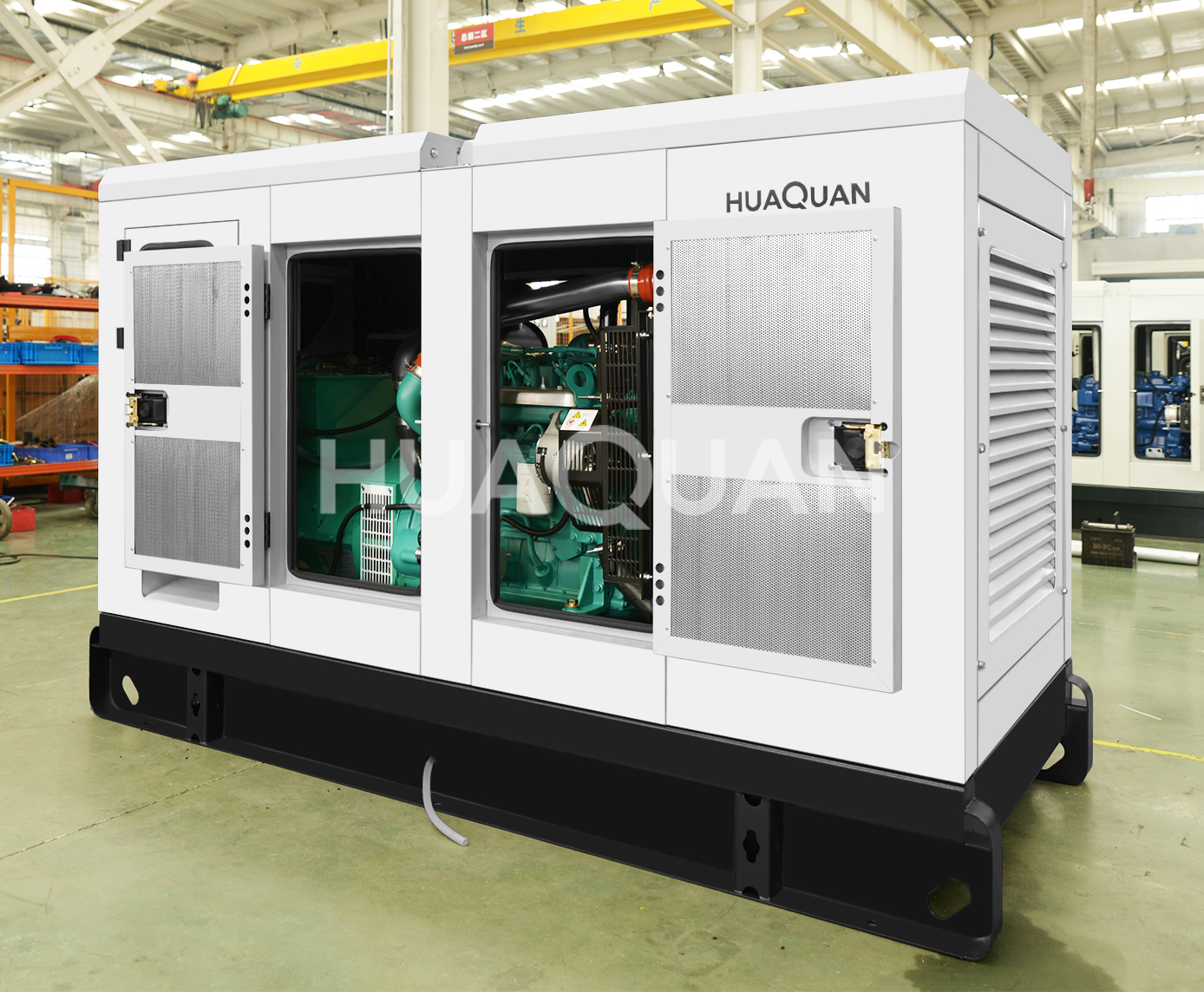
For applications that demand long-term fuel stability without storage concerns, 华泉动力柴油发电机组 paired with proper fuel management practices provide reliable backup power with diesel’s favorable storage characteristics.