介绍
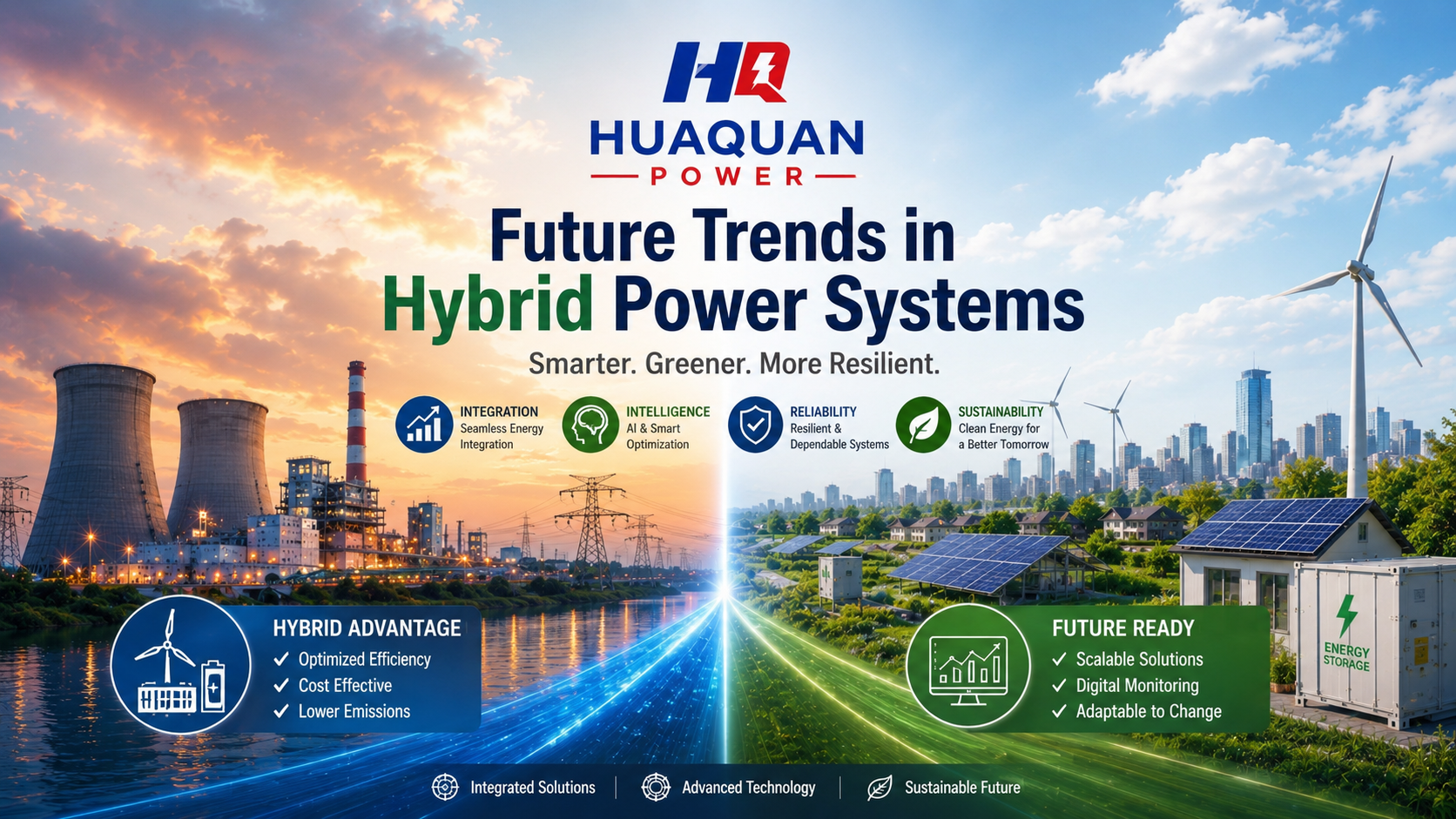
Energy production is a crucial phenomenon when you own a construction site or a manufacturing company. 所需任务的产生和完成比什么都重要. 然而, 混合动力系统在能源行业占据主导地位.
But the question is about how this hybrid energy will go in the future. Will there be an increasing adoption? 今天, we will discuss all the future trends of the hybrid power systems.
What is a Hybrid Power System?
A hybrid power system is a combination of technologies that allows power generation by multiple sources. 例如, you get connected to the utility grid while having an independent energy system. Whenever the grid fails, you can switch the energy source to your independent energy option. It doesn’t affect your energy production capabilities.
There are a few crucial components of a hybrid power system. 例如:
- 太阳能光伏 (光伏发电) 系统
- 风力涡轮机
- Battery Energy Storage Systems (贝斯)
- 柴油机 发电机
- 天然气发电机
- 燃料电池
- 公用电网连接
- 能源管理系统 (特快专递)
By the use of all this equipment and tools, you get energy from more than one source. 例如, the solar system is a standalone source of energy. When you add the diesel generators or grid connection, it becomes a hybrid system.
| 特征 | Current Hybrid Systems | Future Hybrid Systems |
| 可再生能源并网 | 缓和 | 广泛的 |
| 电池存储 | Optional in some systems | Core component |
| 能源管理 | Rule-based | AI-powered |
| 监控 | 当地的 | Cloud-based and remote |
| 维护 | Scheduled | Predictive |
| 网格交互 | 基本的 | Smart grid integrated |
| EV Integration | 有限的 | Vehicle-to-Grid (V2G) enabled |
| 可扩展性 | 缓和 | Highly modular |
Future Trend #1: Greater Integration of Renewable Energy
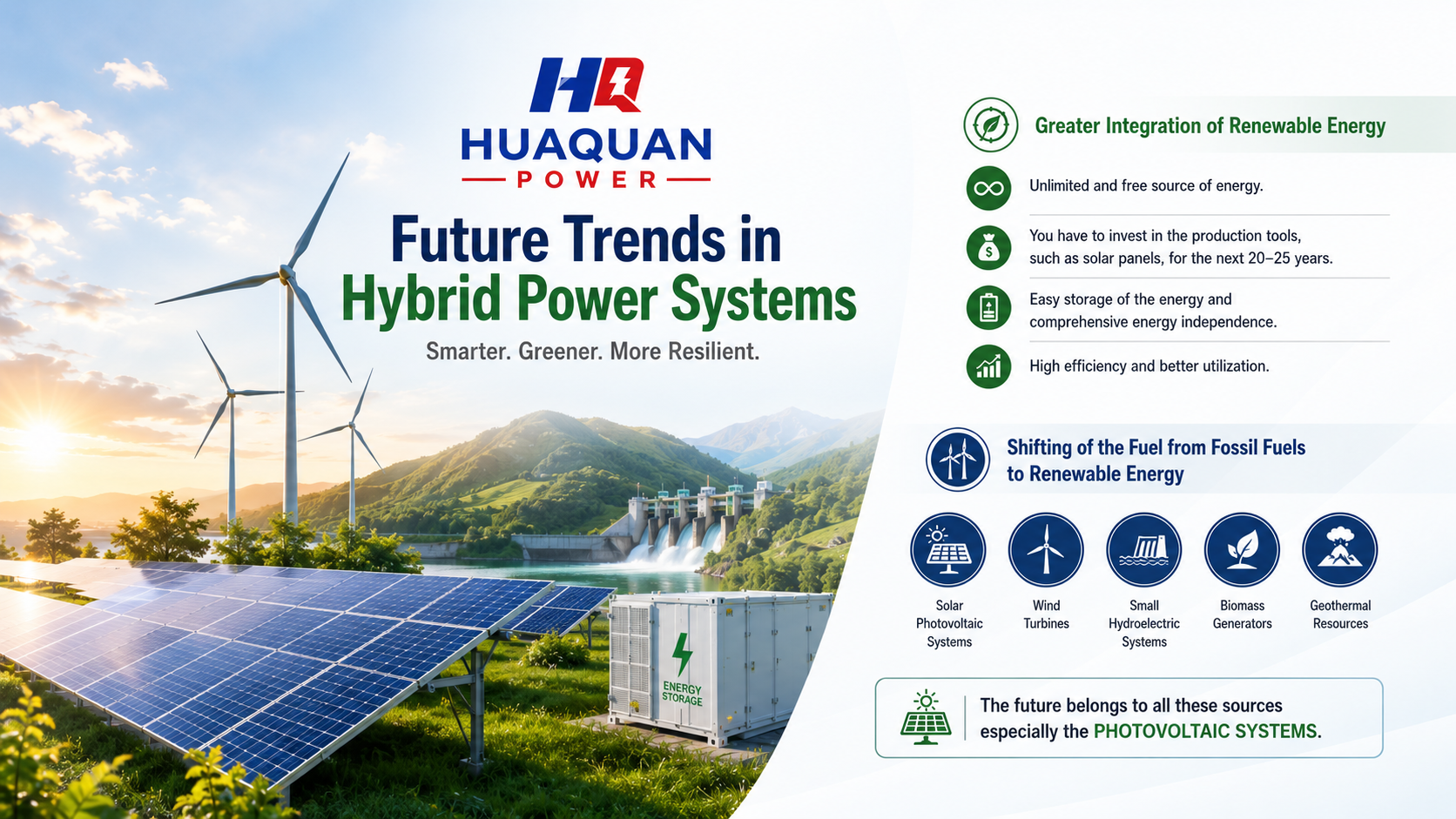
Renewable energy is the future of technology. In recent years, you might have observed the higher installation of solar panels.
你猜怎么着? 将来, there will be even more solar system adoptions. It is because of several benefits, 例如:
- Unlimited and free source of energy.
- You have to invest in the production tools, such as solar panels, for the next 20-25 年.
- Easy storage of the energy and comprehensive energy independence.
- High efficiency and better utilization
Shifting of the fuel from fossil fuels to renewable energy includes many more types. Here is the list of renewable energy resources.
- 太阳能光伏系统
- 风力涡轮机
- 小型水力发电系统
- 生物质发电机
- Geothermal resources
The future belongs to all these sources, especially the photovoltaic systems.
| Renewable Energy Source | Main Advantages | 局限性 | 最佳应用 |
| 太阳能光伏 | 干净的, low maintenance, abundant | No generation at night | 家园, 企业, microgrids |
| Wind Energy | High output in windy areas | Wind variability | Coastal and rural areas |
| Small Hydropower | Reliable continuous generation | Location dependent | 偏远社区 |
| 生物质 | Dispatchable renewable power | Fuel supply required | Agricultural and industrial facilities |
| Geothermal | 稳定的 24/7 electricity | Limited suitable locations | Regions with geothermal resources |
Future Trend #2: Rapid Growth of Battery Energy Storage Systems
After renewable energy sources, battery systems hold a significant role in hybrid power systems. There are several types of batteries.
- LiFePO4 batteries
- Lead-Acid
- 年度股东大会
Prices are dropping over the years, and batteries are expected to perform better in the systems.
A battery 储能系统 performs several tasks in the hybrid energy system. 例如:
- It stores excess solar energy and acts as a primary backup system during the outage.
- Supports and promotes wind energy generation.
- Peak shaving is the ultimate benefit of the batteries.
- 负荷转移. It transfers the load from the solar to the batteries.
- Acts as a primary Backup power
- Frequency regulation provides instant and stable frequency.
- Voltage stabilization to avoid damage to the equipment.
With the declining prices of batteries, there will be more integration of batteries in the solar system.
Future Trend #3: Artificial Intelligence for Energy Optimization
Artificial intelligence has taken this industry by storm because of the intellectual management of the system.
Integration of the AI optimizes the energy in several ways. 例如, it learns from past data and provides energy to the necessary devices during outage hours.
It can even predict the upcoming weather and optimize the energy production and storage to get ready for future disasters.
Here are a few necessary tasks artificial intelligence can handle very well.
- Generator scheduling
- 电池充电
- Renewable energy forecasting
- Electricity demand prediction
- 油耗
- 设备效率
- Maintenance scheduling
Future Trend #4: Advanced Energy Management Systems (特快专递)
The Energy Management System is the CNS of the whole system. What it does is monitor the system and manage the energy very well.
例如, it shifts the loads from the unnecessary devices to the critical devices. EMS integrated with the AI will even take future steps according to upcoming weather conditions and optimize energy even more.
Here is the list of tasks an advanced EMS can handle.
- Real-time optimization of the battery systems.
- Cloud connectivity and easier operations of the energy system.
- Remote monitoring of data.
- Predictive analytics
- Automatic fault detection
- Demand forecasting
| Battery Technology | Current Status | Future Trend |
| 锂离子 | Most widely used | Higher energy density and longer lifespan |
| Solid-State Batteries | Emerging | Improved safety and faster charging |
| Sodium-Ion Batteries | Early commercialization | Lower cost for stationary storage |
| Flow Batteries | Utility-scale applications | Longer duration energy storage |
| LFP Batteries | Rapid adoption | Greater durability and lower maintenance |
Future Trend #5: Smart Grids
Reliance on the traditional grids will be no more in the future. Better grid technology, such as smart grid systems, will dominate the whole situation very well.
It will ensure the communication between:
- 公用事业
- Consumers
- Microgrids
- Renewable energy resources
- 电池储存
- 电动车
因此, there will be more focus on the energy production and utilization of ten systems. Here are a few things under this smart system.
- 电价
- 电网需求
- Renewable generation
- Peak load events
- Grid disturbances
Future Trend #6: Microgrid Adoption
A microgrid is a separate energy storage system connected to the grid supply and generator systems. Since it offers energy independence, there will be more adoption and preference for microgrids.
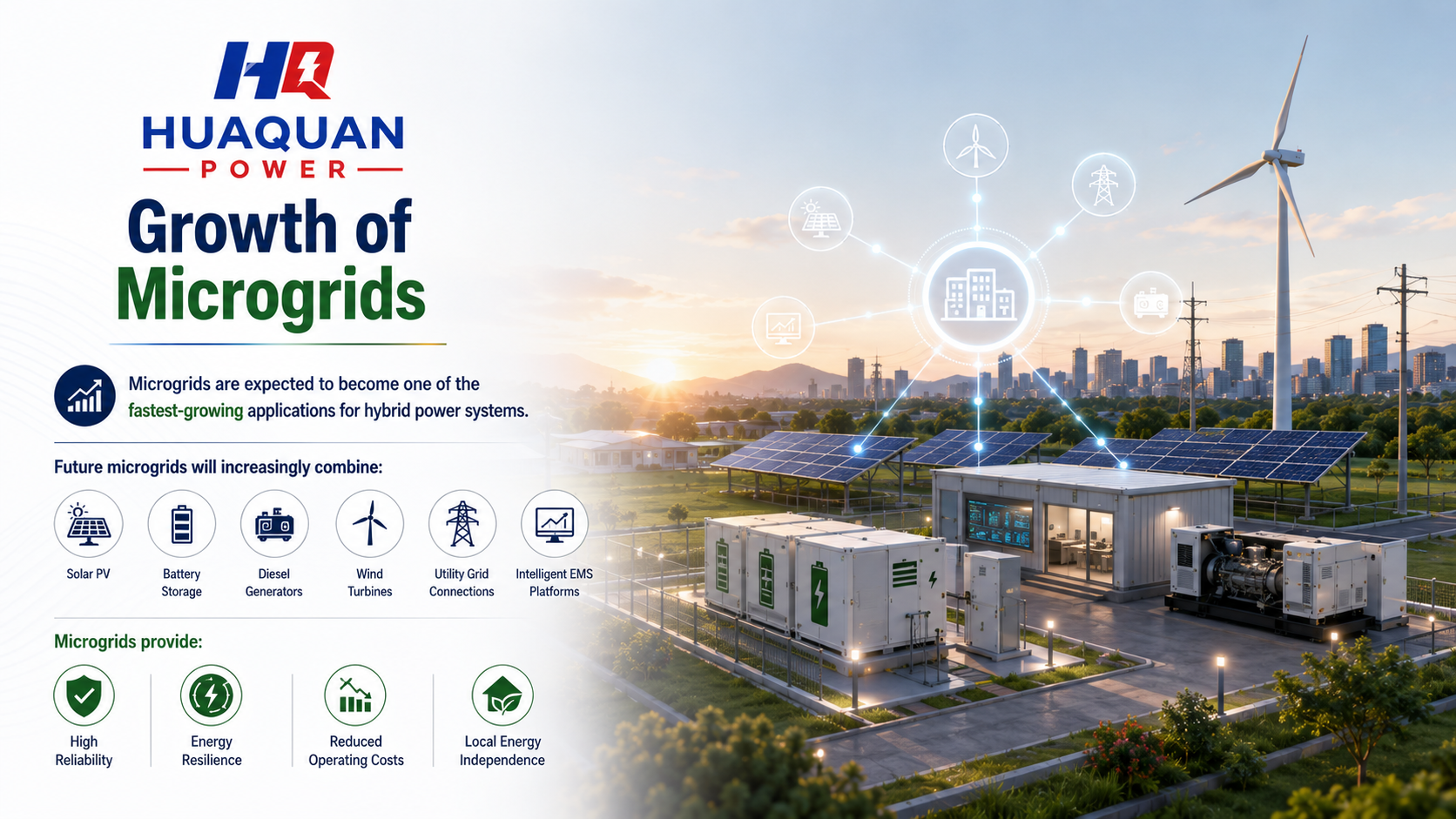
The local energy production through the microgrid systems has benefits, 例如:
- Reduced power losses and better energy storage setup.
- More energy production with the optimization of energy.
- High reliability and stable voltage supply to ensure the safety of your equipment.
- Reduced operational costs and optimal results.
Many sectors, 比如医院, 大学, 机场, 工业设施, military installations, 和偏远社区, will adopt the hybrid microgrids and provide seamless energy.
Future Trend #7: Electrical Access to Remote Communities
Remote rural areas are less likely to have electrical access. It leads to disruption of the energy. With the introduction of the hybrid grid systems, it will be easier to provide the energy to the remote communities.
例如:
- Hybrid grid systems will add more solar technology.
- Batteries will act as a backup.
- Generators will be the long-standing energy solutions.
Remote Communities away from the grid supply will enjoy energy independence this way.
Future Trend #8: Increased Use of Natural Gas Hybrid Systems
People are more conscious about the eco-friendly energy sources. They are going to adopt renewable energy sources for clean and sustainable energy.
But the diesel generator systems leave carbon footprints. There is a solution for such a system.
Natural gas generators are quieter and produce clean energy with lower carbon emissions. 所以, natural gas generators will have more adoption in the future compared to diesel generators.
Future Trend #9: Digital Twins for System Optimization
Do you want to test the system before their operations? It is beneficial because you understand and get the costs earlier. There is even a more reliable energy supply.
A digital twin is a virtual system that mimics the original system and provides detailed analysis. 你可以:
- Simulate operating scenarios
- Test control strategies
- Predict equipment failures
- Optimize maintenance schedules
- Evaluate future expansions
With this system, you can optimize and address the potential issues before they snowball into serious issues.
Future Trend #10: 预测性维护
Fixed maintenance has a servicing interval, whether there is an error in the system or not. It can detect several issues but can sometimes delay and cause potential issues.
Predictive maintenance combines advanced technology to assess the system before errors occur. It can help detect:
- Generator wear
- Battery degradation
- Inverter faults
- Cooling system issues
- Electrical abnormalities
Future Trend #11: Vehicle-to-Grid (V2G) Integration
Have you ever wondered about the dual flow of the energy? This is going to happen in the future. With the V2G integration, the energy routing occurs in both ways— vehicle to grid and grid to vehicle.
It means future hybrid systems will:
- Charge EVs during periods of excess renewable generation
- Draw electricity from EV batteries during peak demand
- Support grid frequency regulation
- Improve emergency backup power
- Reduce peak electricity costs
Future Trend #12: Hydrogen and Fuel Cell Integration
If you are looking for long-lasting fuel systems and high efficiency, hydrogen is becoming the next big technology. Its integration with the fuel cells and renewable technology is ideal, 例如:
- 太阳能光伏
- 风力涡轮机
- Battery Energy Storage Systems
- Hydrogen production through electrolysis
- Hydrogen storage
- 燃料电池
- 备用发电机
Hydrogen adoption will occur as a main fuel in future applications.
Future Trend #13: Modular and Scalable Hybrid Power Systems
Upgrades of the system are typical in future expansions. The planning can better adopt and provide the modular and scalable hybrid power systems a new life.
The benefits of the modular and hybrid power systems are:
- 较低的初始投资
- Easier upgrades
- Reduced installation time
- Greater flexibility
- Simplified maintenance
Future Trend #14: Cloud-Based Energy Management
Cloud management systems have several benefits:
- 远程监控
- Multi-site management
- Real-time alerts
- Automatic software updates
- Centralized data storage
- Performance benchmarking
With cloud management systems, there will be a better future and remote control through the different devices. Users will be able to control their systems while sitting miles away.
Future Trend #15: Enhanced Cybersecurity for Energy Systems
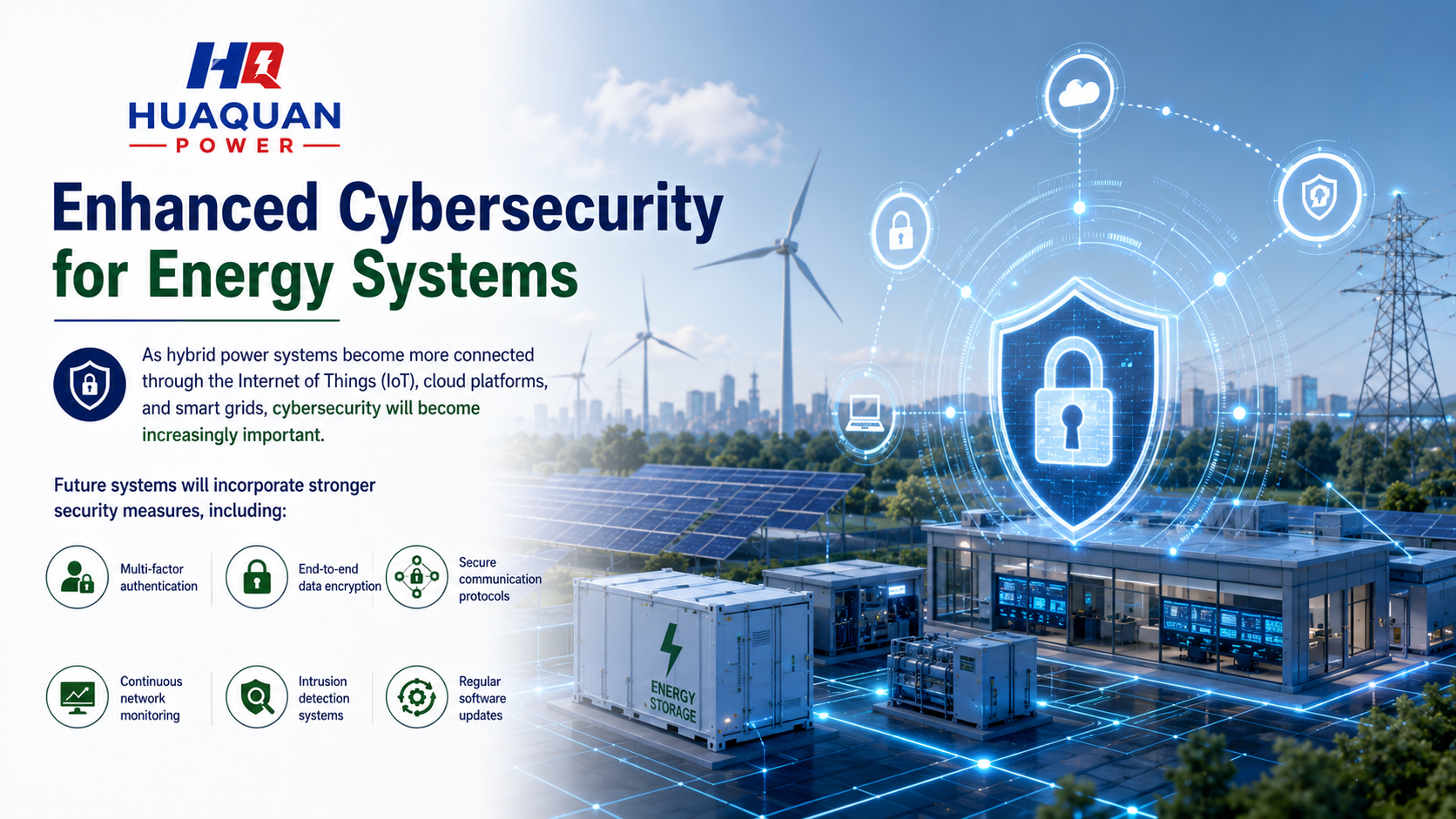
Cybersecurity is a crucial step because a system is vulnerable when connected to the cloud management systems and the Internet of Things. To better protect the system, there will be advanced security options, 例如:
- Multi-factor authentication
- End-to-end data encryption
- Secure communication protocols
- Continuous network monitoring
- Intrusion detection systems
- Regular software updates
A hybrid system will enjoy more security and benefits with the impenetrable system.
常见问题解答
- Can hybrid power systems operate without the utility grid?
是的. You can make your hybrid power an independent energy production system. 为了这, you should install solar panels, 电池, and generators for the complete backup system.
- What role will hydrogen play in future hybrid systems?
Hydrogen offers the perfect fuel for energy production. It will extend battery life and provide more energy during the outage in the long run.
- How will Artificial Intelligence improve hybrid power systems?
Artificial intelligence is a highly effective system. It does various tasks, such as optimizing energy production, forecasting electricity demand, scheduling equipment operation, detecting faults, improving maintenance planning, and reducing fuel consumption. You get higher efficiency with the AI system.
- Why are Battery Energy Storage Systems important in future hybrid systems?
Battery Energy storage systems play a crucial role in the future hybrid system. What it does is store the energy and provide it during the outage hours. 所以, the battery energy storage system acts as a backup system.
- What is the future of hybrid power systems?
Hybrid power systems are going to have more adoption in the future. There will be many more integrations, upgrades, and uses of artificial intelligence to optimize energy production and usage.
Are hybrid power systems environmentally friendly?
是的. Hybrid Power systems are eco-friendly as long as you are using solar power and battery storage systems. Only generator components are not eco-friendly.
- What is the purpose of an Energy Management System in a hybrid power system?
The energy management system assesses and enables the routing of the energy. 例如, during a power outage, it reroutes energy to the critical loads first. Energy Management System provides high efficiency in such cases.
- Which industries will benefit most from future hybrid power systems?
All those industries requiring constant energy will benefit from the hybrid power system. The common examples include healthcare, 制造业, 数据中心, 机场, 商业建筑, 教育, 矿业, 电信, 农业, 和偏远社区.
- What are the biggest challenges for future hybrid power systems?
Future hybrid power systems have several challenges ahead. 例如, high initial investment, integrating diverse technologies, maintaining cybersecurity, meeting regulatory requirements, and having the availability of skilled workers for such a system.
结论
Hybrid power systems will have a brighter future because of the higher efficiency and more energy production. The integration of artificial intelligence will even produce more energy and give better results. 如今, the whole world is moving toward a hybrid system.
If you are looking for hybrid power systems, generators are crucial backup systems. You should choose Huaquan Power for your generator solutions. 为什么? Because it has decades of experience and top-notch diesel generators. You also get after-sales support and enjoy long-standing performance!!