介绍
Whether you are working in the mining industry or building a skyscraper, 不间断的能源供应至关重要. 不带电源, 你的工作很快就会停止. 微电网系统通过为系统提供必要的电力来提高可靠性.
今天, we will understand and discuss how the microgrid system can elevate energy reliability. 让我们知道!
What is a Microgrid?
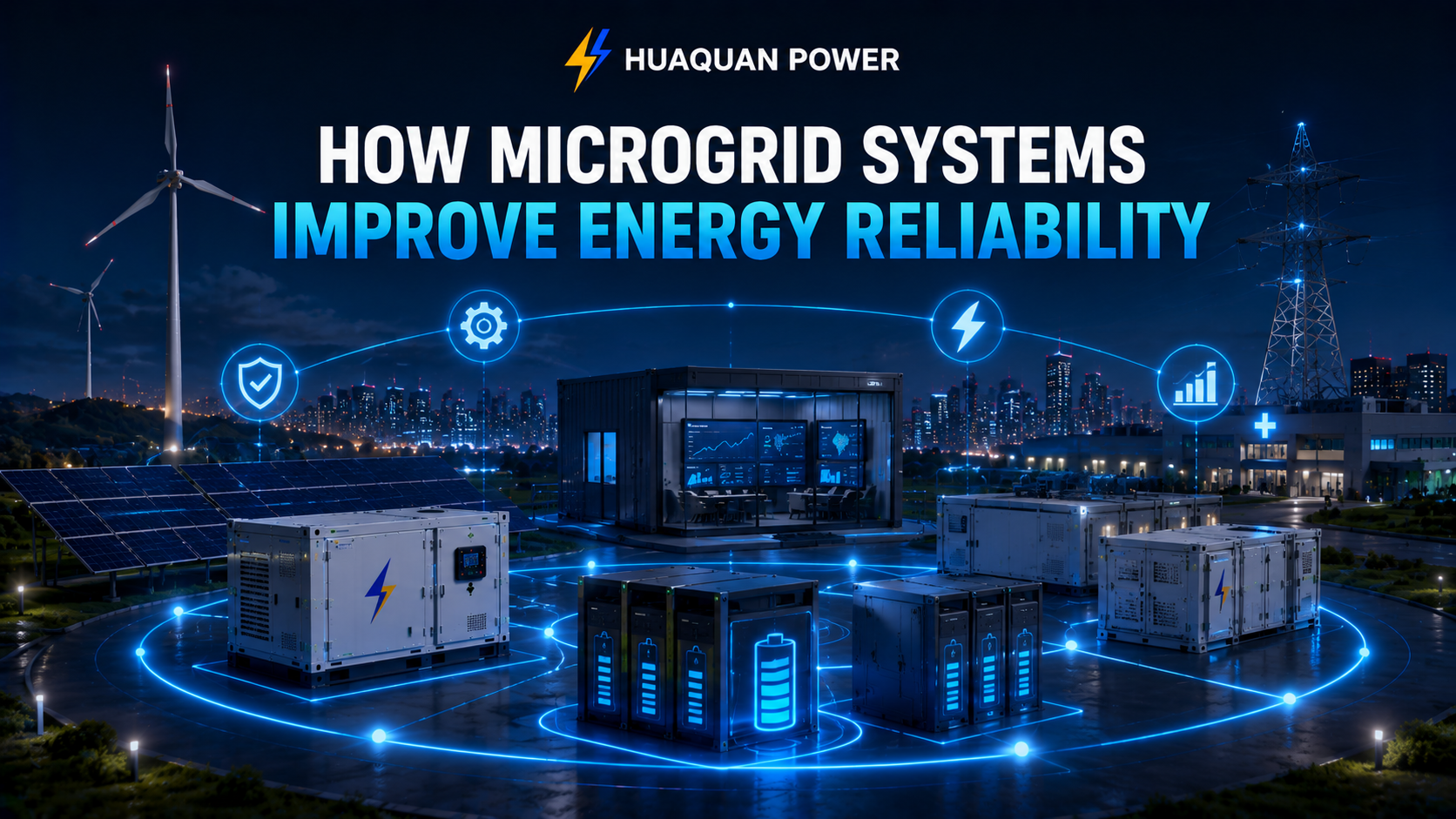
A microgrid is a localized comprehensive energy setup that produces, stores, and provides energy to your installations. To maintain the energy flow, the microgrid power system works efficiently and has the following necessary components.
- Energy source, such as solar panels or utility
- Energy Storage setup, such as batteries
- Backup energy supply through the 发电机.
Compared to a traditional power grid, the microgrid systems operate in two different modes.
- Off-grid mode. In this mode, there is no connection with the utility grid. Microgrid Systems produce power locally and distribute it to the system.
- Grid-tied mode. It enables the utility grid connection and provides seamless energy when connected through the grid system.
Reasons why Microgrid Systems Elevate Energy Reliability
Microgrid Systems improve energy reliability through their quality production and distribution. We have added the key features that ensure energy reliability.
原因 #1: Local Power Generation
Remote power generation has several issues and drawbacks. 例如:
- Energy transmission takes a long time.
- Losses of energy are pretty common due to transmission.
- It causes financial losses due to remote transmission.
Microgrid Systems are pretty effective and offer localized energy production through multiple tools and methods. 例如, here are a few locally installed energy sources.
- 太阳能光伏 (光伏发电) 系统
- 风力涡轮机
- 柴油发电机组
- 天然气发电机
- 热电联产 (热电联产) 系统
- 燃料电池
- 小型水力发电系统 (适用时)
Once you generate the energy locally, it offers many benefits, 例如:
- Reliable energy production and transmission.
- No energy losses and better conservation.
- Improved energy independence.
原因 #2: Islanding Capabilities
Do you know what happens when your grid goes offline? 通常, when you are connected to the utility grid, a power outage causes the shutdown of the whole system for safety purposes.
But the good news is that with the microgrid systems. There is no need to worry about the shutdown cases in the microgrid. It can disconnect the grid automatically and provide power to the system non-stop.
This process is pretty effective and controlled through the smart control systems.
During Island Mode
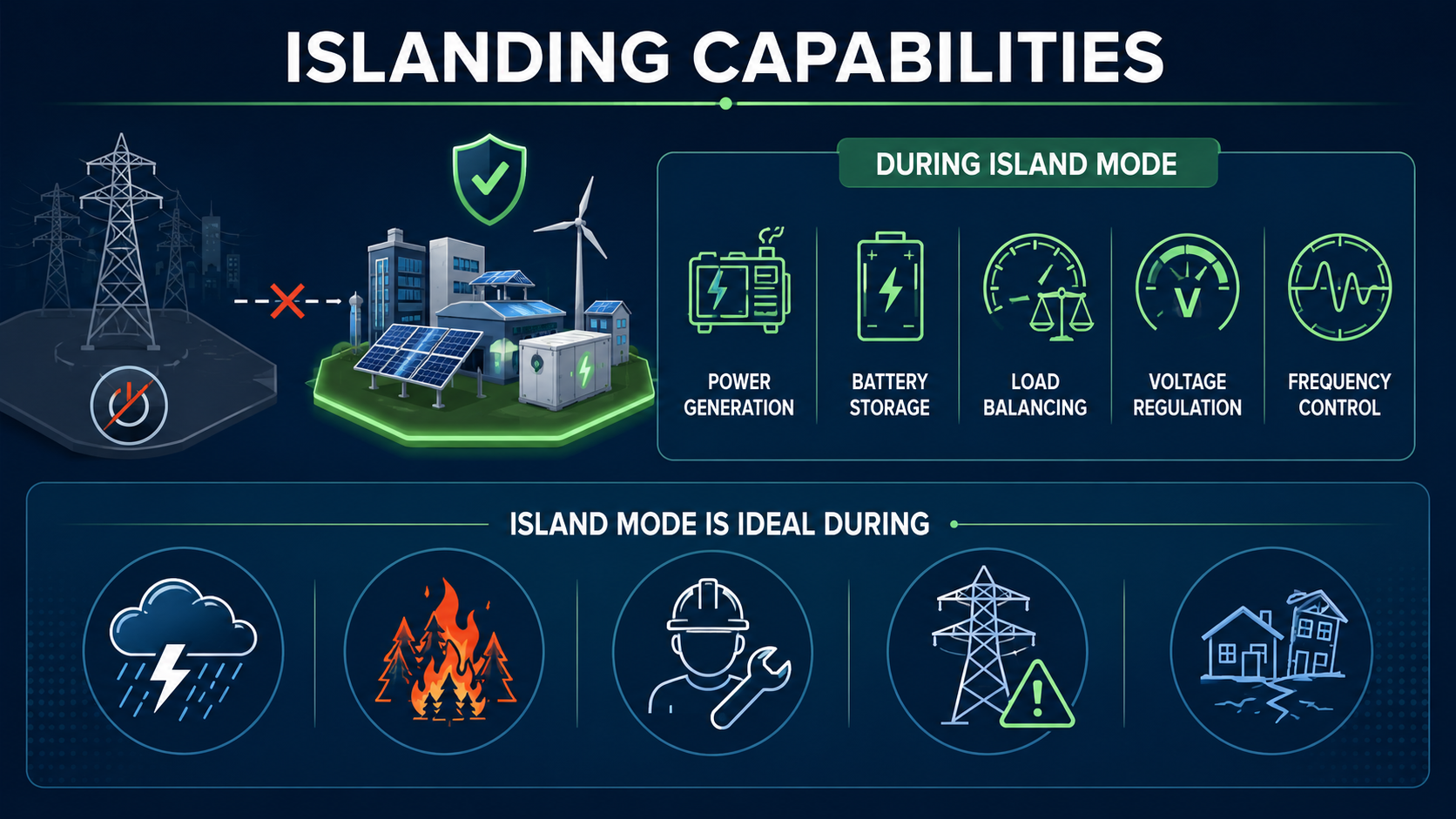
During this mode, the microgrid keeps itself an independent source of energy. 它执行以下任务.
- 发电
- 电池储存
- 负载均衡
- 电压调节
- Frequency control
Do you know when island mode is suitable? It is the ideal solution during:
- Storm-related outages
- Wildfires
- Utility maintenance
- 电网不稳定
- Natural disasters
原因 #3: Multiple Energy Sources
| 能源 | Role in Reliability | 典型应用 |
| 太阳能光伏 | Daytime power generation | 商业建筑, campuses |
| 风力发电机 | Renewable electricity generation | 偏远社区 |
| 柴油发电机组 | Long-duration backup | 医院, 工业厂房 |
| 自然的 气体发生器 | Continuous backup power | 数据中心, 商业设施 |
| 电池存储 | Instant backup and load balancing | Nearly all modern microgrids |
| Utility Grid | Primary or supplementary power | Grid-connected microgrids |
Relying only on one source of energy is never a wise decision. More sources mean better reliability and easier availability of the energy.
The same goes here with the microgrid systems. Compared to traditional grid systems, they have multiple sources of energy during an outage and a normal power supply. 这些都是:
- Utility power
- 太阳能电池板
- 电池储存
- 柴油发电机组
- 天然气发电机
If a power shutdown occurs, battery storage and generators are there to save you from the hassles.
When one source of energy becomes unavailable, the microgrid systems cut it off and redirect energy production and supply through the second source.
原因 #4: Battery Energy Storage Systems (贝斯)
Undoubtedly, generators provide a non-stop energy supply in microgrid systems. But the best thing is the battery energy storage systems. They are an independent source of energy without the use of fuels.
The good thing is the instant power supply, which generators often don’t do. An energy management system helps during a power outage in the following ways.
- Batteries immediately supply electricity.
- Critical equipment continues operating.
- Backup generators start.
- The Energy Management System coordinates all power sources.
In addition to outages, batteries are also helpful during normal power supply cases. 例如, they help by:
- Storing excess solar energy
- 减少高峰需求
- Stabilizing voltage
- Supporting frequency regulation
- Improving power quality
原因 #5: Smart Energy Management System
Have you installed the smart energy management system in your microgrid systems? Microgrid Systems often have a smart energy management system. 它有助于监控:
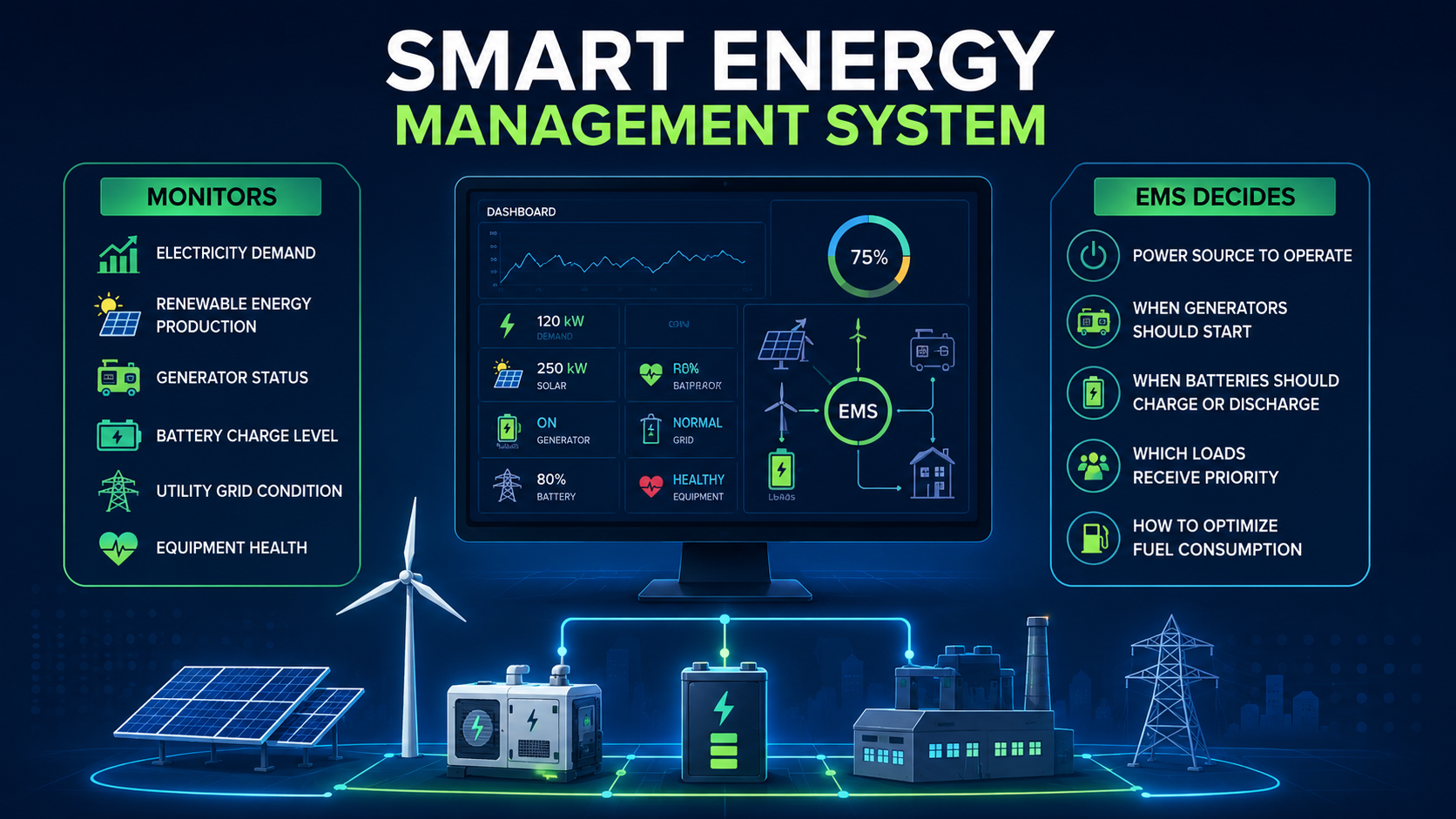
- Electricity demand
- 可再生能源生产
- 发电机状态
- 电池电量
- Utility grid condition
- Equipment health
With this management system, energy efficiency remains high as the EMS system decides on:
- Power source to operate
- When should generators start
- When should batteries be charged or discharged
- Which loads receive priority
- How to optimize fuel consumption
With intelligent monitoring, it is easier to manage energy and enjoy a high-quality management system.
原因 #6: Faster Recovery After Grid Disruption
Grid Disruption occurs due to stormy weather or environmental disasters. If you have a traditional grid system, there is one key disadvantage during this grid disruption. It causes the shutdown of the whole system and disrupts the supply.
然而, microgrid systems offer better reliability in many ways. 例如, they offer a non-stop supply by reducing single points of failure.
When there is no grid supply available, they operate and produce energy independently. Once the grid energy is back, they:
- Synchronize with the grid
- Reconnect safely
- Return to normal operation
- Continue monitoring for future disturbances
原因 #7: Improved Power Quality
Microgrid Systems has many goals to complete. 例如, they handle the outage. But this is not their sole purpose of use. 反而, a stable and reliable energy supply is the necessary task to avoid damage to your home or commercial appliances.
Microgrid Systems do this very well by controlling:
- 电压波动
- Frequency variations
- Harmonics
- Voltage sags
- Voltage swells
- Short interruptions
There are no more risk factors for damage to:
- 医疗器械
- 数据服务器
- Industrial automation systems
- Laboratory equipment
- Telecommunications equipment
Your system has high power quality and gives an outstanding performance.
原因 #8: Reduced Single Points of Failure
The energy reliability of the traditional grid systems is very low. It is because you have a single point of failure; your whole system is going to shut down in no time.
例如, here are a few failure points.
- One transmission line
- One transformer
- One utility connection
- One power plant
If failure occurs at any single point, your whole system fails to receive power and experiences blackouts.
另一方面, microgrid systems are more reliable by offering a continuous energy supply with the right sources. 首先, microgrid systems cut off failure points to keep the energy supply constant.
They have:
- Multiple generators
- 电池储存
- Renewable energy
- Intelligent controls
- Multiple distribution paths
It means you get a constant energy supply when one generator or a distribution path gets affected.
原因 #9: Continuous Power for Critical Loads
Not every device or appliance should be operated. 反而, you have to decide whether and which equipment you should operate.
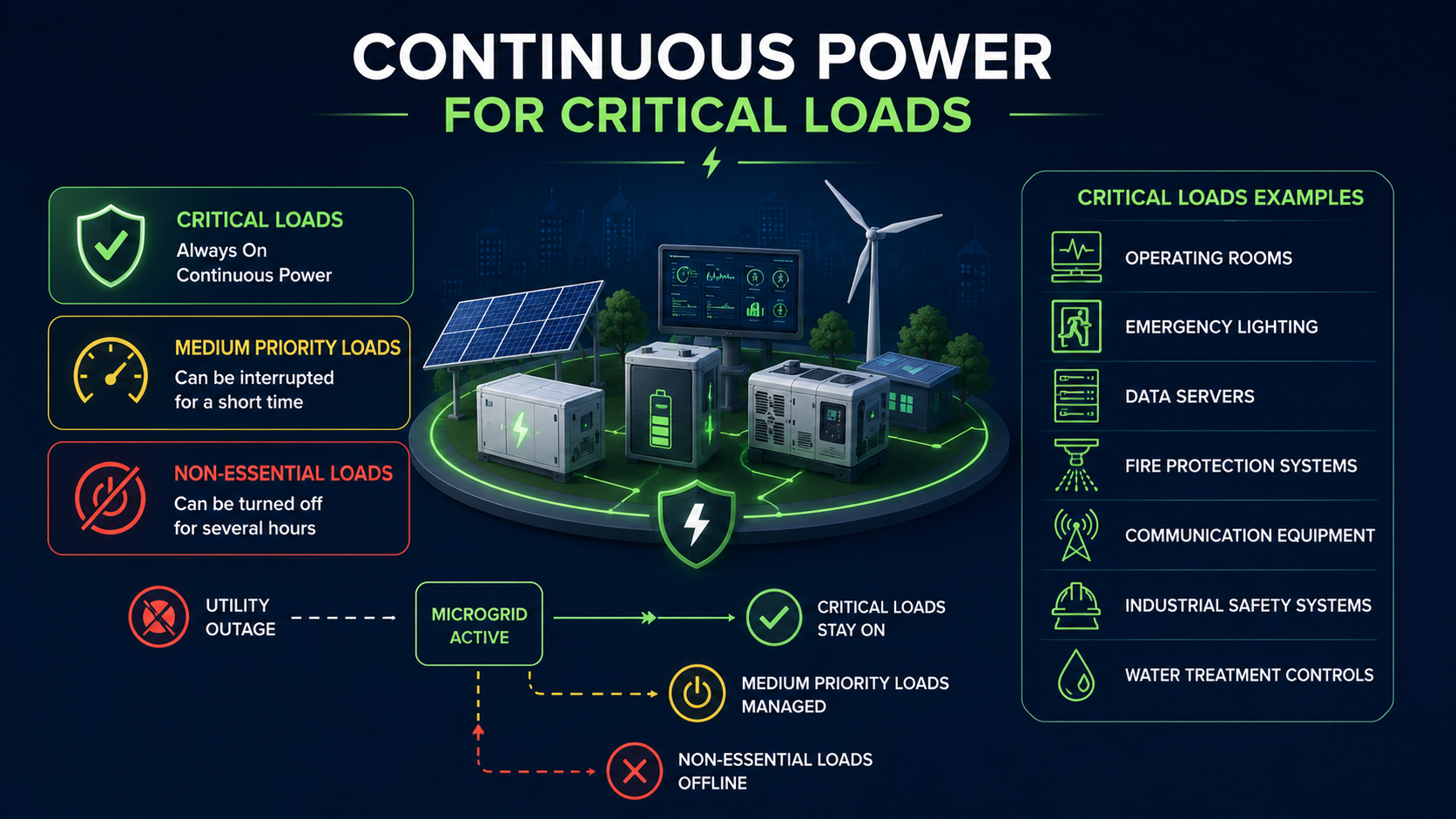
Based on the priority, we divide the appliances into three formats.
- 临界负载— they need essential operations. 所以, the basic goal is to run them continuously.
- Medium priority loads. They are also essential but can be shut down for a few minutes or hours depending on the energy supply.
- Non-essential Loads. It doesn’t matter if you operate these loads. They can go offline for several hours or during an outage.
Microgrid Systems focus on the operations of the critical loads, 例如:
- 手术室
- 应急照明
- 数据服务器
- 消防系统
- 通讯设备
- Industrial safety systems
- Water treatment controls
During outage hours, your necessary devices keep running while ignoring the unnecessary loads.
原因 #10: Better Load Management
The load requirements are never the same throughout the day. 例如, you have peak energy usage during the afternoon due to high heat and the operation of the air conditioners at home.
Power consumption is less in the morning, 晚上, and night. 所以, you should manage the load based on your needs. A microgrid power system balances the loads and powers the system with better load management.
例如:
- It schedules equipment operation to reduce the peak power consumption.
- Optimizes peak demand and stabilizes power consumption
- Prevents overloads by cutting off the unnecessary device operations.
- Balances generator output and streamlines the energy flow.
- It coordinates with the battery storage system to store extra energy and provide it during outage hours.
原因 #11: Improved Resilience During Natural Disasters
Natural disasters come uninvited and cause serious issues. Common examples of natural disasters are hurricanes, 洪水, 地震, wildfires, snowstorms, and severe thunderstorms.
Their impact on the utility grids and power transmission system is aggressive.
- Bring down the whole power distribution network.
- Shut down the utility grids and interrupt the energy supply.
Microgrid systems are very effective in handling power transmission and supply during disasters.
如何? They maintain the energy supply with the local energy production and distribution networks. The benefits of high energy reliability with the microgrid systems include:
- Continued operation during grid failures
- Reduced dependence on damaged transmission infrastructure
- Faster disaster recovery
- Enhanced community resilience
- Improved emergency response capabilities
Reason# 12: Reduced Transmission and Distribution Losses
With the traditional grid systems, the energy distribution occurs several kilometers away. The issue is not the transmission but the loss of power due to transmission and resistance in the power lines. It reduces the supplied energy and decreases overall efficiency.
Microgrid Systems also features a solution for such a situation. They produce the energy locally, reducing the remote transmission and supply. With the remarkable energy, strength, 和可靠性, you get the following benefits.
- Higher overall system efficiency
- Lower transmission losses
- Reduced stress on utility infrastructure
- Improved voltage stability
- Better energy utilization
Traditional Power System Vs. Microgrid
| 特征 | Traditional Power Grid | Microgrid |
| 发电 | 集中 | Local and distributed |
| Utility Dependence | 高的 | Low during island mode |
| Islanding Capability | 不 | 是的 |
| Backup Generation | 有限的 | Integrated |
| 电池存储 | Rare | 常见的 |
| 可再生能源并网 | 缓和 | 广泛的 |
| Recovery After Outage | Utility dependent | 快速地, autonomous recovery |
| Power Quality Control | Utility managed | Locally optimized |
| Load Prioritization | 有限的 | 先进的 |
| Overall Energy Reliability | 好的 | 非常高 |
常见问题解答
- Which industries benefit most from reliable microgrids?
There are various industrial sectors deploying microgrid systems in their setup for energy reliability. The examples are healthcare, 数据中心, 制造业, 机场, 军事设施, 大学, 电信, 公用事业, 和偏远社区.
- Why are battery energy storage systems important in microgrids?
Battery Energy storage systems act as a backup supply and elevate power quality. Unlike the generators, they provide instant and stable energy supply to power your devices better.
- Can a microgrid operate without the utility grid?
是的. If you have installed a microgrid as a complete off-grid solution, buy the solar panels, install the battery storage systems, and choose the right size and quality of the generators. It ensures the non-stop operations of the utility grid.
- What is island mode in a microgrid?
Island mode means the independent operations of the devices and separation from the grid in the event of an outage. Microgrid puts the system on the island in case of grid disruptions to ensure the availability of energy supply.
- How do microgrids improve energy reliability?
Microgrids do many things to improve energy reliability. 例如, they provide a consistent power to devices, put the system in island mode for a constant supply, and feature a stable power supply.
- Are microgrids expensive to implement?
是的. Microgrids have a higher initial investment because of comprehensive systems, such as solar panels, 电池, 和发电机. 然而, 从长远来看, they offer extended benefits.
- Can renewable energy alone make a microgrid reliable?
不, a renewable energy source can improve the power reliability, but it doesn’t make the whole system reliable. It is because of weather dependence. When sunlight is not available, you can’t produce energy with solar panels.
- Do microgrids eliminate power outages?
是的. Microgrids combat power outages and provide a flawless energy supply. They offer valuable results during a power outage with isolation and a constant energy supply.
结论
Microgrid Systems offer a seamless energy production, automated transmission through ATS, and provide the grid and off-grid facilities. If you are looking for the right solutions, install quality components in your microgrid systems. 例如, purchase high-quality generators for backup supply.
Huaquan Power has premium-quality generators that feature high efficiency and enable seamless power generation. You’ll get a non-stop energy supply with the fuel. Choose from a variety of options in our collection right away!