The Diesel Generator log book template is used to note requirements regarding important aspects of the generator’s day-to-day operation. The template or log book helps the operator note important details such as hours of operation and issues they faced during the operation of the generator. The main goal of this template is to ensure that the records are being maintained in a clean and organized manner so they can be used for later references. Additionally, following a standard recording format ensures that the records are easy to read, compare, and refer to.
This article will guide you through the structure and key sections included in a diesel generator operation log recording specification.
Basic Information Section
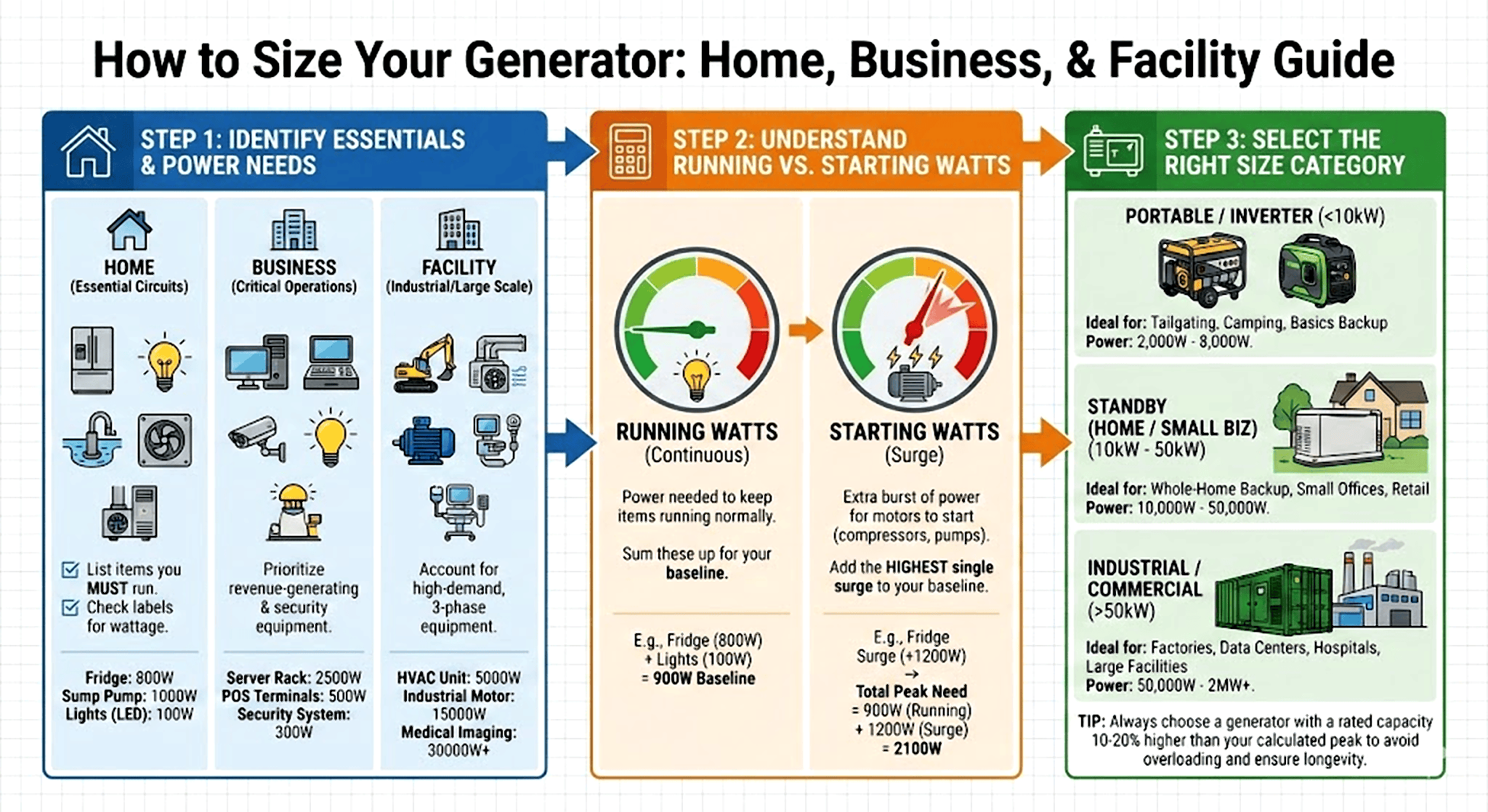
The basic information section includes the general details about the diesel generator and its operation. The section specifies the details about the generator used and where it was operated. Here are a few attributes included in the basic info table:
Generator Identification Details: This includes important information about the generator, which helps in differentiating one from another. The details include the model no., serial no., and the capacity, which is often measured in kW or kVA.
Location: This shows the location where the generator is installed or is in use. The location could be a factory, hospital, or any other place. However, recording the location helps in tracking the equipment.
Date and Time of Operation: This includes information like the specific date and time that the generator was used. Keeping track of this information helps in the proper recording of the details related to the running hours of the generator.
Operator Name: This is used to identify the person responsible for running and monitoring the generator.
Example Basic Information Section | |
| Item | Details (Example) |
| Generator Model | HQ500GF |
| Serial Number | HQ2026DG1058 |
| Rated Capacity | 500kVA |
| Installation Location | Main Factory – Block A |
| City | Shanghai |
| Date | 10 Feb 2026 |
| Start Time | 08:00 AM |
| Stop Time | 2:00 PM |
| Operator Name | Zhang Wei |
Operating Parameters Recording Section
This section involves the recording of essential technical values of the diesel generator when it runs. Keeping track of these details accurately helps operators confirm that the generator is working properly and supplying stable power.
Engine Speed (RPM): Shows the speed at which the engine is rotating per minute.
Load Percentage (%): Shows the total generator capacity that has been used.
Output Voltage (V): Shows the electrical pressure produced by the generator.
Output Current (A): This is used to measure the total amount of electrical flow supplied to the load.
Frequency (Hz): This is used to show whether the electricity being supplied is stable or not, usually measured in Hz.
Fuel Level (%): Indicates the available fuel left in the tank.
Oil Pressure (Bar): Shows whether the lubricating oil is circulating properly inside the engine or not.
Coolant Temperature (°C): Shows how hot the engine coolant is during operation.
Recording Table | ||
| Parameter | Unit | Recorded value (Example) |
| Engine Speed | RPM | 1500 RPM |
| Load Percentage | % | 70% |
| Output Voltage | V | 400 V |
| Output Current | A | 720 A |
| Frequency | Hz | 50 Hz |
| Fuel Level | % | 60% |
| Oil Pressure | Bar | 4.5 Bar |
| Coolant Temperature | °C | 85 °C |
Inspection and Observation Section
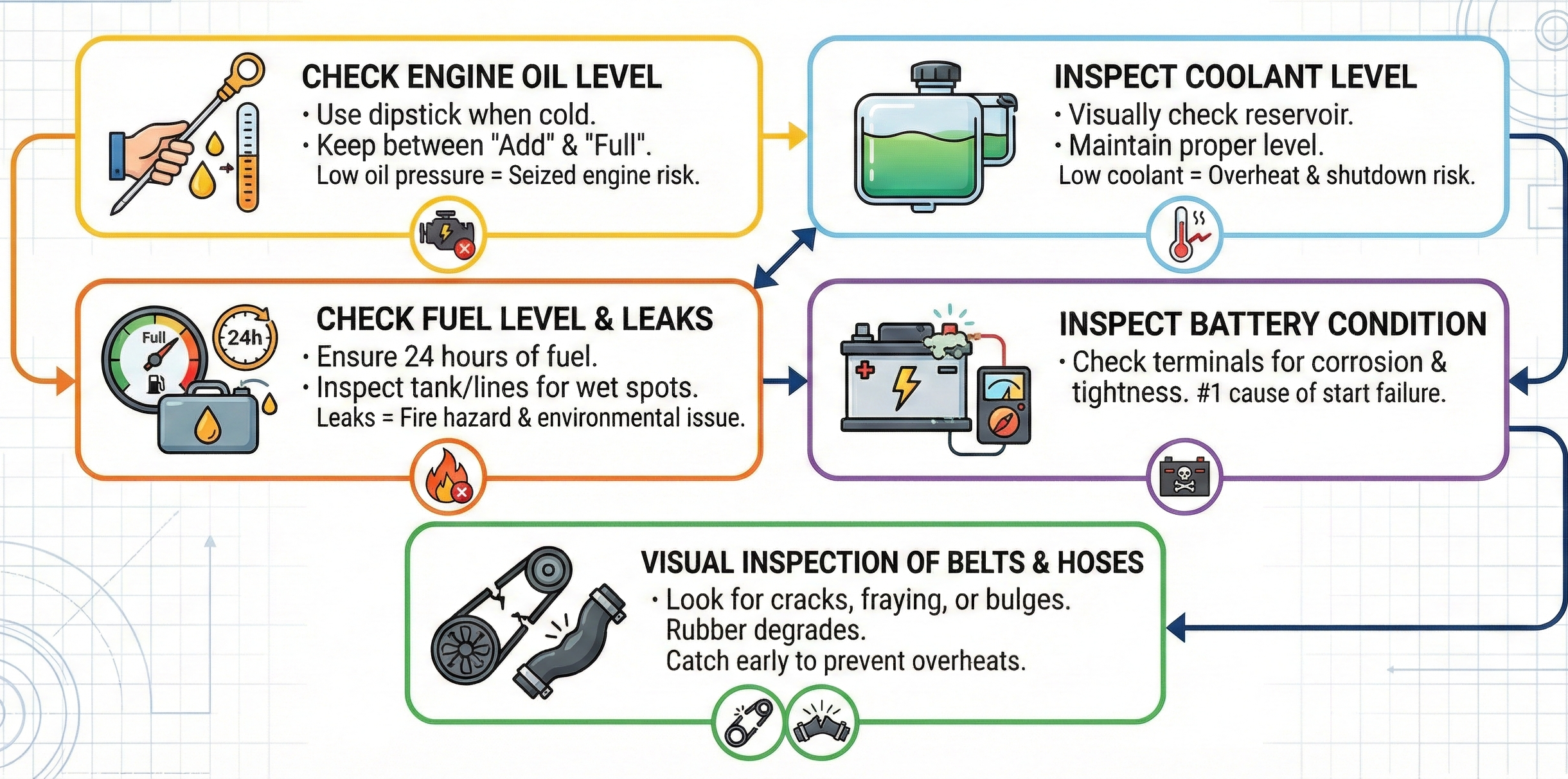
This part records the details that the operator identifies while observing and that are noted while running the diesel generator. Moreover, by closely observing the generator, it becomes easier to identify its problems, which may not be reflected in its parameters.
Visual Inspection Notes: Here, the operator checks if there are oil leaks, fuel leaks, or damaged wires. They also check if there is anything unusual around diesel Generators.
Abnormal Noise or Vibration: The generator is observed closely to confirm that the engine is running smoothly and not making any unusual sound.
Exhaust Condition: The color and quality of the exhaust smoke are observed closely because it tells a lot about the engine condition.
 Diesel Generator Maintenance" width="2440" height="1212" />
Recording Table | ||
| Inspection item | Observation (Example) | Status (Normal/Abnormal) |
| Visual Inspection | No leaks, cables connected properly | Normal |
| Noise/Vibration | Smooth operation, no unusual noise | Normal |
| Exhaust Condition | Light gray smoke during startup only | Normal |
Alarm and Fault Recording Section
This section is used to record any warnings or faults occurring while the diesel generator is in operation. It is not only helpful in solving the problems occurring while using the generator, but it also helps you plan the maintenance of the equipment.
Alarm Details: This includes the exact alarm message or warning received, etc.
Fault Description: This gives a description of the fault, along with the reason for the fault.
Time of Occurrence: Here, you specify the actual date and time when the alarm or fault occurred. You can easily track and understand when these problems occur.
Recording Table | ||
| Alarm Message | Fault Description | Date & Time |
| High Coolant Temperature | Temperature reached 98 °C, load reduced | 12 Feb 2026 – 11:45 AM |
| Low Oil Pressure | Oil pressure dropped below 2.0 Bar | 12 Feb 2026 – 01:20 PM |
| Overload Warning | Load exceeded 95% capacity briefly | 12 Feb 2026 – 03:10 PM |
Maintenance and Action Taken Section
This section involves recording the steps taken to fix a certain issue or problem. Keeping accurate records helps in making future maintenance easier.
Corrective Actions: This involves describing the steps that were taken to solve a specific problem or prevent further damage.
Parts Replaced (if any): If any parts were replaced due to any damage, they are recorded in this section.
Technician Name and Signature: This shows the person who was responsible for maintenance.
Example Recording Table | ||||
| Issue Identified | Corrective Action Taken | Parts Replaced | Technician Name | Signature |
| Low Oil Pressure Alarm | Checked oil level and refilled oil | None | Li Ming | ________ |
| Overheating | Cleaned radiator and reduced load | Coolant Hose | Chen Wei | ________ |
| Battery Not Charging | Inspected alternator and adjusted belt | Charging Belt | Zhang Lei | ________ |
Conclusion
A well-structured and clear diesel generator log book template for recording specifications ensures that the operator confirms all the key information about the operation of a diesel generator is recorded. All of the sections we have mentioned help in the full record of the performance and condition of the generator.
Huaquan Power, a company that has over 15 years of experience in the production of customized and durable generator sets, knows that proper practices of usage are as important as a robust product to ensure seamless and uninterrupted usage of its products.