When you are looking to buy a generator you need to understand the difference between single-phase vs. three-phase generators. This is important whether you are buying a generator for your home, a building or a factory.
1. Single-Phase vs. Three-Phase Generators Description
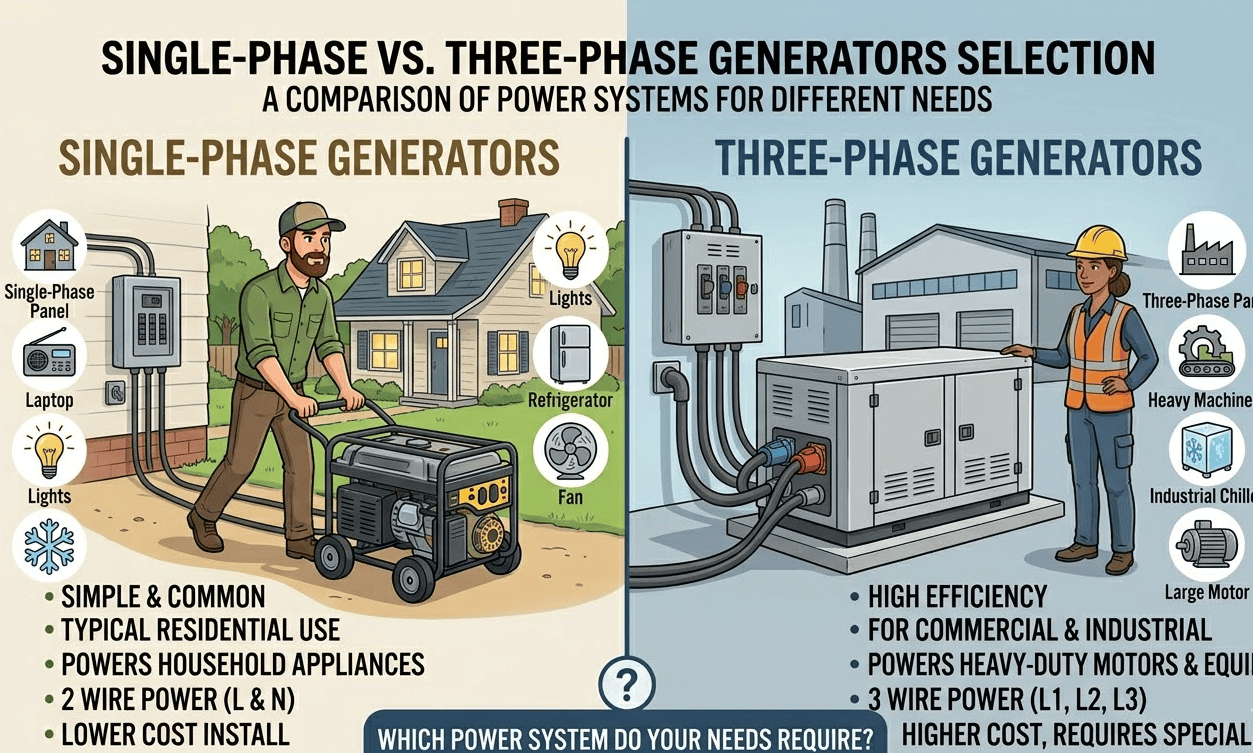
Single-phase generators make one type of electricity that always changes. This electricity goes through two wires, one that has power and one that does not. The power goes up and down in a wave pattern. It stops twice in every cycle. Single-phase generators are good for things like homes and offices because they do not need a lot of power all the time. They are used for things like lights, heaters and normal appliances.
Three-phase generators are more complicated and work better. They make three types of electricity that’re all different from each other. This means that when one type of electricity stops another type starts. This makes the power delivery smooth and constant. Three-phase generators use four wires, three that have power and one that does not. They are used for things like factories and commercial buildings because they need a lot of power all the time.
2. Single-Phase vs. Three-Phase Generators Key Differences
Single-Phase vs. Three-Phase generators both make electricity but they work in different ways. If you choose the type of generator it can be inefficient and even damage your equipment. Here are some key differences between phase and three-phase generators.
2.1 Voltage Delivery and Waveform Stability
Single-phase generators have power delivery that goes up and down. This means they are not good for applications that need a lot of power. Three-phase generators on the hand have a constant power delivery. This is because they have three types of electricity that overlap, which makes the power output stable. This stability is important for things that need power and for big motors that need a constant power supply to work smoothly.
2.2 Power Density and Wiring Efficiency
Three-phase systems are better at sending power over distances and through small wires. They use material to send the same amount of power as single-phase systems. This means that three-phase generators can be smaller and more cost-effective in factories and commercial buildings. They need infrastructure to distribute the power, which makes them more efficient. Single-phase generators are not as efficient as three-phase generators especially when it comes to applications. Three-phase generators are the choice, for things that need a lot of power all the time.
2.3 Load Handling and Balancing
When you are dealing with a single-phase system managing the load is easy. It has limitations. However when you are working with a three-phase system load balancing is very important. You can use a three-phase generator to get single-phase power by tapping into one of the phases. You have to make sure the load is spread out evenly across all three phases. If one phase has a lot of load and the others do not it can cause the generator to shake, get too hot or even damage the alternator inside.
2.4 Mechanical Vibration and Noise
Single-phase power can cause the generator’s engine and alternator to pulse. This can lead to vibration compared to three-phase units. Three-phase generators have a torque because the power delivery is smooth. This means the mechanical parts work smoothly which can help the bearings and other parts inside the engine last longer because they do not have to deal with the constant pulsing of power cycles.
2.5 Motor Startup Capabilities
Electric motors like the ones used in pumps, compressors and elevators need a lot of power to start. Three-phase power is perfect for this. Three-phase motors are simpler, smaller and more efficient than single-phase motors. They do not need starting parts like single-phase motors do which makes three-phase generators the best choice for facilities that use big industrial motors.
2.6 Transformer and Infrastructure Compatibility
The type of generator you choose often depends on the existing system. Most homes are set up for single-phase power. If you try to install a three-phase generator in a home with single-phase power you will have to upgrade the transformer and rewiring which can be expensive. On the other hand industrial areas are usually set up for three-phase power. If you try to install a single-phase generator in a facility it may not work with the equipment, which often needs three-phase power.
2.7 Cost of Equipment and Installation
Single-phase generators are usually cheaper to buy for capacities. However when you need power three-phase generators are more cost-efficient. Installing a three-phase system is more complicated. Requires special parts, which can increase the costs.
2.8 Heat Dissipation and Operational Life
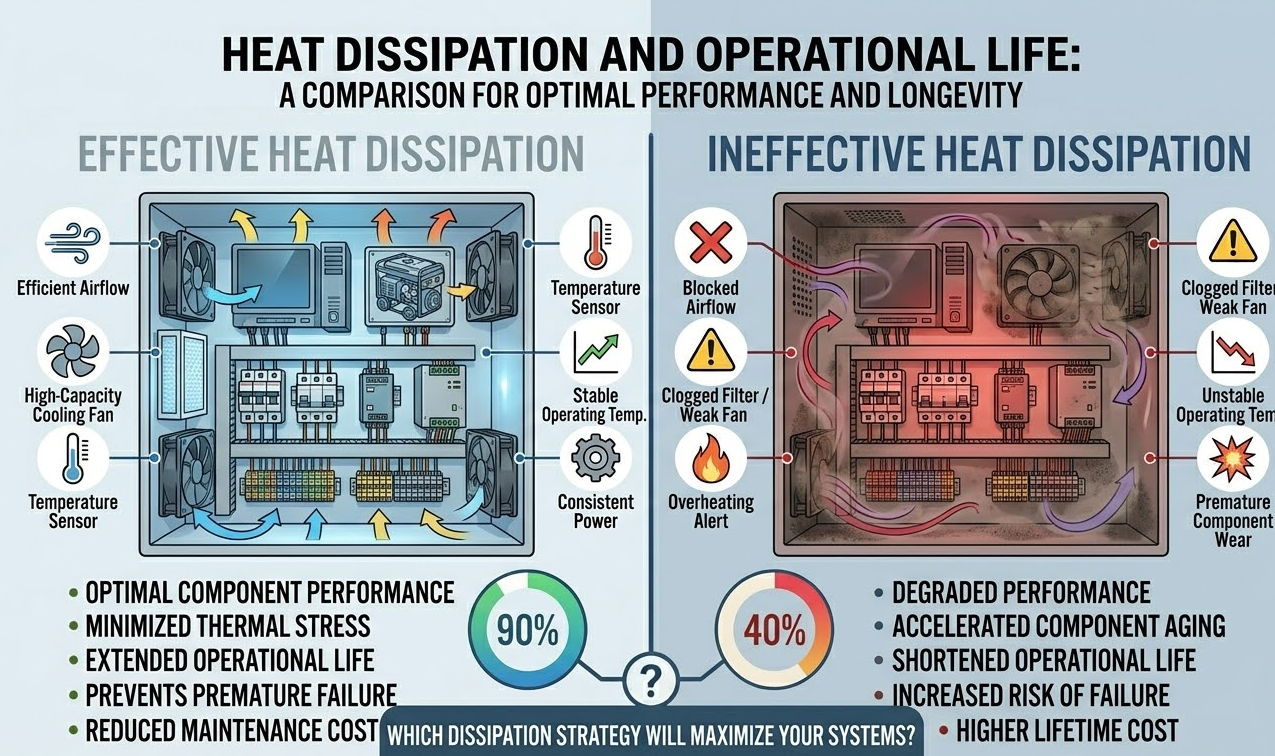
Three-phase generators usually run cooler than single-phase units when they are working hard. Heat can damage the insulation and engine parts. Since three-phase generators work efficiently and have a smoother electrical flow they can last longer when used continuously. Single-phase units are great for power but they may not be as good for continuous use, at high capacities.
3. How to Decide Between Single-Phase vs. Three-Phase Generators
To make the Single-Phase vs. Three-Phase choice you need to think about your future power needs, the equipment you will use and the limitations of your location.
3.1 Assessing Your Property’s Existing Electrical Phase
First you need to check your system. Look at your meter or service entrance. If you see two wires you have single-phase power. If you see four wires or a meter that says “3-Phase” you should get a generator that matches that. Changing a single-phase building to work with a three-phase generator is a project that requires a lot of money and work with the utility company.
3.2 Evaluating the Nature of Your Equipment and Machinery
Look at the “data plates” on the equipment that’s most important to you. If you see motors that say “3PH” or equipment that needs 480V, a single-phase generator will not work. However if you are using it to power office computers, household lighting and basic heaters a single-phase unit is a better choice because it is more logical and cost-effective. The safest thing to do when planning for electricity is to make sure your generator can handle your demanding piece of equipment.
3.3 Matching Single-Phase vs. Three-Phase to Your Total Power Load
The total wattage is an indicator of what you need. If your total power requirement is under 15kW to 20kW a single-phase generator is usually enough and easier to manage.. If your power needs are more than 30kW, three-phase generators are what most people use in the industry. They can handle high-amperage draws without causing voltage drops that could make lights dim or crash computer systems.
3.4 Determining Future Growth and Industrial Scalability
If you have a workshop now but plan to add big machines like industrial CNC machines, large kilns or heavy-duty refrigeration in the next few years it is a good idea to invest in a three-phase generator now. Even though it costs more at first, a three-phase unit gives you room to grow and expand industrially. Single-phase systems have limits and once you reach them you cannot just upgrade. You have to replace the system to use three-phase machinery.
4. Single-Phase vs. Three-Phase Conclusion
Choosing between Single-Phase vs. Three-Phase generators is a big decision for your power strategy. Single-phase generators are simple and cost-effective for homes and small businesses where the power needs are not too high. The equipment is standard. Three-phase generators give you the high-performance power you need for growing big machines and large facilities. By matching the Single-Phase vs. Three-Phase to your equipment and infrastructure you can be sure you have a power supply that protects your electronics and keeps everything running smoothly.
5. Buy Single-Phase vs. Three-Phase Generators with Huaquan Power
At Huaquan Power we know that every power need is different. We have a lot of high-performance generators to choose from ranging from single-phase units for homes, to big three-phase industrial power plants. The team of engineers can help you figure out your load and pick a unit that is efficient and reliable. With Huaquan Power you get support, a good warranty and the peace of mind that comes with a well-planned power solution. Contact us today to get started with your power needs.