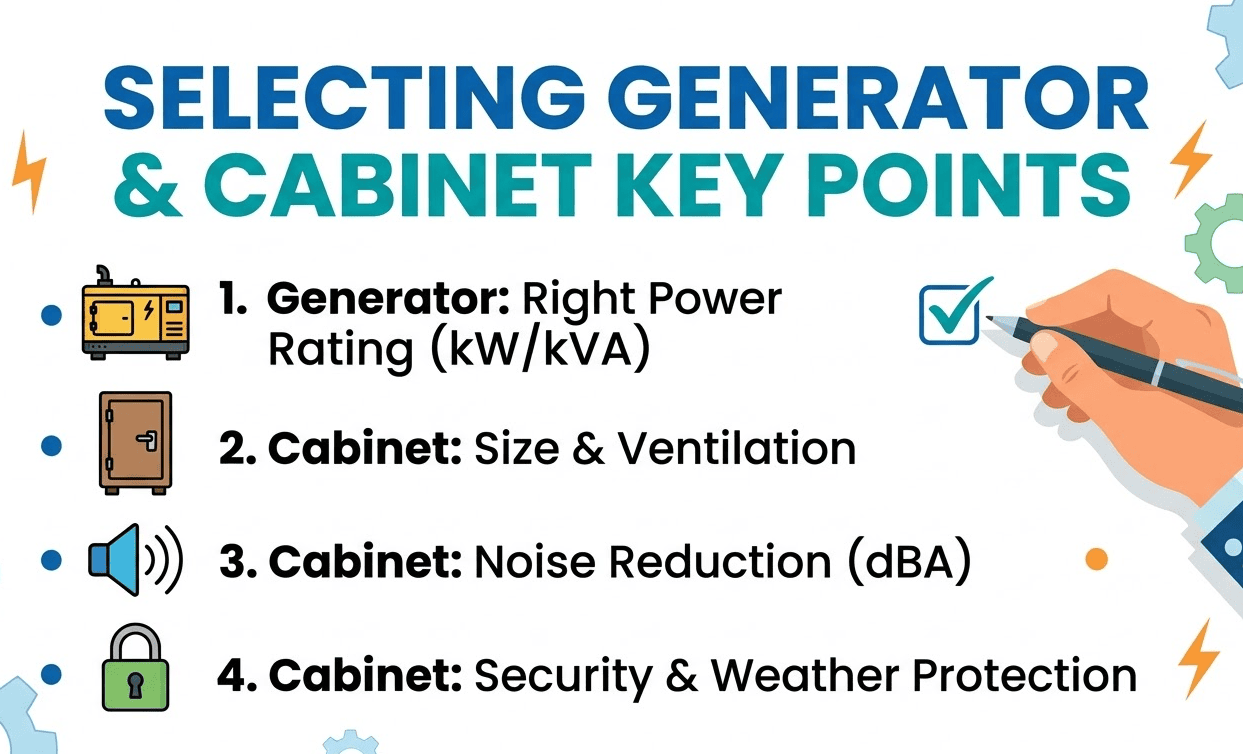
Selecting Generator and Cabinet for your power system is a big commitment to making sure things keep running smoothly and safely. Whether you have a data center, a factory or a hospital, selecting generator and cabinet is very important.
1. What is Selecting Generator and Cabinet?
This system includes a generator and a control cabinet that work together to provide power when the main power is out. The control cabinet usually has an Automatic Transfer Switch or Paralleling Switchgear that helps switch to the power. You need to understand how the generator and control cabinet work together to make sure you have a power system.
2. Things to Consider When Selecting Generator and Cabinet
The generator is the part of your backup power system. It turns energy into electrical energy when the main power is out. You should not just embark on selecting generator and cabinet based on how much power it can produce. You need to think about how the generator will work with the things it is powering.
2.1 Load Profiles and Inrush Currents
One of the important things to do when choosing a generator is to think about the different types of loads it will power. Some equipment, like air conditioning units, elevators and pumps need a lot of power to start up. This is called inrush current.
If the generator is not big enough to handle this surge of power it can cause problems with the power system. The voltage can. This can cause circuit breakers to trip or equipment to shut down. To avoid this you need to calculate the “Step Loading” sequence to make sure the generator can handle the load when it starts up.
2.2 Power Quality and Total Harmonic Distortion
In today’s digital age the quality of the power is just as important as the amount of power. Some equipment, like computers and medical imaging equipment can be sensitive to power quality. They can be affected by “noise” in the power system, which is called Total Harmonic Distortion.
High levels of Total Harmonic Distortion can cause equipment to overheat or malfunction. When choosing a generator for a facility, with equipment you need to choose one that produces clean power. The generator should have a design and high-quality parts to make sure the power stays consistent and clean.
2.3 The Role of the Generator and Cabinet
The control cabinet is like the brain of the system. It helps keep an eye on the power grid, tells the generator to start and safely switches the building’s power load. The cabinet’s setup must match the generator’s output and the building’s electrical system.
2.4 Automatic Transfer Switch
The Automatic Transfer Switch (ATS) in the cabinet helps switch between power sources. To avoid reactions to small power grid flickers the ATS needs to be set up with specific time delays. This includes a “Time Delay to Start” that waits for a confirmed power outage, a “Time Delay to Transfer” that ensures the generator is working correctly before taking on the load and a “Time Delay to Re-transfer” that makes sure the utility power is stable before switching to the grid. These settings help prevent wear on the generator.
2.5 Four-Pole vs Three-Pole Switching Architecture
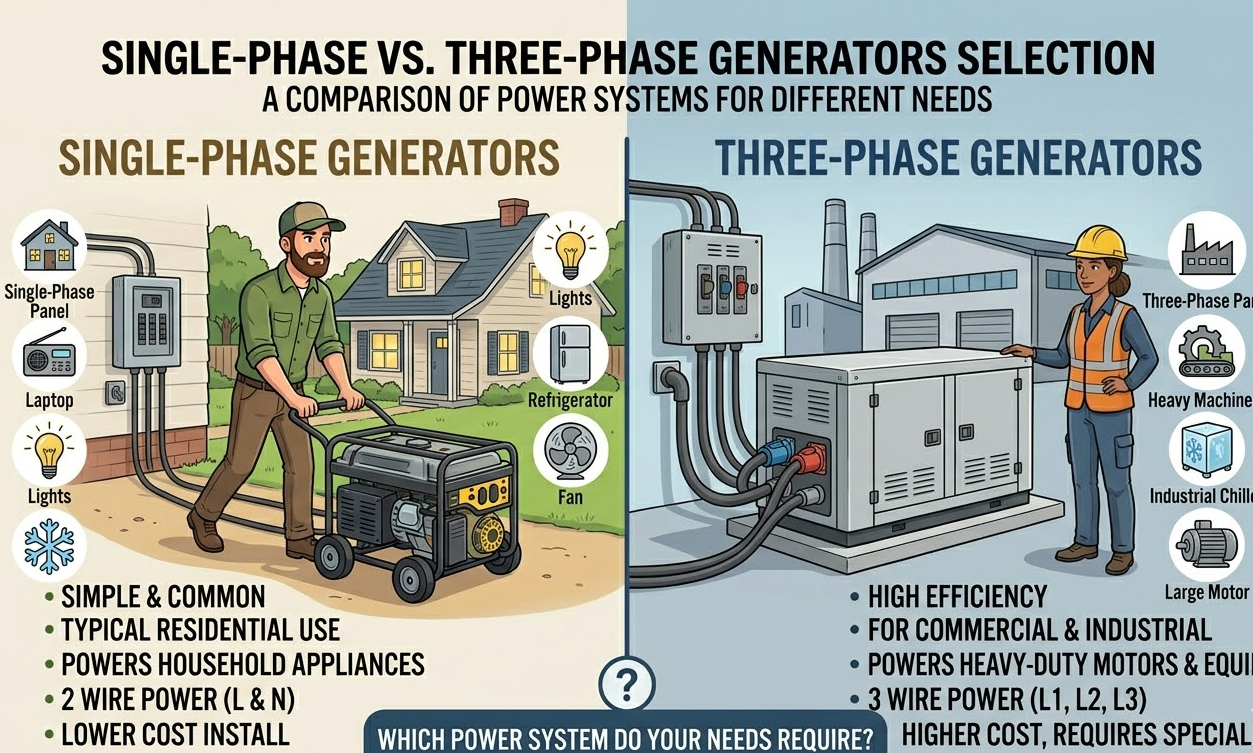
When setting up the cabinet it’s essential to decide between a three-pole or four-pole switching mechanism. This choice depends on the building’s setup. In some settings a three-pole switch can cause problems with ground-fault protection leading to false alarms and system shutdowns. A four-pole cabinet switches the wire and the three phases keeping the generators neutral separate from the utilities neutral. This ensures an electrical path and prevents interference with safety systems.
2.6. Selecting Generator and Cabinet Structural Requirements
The environment where the generator and cabinet are located affects how long they last and how well they work. If the equipment isn’t protected from the elements it can corrode, circuit or break down over time.
2.7 Selecting Generator and Cabinet Ratings and Enclosure Selection
The energy board provides ratings for enclosures to ensure they can handle specific environments. For installations in clean rooms a NEMA 1 enclosure is usually enough. However if the control cabinet is outdoors a NEMA 3R rating is required to protect against rain and ice. In areas or chemical plants a NEMA 4X stainless steel enclosure is the best choice to prevent rust and component failure.
2.8 Thermal Management and Ventilation
Generators and control cabinets produce a lot of heat. The generator needs an enclosure with airflow to prevent overheating especially in summer. The control cabinets internal components are sensitive to temperatures. In climates cabinets may need fans or air conditioning units to keep them cool. If the cabinet gets too hot it can cause problems. Fail during a critical power outage.
2.9 Fuel Strategy and Long-Term Runtime
The usefulness of a generator is limited by how much fuel it can hold. When choosing a generator, the type of fuel you use. Diesel, natural gas or propane. Affects how long it can run and how complicated the fuel management system is.
2.10 Diesel Sub-Base Tanks and Management
Diesel is still the common choice for critical backup power because it’s stored on site and doesn’t rely on external pipelines that might fail during an earthquake or big storm. Many generators come with tanks located underneath them.
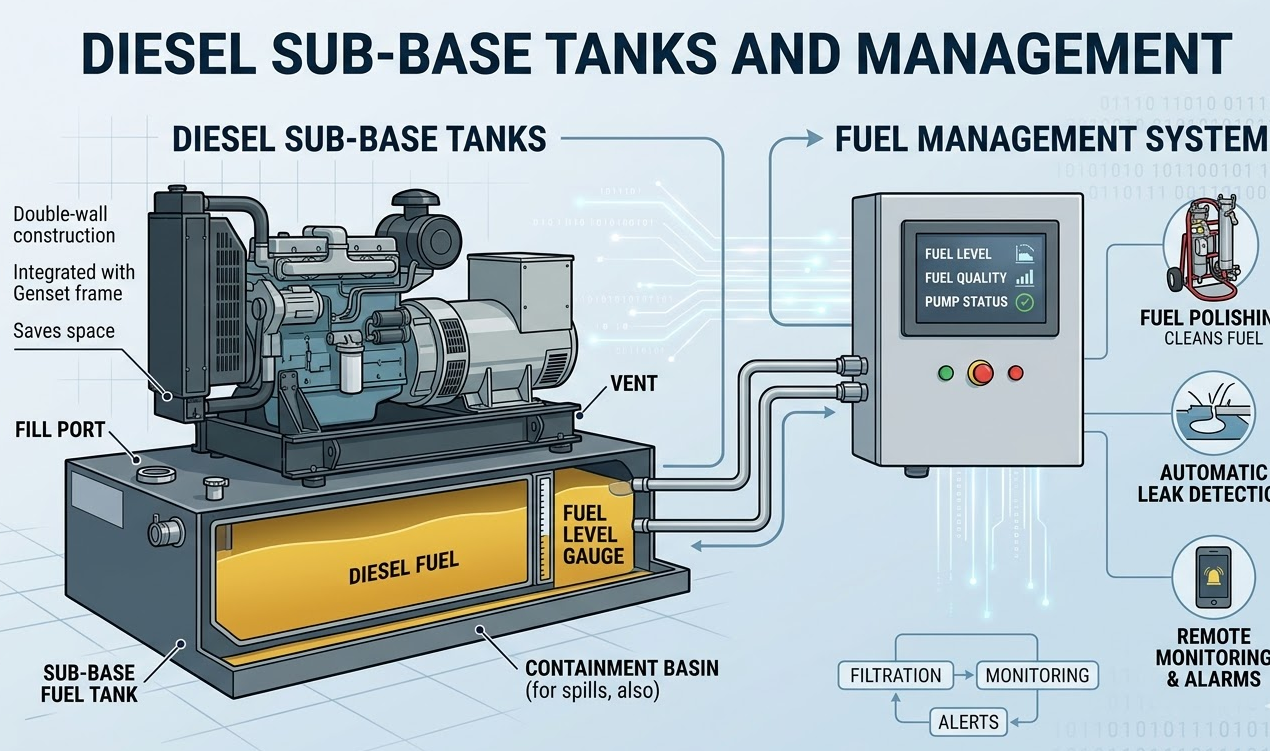
For facilities that need days of runtime the control cabinet needs to be set up with fuel level sensors and a special logic system. This system lets the cabinet automatically activate pumps to move fuel from a larger underground storage tank into the generator’s smaller tank ensuring a continuous supply without manual intervention.
2.11 Selecting Generator and Cabinet Maintenance and Lifecycle
Choosing a generator isn’t about making a purchase; it’s also about thinking about how easy it is to maintain over the next twenty years. A system that’s hard to service will eventually become unreliable.
2.12 Accessibility and Modular Design
When selecting the cabinet look for designs that make it easy to access components. Modular controllers that can be swapped out without rewiring the cabinet are a big advantage during emergency repairs. Similarly the generator should have an enclosure with access doors for oil changes, filter replacements and alternator inspections. Proper spacing between the generator and the cabinet is also important to let technicians work safely and efficiently.
3. Selecting Generator and Cabinet Conclusion
Selecting a generator and cabinet is a balancing act between performance, environmental resilience and budget. By focusing on load profiles, phase synchronization and environmental protection you can ensure that your power system is more than a collection of machines. It’s a dependable safeguard for your facility. Selecting generator and cabinet with an intelligent correctly rated control cabinet provides peace of mind that when the grid fails your operations will continue without a second’s hesitation.
4. Partner with Huaquan Power for Professional Power Solutions
At Huaquan Power we specialize in designing and manufacturing high-performance generators and advanced control cabinets. Our engineering team is dedicated to helping you navigate the complexities of load calculation phase matching and enclosure selection to build a system tailored to your requirements. Whether you are looking for a diesel unit for industrial use or a whisper-quiet silent generator, for a commercial office Huaquan Power provides the expertise and hardware to secure your energy future. Contact us today to begin your selection process with a team you can trust.