When you are dealing with heavy machinery like power backup Geradores, padrões de segurança e proteção tornam-se uma prioridade. À medida que os consumidores instalam geradores para produzir eletricidade durante emergências, esses aparelhos de alta tecnologia lidam com combustíveis voláteis para gerar eletricidade de alta tensão. Para máxima confiabilidade e segurança, the manufacturing industry turns towards ISO Certificação de Gerador.
This certificate is a detailed framework of international standards to ensure that a generator manufacturer follows the quality control, environmental standards, and workplace safety while designing and manufacturing these products. Este guia de HuaQuan covers the basic ISO standards and how one gets an ISO certificate. And what kind of benefits can manufacturers and consumers have with this?
What is ISO Generator Certification?
Overview of ISO standards
The International Organization for Standardization (ISO) is our non governmental, independent global organization. It ensures the safety, qualidade, and efficiency of products, services, and systems. In the manufacturing category, the ISO standards are not a single rule book set for specific products. There is a detailed road map of how a business must continue working for consistent, high quality products.
Role of ISO in generator manufacturing
In generator manufacturing, ISO certification is a universal stamp seal. Although there are specific product performance certificates like ISO 8528 for technical ratings, and a performance checklist of alternating current generator sets. Além disso, The overview of ISO management certifications ensures your factory building the generators has a strong, compactar, well designed system. Every unit you design and introduce in the market is an exact copy of the prototype in terms of quality, segurança, and environmental compliance ordinance.
Key ISO Standards for Generators
Whenever a generator manufacturer claims their products are ISO certified, they are referring to a list of compliance regulations with one or more of the standards set by the organization.
ISO 9001 (Quality Management)
This is the leading gold standard for Quality Management Systems (QMS). When the manufacturer strictly follows the quality control procedure at every single production step, from sourcing raw materials like steel and copper to final generator load bank tests during assembly. It helps the manufacturers find flaws earlier, so the customer satisfaction is on peak when they get their power backup system.
ISO 14001 (Environmental Management)
During generator manufacturing, people deal with hazardous materials, engine emissions, and industrial paints. ISO 14001 is all about Environmental Management Systems (EMS). Além disso, The factories must minimize their environmental footprint. It asks the manufacturers to safely dispose of all kinds of chemical waste, cut down the energy consumption during generator manufacturing, and ensure the products easily meet the global standards of sustainability goals.
ISO 45001 (Occupational Safety)
While building heavy, permanent backup generators, fuels like diesel and natural gas can be dangerous to operate with. ISO 45001 handles Occupational Health and Safety (OH&S). It verifies that the manufacturer keeps an eye on workplace hazards and provides proper safety uniforms to their workers. Whether there is a professional, quality standard protocol for handling loud noises and toxic fumes or not. Além disso, This checklist is a priority for maintaining the physical health and well-being of all the workers in our manufacturing factory.
Importance of ISO Generator Certification
- People usually ask why it is necessary to follow these standard checklist parameters for generator manufacturing. Lembrar, the international standards for generator certification are categorized into three crucial factors, incluindo:
- Global credibility: An ISO certificate is approved and known worldwide. It tells a buyer in Europe that a generator manufactured in Asia is built with the same dedication to quality and safety protocols as one built in a local market.
- Improved product quality: The ISO standard asks for high end record keeping and manufacturing adherence. It ensures that the room for error is reduced significantly. Em última análise, the manufacturers get to have few warranty claims and the long fiber generator shelf life for many years.
- Compliance with international buyers: In many agencies, hospitais, and corporate offices, there are strict procurement rules. Geralmente, these fit facilities cannot purchase any high end equipment without an ISO 9001 ou 14001 certificate.
ISO Generator Certification Requirements
Are you planning to have an ISO generator certification? The manufacturers must comply with the industry rules and regulations along with the international standards to get their product a legal approval.
- Quality management system: The company must have a formal QMS that thoroughly explains how its products are designed, built, and tested. Every employee must know their specific role inside the system.
- Documentation and procedures: If every procedure is not documented, it is considered that it didn’t happen. ISO needs long, tons of paperwork. Manufacturers must write detailed Standard Operating Procedures (SOPs) for every task performed on their factory floor period from tightening the alternator bolts to even testing fuel injectors; every SOP must be listed.
- Continuous improvement processes: An ISO is not a set and forget procedure. Além disso, The manufacturers must prove they have proper mechanisms to evaluate their product failures, get customer feedback to improve, and continuously refine their manufacturing process to avoid recurring power issues.
ISO Certification Process for Generators
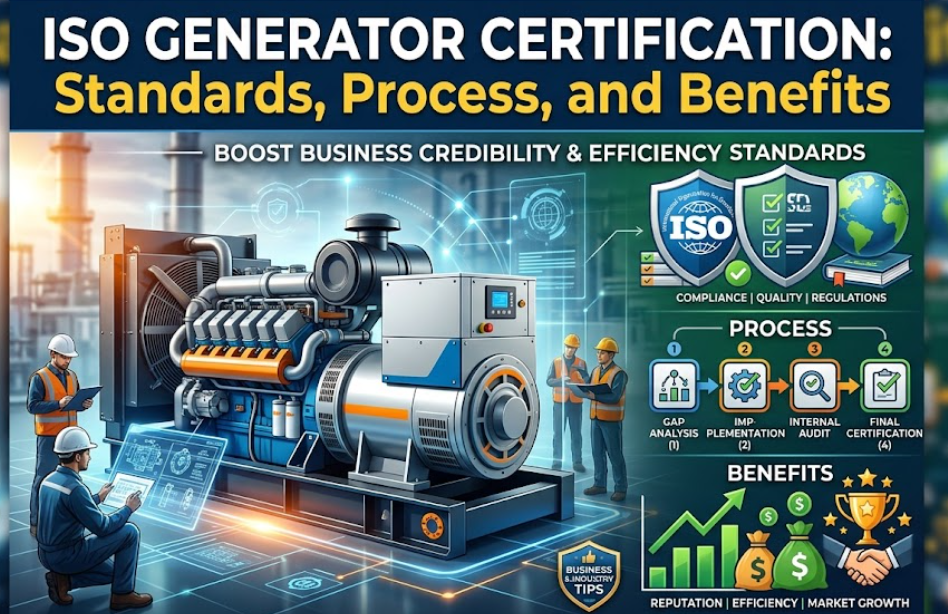
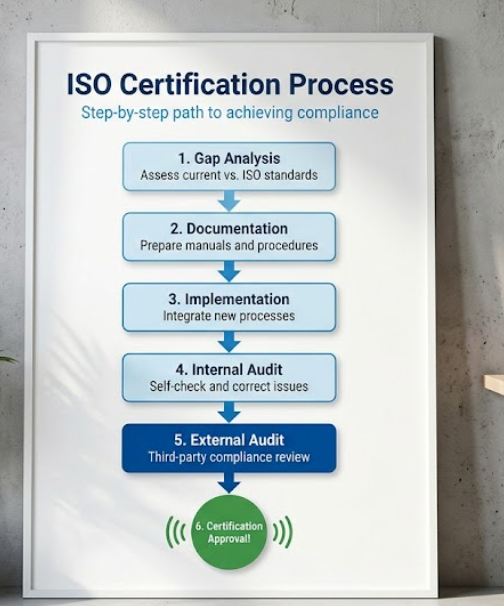
Achieving an ISO generator certification is a long, multi step procedure that takes even several months or even a year to complete.
Gap Analysis
The company hires an ISO consultant who evaluates its manufacturing operations. The consultant finds out every gap between what the factory is manufacturing right now and what the ISO standards it requires.
Preparação de Documentação
The company’s management and engineering teams align to write their quality manuals, safety procedures, and environmental policies to cover all the gaps highlighted in the first step.
Implementação
There are new procedures on every factory floor. High authorities train their workers according to new standards. Por exemplo, how they can log out from defective alternative windings or safely store their generator engine coolants.
Internal Audit
Before hiring an official external auditor, the company must run its own internal audit. An employee mimics an inspector to evaluate whether the new procedures are being followed or not to filter out any underlying issues.
External Audit
Um profissional, certified third party auditor visits your factory. Observe the assembly lines, interview your workers, double check the maintenance logs, and verify the documentation to evaluate whether your factory complies with the ISO regulatory standards or not.
Certification Approval
If the auditor approves that your facility successfully complies with all the requirements, the certification company issues an official ISO certificate for a specific time interval, usually up to three years.
Benefits of ISO Certification for Generator Manufacturers
Investing your time and money in ISO certification turns out to be a big, fat money making move for manufacturers.
- Increased market access: With certification, manufacturers can easily bid on government contracts and export high quality generators in international markets.
- Customer trust: Buyers are always ready to spend thousands of dollars that protect their business and property. The ISO badge is proof of reliability, making you one step ahead of non certified competitors.
- Operational efficiency: By disposing of waste, streamlining your generator assembly procedure, and separating the defective units, the factory can make more money than imagined.
- Reduced risks: Strict compliance with ISO 45001 e 14001 reduces the chances of workplace accidents, environmental fines, and any sudden product failure.
Challenges in ISO Certification
- High documentation workload: Switching from informal manufacturing to a documented QMS is a shock for floor workers and management. Writing and managing every single procedure in documentation takes a lot of effort from the administration.
- Cost of implementation: Hiring consultants, paying third party auditors, and upgrading your factory equipment to comply with environmental standards can be a challenging thing for your finances.
- Training requirements: Every employee, from the CEO to your driver, must be trained according to the new ISO standards. It ultimately slows production in the beginning as all your employees are adapting to the new rules and regulations.
Cost and Timeline of ISO Certification
Cost factors
The price for ISO certification depends on your manufacturing facility and the current operational state. The consulting fee, auditor travel expense, and certification registration fee are the basic costs for this. A mid size generator manufacturing plant can make up its mind for a budget anywhere between $10,000 acabar $40,000 for an ISO generator certification approval.
Typical duration
From the initial gap analysis to the final certification approval, the process takes somewhere between 6 e 12 meses. Factories that have strong quality control parameters usually take less time, while disorganized facilities take more than a year.
Maintaining ISO Certification
Having an ISO certificate is a milestone. But it takes daily commitment to keep it in the long run.
Regular audits
To ensure your factory has not slipped back to its old habits, the certification authorities conduct surveillance audits annually. If your factory fails these check-ins, your certificate might be suspended or canceled.
Continuous improvement
The strategy of ISO certification is a continuous evolution! The manufacturers must consistently portray that they are looking for ways to make their generators safer, the process cleaner. Also they ensure their quality control high on peak.
Conclusão
ISO generator certification is more than a mere marketing tool strategy. It is a commitment that manufacturing factories make to excel in the industry. By following international standards for quality, environmental care, and workplace safety, factory manufacturers provide reliable sistemas de energia de reserva with superior safety standards. For consumers and facility managers, purchasing an ISO certified generator brings peace of mind, guaranteeing their setup will perform safely and efficiently whenever the power grid fails.
Don’t Compromise on Critical Power.
Make sure your residential facility or business is protected during blackouts with world class engineering. Contate-nos today to have premium ISO certified standby power backup generators that guarantee safety, compliance and smooth performance when you need them.
⚡ Explore soluções relacionadas
- 🏭 500kW Gerador Diesel
- 🏭 1000kW Gerador Diesel
- 🏭 500Gerador diesel de kW YC
- 🔧 KMS (Cummins/Doosan) Série
- 🏥 Soluções de geradores de data center
- 📋 Grupos Geradores Diesel
- 📋 Processo de pedido – Como comprar
- 📋 Contate-nos
💡 Precisa de uma solução customizada? Contate nossa equipe de engenharia para recomendações específicas do projeto.