Energy independence is a blessing. With the developing systems, most businesses are moving toward independent energy sources. One of the powerful systems is the microgrid power system.
It offers energy freedom with local energy production. Hoje, we will discuss the microgrid power system and understand how this system works. Let’s know!!
What is a Microgrid Power System?
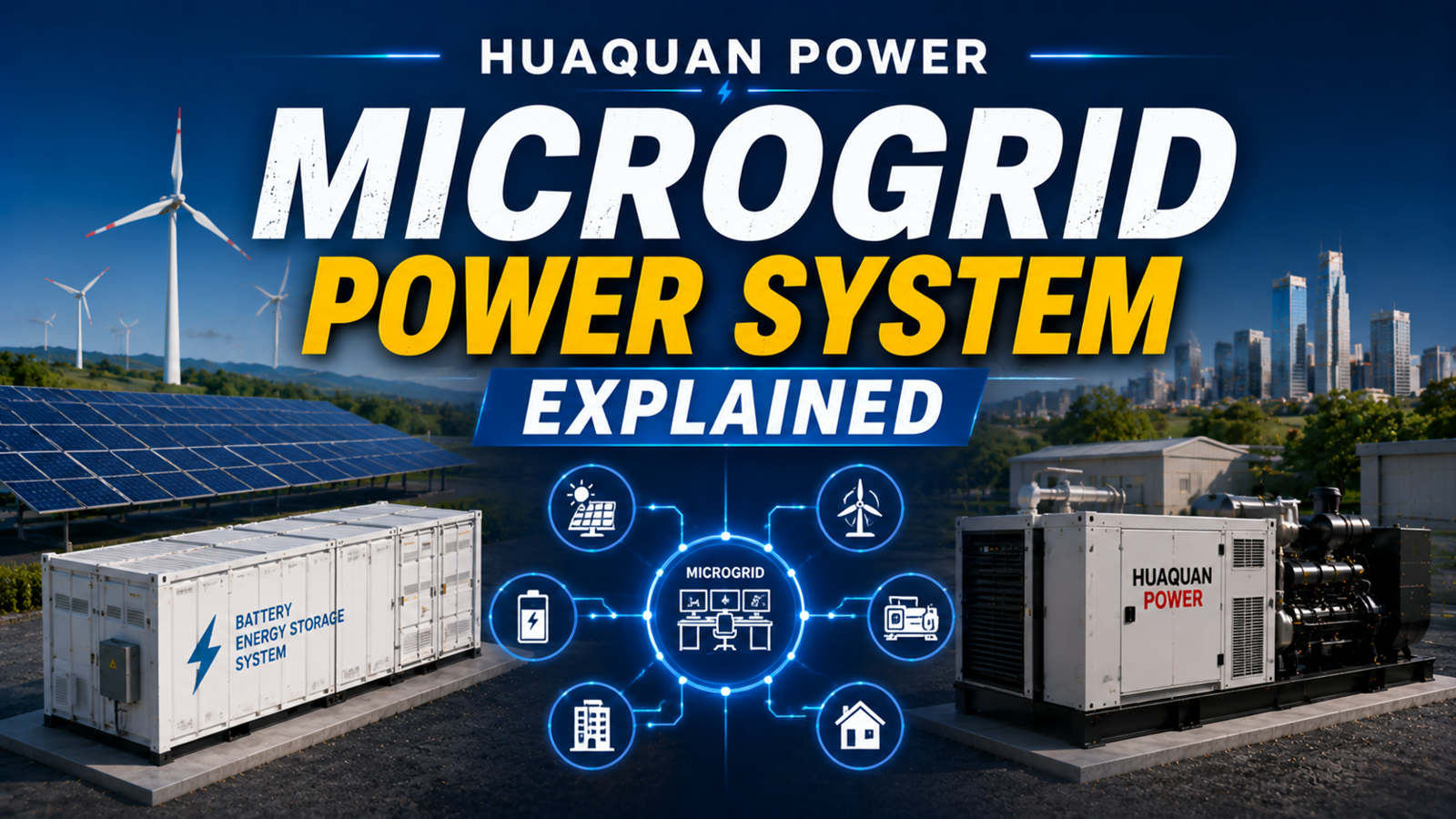
A microgrid power system is a comprehensive energy production setup that involves the power sources, Sistema de armazenamento de energia, and intelligent control options.
A microgrid power system can be connected to the utility grid or not, but it offers independent energy sources. The energy production occurs locally without reliance on the utility grid systems.
Portanto, a microgrid power system operates as an independent energy source and involves intelligent operations.
How Does a Microgrid Power System Work?
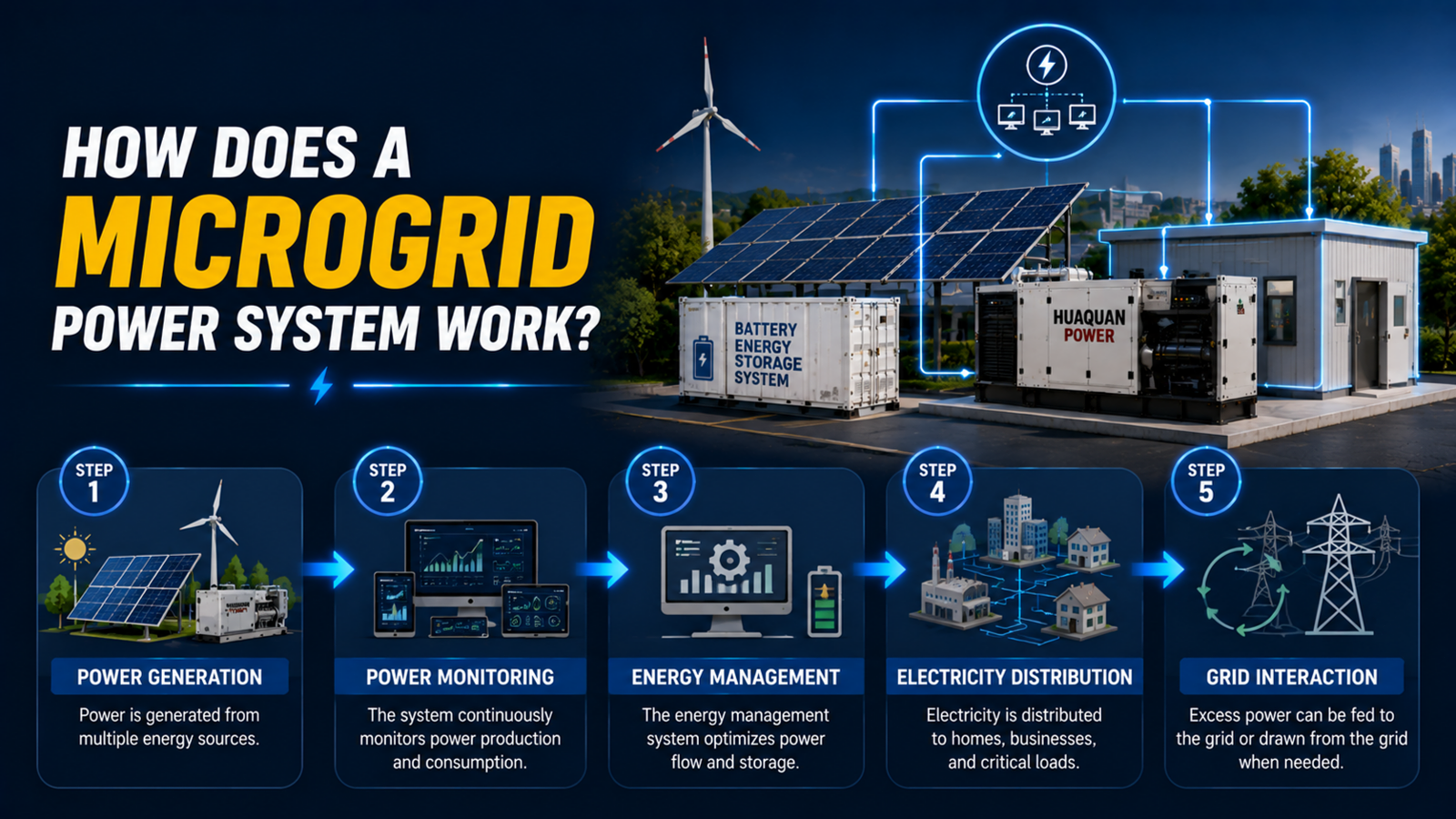
A microgrid power system works to generate power and distribute it through various steps discussed below.
Etapa 1: Geração de energia
The very first is the power generation. There are various tools and systems involved in power generation.
Here is the list of tools.
- Diesel Geradores
- Geradores de gás natural
- Solar photovoltaic (VP) sistemas
- Wind turbines
- Hydropower
- Biomass generators
- Fuel cells
A few tools can work simultaneously or independently, depending on the power needs and situation.
Etapa 2: Power Monitoring
Local conditions can change depending on the harsh conditions. The sudden fluctuations in the following factors can occur:
- Tensão
- Freqüência
- Atual
- Load demand
- Condições meteorológicas
- Status da bateria
- Disponibilidade de combustível
A power monitoring system helps manage the voltage and load demands according to conditions. For these reasons, many sensors are installed that monitor these power changes and help optimize the system.
Etapa 3: Energy Management
Energy management is crucial and helps manage energy efficiency. A proper EMS helps decide the following:
- Which power source should operate? Two or more power sources should operate or not.
- How much should each source provide?
- Whether the batteries should be recharged and discharged depends on the needs.
Why energy management?
The logic is straightforward. It helps optimize the system, improves energy efficiency, and provides seamless energy at lower operating costs.
Etapa 4: Electricity Distribution
The Microgrid Power System has a distribution network. The goal of this network is to provide seamless energy to the different options and components.
Power distribution occurs to the different components. An Energy Management System helps distribute the right power load and voltage based on requirements.
Etapa 5: Grid Interaction
If you keep the grid interaction, the energy distribution occurs in the following ways.
- If the energy supply is insufficient, the utility grid provides the power.
- When energy production is surplus, the microgrid supplies energy to the utility grid.
That is how you can reduce energy bills and optimize energy production.
Components of a Microgrid Power System
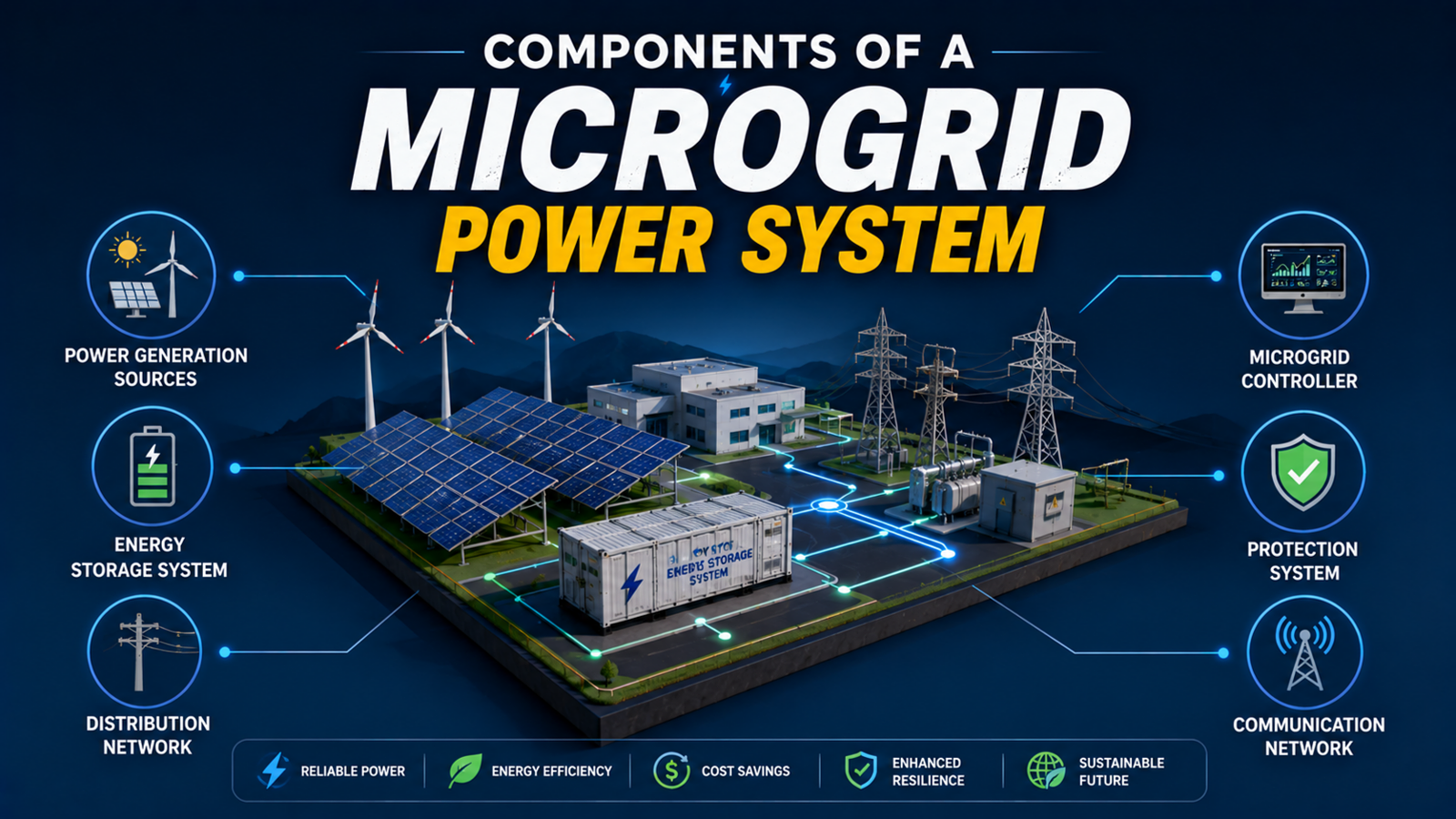
There are a few major components of the microgrid power system.
Power Generation Sources
Power Generation Sources are often renewable in microgrid power systems. No entanto, there can be a few others, such as generators or other options.
Here is the list of power generation systems.
- Geradores a diesel
- Geradores de gás
- Solar panels
- Wind turbines
- Small hydro systems
- Biomass plants
- Combined heat and power (cogeração) unidades
Hoje em dia, most modern microgrid power systems combine diesel generators with solar panels and a battery system. It provides sufficient energy supply in high load requirements or outages.
Sistema de armazenamento de energia
Do you want to keep an off-grid system? For energy independence, you must have a proper energy storage system for the energy storage. Geralmente, it involves a series of batteries for energy storage.
A few common types of batteries include:
- Íon de lítio
- Lithium iron phosphate (LiFePO4)
- Flow batteries
- Sodium-ion batteries
Battery storage occurs when you produce more energy than you need.
Rede de Distribuição
The energy distribution network is pretty crucial. It involves a variety of systems that can transfer the energy from the main production to the applications.
Here are a few things involved in the power distribution.
- Switchgear
- Transformers
- Cables
- Protection devices
- Disjuntores
Microgrid Controller
Microgrid controllers are the central nervous system of the whole process.
They can handle several tasks, como:
- Load forecasting
- Generator scheduling
- Battery management
- Fault detection
- Automatic switching
- Islanding control
Protection System
Due to sudden voltage fluctuations or peak current changes, equipment damage may occur. Portanto, a protection system helps manage the currents and avoid the short circuits.
Examples of the protection devices include:
- Relays
- Disjuntores
- Proteção contra surtos
- Ground fault protection
- Arc fault detection
Communication Network
There are a few ways of communication within the system.
- Ethernet
- Fiber optics
- Wireless communication
- Industrial IoT
Real-time communication helps operate the system seamlessly and provides smooth operations.
Types of a Microgrid Power System
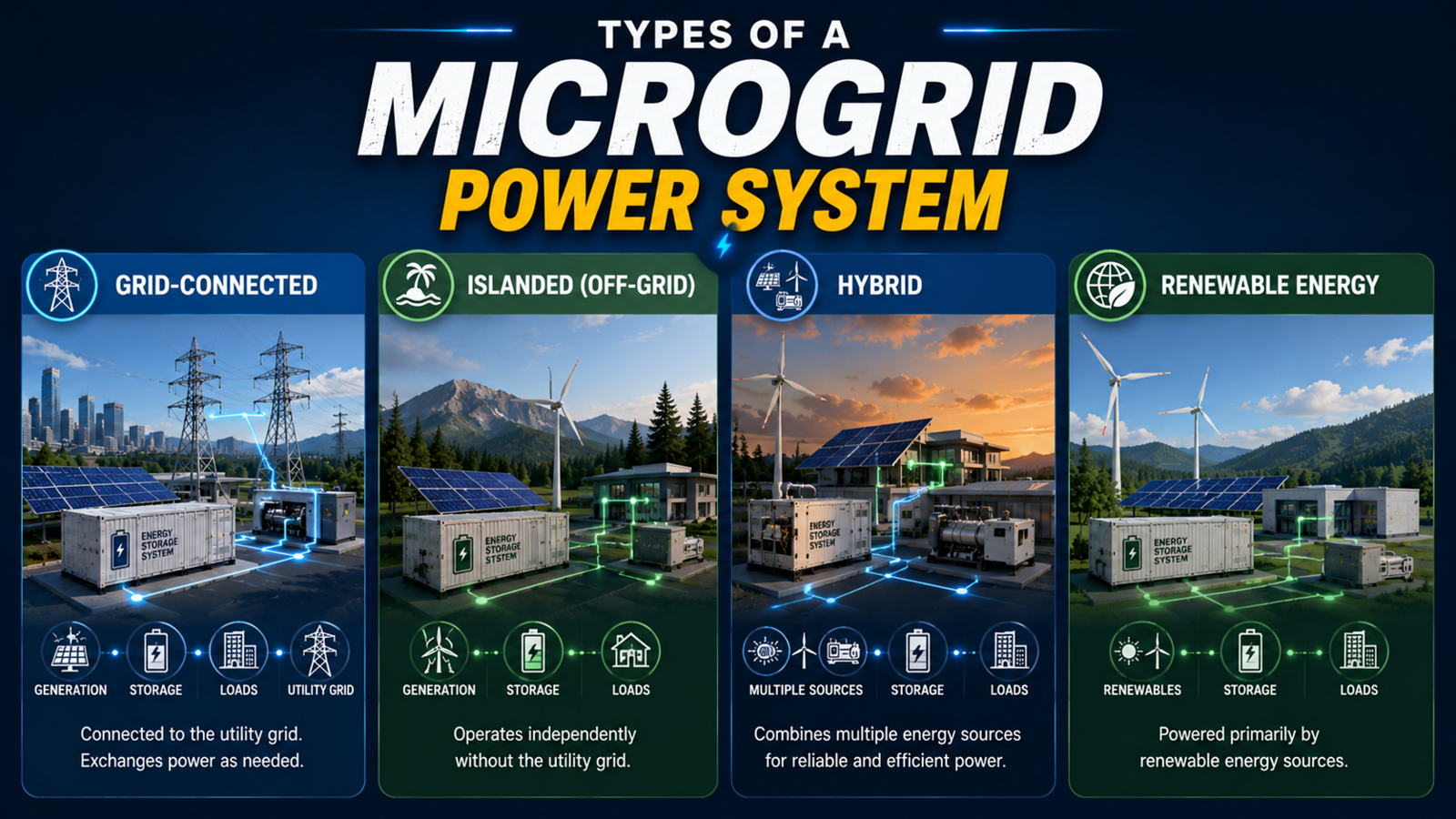
A microgrid power system can have several operational modes and types. Estes incluem:
Grid-Connected
A grid-connected power system has a connection with a utility grid system. Doing so has several advantages.
- Your power shutdown never occurs, as you have dual energy sources.
- Electrical bills have been cut down significantly due to excessive energy supply to the grid systems.
- Operational costs are significantly lower.
Grid connection offers two energy sources and helps interact with the grid during a power outage or excessive energy storage.
Islanded(Fora da rede)
Do you want true energy independence? An off-grid system offers an independent energy source.
Such an off-grid approach has:
- Power sources, such as solar systems or generators, generate energy and provide it to appliances.
- Batteries store power.
- In case of a power outage or high loads, batteries offer the stored energy.
Such a setup can be expensive if you have long power outages.
Híbrido
One of the best options is the hybrid approach of the system. This system:
- Grid approach by connection with the utility grids.
- An off-grid approach is used for the installation of the batteries.
Então, a hybrid system stores energy and supplies it to the grid during excessive energy storage. When a power outage occurs, batteries supply the energy. If the load exceeds, and batteries are discharged, then the utility grid can help.
Here are a few examples of such a hybrid system
- Solar + diesel
- Wind + bateria
- Solar + vento + bateria + gerador
Renewable Energy
If you want to produce renewable energy and reduce dependence on the generators, there are a few sources.
- Solar farms
- Wind turbines
- Battery storage
- Smart controllers
These offer sustainable energy production and supply.
Benefits of a Microgrid Power System
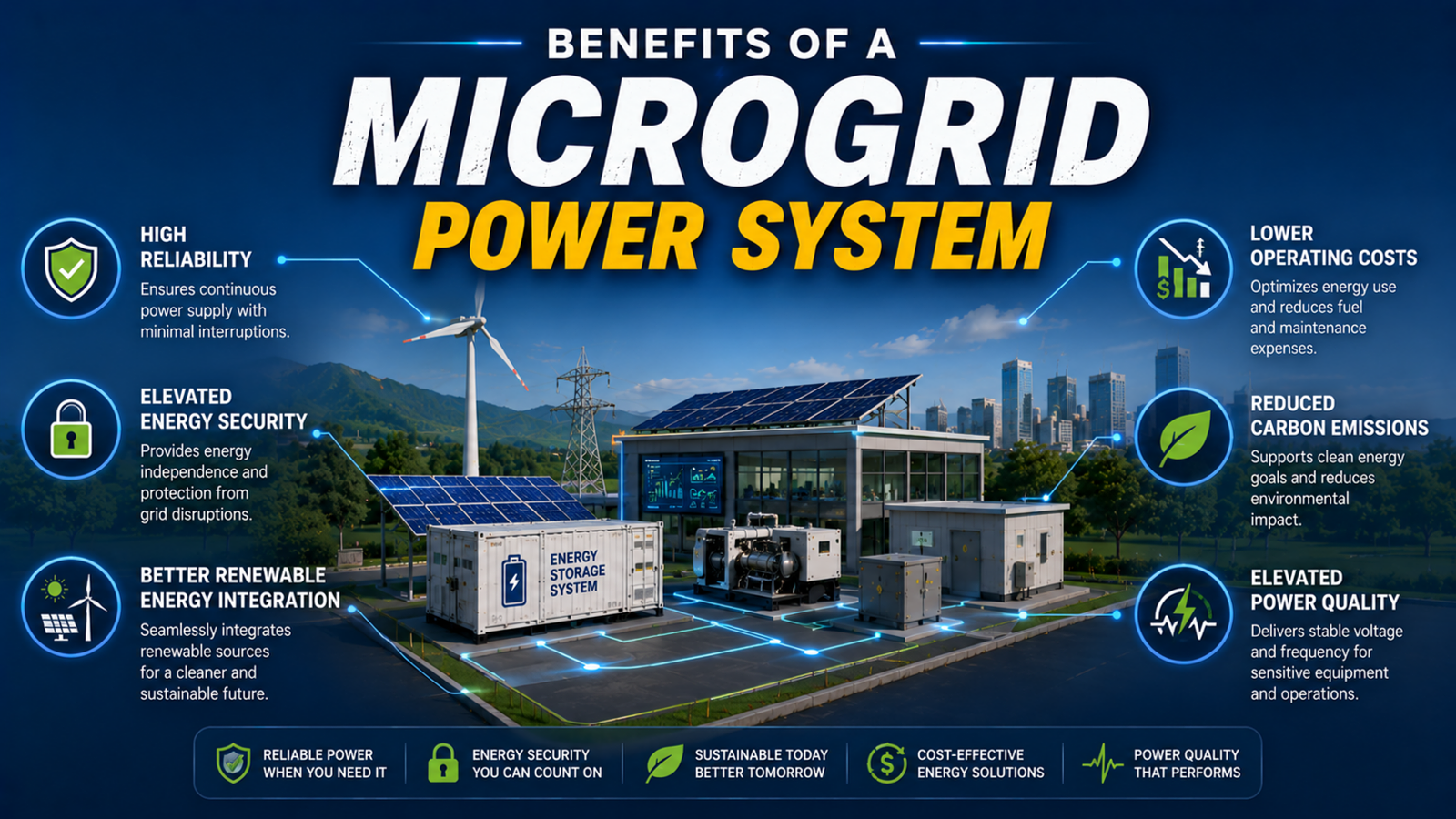
A microgrid power system is highly beneficial with the following benefits.
Alta confiabilidade
Centralized power sources can be very expensive. Higher electricity bills and power shutdowns are the true headache.
That is where a microgrid power system helps with the following benefits.
- The power system operates during the utility failures without interruptions.
- Storms won’t affect much as the generators offer a constant supply.
- There are no issues during the grid instability.
- Equipment failures are less likely as the system provides a stable voltage and current for applications.
Elevated Energy Security
Critical operations continue as the uninterrupted energy supply is available in various cases.
- During the daytime, the solar system helps manage the power supply.
- Durante interrupções, batteries store power and provide it.
- In a hybrid system, the grid with the batteries offers non-stop support.
Better renewable energy integration
Renewable energy integration occurs through the solar system or hydropower.
There are a few benefits of renewable energy integration.
- Sustainable energy without carbon emissions.
- Unlimited energy sources at a very low cost.
Lower operating costs
The microgrid power system offers lower operating costs because of:
- Reduced peak demand charges
- Lower fuel consumption
- Improved generator efficiency
- Better load management
Challenges of Microgrid Power System
A microgrid power system is not a go-to choice until you know its challenges and are ready to handle them.
Here are three critical challenges.
High Initial Investment
Initial investment is pretty high. It is because of several expensive tools to buy up front in the installation process.
- Geradores
- Solar systems
- Battery storage
- Controllers
- Switchgear
- Engineering services
Choose the microgrid system only if you are ready to invest in high upfront costs.
Complex Design
A microgrid doesn’t involve a simple design. If you want energy independence, the pattern is different. If you want a hybrid system, the complexity of the system increases further.
Here are a few things.
- Electrical engineering
- Protection coordination
- Load analysis
- Renewable integration
Requisitos de manutenção
A microgrid system requires regular maintenance. The common maintenance hassles include:
- Generator servicing
- Battery inspections
- Solar cleaning
- Protection testing
| Energy Source | Vantagens | Limitações |
| Gerador Diesel | Confiável, high power output | Fuel costs and emissions |
| Natural Gerador de Gás | Cleaner than diesel | Requires gas supply |
| Solar PV | Renewable and low operating cost | Weather dependent |
| Wind Turbine | Clean energy | Variable output |
| Hydropower | Continuous renewable energy | Dependente do local |
| Biomass | Renewable fuel | Disponibilidade de combustível |
| Fuel Cell | Alta eficiência | High installation cost |
Applications of a Microgrid Power System
The microgrid power system has several applications discussed below.
Industrial Manufacturing
In a manufacturing system, there are a few critical applications, como:
- Production lines
- CNC machines
- Heavy industrial equipment
- Armazéns
Hospitals and Healthcare Facilities
Hospitals require an uninterrupted supply and hence need an independent energy source. Microgrids offer energy for the following facilities.
- Operating rooms
- Medical imaging equipment
- Diagnostic laboratories
- Emergency power systems
Data Centers and Telecommunications
Data centres also require a non-stop supply to manage data and control the system. The common applications in the data centres are:
- Servidores
- Cloud computing facilities
- Torres de telecomunicações
- Network operation centers
- Communication equipment
Mining and Remote Communities
Remote areas don’t have a grid supply. They require the energy supply through independent energy systems, such as microgrid power systems. Here are a few applications.
- Mining equipment
- Processing plants
- Workers’ camps
- Residential communities
- Water pumping systems
Military Bases and Critical Infrastructure
Military bases and infrastructure utilize the microgrid facilities for:
- Command centers
- Surveillance systems
- Emergency facilities
- Sistemas de segurança
Commercial Buildings and Educational Campuses
Commercial buildings and offices use the microgrid to power:
- Prédios de escritórios
- Shopping malls
- University campuses
- Research laboratories
- Student housing
Microgrid Power System vs Traditional Power System
| Recurso | Microgrid | Traditional Grid |
| Geração de energia | Local | Centralized |
| Confiabilidade | Alto | Moderado |
| Outage Protection | Excelente | Limitado |
| Integração Renovável | Excelente | Moderado |
| Independência da rede | Sim | Não |
| Armazenamento de energia | Common | Limitado |
| Escalabilidade | Alto | Moderado |
| Local Control | Complete | Utility controlled |
Perguntas frequentes
- What is the primary purpose of a microgrid?
Microgrid power systems operate to provide energy freedom. It involves a systematic approach toward localized energy production, optimization, and finally distribution of energy to your system with minimal reliance on the utility grid.
- Can a microgrid operate without the utility grid?
Sim, a microgrid can operate without the utility grid support when it is in the island mode. It generates and distributes power on its own without any utility grid.
- What industries benefit the most from microgrids?
A microgrid is beneficial for several industries. Por exemplo, fabricação, assistência médica, mineração, telecomunicações, centros de dados, aeroportos, military facilities, universities, and remote communities.
- What energy sources are commonly used in a microgrid?
Na maioria das vezes, renewable energy sources are used in the microgrid. Common energy sources include diesel generators, natural gas generators, painéis solares, wind turbines, battery energy storage systems, biomass generators, energia hidrelétrica, and fuel cells.
- How do batteries improve microgrid performance?
One of the best things about the batteries is their energy storage capacity. It helps stabilize voltage and frequency, stores excess renewable energy, reduces generator runtime, lowers fuel consumption, and provides backup power.
- Are microgrids environmentally friendly?
Sim, most microgrid systems are eco-friendly as they involve renewable energy sources. There is no carbon emission. Portanto, the impact of microgrids is very little on the environment.
- How is a microgrid different from a traditional power grid?
A traditional power grid always gets energy from a centralized production system. They are often miles away and distribute energy. A microgrid system produces energy locally with its renewable energy sources and distributes it to the system.
- What factors should be considered when designing a microgrid?
When designing a microgrid, you must consider several factors, such as load demand, critical loads, available energy resources, battery capacity, dimensionamento do gerador, renewable energy potential, system scalability, maintenance requirements, orçamento, and regulatory compliance.
Conclusão
A microgrid offers an independent energy source with local energy production and distribution. You can get support from the utility grid if you want a dual power source, or you may use batteries to store the excessive energy. No entanto, the whole system works to provide you with energy freedom.
Are you looking for energy efficiency and freedom? Poder Huaquan has suitable generators for various applications. Our top-notch generators meet your needs and provide a seamless energy source. Check out our energy sources right away!