Parallel operation of diesel generators is the method where two or more generator sets are connected together to supply power to a common electrical load. This approach is often used when a higher amount of power is required, which cannot be supplied by a single generator. The purpose of this manual is to provide clear guidance for safe and correct parallel operation of the diesel generator.
This article will walk you through how diesel generators are operated in parallel while covering operating requirements, synchronization, and other key details.
Overview of Parallel Operation
In parallel operation, multiple generators are connected together via a common electric bus to supply power to the same load. Instead of one generator supplying all power, multiple generators contribute to reduce the load on one generator. However, the voltage and the frequency of the generator must be the same.
One of the key reasons to use parallel operation is that it allows the power system to handle a higher quantity of loads without being interrupted in between. As the load is shared among multiple generators, the system continues operating even if one system gets stopped or disconnected. However, it’s also important to distribute the load evenly to avoid any type of damage and instability.
Description of Parallel Deisel Generator System
In parallel operation, the generators are often connected through circuit breakers, which allow them to be safely connected or disconnected when required. In the electrical setup, each diesel generator is connected to the main busbar using its own circuit breaker. The busbar acts as a common point where all power from multiple generators is combined and then distributed. This allows the generators to be connected or disconnected without interrupting the operation.
The control and protection system helps the generator operate safely in parallel operation. The control manages starting, stopping, and load sharing in generators. The protection system monitors conditions such as voltage, frequency, and power flow. If anything happens in between it immediately disconnect the generator to avoid any damage.
Requirements for Parallel Operation
To operate multiple generators together in parallel, they must first be compatible with each other. To ensure they are compatible with each other, check their voltage and frequency rating, which must be the same. Also, make sure their power ratings are suitable for each other so they can share the load properly without overloading only one generator.
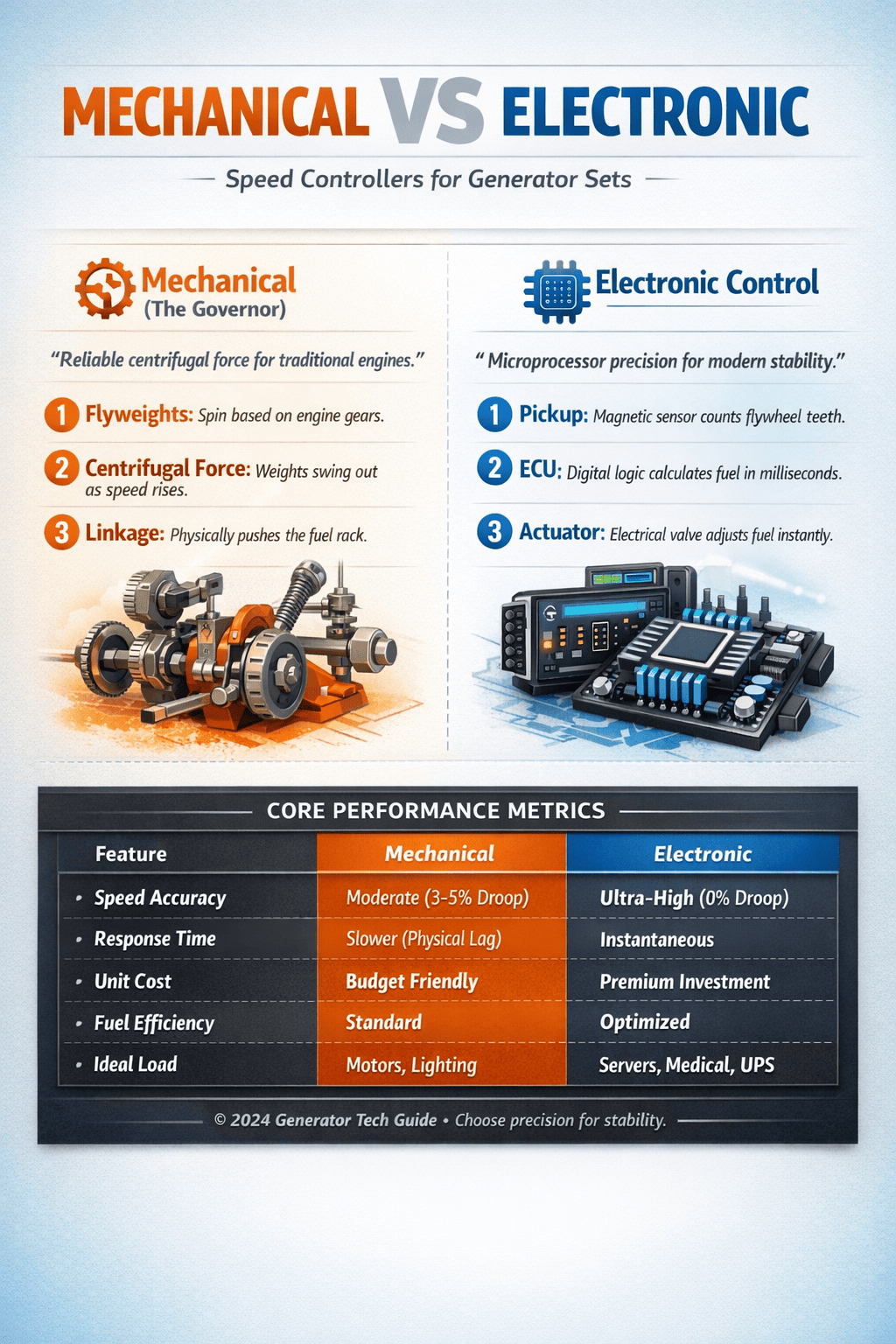
For stable operation, correct speed and voltage control are essential. The speed control system keeps the generator frequency stable so they can share the load evenly. Whereas the voltage control system is responsible for maintaining the equal voltage levels. However, if not handled properly, this may result in generators becoming unstable or failing in sharing the load properly.
Operating Modes
The process of parallel operation of diesel generators can be carried out in three different operating modes. The mode usually depends on the level of automation required.
Manual Parallel Operation
In this operating mode, the operator performs most of the tasks. They first start the operator, check the voltage and frequency, perform synchronization, and then connect the generator to the bus manually. Manual operations are usually used in small systems or places where trained operators are available.
Semi-automatic Parallel Operation
As the name suggests, in this type of parallel operation, some of the parts are handled manually, and some are automated. Most of the time, synchronization is done automatically, and the operator handles the starting and stopping of generators.
Fully Automatic Parallel Operation
Here, all major operations are handled by the control system. The system automatically starts and stops generators, performs synchronization, and shares the load between multiple generators. This is mostly used in places such as hospitals, data centers, and industrial plants where a fast and reliable power supply is needed.
Pre-Operational Checks
Basic checks must be done before connecting diesel generators for parallel operation to ensure safe and smooth operation:
Mechanical checks
This must be done first. These include checking fuel level, engine oil level, and coolant level. Also, make sure there are no oil, fuel, or coolant leaks.
Electrical checks
This includes checking generator voltage, frequency, and phase sequence. They must be compatible with other generators. Also, make sure the cables and circuit breakers are in good condition and connected properly.
Control and Protection Systems
It is necessary to check the control panel to ensure that all settings are correct and the indicators are functioning properly. The protection devices and interlocks must be ready to function in case any problem arises during the operation. This will help in preventing damage and ensuring a safe parallel operation.
Normal Operating Procedures for Parallel Operation
Starting Generators for Parallel Operation
First, start each generator and allow it to reach normal speed and voltage. Once stable, synchronize the generator with the common bus and connect it to the system. After connecting, it will start sharing the load with other generators that are running.
Adding a Generator to a Live Bus
When a generator is connected to a live bus, the generator must first be synchronized with the existing system. Before closing the breaker, ensure that the voltage, frequency, and phase are appropriate for the bus conditions. After the connection, allow the load to gradually be shared among the other generators.
Operating Generators Under Varying Load Conditions
While the load keeps varying, it is important to monitor the voltage and frequency to ensure that the system is stable. Also, ensure that the load is evenly distributed among the generators. If any problems happen in between, adjust the controls to ensure smooth operation.
Removing a Generator from Parallel Operation
To remove the generator from parallel operation, slowly reduce the load. Make sure the generator is carrying minimal or no load. Now open the circuit breaker to disconnect it from the bus. Run it for a few minutes before closing it, and then safely shut it down.
Conclusion
Following the correct operating procedures is very important when running diesel generators in parallel. This makes sure the generators work smoothly while keeping them stable and reliable. Not following the correct procedures may cost you higher risks and damage your equipment. Moreover, always follow correct insights from experienced generator manufacturers and industry platforms, like Huaquan. With trusted guidance, you can operate your generators safely and efficiently.