 Diesel Generator and Gasoline Generator" width="1536" height="1024" />
Mengalami pemadaman boleh mengecewakan; oleh itu, sistem kuasa sandaran adalah penting. That’s why picking the right generator is crucial for keeping your Rumah powered during outages. While both diesel and gasoline Penjana supply power, mereka masing-masing bersinar di kawasan yang berbeza, daripada kecekapan bahan api kepada jangka hayat dan prestasi keseluruhan. Akhirnya, which one is best depends on your specific needs and how you plan to use it.
To help with this decision, let’s take a closer look at the comparison between the diesel generator and gasoline generator models, so you can decide which option will keep your home running smoothly when the power goes out.
The Key Difference Between Diesel and Gasoline Generators
Diesel generator and gasoline generator models use internal combustion engines to transform fuel into electrical energy. A diesel generator runs on diesel fuel and functions via compression ignition, which involves compressing air to a high temperature and injecting fuel to automatically ignite. A gasoline generator, on the other hand, runs on gasoline and is powered by a spark plug, which ignites the air-fuel mixture. This basic variation in the ignition process is the primary operational difference between diesel and gasoline generators.
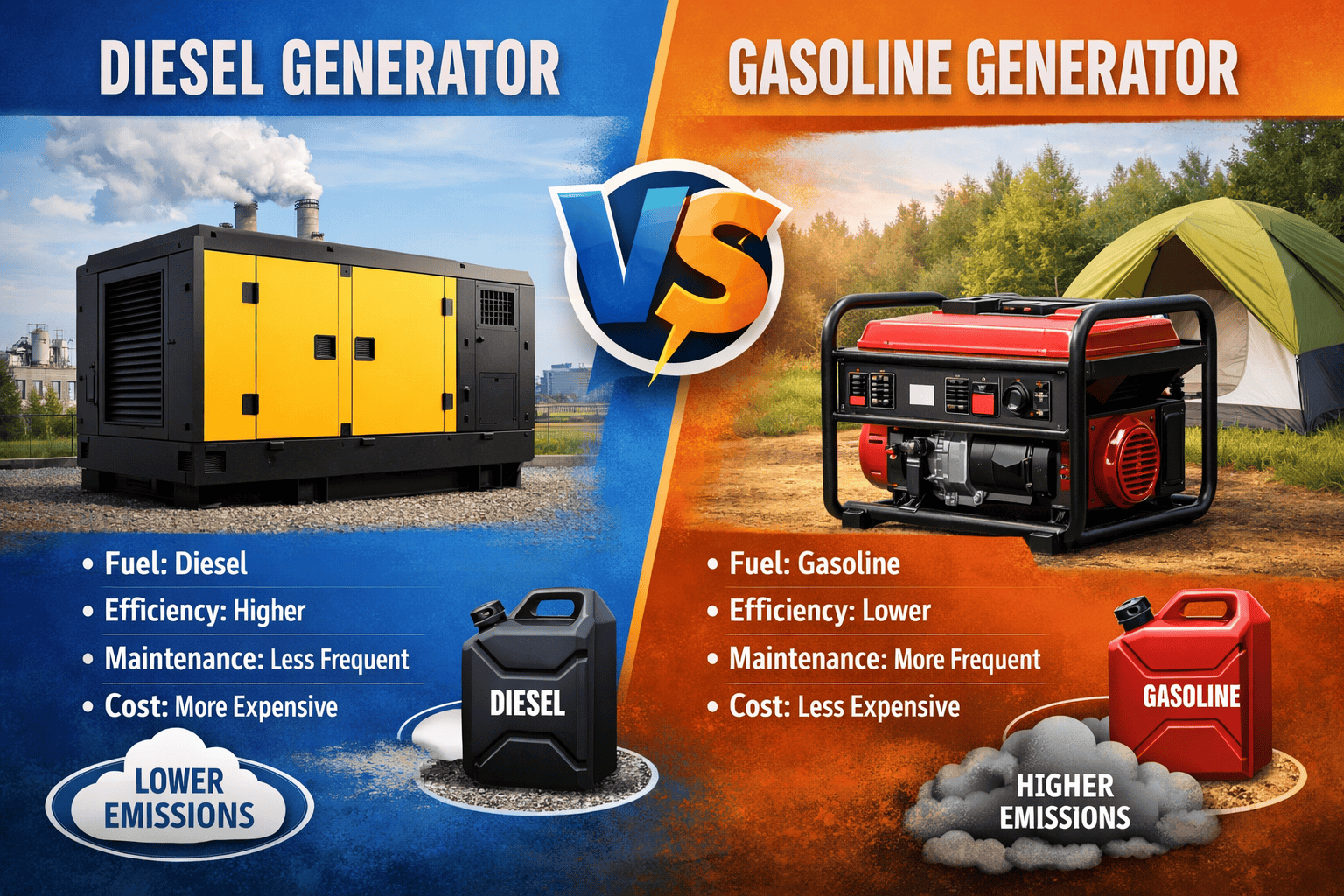
Diesel Generator and Gasoline Generator: Head-to-Head Comparison
Now that we understand the basic working differences between the diesel generator and gasoline generator models, let’s move on to a detailed comparison to see how they perform across key factors.
| Feature | Diesel Generator | Gasoline Generator |
| Fuel Efficiency | Higher | Lower |
| Durability | 3–5x longer lifespan | Shorter lifespan |
| Upfront Cost | Higher | Lower |
| Maintenance | Less frequent | More frequent |
| Environmental Impact & Noise Levels | Less environmentally-friendly, higher emissions, louder | More environmentally-friendly, lower emissions, and silent |
| Power Output | Higher torque | Lower power output |
1. Diesel vs Gasoline Generator Durability Comparison
Diesel generator and gasoline generator models consume fuel at different rates, which affects how efficiently they produce electricity. Diesel fuel has a higher energy content than gasoline, giving diesel engines an efficiency advantage, especially under heavy loads.
In practice, a diesel generator of a given size can use 30–35% less fuel per hour than a comparable gasoline generator. This makes diesel generators more cost-effective and energy-efficient over their operational life.
2. Diesel vs Gasoline Generator Durability Comparison
Diesel generators are more durable over long periods because they can handle heavier workloads than petrol generators. They commonly have heavy-duty designs that last longer than petrol units, often providing thousands of additional hours of use before requiring major service. Diesel generators operate at lower RPMs, which results in reduced engine damage and extended time periods between maintenance needs compared to petrol engines.
When considering a diesel vs petrol generator, it’s important to note that the construction of petrol gasoline generators takes less material because their design needs fewer parts, resulting in lighter generator systems. The engine components face increased stress under heavy load operations, leading to more maintenance requirements and a reduced lifespan. Petrol generators are best suited for short-term needs that occur irregularly and for situations where heavy loads do not happen.
3. Diesel vs Gasoline Generator Cost Comparison
Gasoline generators attract budget-conscious users who need temporary power because they have a lower upfront cost. However, this initial saving can be misleading. Shorter lifespan, higher fuel consumption, and more frequent maintenance often lead to increased operating costs, reducing their overall value over time.
Diesel generators, on the other hand, have higher upfront costs but provide better long-term value. Their fuel efficiency, durable construction, and lower maintenance requirements result in significant savings over their operational lifespan. Designed for continuous and extended use, diesel generators deliver reliable power for longer periods before requiring major service.
So, if you’re asking, “Diesel or petrol generator which is better” in terms of cost, diesel generators usually make the most sense for long-term use and durability, while petrol generators are suitable for short-term or occasional needs.
4. Diesel vs Gasoline Generator Emissions & Noise Comparison
When choosing between the diesel generator and gasoline generator models, it’s essential to consider both environmental impact and noise levels. Each type functions differently, resulting in distinct emissions and sound profiles. While diesel generators are more fuel-efficient, they tend to produce higher amounts of pollutants, including nitrogen oxides and particulate matter, making them less eco-friendly compared to gasoline generators.
5. Diesel vs Gasoline Generator Maintenance Comparison
Diesel generator and gasoline generator models require significantly different maintenance because of the differences in engine design. Gas generators necessitate regular oil changes, spark plug replacements, and air filter cleaning. Although their simpler construction makes them easier to fix, they require more frequent maintenance to work reliably.
Diesel generators, on the other hand, are designed to be long-lasting and reliable. They require fewer routine duties because they do not have spark plugs or moving parts. While diesel generators may require specialised maintenance and more expensive parts when serviced, they require less regular maintenance than gasoline generators.
6. Diesel vs Gasoline Generator Power Output Comparison
Diesel generators are well-suited for heavy-duty applications requiring consistent and robust power, as they typically deliver higher torque and greater overall output. Although suitable for many applications, gasoline generators might not have the same power output as diesel generators, which could be a drawback for some heavy-duty jobs.
So, Diesel or Petrol Generator: Which is better?
This concludes our detailed comparison of diesel generator and gasoline generator models for efficiency, durability, and performance.
Based on this comparison, you can choose either option depending on how you intend to use your generator. When you need consistent power for extended hours and durability under heavy use, diesel generators are the go-to choice. Conversely, for occasional use where portability and ease of operation matter, a gasoline generator is more suitable.
Akhirnya, the decision isn’t just about efficiency or durability; it’s about finding a generator that matches your unique needs and usage habits.
And if you are still unsure about a diesel or petrol generator, which is better, consider exploring customized solutions and comparing specifications directly at Kuasa Huaquan to make a more informed decision. With over 15 years of experience and products used in more than 100 countries, we are committed to helping you find the right power solution.
People Also Ask
1. How Do Diesel Generators Differ from Gasoline Generators?
A diesel generator uses diesel fuel and compression ignition, while a gasoline generator relies on petrol and spark ignition.
2. Diesel or Petrol Generator, Which is better?
Choosing between a diesel or petrol generator model depends on usage. Diesel generators are ideal for long-term, continuous, and heavy workloads due to durability and fuel efficiency, while petrol generators are lighter, more portable, and better for short-term or occasional power requirements.
3. How to Choose Between Diesel and Petrol Generators?
When choosing between a diesel and petrol generator model, consider load requirements, runtime, maintenance, and budget.