Introduction
High moisture levels can damage electrical systems, contaminate fuel, and reduce generator efficiency. Therefore, this guide explains practical moisture prevention measures to ensure safe and reliable diesel generator operation in wet conditions.
In addition, regular inspection helps detect moisture issues before they become serious problems.
Understand The Effect of moisture on Diesel Generators
Before implementing prevention measures, you need to understand the role that moisture plays in generator systems. Water and humidity can directly damage mechanical and electrical components.
As a result, moisture causes corrosion of metal parts and leads to rust formation. Electrical insulation weakens over time, which can cause short circuits or system failure. Therefore, early identification helps avoid serious damage, and it is important to understand these risks to take effective preventive action.
At the same time, effective moisture prevention reduces unexpected system downtime.
Identify Common Moisture Related Problems
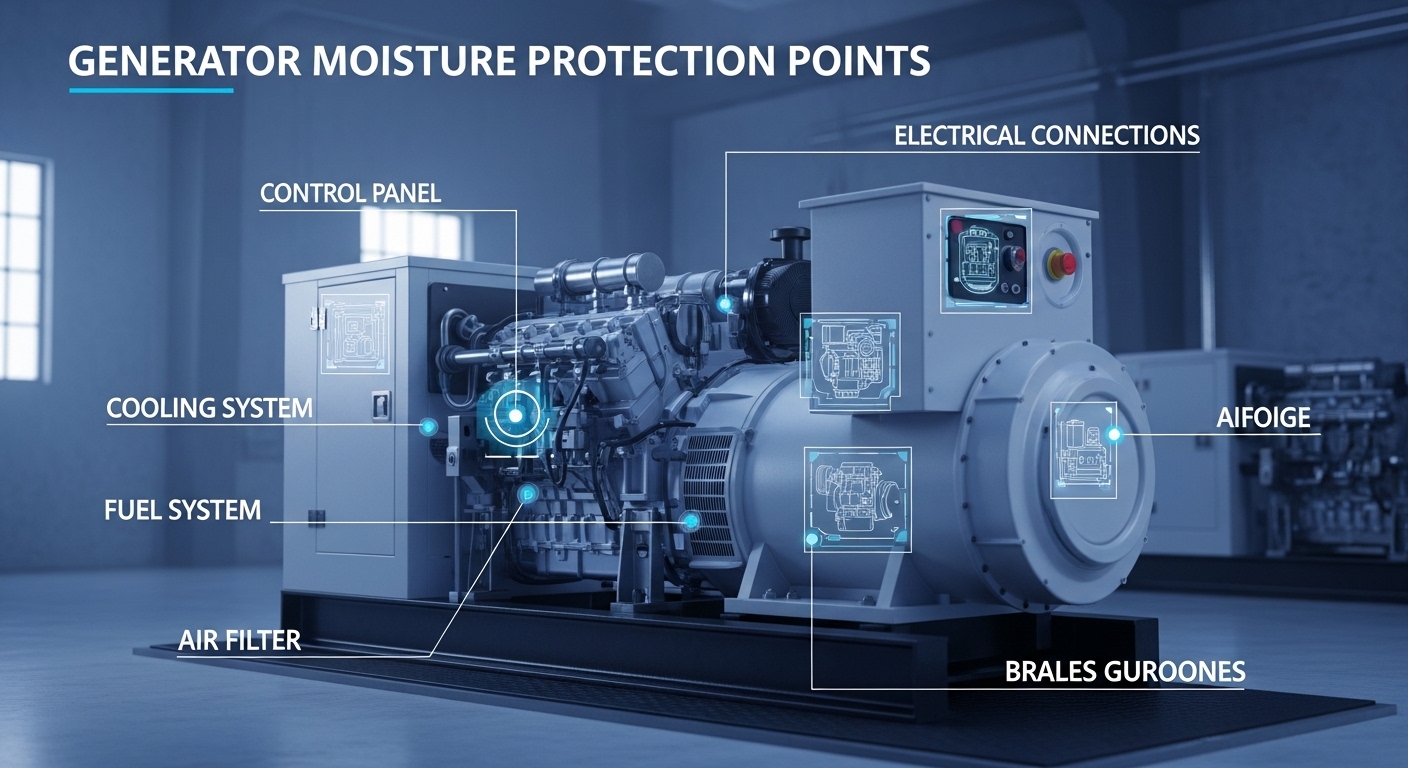
For example, you must understand the common problems that occur during the rainy season due to moisture. Early identification helps to avoid serious damage.
Common problems include:
- Electrical short circuits
- Corrosion of the component
- Contamination of Fuel by Water
- Decreased insulation resistance
- Starting difficulties
Moisture reduces equipment reliability and increases maintenance requirements. Consequently, operators must take preventive measures to avoid system failure. Early detection prevents operational failure.
Keep Generator In a Covered Area
You should place the generator in a protected space so it has less direct contact with rain. Make sure that rainwater is prevented from getting directly into the generator. Proper covering helps to overcome the water damage to the sensitive components.
This is one of the most effective moisture prevention methods for outdoor generators.
Make Sure There Is Proper Drainage Around Generator
If water collects around the generator, it increases moisture exposure. Provide proper drainage around the site of installation. Do not allow water to collect around the base of the generator. Good drainage is important to make sure that the generator structure is not exposed to water.
Maintain Dry Generator Environment
In the rainy season, you must ensure that the surrounding environment of the generator is dry. Keep the room with the generator clean and clear of wet materials. Do not put water or wet equipment near the generator. A dry environment is useful in mitigating the effects of humidity. In particular, controlled indoor conditions significantly reduce moisture risks.
Check for Sealing of Generator Enclosure
The enclosure of the generator should be well enclosed, so that water may not get inside. Inspect doors, panels and joints for gaps. Replace damaged seals or gaskets. Good sealing prevents rainwater and moisture from entering internal components.
Protect Electrical Components for Moisture Prevention
Electrical systems are very sensitive to moisture and must be protected in special ways. Cover control panels and electrical terminals with protective enclosures. Make use of moisture-resistant materials, if possible. Furthermore, proper insulation and protection reduce the risk of electrical failure.
Electrical protection is a critical part of moisture prevention in diesel generators.
Use Anti Moisture Heaters
Anti-condensation heaters can be installed inside the generator panels. These are heaters that are used to help maintain a dry environment by reducing the humidity inside electrical enclosures. Continuous heating prevents condensation in sensitive parts.
Perform Regular Insulation Resistance Checks
You will have to measure insulation resistance in rainy season. Use insulation testing equipment in testing of electrical components. Low insulation resistance indicates the presence of moisture. Regular testing helps to catch problems early.
Examine Wiring And Connections
Wiring and electrical connections can be affected by moisture. Check all cables and terminals to ensure they are not corroded or loose. Make sure that proper insulation is maintained. Replace damaged wires as soon as possible to avoid faults.
Protect Control Panel Cloaked Water Entry
Control panels should be protected from direct water. Put waterproof covers or closed, sealed enclosures. Do not install control panels in open areas. Proper protection ensures stable monitoring and operation.
Maintain Proper Ventilation for Moisture Prevention
Ventilation is needed to prevent moisture from accumulating within generator rooms. Make sure there is enough air movement to remove the humid air. Additionally, ventilation fans should be used if required. Proper ventilation helps to keep conditions dry inside.
Proper airflow is essential for effective moisture prevention inside generator rooms.
Use Dehumidifiers In Generator Room
Dehumidifiers are useful for controlling the levels of humidity in closed spaces. Install dehumidifiers in generator rooms during the rainy seasons. Lower humidity reduces the opportunity of condensation and corrosion.
Check Air Intake System
The air intake system will cause moisture to enter the engine if not maintained properly. Check air filters and intake ducts regularly. Change clogged or wet filters. Clean intake systems are helpful in preventing moisture.
Inspect Exhaust System
The exhaust system should be checked for water entering or blockage. Make sure exhaust pipes are in a position where they will not be exposed to rainwater. Use rain caps if necessary. As a result, proper exhaust protection prevents moisture entry and improves system reliability. Good exhaust condition helps prevent internal moisture accumulation.
Monitor Fuel System for Water Contamination
Water may get into fuel tanks through condensation or leakage. For this reason, inspect fuel tanks and fuel lines at regular intervals. Check the fuel for the presence of water. Remove contaminated fuel as soon as possible.
Fuel system inspection plays an important role in overall moisture prevention strategy. Likewise, regular monitoring helps prevent long-term fuel system damage.
Drain Water From Fuel Tank Occasionally
Drain water from the fuel tank regularly during rainy conditions. Open drain valves to remove water and sediment. Regular drainage prevents fuel system damage and ensures proper combustion.
Use High Quality Fuel
Good quality diesel fuel reduces the risk of contamination. Get fuel from reliable suppliers. Store fuel in closed containers. High quality fuel helps ensure stable engine operation.
Check Engine Oil Condition
Moisture could cause engine oil contamination in the rainy season. Inspect the condition of the oil regularly. Look for signs of water contamination, such as a milky appearance. Replace oil if contamination is found.
Protect Cooling System from Moisture
Cooling system components should be protected from external water exposure. Fix the leaking radiator and coolant system. Ensure proper sealing. Maintain coolant condition to prevent corrosion.
Clean Generator Regularly
Regular cleaning helps to prevent the buildup of dirt, which retains moisture. Remove dust, mud and debris from generator surfaces. Clean equipment dries faster and reduces the potential for corrosion.
At the same time, regular cleaning supports better airflow and overall system efficiency.
Monitor Generator Operating Parameters
You have to monitor the performance of generators carefully during the rainy season.
Important parameters are:
- Engine temperature
- Oil pressure
- Output voltage
- Frequency stability
- Fuel consumption
In many cases, abnormal readings indicate moisture-related issues. Early action helps prevent damage.
Perform Regular Test Runs
Even during the rainy season, periodic operation is important. Similarly, run the generator at intervals to keep components dry. The operation helps evaporate moisture and keeps the system ready.
Increase or Decrease the Maintenance Frequency
As a result, maintenance intervals should be reduced during the rainy season. Increase inspection frequency of electrical and fuel systems. Frequent checks help identify moisture problems early. As a result, early maintenance reduces repair costs and downtime.
Maintain Maintenance Records
In addition, you should record all maintenance activities.
Important records include:
- Inspection dates
- Maintenance activities performed
- Detected issues
- Repair actions
Accurate records help monitor generator condition and improve maintenance planning.
Normal Train Maintenance Personnel
Maintenance personnel should understand moisture prevention methods. Technicians must know how to inspect and protect generator systems. Skilled personnel help ensure reliable generator operation.
Follow Safety Procedures
Most importantly, safety is important when working in wet conditions. Do not touch electrical components with wet hands. Use protective equipment if necessary. Follow workplace safety rules at all times.
Conclusion
You must establish suitable moisture prevention measures for diesel generators during the rainy season. Controlling humidity, protecting electrical systems and maintaining cleanliness help prevent damage. In conclusion, regular monitoring and preventive maintenance ensure reliable and safe generator operation.
Ultimately, proper maintenance ensures stable generator performance in all weather conditions. and performance of diesel generators.
Frequently Asked Questions
1. Why Is Moisture Bad In Diesel Generators?
Moisture may cause corrosion, electrical faults and poor insulation performance, leading to equipment failure.
2. How Does Water Get Into Generator Systems?
Water can enter through condensation, leaks, poor sealing or direct exposure to rain.
3. Should Generators Be Covered During Rainy Season?
Yes. Proper covering protects generators from direct water exposure and reduces moisture damage.
4. Under what frequency should I drain fuel tank in rainy season
Fuel tanks should be checked and drained regularly, depending on operating conditions and humidity levels.
5. Why is It Important to Test Insulation Resistance?
It helps detect moisture in electrical components and prevents electrical failure.
About Huaquan Power
Huaquan Power is serving professional solutions of diesel generators for industrial and commercial users. You can choose reliable generator sets, customized power systems and comprehensive technical support.
Visit: http://huaquanpower.net/
You can browse product information and service options based on your power system needs.