Due to the rising global demand for stable and uninterrupted power supply, CHP systems have become a smart solution for efficiently running large-scale infrastructure projects. Gabungan Panas dan Tenaga (CHP) is an efficient system that generates both electricity and useful heat from a single energy source. In many business and industrial sectors, gas Generator are commonly used as the primary power source in CHP systems.
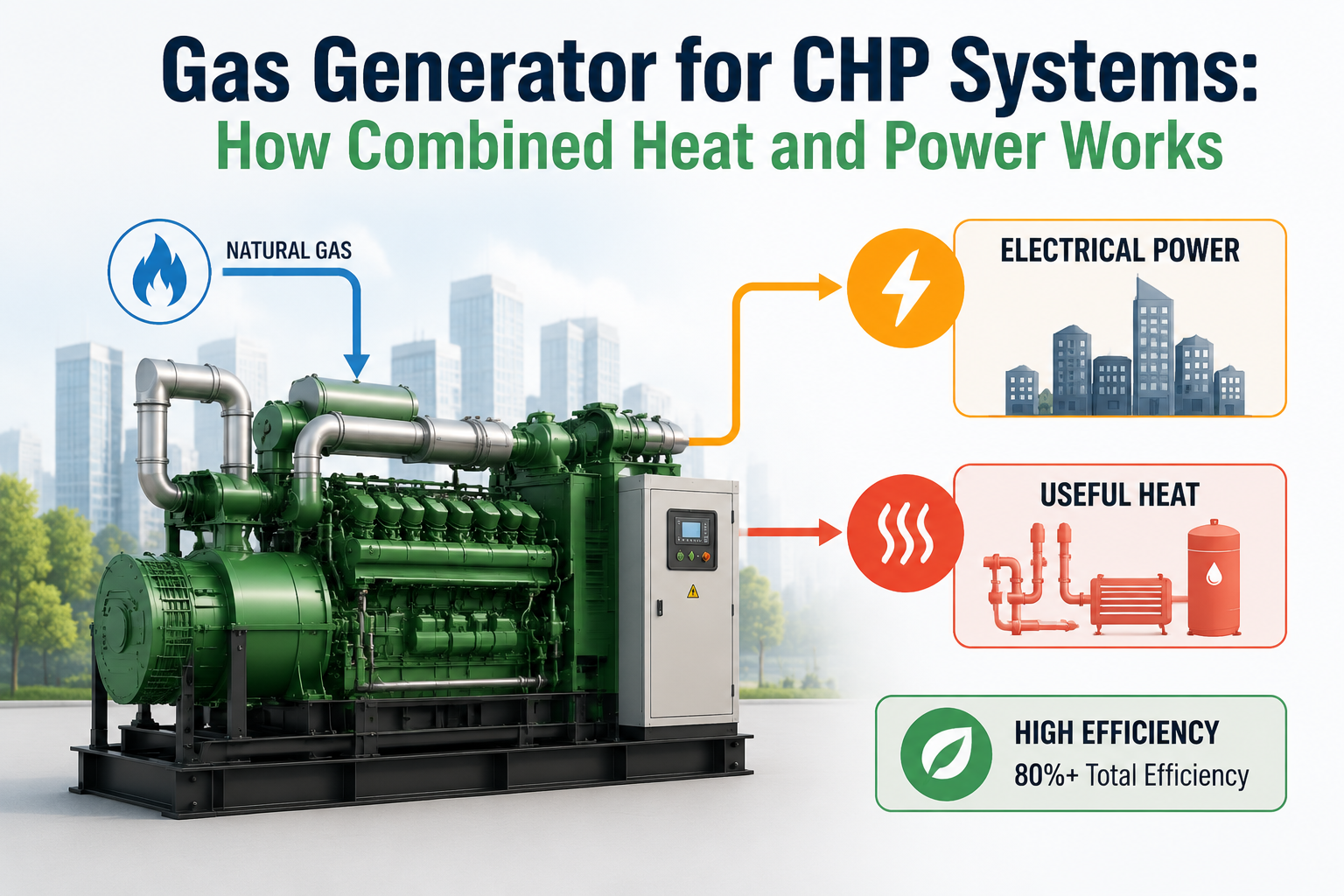
Unlike conventional power systems, CHP systems do not waste the heat produced during electricity generation. By using both electrical and thermal energy, CHP systems can achieve efficiency levels of more than 80%. This makes them much more cost-effective than traditional energy systems.
Dalam artikel ini oleh HuaQuan, you will learn exactly how a Pembangkit Gas for CHP works, its main components, the incredible benefits of cogeneration, and how to choose the perfect system for your facility’s energy needs.
What Is a Gas Generator for CHP?
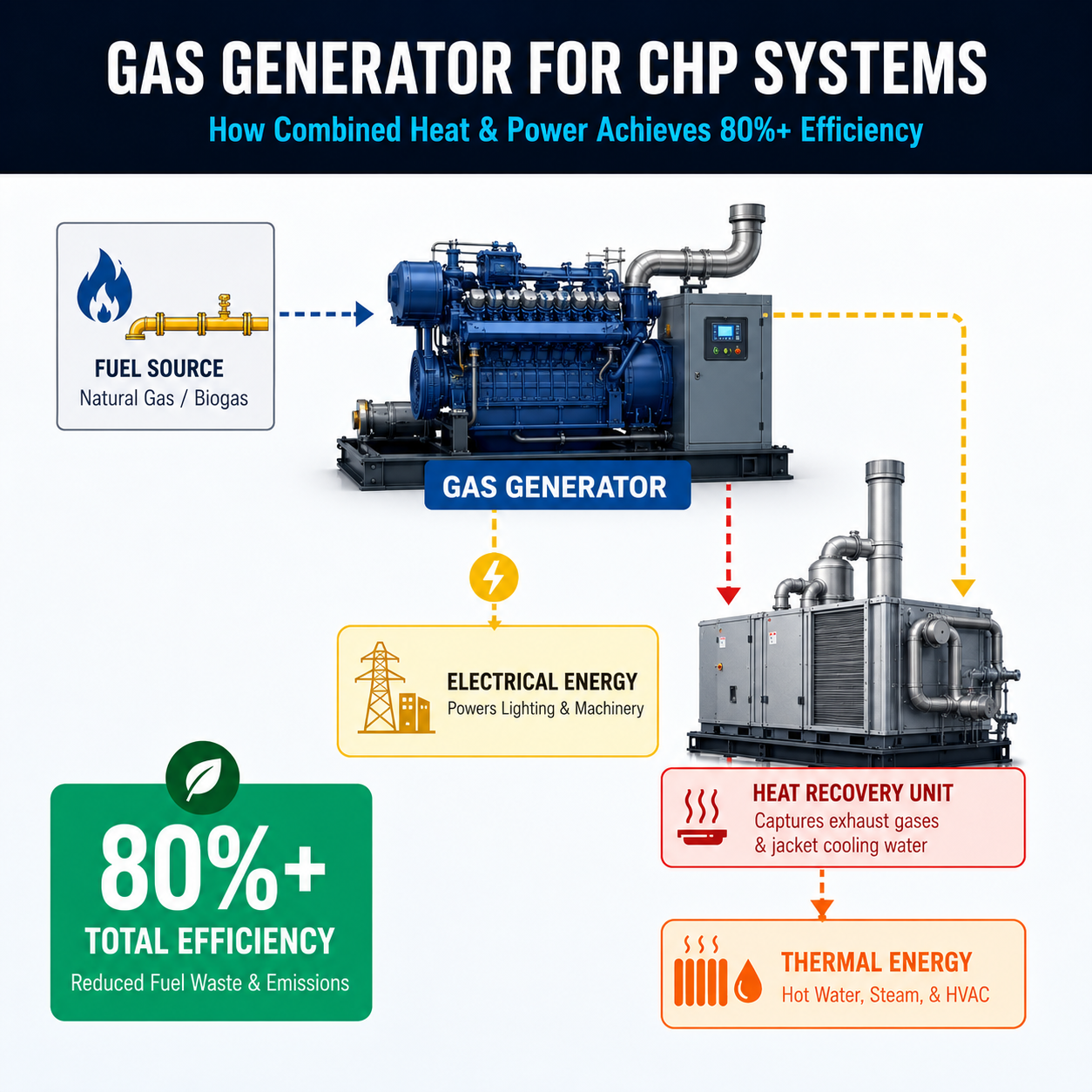
A gas generator for CHP acts as a dual-purpose energy system by generating usable heat alongside power generation. Here’s how it works:
- Produces electricity: Itu internal combustion gas engine is connected to an alternator to produce electricity.
- Recovers heat: High-temperature gases released from the engine’s exhaust and heat from jacket cooling water are captured.
- Utilizes thermal energy: The recovered heat is used to produce hot water, steam, space heating, and even cooling through absorption chillers for facility use.
- Maximizes utilization: A gas generator for a CHP system produces both electrical and thermal energy simultaneously. This reduces overall energy use and carbon emissions.
How Combined Heat and Power Works
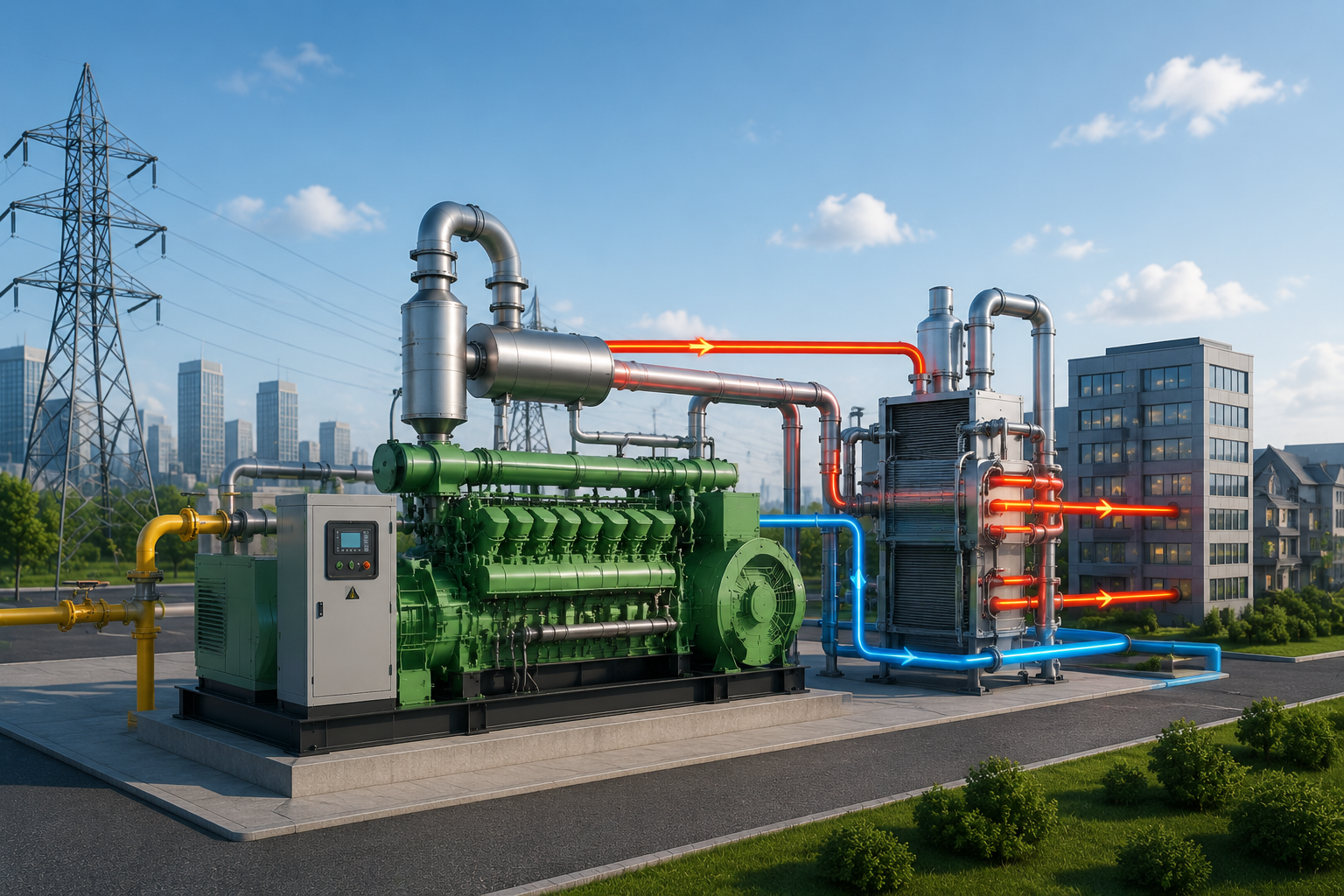
The gas generator CHP method produces both electrical energy and useful thermal energy in one hassle-free integrated system. The whole process operates in a continuous loop:
Melangkah 1: Gas Fuel Enters the Engine
The process begins with the delivery of fuel to the gas generator. This fuel can be natural gas from the grid. It can also be biogas from anaerobic digesters. The choice of fuel depends on the needs of the facility and available resources.
Melangkah 2: Generator Produces Electricity
The gas is burned inside the engine cylinders. This creates mechanical energy, which will rotate the crankshaft. The rotation then powers the connected alternator, generating electricity. This electricity is used to run equipment, lampu, dan mesin.
Melangkah 3: Waste Heat Is Captured
The combustion process produces a large amount of heat. Instead of letting this heat escape through the exhaust or radiator, special heat exchangers are used to capture it. Heat is recovered from two main sources. The first is the hot exhaust gases emitted from the cylinders. The second is the jacket water used to cool the engine block.
Melangkah 4: Heat Is Used On-Site
The heat energy that is captured is transferred to the hydronic systems of the respective facility. It can be used to produce steam for industrial processes, supply domestic hot water, power central space heating systems, or activate heat-driven cooling systems.
Main Components of a Gas Generator CHP System
To make the cogeneration system successful, many essential parts need to be assembled accurately:
- Gas engine: The main component that transforms fuel into mechanical energy.
- alternator: It uses engine rotation to convert mechanical power into electrical energy.
- Heat recovery unit: The main unit that manages the transfer of thermal energy from the engine.
- Exhaust heat exchanger: It captures high-temperature heat from the engine’s exhaust and converts it into useful energy.
- Jacket water heat exchanger: Receives residual lower-quality heat from a portion of the engine’s cooling circuit.
- Panel kontrol: Acting as the digital brain of the whole setup, it monitors the system in real time by regulating engine health status, sinkronisasi, and thermal output.
- Gas supply system: Controls the amount and pressure of fuel to ensure efficient engine performance.
- Sistem pendingin: A backup heat removal system that ensures excess heat is safely removed from the system when the load on the facility is reduced for a short time.
- Synchronization panel: This panel ensures that the electrical power of the generator for CHP is properly matched with the local utility grid.
Benefits of Using a Gas Generator for CHP
Gas generators for CHP provide major operational and cost advantages, such as improving energy efficiency and lowering overall operating expenses.
- Higher total energy efficiency: CHP systems can reach efficiencies of up to 80–90% as opposed to around 50% when electricity is purchased from the grid and heat is produced from a boiler.
- Lower fuel waste: It makes the most of the energy from every volume of gas consumed while improving overall efficiency.
- Reduced electricity purchase from the grid: Reduces peak demand charges and reliance on the main power grid.
- On-site power security: Supplies reliable baseload power, assuring continuous operations even when the main grid is experiencing interruptions.
- Useful heat recovery: Eliminates the use of separate fuel-powered boilers for heating and processing, as recovered heat is utilized for these purposes.
- Lower operating cost: The cost-effective CHP system results in reduced overall expenses and has proven to be a great investment.
- Better energy independence: Protects the facility from fluctuations in energy costs.
Where Gas Generator CHP Systems Are Used
Gas generator CHP systems are suited for buildings that have a year-round energy demand, as they deliver uninterrupted power and heat generation:
- Factories and Manufacturing: particularly those facilities where process steam or continuous drying is required on a daily basis.
- Rumah Sakit: Healthcare facilities require reliable sistem tenaga cadangan at all times, along with massive hot water and heating loads.
- Hotels and Resorts: Used for pool heating, domestic hot water supply, and space heating and cooling to ensure guest comfort.
- Greenhouses: Used for controlling climate conditions to maintain optimum plant growth and CO2 enrichment to increase crop yield and improve photosynthesis.
- Food Processing Plants: CHP systems are very useful in food industries where pasteurization and sterilization are performed on a regular basis.
- District Heating Projects: CHP systems provide reliable heating solutions for residential buildings within a city district.
- Commercial Buildings: Gas generator CHP systems are ideal to cover extensive HVAC (Heating, ventilasi, and air conditioning) requirements of large commercial buildings.
- Industrial Parks: CHP systems support microgrids by providing a stable electrical supply, pemanas, and cooling for multiple facilities.
Gas Generator CHP vs Separate Power and Heat Production
Typical energy systems involve a utility company providing power to a building, while on-site boilers produce heat using fuel. Since power and heat are generated separately, a large amount of energy is wasted. More than half of the energy in centralized power plants is lost as waste heat through cooling systems or during electricity transmission through power lines.
Both of these processes are managed by a single CHP system. Cogeneration eliminates valuable energy loss by producing electricity and recovering waste heat in the same location. The by-product heat is then used on-site. The EPA and other energy authorities have estimated that a well-designed CHP system is more efficient than separate energy generation and on-site boiler operation. It consumes less fuel and produces fewer greenhouse gases.
How to Choose the Right Gas Generator for CHP
When selecting a gas generator for CHP, there are a number of factors to consider.
- Electrical load: Verify your facility’s basic and peak energy demand.
- Heat demand: Determine the amount of hot water or steam you require, and the temperature at which you require it.
- Gas type and pressure: Ensure the engine is suitable for the fuel being used, such as natural gas or biogas, and that it matches the required supply pressure.
- Jam operasional: Operasi berkelanjutan (khas 6,000 ke 8,000+ jam per tahun) is the optimal operating regime for CHP systems.
- Grid connection requirement: Figure out whether the system will operate connected to the utility grid or independently in island mode.
- Heat recovery purpose: The engine’s heat exchangers must be able to produce high-pressure steam and low-temperature hot water.
- Emission requirements: Local environmental regulations may require extra exhaust treatments, menyukai SCR (Selective Catalytic Reduction), for reducing harmful emissions.
- Dukungan pemeliharaan: Gas engines require regular maintenance and calibration protocols; make sure service support is located nearby.
- Space and installation conditions: Consider the physical space required for installation, the noise control system, and the ventilation of the plant room.
Kesimpulan
Gas generators for CHP systems are a smart, cost-effective, and energy-efficient solution for modern industries and commercial facilities. They produce electricity and useful heat at the same time, which helps reduce energy waste and lower operating costs. These systems also provide stable and reliable performance for businesses that need a continuous power supply.
As energy demand keeps growing, CHP technology is becoming an important part of sustainable power generation. A high-quality gas generator can improve efficiency, support environmental goals, and deliver long-term savings. With the right CHP system, businesses can enjoy reliable power and better energy management for many years. Share your electrical usage, heating needs, and fuel source with us. Our engineering team can assist you in determining the right size gas generator to be installed on your CHP system. Hubungi kami Hari ini.
FAQ
What is a gas generator for CHP?
It is a gas-powered electric generator. It has heat exchangers that capture heat from exhaust and the cooling system. This recovered heat is then used for heating or cooling the facility.
How does a CHP system save energy?
A CHP system recovers and utilizes the heat produced during the electricity generation process, instead of releasing it through the chimney. This eliminates the need to add extra fuel to a separate boiler to generate heat. Sebagai akibat, it increases the overall energy efficiency to 80% or higher.
What fuels can be used in a gas generator CHP system?
Although natural gas is the most prevalent, modern CHP gas engines can be adapted to use biogas (from landfills or digesters), propana, syngas, and new hydrogen blends.
Is CHP suitable for factories and hotels?
Ya. The CHP system is ideal for Factories and hotels as they need both electricity and thermal energy simultaneously throughout the year. This includes hot water, steam, and space heating or cooling.