Sensors in diesel Generatori are the key component because they track engine performance, find faults and alerts in time. Generator sensors let you pinpoint the cause of issues and help you prevent major component damage. You cannot afford any faults in sensors; that’s why Troubleshooting of Diesel Generator Sensor Malfunctions is important.
Nutshell: How to Troubleshoot Diesel Generator Sensor Malfunctions
Stop searching for “easy troubleshooting of diesel generator sensor malfunctions’ online and read this quick overview:
- To find the issues in sensors, check wires, connections and look for visible signs of damage.
- Use a multimeter to measure both voltage and resistance of sensors.
- Ensure sensors are perfectly installed, and give a proper gap between the speed sensor and other components to avoid damage.
- Try swapping and analysing the readings in the controller to see if it works, in case the previous sensor looks faulty.
- Make sure sensors are working fine through the control panel screen.
You can quickly find the basic issue in the
Diesel Generator Sensor Malfunctions by following these steps.
Why Sensors Are Critical in Diesel Generators
Sensors are just like the “eyes and ears” of diesel generators. You get real-time data about parameters through sensors on the control screen. You can track and enhance the engine performance by using all the sensors in diesel generators. However, common sensors which are found in diesel generators include:
- Speed sensor (MPU)
- Oil pressure sensor
- Temperature sensor
For the effective safety of both generators and heavy machinery in manufacturing industries, sensors play a key part. If any sensor in the diesel generator fails, it causes poor efficiency and generates unreliable power.
Common Symptoms of Diesel Generator Sensor Malfunctions
- You notice inaccurate readings for oil pressure, temperature or speed in the control panel when the sensor is failing.
- Sljedeći, if you see false alarms or sudden system shutdown with no visible mechanical problem.
- When diesel generators immediately shut down after starting up.
- Sometimes, overspeeding or speed signal loss happens.
- Irregular peaks and drops in temperature, speed and pressure readings.
- Another sign of sensor failure is seeing intermittent issues that keep showing up and vanish due to loose wires.
- Sudden engine surging, hunting or unstable performance means the sensor is in trouble.
- The control panel shows warning lights or fault codes on the screen when sensors or communication fail.
Common Diesel Generator Sensor Malfunctions
Before we jump into the troubleshooting of diesel generator sensor malfunctions, let’s learn what types of faults usually happen. When you understand all these causes of sensor failure, you can fix the trouble in time:
Speed Sensor (Magnetic Pickup) Failure
To manage the flywheel rotation and manage engine speed, speed sensors play a key role. You cannot start the engine, sudden shutdown, or the control panel shows no speed readings when it fails. Mostly happens because of an inaccurate sensor gap, poor communication or loose cables.
Oil Pressure and Temperature Sensor Faults
The oil pressure and temperature sensors are responsible for handling overheating and lubrication in generators. You notice false alarms, unexpected system breakdowns or inaccurate readings when these sensors are in trouble.
Wiring and Harness Issues
One of the common causes of sensor failure in generators is due to wire issues. Maybe the wiring is broken, loose, corroded or causing short circuits and causing sensors to fail. In the absence of a signal, any sensor will fail.
Control Panel or Module Faults
It’s also possible that there is no issue in the sensor; the real problem is in the controller. Try switching the sensor to another generator if it’s working; then the problem is in the engine:
- Control panel input circuits
- Internal controller card
- Signal processing module
Step-by-Step Troubleshooting of Diesel Generator Sensor Malfunctions
For accurate fault detection and fixing the cause of the issue in sensors, follow this structured approach:
Visual Inspection First
First of all, look at the loose wires, broken connections or corroded cables to fix them. If the problem is in the wire harness, replace it in time. Clean the oil and avoid contamination on the sensors.
Test Sensor Signals
You can use a multimeter to see the actual sensor performance. A normal speed sensor usually makes an AC voltage of around 1.5 do .30 VAC during operations. You need to check the resistance or continuity of both temperature and pressure sensors. If the latest readings are too far from what’s ideal, then the sensor is faulty; replace it.
Verify Installation and Positioning
When installing the sensors, make sure the gap between the speed sensor and the flywheel is reliable. Try perfectly mounting the sensors for extra security. Minimum vibrations are better to avoid losing components or misalignments.
Swap with a Known Working Sensor
You can use the swap method for sensors to check if it’s working or not. Replace the potentially faulty sensors with a new one and try getting recent readings. If the fault disappears from the control screen, then the sensor was problematic.
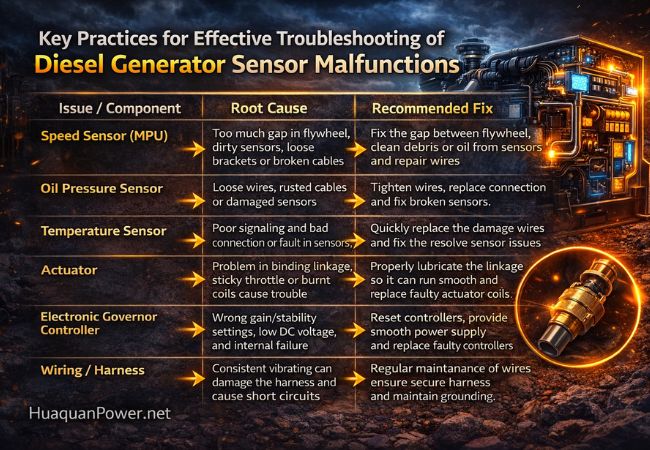
Key Practices for Effective Troubleshooting of Diesel Generator Sensor Malfunctions
| Issue / Component | Root Cause | Recommended Fix |
| Speed Sensor (MPU) | Too much gap in the flywheel, dirty sensors, loose brackets or broken cables | Fix the gap between the flywheel, clean debris or oil from sensors and repair wires. |
| Oil Pressure Sensor | Loose wires, rusted cables or damaged sensors | Tighten wires, replace connections, and fix broken sensors. |
| Temperature Sensor | Poor signalling, bad connection or fault in sensors. | Quickly replace the damaged wires and fix the resolution sensor issues. |
| Actuator | Problems with the binding linkage, sticky throttle or burnt coils cause trouble. | Properly lubricate the linkage so it can run smoothly, and replace the faulty actuator coils. |
| Electronic Governor Controller | Wrong gain/stability settings, low DC voltage, and internal failure | Reset controllers, provide a smooth power supply and replace faulty controllers |
| Wiring / Harness | Consistent vibrating can damage the harness and cause short circuits | Regular maintenance of wires ensures a secure harness |
| Control Module / Panel | Errors in the communication of sensor or any internal component issues | Repair or bring a new module, ensure a safe power supply and maintain grounding. |
Preventive Maintenance for Sensor Reliability
It’s better to avoid the risks of sensor failure rather than troubleshoot diesel generator sensor malfunctions. If you regularly maintain your diesel generators, you can lower the chance of potential system failure in
Diesel Generator Sensor Malfunctions. Follow these expert tips to avoid generator sensor failures:
- Properly manage all the wires and fix loose connections.
- Alignment and a reliable gap between the speed sensor and the flywheel are important.
- Get rid of annoying oil or debris gathered on the top of the sensor surface by carefully cleaning it.
- Secure all the wires to protect them from breaking during consistent vibrations.
Make a schedule for regular maintenance to avoid potential causes of sensor and other component failure.
Advanced Diagnostic Tips for Troubleshooting of Diesel Generator Sensor Malfunctions
You might need a deep analysis of sensor faults when you cannot find the visible signs of inaccurate readings:
- Make sure the signal continuity from the sensor to the controllers.
- Test out the relay input/output inside control circuits.
- Ensure reliable grounding to avoid electrical interference.
Final Thoughts
Troubleshooting of diesel generator sensor malfunctions is sometimes critical when there is no physical sign of damage. It affects the performance of the engine, stops important operations and compromises system downtime. You cannot trust inaccurate readings of sensors because they can damage the engine.
Get in Touch for Quality Diesel Generators. Visit Huaquan moć.
FAQs
Why
Diesel Generator Sensor Malfunctions : Failure Occurs in Real Conditions
Most diesel generators operate under harsh conditions that increase the chances of sensor failure. Continuous vibrations loosen wires, dust and oil contamination ruins the sensor surface, and high temperature melts down the sensors.
Why is my generator showing low oil pressure or temperature alarms?
It might be happening due to faulty sensors or loose wires. Try replacing the sensor to see if the previous one is malfunctioning in diesel generator sensor malfunctions.
How can I troubleshoot wiring or connector problems in sensor circuits?
You have to search for loose wires, corroded or broken cables and fix them to ensure sustainable signals. You can trust the wiggle test to track sensor signals and replace them if needed.