The modern industrial landscape needs a level of reliability that traditional manual generator management can not provide anymore. Decentralized power is becoming the standard for data centers and healthcare facilities and remote industrial sites. So the ability to oversee equipment from a distance using Generator Remote Monitoring System is necessary.
1. What is a Generator Remote Monitoring System?
A Generator Remote Monitoring System acts as a bridge between hardware and cloud based analytics. This means that whether a generator is in a basement or on a remote mountain top its status is transparent and its health is protected.
To set up a Generator Remote Monitoring System you need to combine hardware integration and network security and data logic to turn engine metrics into useful business information.
2. Generator Remote Monitoring System Configuration
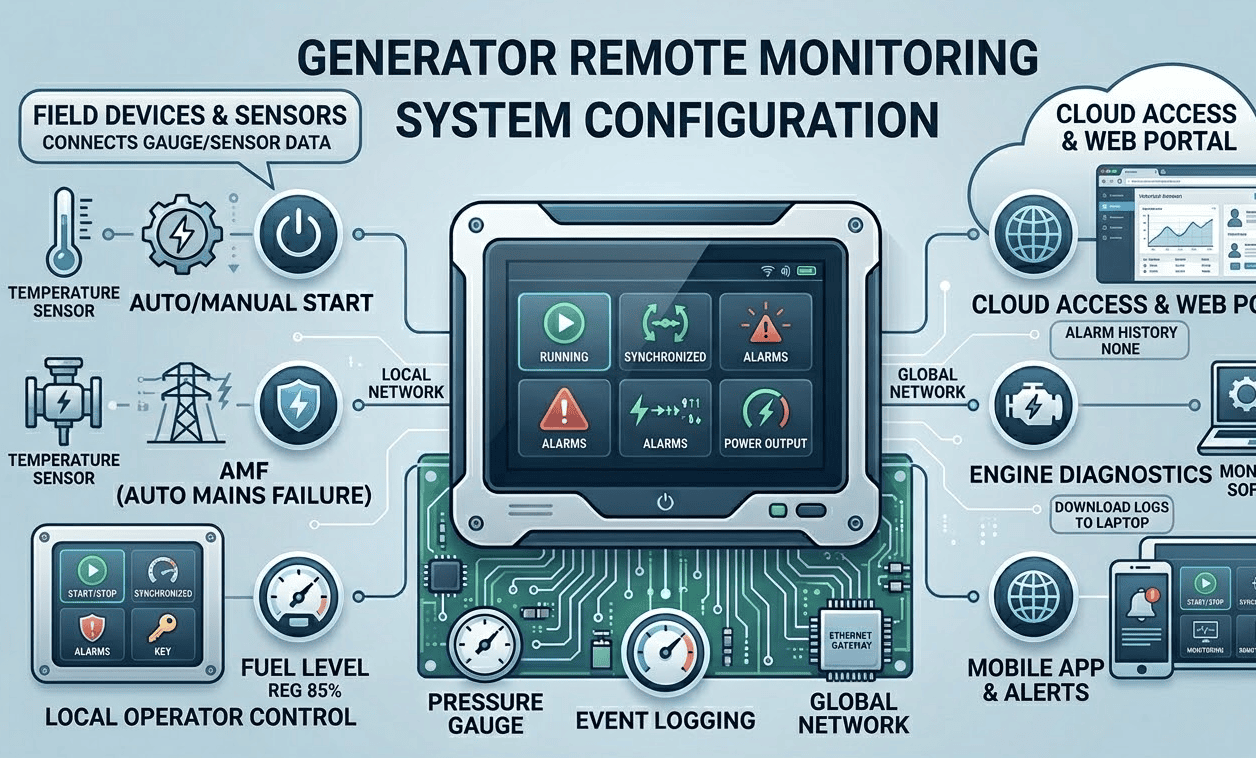
To set up a Generator Remote Monitoring System you need to understand how a machine communicates. It starts at the generator control panel where sensors collect electrical data. This data is then turned into a language usually through a communication gateway or a smart controller. This gateway is like a translator that packages the information so it can be sent over the internet.
2.1 Integration of IoT Gateways and Controllers
The key to configuration is the Internet of Things gateway. This device connects to the generator’s controller. During setup the gateway is programmed to get values like oil pressure and fuel level and battery voltage.
By choosing a gateway that supports multiple protocols facility managers can make sure the Generator Remote Monitoring System works with generator brands and models. This hardware is the base for all the data analysis that comes next.
2.2 Cloud Server Communication and Data Protocols
Once the gateway has the data it needs to send it to a cloud server. This involves choosing a protocol like MQTT which is good for low bandwidth and high reliability communication.
During setup the gateway is pointed to an IP address or URL of the monitoring platform. This connection is usually secured with SSL/TLS encryption to prevent access to the generator’s control functions.
The frequency of data transmission is also set up at this stage. For example critical alarms might be sent away while routine engine hours might only be updated once, per hour to save on data costs.
2.3 Setting Up Data Trackers
A Generator Remote Monitoring System is only as good as the data it tracks. To set this up you need to choose which specific data points are important for your operation. It is tempting to track everything but a good setup focuses on the things that can predict when something will go wrong or show that there is an emergency.
2.4 Mechanical Health and Fluid Management
The common reason generators fail is because they are not maintained properly. You need to set up the system to track when maintenance is required. The system will monitor how hours the generator has run and send a warning when it is time to change the oil and filter like when it reaches 250 or 500 hours. You should also set up the system to keep an eye on the fuel level.
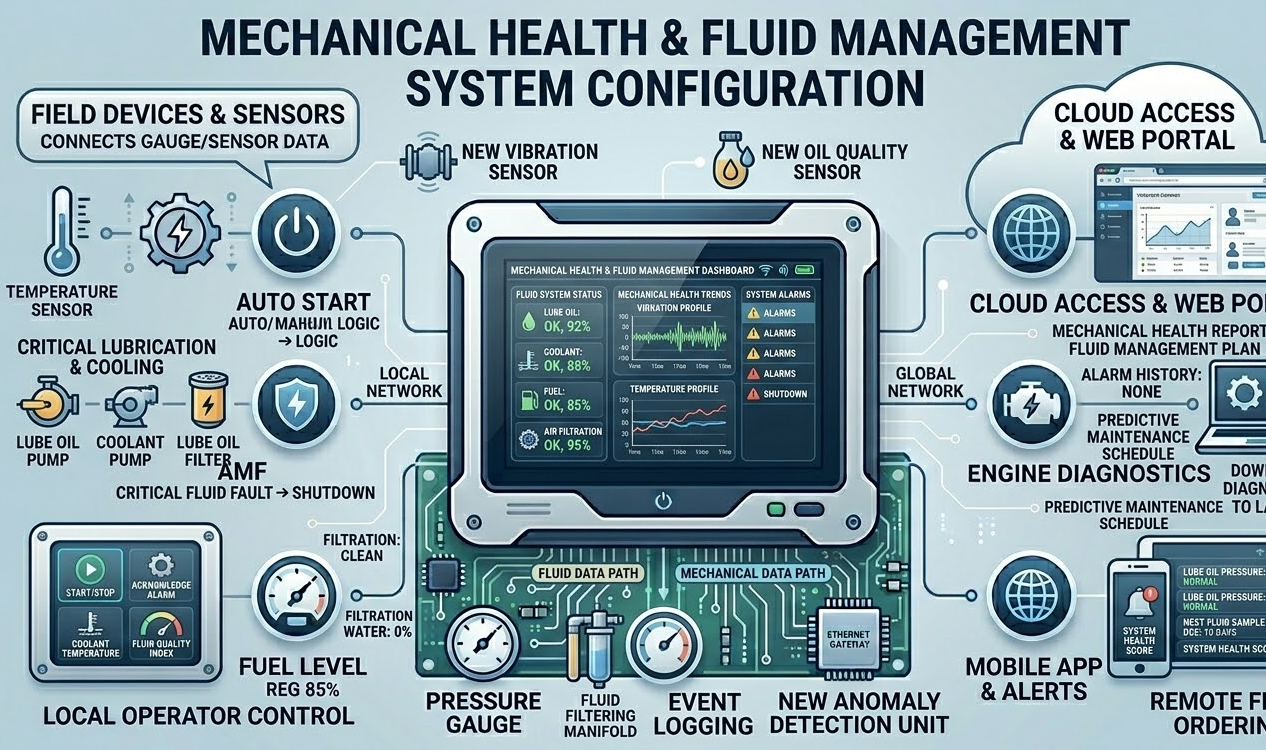
By setting up warnings for when the fuel’s low or very low the system can automatically send an email to the person who delivers the fuel so the tank is full before a big storm comes. This helps prevent mistakes that can happen when people have to check the fuel level
2.5 Generator Remote Monitoring System Output and Battery Stability
On the electrical side the setup focuses on making sure the generator is ready to work. A lot of generators fail because the starter battery is dead. By setting up the system to monitor the battery voltage the maintenance team will get a warning as soon as the voltage drops too low like below 12.2V for a 12V system. The system will also track the output voltage and frequency when the generator is running. If the generator starts but does not produce power the system will log the problem and warn the technician that the Automatic Voltage Regulator may need to be adjusted which helps prevent damage to the electronics in the building.
2.6 Network Setup and Connection Options
The remote part of monitoring only works if the network connection is stable. The setup will be different depending on where the generator’s each method needs to be set up in a different way.
2.7 Wired Ethernet and Local Area Network Setup
For generators that’re inside a main building or campus a wired Ethernet connection is the most stable and cost-effective option. To set this up you need to give the generator gateway an IP address so it can be easily found on the company network. This often requires working with the IT department to open ports in the firewall so the gateway can send data to the cloud without putting the company network at risk. This method allows for data transfer and is good for systems that need to monitor the generator room in real-time.
2.8 Cellular and Satellite Connectivity for Remote Sites
In places where it’s not possible to run a cable, cellular or satellite connectivity is the best option. Cellular gateways use 4G or 5G SIM cards to send data. To set this up you need to configure the Access Point Name settings for the cellular provider. For places that are really isolated like oil rigs, in the desert or remote cell towers satellite links are used. These systems are designed to use data, often sending only small packets of information when something changes. This ensures that even the remote equipment is still being watched by the central command center.
2.9 Security Protocols and User Access Control
When you have a Generator Remote Monitoring System it is very important to think about security. This is because you can start or stop the system from a distance. If the system is not secure someone could use it to cause damage or disrupt things.
You need to have security from the start. This means that when you log in to the system you need to use a password and a special code that is sent to your phone. The information that is sent between the system and the cloud needs to be encrypted. This means that even if someone intercepts the information they will not be able to read it. This level of security is necessary for places like government buildings, military bases and banks.
You also need to control who can access the system. Not everyone needs to be able to shut down the system. You can set up levels of access so some people can only see certain information while others can make changes. For example someone who just needs to check the system can be a “Viewer”. Only see the fuel levels and how long the system has been running. A “Technician” can do things like clear fault codes and run tests. An “Administrator” has the power and can change the system settings and add new users. By being careful about who can do what you can prevent accidents and unauthorized access.
2.10 Using Remote Data for Predictive Maintenance
The goal of having a Generator Remote Monitoring System is to be able to predict when something might go wrong. By looking at the data from the system over time you can see patterns that might indicate a problem.
You can look at the data from the past to see how the system has been performing. For example if the coolant temperature has been getting higher over months the system can warn you that there might be a problem with the radiator. By catching these problems you can schedule repairs during the day instead of having to do them in an emergency. This can save you a lot of money. Ensure that the system is always working properly.
You can also set up the system to automatically generate reports. This is important, for some industries, where you are required to test the system. For example in healthcare you need to test the system every month and keep logs. The remote monitoring system can do this for you. Send the reports to the right person. This saves time. Ensures that the reports are accurate.
3. Generator Remote Monitoring System Conclusion
Setting up a monitoring system is a good investment. It helps you to have a system and can save you money in the long run. By setting up the system and securing it you can turn your backup power into a transparent asset. This means that you can see what is going on with the system and make sure it is working properly. It can also help you to extend the life of the equipment and give you peace of mind. In a world that’s always on, being able to monitor your power supply from anywhere is very important.