Are you thinking of purchasing a backup power generator? The purchase price for this heavy duty equipment is only the beginning of a never ending maintenance plan. Over the years of generator use, fuel costs become the #1 operating expense. Thus, it’s better to know everything about generator fuel consumption to calculate the maximum operating cost and choose the right fuel type.
This way, the users can easily ensure reliable, long term power performance for their homes or businesses alike. No matter what purpose you are looking for a power generator for. Whether to light up a small residential property through a temporary blackout or to run an industrial facility during a prolonged grid failure, efficiency matters.
This blog covers the exact generator fuel consumption rates for gasoline, natural gas, and diesel units. Compare the standard metrics to accurately calculate the budget you must spend on power outages. Avoid buying unnecessarily oversized energy waste generators and always choose the best available, cost effective power backup solution for your requirements.
What Is Generator Fuel Consumption?
Generator fuel consumption is the exact amount of fuel an engine burns per hour to produce a specific electrical output. This is a key core metric that electrical engineers use to determine a generator’s efficiency. How much does it cost to run efficiently? Depending on the fuel type, you can measure this either in liters per hour (L/hr), gallons per hour (GPH), or cubic feet per hour (CFH).
Remember, fuel consumption is not a standard static number. According to your generator’s physical engine size and the electricity load, which is the demand from your plugged in appliances, it fluctuates from time to time.

How Fuel Consumption Is Measured
Manufacturers tested and enlisted fuel consumption rates depending on the standard local benchmarks.
- Full Load (100%): The generator easily empowers all your appliances at its maximum capacity. At this stage, it burns the maximum amount of fuel per hour.
- Half Load (50%): In half load, the generators usually run at half of their rated capacity. It helps you calculate an average estimate.
- Idle / Quarter Load (25%): When idle or working on quarter load, the generators run at a minimal demand standard. In such scenarios, it consumes the fuel least; running continuously at light loads is never recommended. As it can damage your generator diesel engine over time.
Generator Fuel Consumption Chart
To help you calculate the overall generator operational cost, have a look at the standard fuel consumption chart depending on the fuel types available in the market. Although the exact numbers slightly vary depending upon your engine manufacturer, environmental conditions, and your generator’s age.
Diesel Generator Fuel Consumption Chart
These generators are the high premium standard set for heavy duty equipment and industrial facilities due to the high diesel fuel energy density.
| Generator Size | 25% Load (GPH) | 50% Load (GPH) | 75% Load (GPH) | 100% Load (GPH) |
| 20 kW | 0.6 | 0.9 | 1.3 | 1.6 |
| 50 kW | 1.4 | 2.0 | 2.9 | 3.6 |
| 100 kW | 2.6 | 4.1 | 5.8 | 7.4 |
| 250 kW | 5.7 | 9.5 | 13.6 | 18.0 |
Gasoline Generator Fuel Consumption Chart
Small, portable power generators use gasoline as fuel. These generators are designed for temporary, lower output appliance power.
| Generator Size | 50% Load (GPH) | 100% Load (GPH) |
| 5 kW | 0.35 | 0.70 |
| 8 kW | 0.50 | 0.95 |
| 10 kW | 0.65 | 1.20 |
| 15 kW | 0.90 | 1.60 |
Natural Gas Generator Fuel Consumption Chart
Generally, residential areas and commercial facilities prefer natural gas for their standby generators. You can measure natural gas consumption in cubic feet per hour (CFH).
| Generator Size | 50% Load (CFH) | 100% Load (CFH) |
| 10 kW | 110 | 165 |
| 20 kW | 180 | 275 |
| 50 kW | 450 | 700 |
| 100 kW | 850 | 1,250 |
Diesel vs Gas vs Natural Gas: Fuel Efficiency Comparison
When you are comparing these fuels against each other, thermodynamic efficiency differences help you make a clean and clear evaluation.
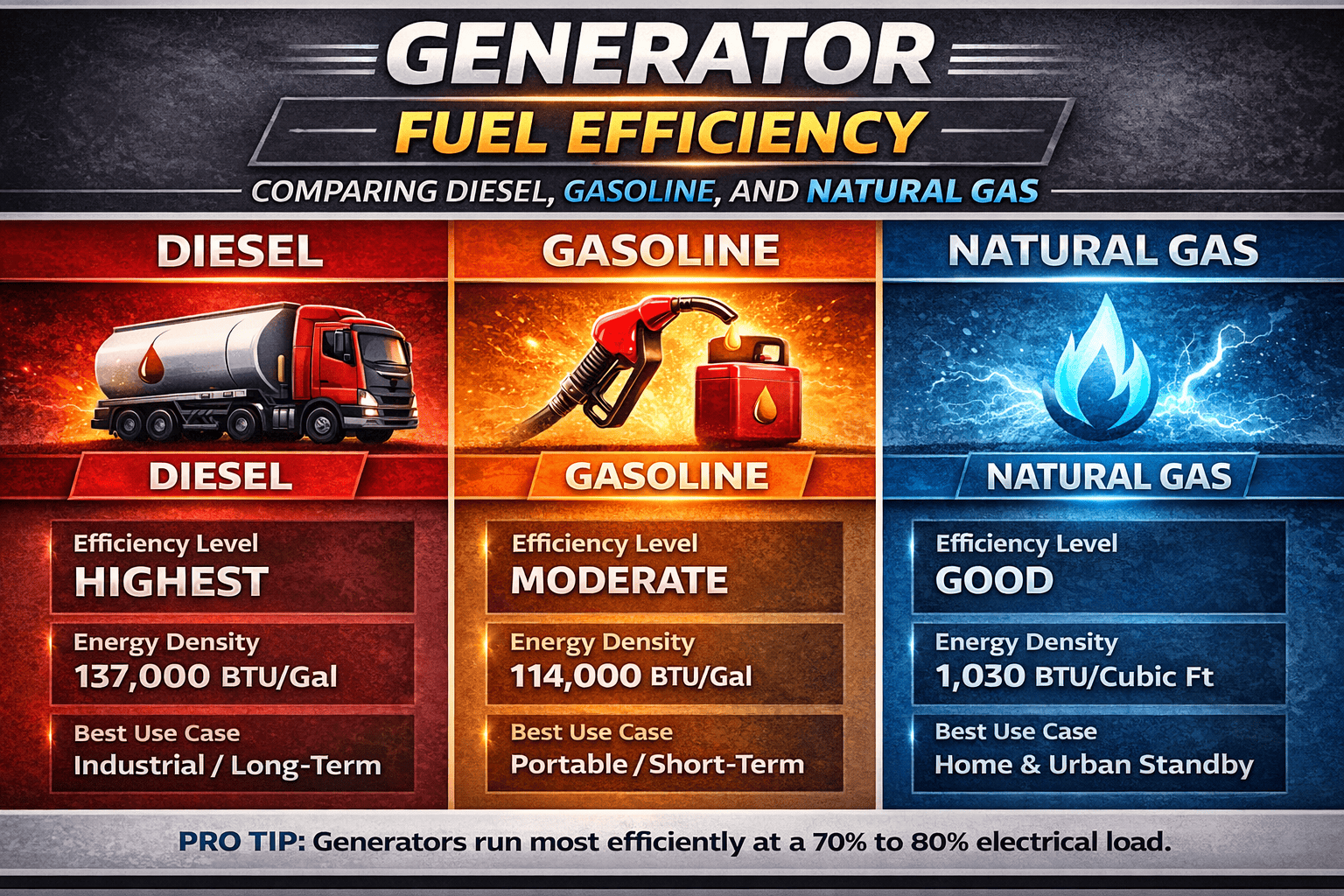
- Diesel: Diesel is the best, most efficient fuel available. It has more highly usable energy per gallon available than natural gas or propane. Ultimately, your engine must burn less of it to produce the same amount of electricity.
- Gasoline: Gasoline offers moderate power efficiency. It is readily available in the market. As you can start it quickly in cold weather, people prefer it for their facilities. However, it burns quickly and degrades if you store it for a long time.
- Natural Gas: When it comes to natural gas, it is the cleanest burning fuel, but slightly less energy dense than diesel. A power backup engine needs a high natural gas volume to produce the same kilowatt output. Generally, you directly connect the natural gas utility line to your power generators; the supply is always infinite.
Generator Fuel Consumption and Operating Cost
Simply, generator fuel efficiency directly helps you calculate your total operating cost. Multiply the generator’s hourly fuel consumption by the local price of the fuel you use.
For example, a gasoline generator is cheaper initially. What if the gas prices spike during extremely bad weather? Running your entire facility will be highly expensive for over a week. Conversely, efficient diesel generators are expensive initially. But if you run it over 48 hours (about 4 days), the kilowatt-hour (kWh) prices usually go down.
Cheapest Fuel Type for Long-Term Use
For a prolonged power outage, natural gas is the cheapest option available in urban areas. Credit goes to its low, stable municipal utility rates; you can easily connect it to your power generator engine. In rural, off grid, or industrial applications where natural gas is not readily available, diesel is the best available choice. It is cost effective, highly efficient, and has a slow burn rate.
Factors That Affect Generator Fuel Consumption
A generator’s actual fuel usage rarely matches the exact numbers mentioned inside a brochure. A few known factors that directly influence your generator’s power include:
Load Level
None of the manufacturers in the market designed their generators to run at 100% capacity consistently. Although they operate efficiently, burning fuel with maximum mechanical output, the load stays between 70% to 80% of their overall capacity.
Generator Size
We all oversize our generators somewhere in our lives. It is one of the most common blunders people make. If you buy a 50 kW generator to power a mini 15 kWh load, the generator will still consume a high amount of fuel just to keep itself running. Ultimately, the fuel economy will crash, leading to long term engine damage due to weight stacking.
Engine Efficiency
Engine efficiency matters the most! Modern electrical engines have highly advanced fuel injection systems to consume less fuel than older, mechanical carburetors.
Maintenance Condition
Electric engines work harder to pump and breathe. Dirty air filters, degraded oil, and foul spark plugs create unnecessary internal resistance. Resultantly, the engine burns more fuel than necessary to maintain its overall RPMs.
Fuel Type and Quality
Have you ever used old, oxidized diesel or ethanol blended gasoline? These low quality fuels have absorbed water that directly impacts your engine’s combustibility power. The engine consumes more of this poor quality fuel to generate the required electricity.
Which Fuel Type Is Best for Different Applications?
Best for Homes
Natural Gas or Propane. These standby power units connect directly to the existing utility lines or large tanks. Ultimately, you do not need to manually store or pour fuel into tanks in the dark. These power generators are quiet, clean, and highly reliable for residential areas.
Best for Industrial Use
Diesel. Factories, hospitals, and large agricultural facilities need continuous, sustained power. Diesel generators have high torque, maximum fuel efficiency, and long term durability necessary for these heavy industrial loads.
Best for Portable Generators
Gasoline. If you need to power a tailgate, remote construction site, or RV, gasoline is readily available at any corner. Gasoline engines are highly mobile and light in weight.
How to Reduce Generator Fuel Consumption
Do you want to extend your fuel supply in an emergency? Make sure to follow these quick, smart, effective tips.
- Proper Sizing: Calculate your peak starting voltage and total running voltage before buying any generator. Choose the one where your normal load easily sits at 70%.
- Regular Maintenance: Regularly change the oil, air filters, and fuel filters according to your manufacturer’s recommended schedule to keep the engine in its best condition.
- Use High-Quality Fuel: Add biocides and stabilizers to stored diesel. Use ethanol free premium gasoline for portable units for maximum fuel combustibility.
- Operate Near Optimal Load: Do not install an oversized generator. Cycle your heavy appliances, like if you want to run the well pump, turn it off to run the AC. Rather than starting all your appliances at once, keep the loads safe and efficient.
Final Verdict: Choosing the Most Efficient Generator
To wrap it up, when you are optimizing a generator’s fuel consumption, find the right option according to your requirements. Diesel is the king for raw efficiency and heavy duty longevity. Natural gas provides maximum convenience and continuous electricity for homes and businesses in connection with the grid.
Gasoline is the only practical, moderately efficient choice for mobile and temporary power, and it just. When you are smart enough to calculate how much fuel your system needs per hour, you can budget your requirements smartly. Avoid costly maintenance issues and ensure the light stays on when you need it the most.
Need Help Choosing an Efficient Generator? Contact HuaQuan
Calculate the power loads of fuel consumption charts and pick the right fuel type to chase down the right, compatible generator for your facility. Do not haphazardly make this decision. Contact our power experts today to request a custom quote. Let us help you size and select the best generator in terms of efficiency and reliability for your home or business today.
FAQs
Which generator fuel is highly efficient for a power backup generator?
Diesel is an energy dense and efficient generator fuel. A diesel engine produces more electricity per gallon than an equivalently sized gasoline or natural gas engine.
How much fuel does my generator need to consume per hour?
It depends on the generator size and electrical load. A standard 20 kWh home standby generator runs at 50% load while burning 1.3 gallons of liquid propane or 180 cubic feet of natural gas per hour.
Does electrical load affect fuel consumption?
Yes. The more appliances and heavy motors you turn on, the harder your generator’s engine has to work, which directly increases the amount of fuel consumption per hour.
Is diesel fuel cheaper than gasoline for power generators?
Although diesel fuel is slightly expensive per gallon at the pump, its superior energy density helps you burn less of it over time. For continuous, long days of running, diesel is always cheaper than gasoline.