As the world gets tougher on rules and companies are expected to be more responsible with generator environmentally friendly configurations. Choosing a power generator that’s good for the environment is not just about following local rules on emissions anymore. It is a decision that affects how much it costs to run things in the long term, how sustainable the site is and how the community sees you.
1. What are Generator Environmentally Friendly Configurations?
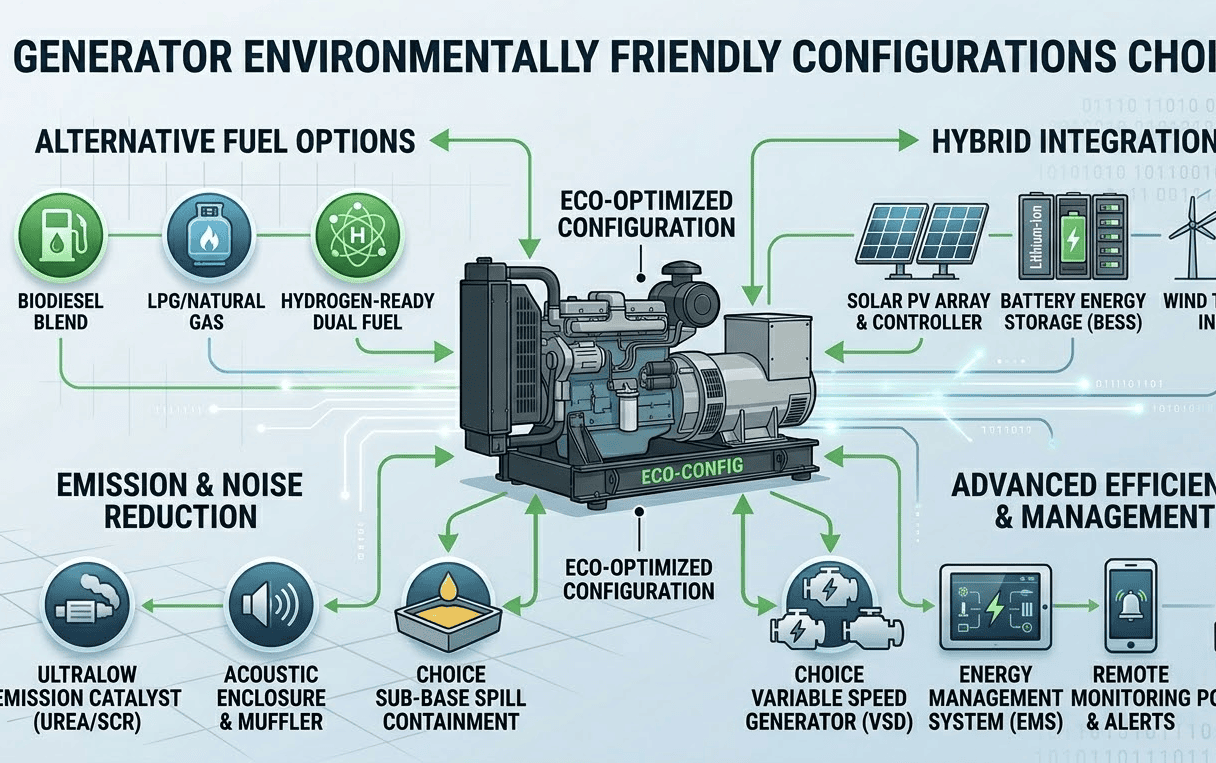
A configuration that is good for the environment is about more than putting out fewer emissions. It is also about reducing noise using fuel wisely, preventing spills and using energy sources. This guide will help you navigate the details and environmental impact of modern power systems.
2. Generator Environmentally Friendly Configurations Choices
The biggest environmental impact of a power generator comes from what comes out of its exhaust. Old diesel engines put out things like nitrogen oxides, tiny particles and carbon monoxide which all contribute to air pollution and breathing problems. Choosing generator environmentally friendly configurations that uses combustion and post-treatment technologies is the first step to making your power site more environmentally friendly.
2.1 Following Tier 4 Stage V Standards
When you are choosing a diesel power generator, the most important thing to think about for the environment is the emission rating. In North America the Tier 4 Final standard is the one for engines that are not used on roads and in Europe the Stage V standard has similar strict requirements. These generator environmentally friendly configurations use a combination of Selective Catalytic Reduction and Diesel Particulate Filters.
The Selective Catalytic Reduction system uses a liquid to turn bad nitrogen oxides into harmless nitrogen and water vapor. The Diesel Particulate Filters catch. Tiny particles before they come out of the exhaust. Choosing a power generator that meets these standards can reduce tiny particles by more than 90 percent compared to old models that do not have any regulations.
2.2 Switching to Gaseous and Bi-Fuel Configurations
For companies that want to stop using diesel power generators that run on natural gas or propane are a much cleaner option. Burning natural gas makes no tiny particles and a lot less carbon dioxide and nitrogen oxides. Also natural gas is often sent through pipes, which means you do not have to worry about the carbon footprint of trucks bringing fuel or the risk of spills on the ground. If you cannot get a supply of natural gas a bi-fuel configuration that uses a little bit of diesel to start a lot of natural gas can be a good compromise.
It keeps things running while greatly reducing the environmental impact of the exhaust. A generator that is good for the environment is one that uses fuel efficiently. The less fuel a generator uses to make a kilowatt of power the less bad it is for the environment. To do this you need to look at the generator, not just the engine, but also the electronic parts that control it.
2.3 High-Pressure Common Rail Fuel Injection
The way fuel is put into the engine is very important. High-Pressure Common Rail systems use parts to put fuel into the engine in a very precise way. This makes sure that the fuel is used completely which means the generator makes power and produces less bad stuff. When you choose a generator you should pick one with High-Pressure Common Rail technology so that the engine works well as it can use less fuel and make less pollution.
2.4 Load-Dependent Starting and Variable Speed Technology
In cases generators are too big for the job they need to do and they spend most of their time not working at full capacity. Old generators have to run at the speed all the time to keep the right frequency, which is not efficient when they are not working hard. A generator that is good for the environment can change its speed based on the load or it can use smaller generators that can be turned on or off as needed.
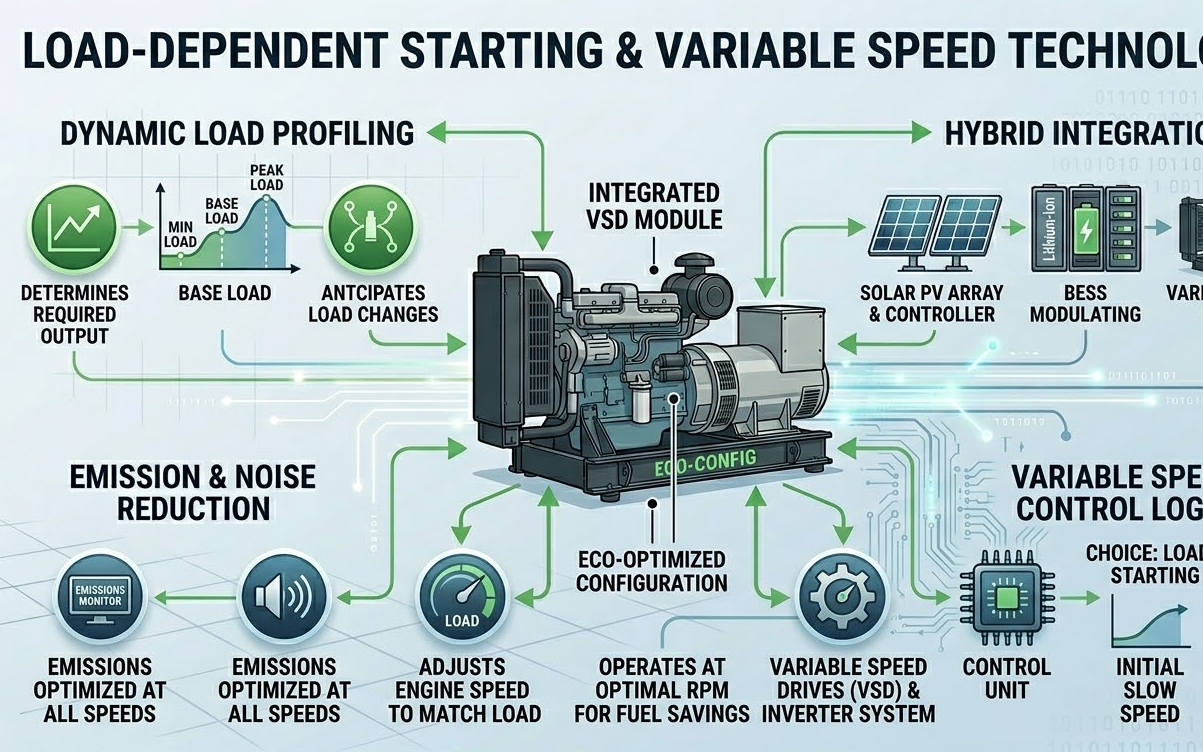
This way the generators that are working are always working at the level, which prevents them from running inefficiently and making too much pollution. Being generator environmentally friendly configurations is not about the air, it is also about the noise. Loud noises can hurt animals, bother people who live nearby and break noise rules.
2.5 Generator Environmentally Friendly Configurations Acoustic Enclosures
The main way to reduce noise is with the generator’s enclosure. A generator that is good for the environment uses an enclosure that is designed to be quiet. These enclosures have foam that absorbs sound and special parts that let air in and out without making noise. If you choose an enclosure that keeps the noise level down to 65 decibels or less the generator can be used in areas where people live without being a nuisance.
2.6 Precision Mufflers and Vibration Isolation
The exhaust system is also very important for reducing noise. A good exhaust system has a muffler that reduces noise a lot. You should also use high-quality parts to reduce vibration. By keeping the engine and other parts from vibrating much you can prevent the noise from being felt as a low hum even if the noise in the air is not too bad.
If fuel, oil or coolant spills it can be very bad for the environment. A generator that is good for the environment must be designed to prevent any fluids from reaching the soil.
2.7 Double-Walled Fuel Tanks and Secondary Containment
The fuel tank is the likely place for a spill to happen. A generator that is good for the environment uses a walled fuel tank. The inner tank holds the fuel and the outer tank is like a backup in case the tank leaks. The generator’s base should also be designed to catch any spills of oil or coolant so they do not go into the storm drains.
2.8 Using Biodegradable Lubricants and Coolants
You should also think about the lubricants and coolants used in the generator. Some generators can use lubricants that are not as bad for the environment if they spill. You should also choose coolants that’re not toxic and do not need to be changed often which means there will be less waste and it will be safer to handle.6. Integration with Energy and Hybrid Systems
The best generator for the environment is one that runs as little as possible. Many modern setups use a mix of power sources like panels and battery storage to make generators more efficient. In a system a large battery handles the regular power needs and small changes in demand. The generator only kicks in when the batteries are low or there’s a surge in demand. This way the generator runs less and always at its efficiency.
At sites this can cut fuel use and CO2 emissions by up to 50% or more. The control panel needs logic to switch smoothly between the battery and generator. Some generators can also run on fuels like HVO. HVO is a kind of diesel made from waste fats and vegetable oils. It can cut CO2 emissions by up to 90% compared to diesel. When choosing a generator make sure the engine maker says it’s okay to use 100% HVO. This way you can still use a generator while using much less fossil fuel.
3. Generator Environmentally Friendly Configurations Conclusion
Picking a generator that’s good for the environment is a smart investment. It helps you follow rules, use fuel and look good. By choosing a generator with top-notch emission controls, smart fuel management and good noise reduction you get a power solution that’s kind to the environment and reliable. As you move towards a future with carbon these eco-friendly generators will become the norm. This way your facility will be ahead of the game in both tech and sustainability.
4. Drive Your Green Energy Transition with Huaquan Power
At Huaquan Power we’re working on the generation of eco-friendly energy solutions. Their products include diesel units, natural gas generators and hybrid systems that minimize impact. They are proud of our green manufacturing processes. Can customize generator setups with quiet canopies and spill-containment systems. Let Huaquan Power help you design a power plan that balances performance with standards. Contact them today to learn how we can help you achieve your sustainability goals, with Huaquan Power.