The generator automatic transfer switch is what connects your generator to your home or business and makes sure everything keeps running smoothly when the power goes out. Whether you are trying to keep a home safe, a data center running or an industrial facility working, understanding how the ATS works is critical to making sure you do not experience any problems during a power failure.
1. What is a Generator Automatic Transfer Switch?
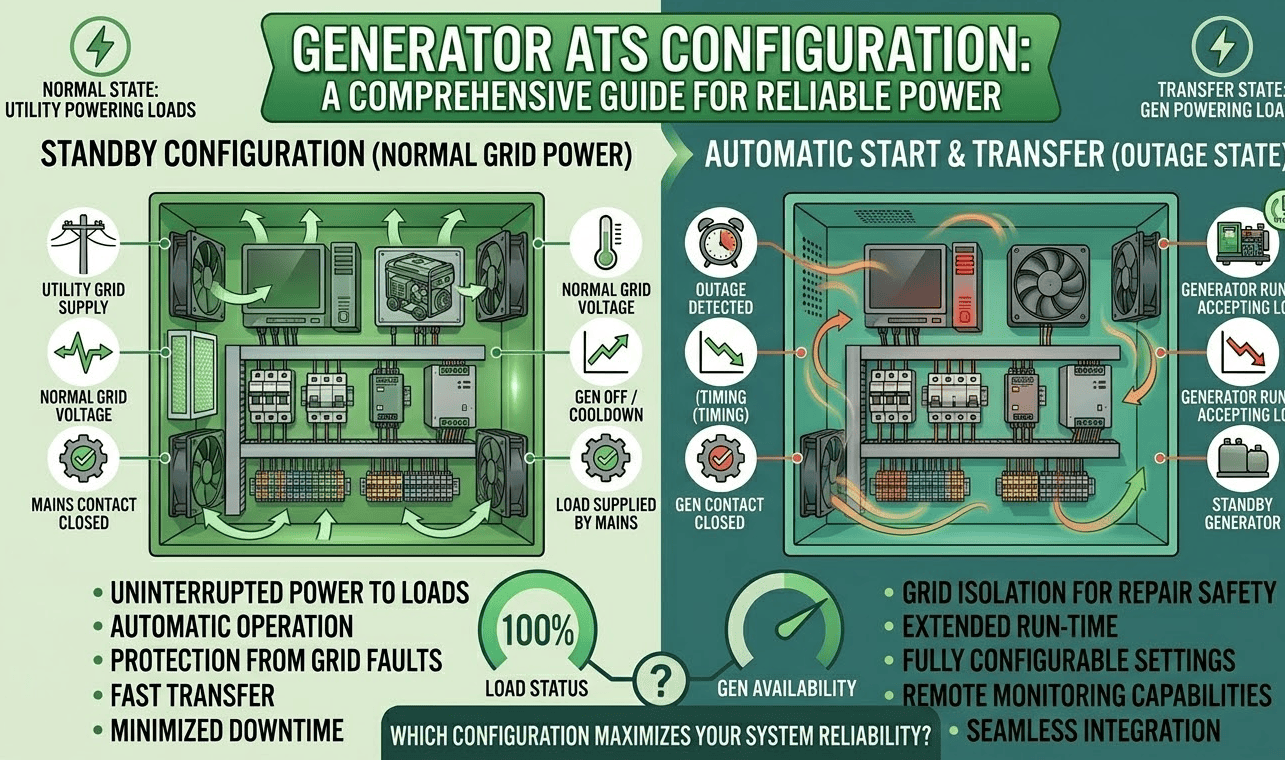
The Generator Automatic Transfer Switch or ATS is a device that switches your load from the main power grid to a generator when it detects a power failure or a big drop in voltage. When the main power comes on the ATS switches your load back to the grid and tells the generator to shut down after it has had a chance to cool down.
The ATS is different from a transfer switch because it does this automatically. You do not have to do anything. This is very important in places like hospitals, cold storage facilities or telecommunications hubs where losing power for a few seconds can cause big problems.
2. Key Components of an Generator Automatic Transfer Switch
To understand how an ATS works you need to know about the parts that make the switch happen. A standard ATS has parts that work together.
2.1 The Sensing Mechanism
The sensing mechanism is like the eyes of the Generator Automatic Transfer Switch. It constantly checks the voltage and frequency of the power coming from the grid. If the voltage drops below a level or if the frequency gets too far out of range the sensing mechanism tells the ATS to start the generator.
2.2 The Controller
The controller is like the brain of the ATS. It makes sure everything happens at the time. It waits a while before starting the generator to make sure the power outage is not just a quick flicker. It also waits a while before switching to the generator to make sure it is ready.
2.3 The Switching Mechanism
The switching mechanism is the part of the ATS that actually switches the power from the grid to the generator. It is designed to make sure the generator and the grid are never connected to the load at the time, which could cause a big problem.
2.4 User Interface and Indicators
Modern ATS units have displays that show you what is happening in real time. You can use these displays to adjust settings, like how the generator should run after the power comes back on or how often the generator should be exercised. This makes it easy to keep your ATS working.
3. Types of Generator Automatic Transfer Switch Transition Modes
The way an Automatic Transfer Switch or ATS moves power from one source to another is defined by its Transition Mode. Choosing the mode depends on how sensitive the equipment being powered is.
3.1 Open Transition (Break-Before-Make)
This mode is common. The ATS breaks the connection with the utility source before it makes the connection with the generator. There is an interruption in power usually lasting milliseconds to seconds. This mode is cost-effective and suitable for homes and general commercial applications. An ATS using this mode is suitable for residential and general commercial applications.
3.2 Closed Transition (Make-Before-Break)
In environments a closed transition ATS briefly overlaps the two sources, synchronized in phase so that there is no interruption in power. This requires a complex setup and coordination with the local utility company as the generator momentarily runs in parallel with the grid. A closed transition Generator Automatic Transfer Switch is used in high-stakes environments.
3.3 Delayed Transition
This mode introduces a programmed pause in the “position. This allows any residual voltage in motors or transformers to dissipate before reconnecting to a new source. This prevents stress or “out-of-phase” re-energization that could damage heavy machinery. An ATS with delayed transition mode helps prevent damage to machinery.
4. Technical Specs for Generator Automatic Transfer Switch
When configuring an ATS it is crucial to match the switch to the electrical characteristics of the facility. A mismatch can lead to fire hazards or frequent “nuisance tripping.”
4.1 Amperage Rating
The ATS must be rated to handle the load of the circuits it is protecting. For a whole-house backup this usually matches the service panel (e.g. 100A, 200A or 400A). In settings ATS units can go up to 4000A or more. The ATS amperage rating must match the service panel.
4.2 Voltage and Phase Matching
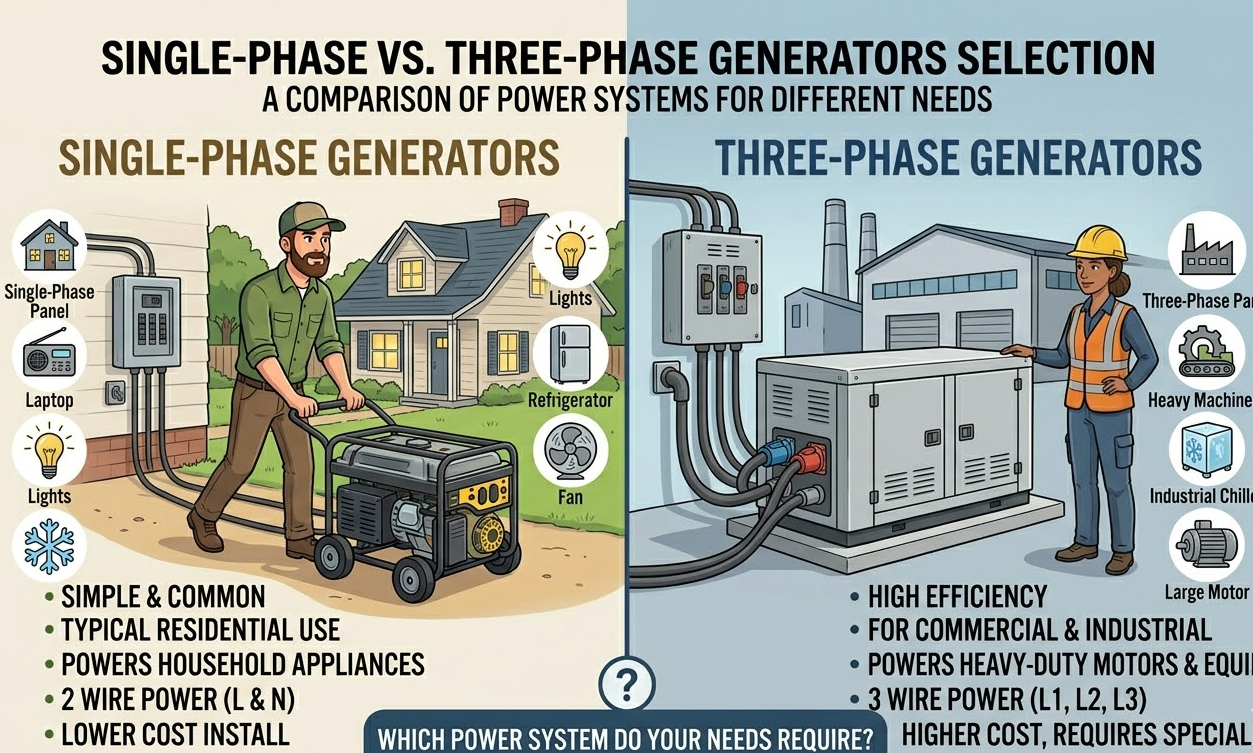
An ATS must match the system phase (Single-Phase vs. Three-Phase) and voltage (e.g. 120/240V, 208V or 480V). Using a single-phase ATS on a three-phase system is not possible. Using the wrong voltage rating will result in immediate equipment failure. The ATS must match the system’s voltage.
4.3 Enclosure Ratings
Where the ATS is installed determines its enclosure type. It can be indoor use dust protection, protection against rain and sleet, and corrosion-resistant/wash-down areas. The enclosure rating of an ATS depends on where it’s installed.
5. Step-by-Step Generator Automatic Transfer Switch Installation
Installation should always be performed by an electrician but understanding the sequence is vital for project management.
5.1 Site Assessment and Mounting
The ATS is typically mounted between the utility meter and the load center (breaker panel). It must be placed in a location that allows for wiring access to both the utility entrance and the generator’s location. The ATS is usually mounted near the utility meter.
5.2 Power Wiring
The electrician connects the “Normal” (Utility) wires, the “Emergency” (Generator) wires and the “Load” (Building) wires to the designated lugs. Proper grounding and bonding are essential here to prevent shocks during a fault. Proper power wiring is crucial for ATS installation.
5.3 Control Wiring
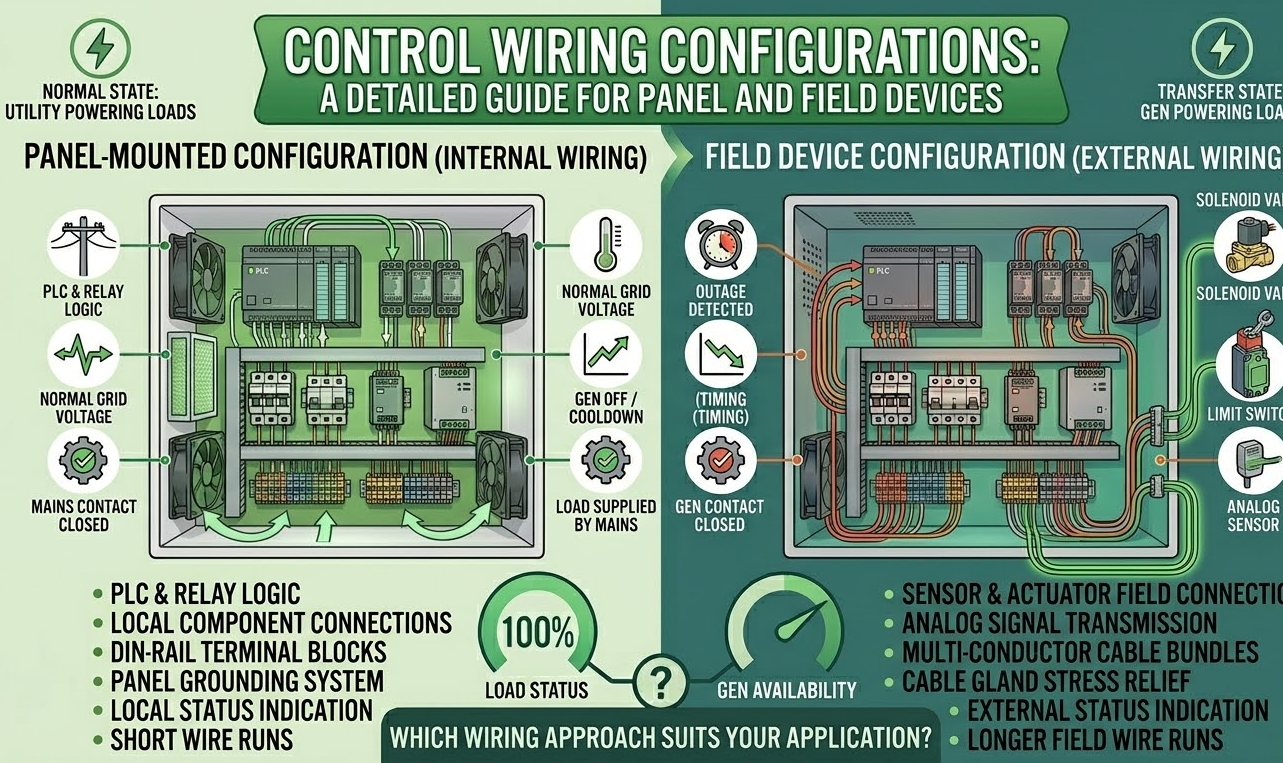
Beyond the heavy power cables a “two-wire start” or communication cable is run between the ATS and the generator controller. This is the line that tells the generator when to wake up and when to go back to sleep. Control wiring is necessary for communication between the ATS and the generator.
An Automatic Transfer Switch is a device that sits idle most of the time 99 percent of the time. If you do not test it regularly the mechanical parts can get. The sensors can stop working.
5.4 Generator Automatic Transfer Switch Weekly Exercise Cycles
Most Automatic Transfer Switch units are set up to run the generator once a week for 20 minutes. This test makes sure the battery stays charged, the oil moves around and the Automatic Transfer Switch logic is working. You can set this up to run with a load or without a load.
5.5 Infrared Thermography
When technicians do maintenance every year they use cameras to check the contactors for hot spots. If the connections are loose or the contacts are damaged they can get hot. This can cause the Automatic Transfer Switch to fail or even start an electrical fire.
6. Generator Automatic Transfer Switch Configuration Mistakes to Avoid
One mistake is not getting the size for the neutral wire. In systems with a lot of computers the neutral wire can carry a lot of current. The Automatic Transfer Switch needs to have a bar that can handle this.
Another mistake is ignoring the fault ratings. The Automatic Transfer Switch needs to be able to handle a circuit until the breaker trips. You need to check the Withstand Closure Rating against the fault from your utility company.
Also be careful with the phase rotation. In systems with three phases if the generator’s phase rotation does not match the utilities the motors will spin backwards when the generator takes over.
7. Generator Automatic Transfer Switch Conclusion
An Automatic Transfer Switch is very important for keeping the power on. It automatically switches between the grid and your generator so you stay safe and have power all the time. If you set it up correctly from choosing the transition mode to setting the timing delays your backup system will work perfectly when the power goes out.
8. Secure Your Power with Huaquan Power ATS Solutions
Huaquan Power has Automatic Transfer Switches that work well with their generator sets. They have switches for homes and big industries. They all have smart controllers, strong mechanical locks and easy-to-read screens. Do not take a chance, with your power. Trust Huaquan Power to be the brain of your system, your Automatic Transfer Switch.