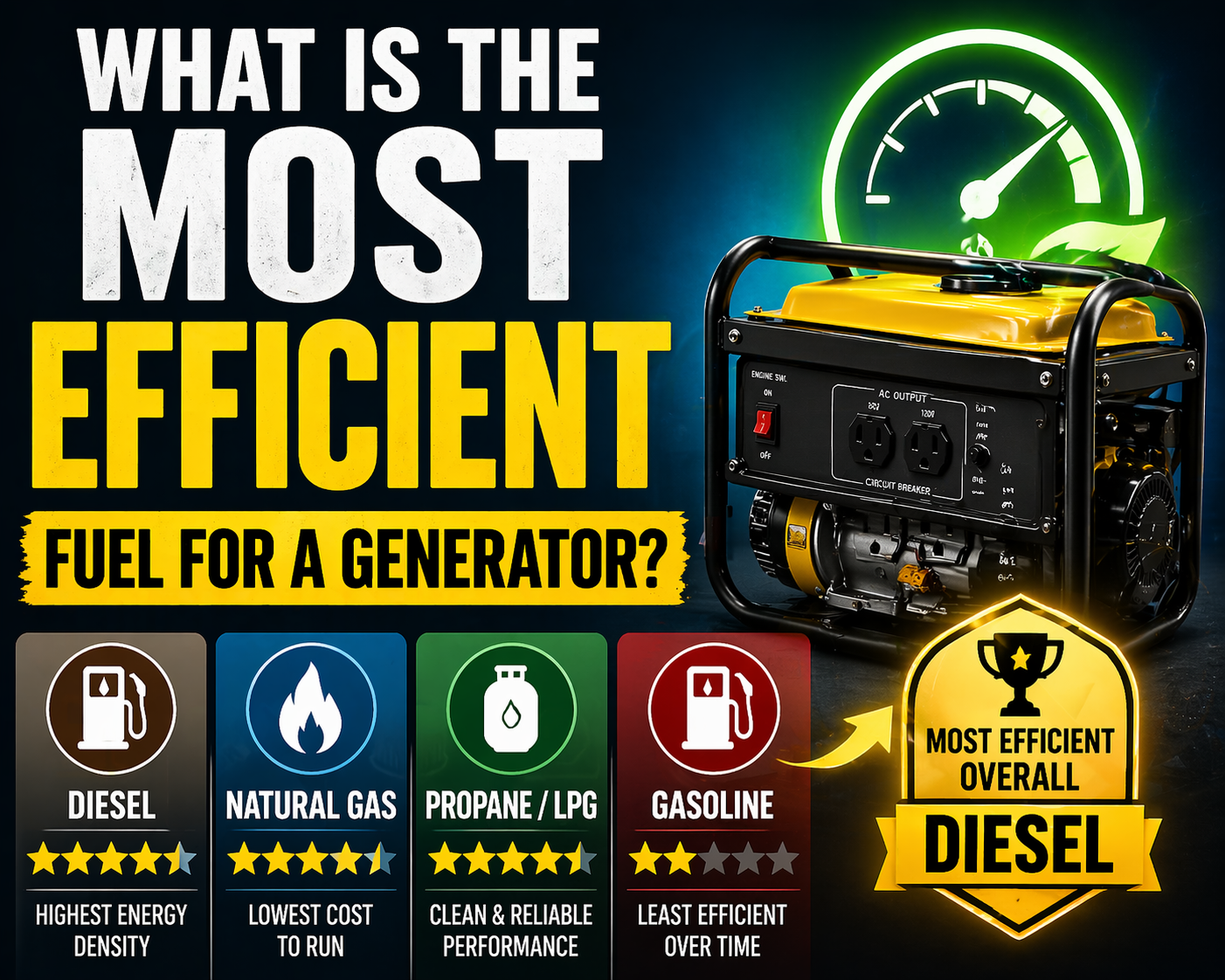
Lorsque vous décidez d'investir une grosse somme d'argent dans un système de remplacement d'énergie, vous devez choisir soigneusement le type de carburant. Différents types de Générateurs fonctionner avec différentes sources de carburant. Il s'agit notamment du gaz naturel, propane, diesel, essence, et les biocarburants modernes. Savez-vous Quel est le carburant le plus efficace pour un générateur? Cela dépend de plusieurs facteurs, comme les besoins en énergie, critères opérationnels, et les conditions environnementales.
Comprendre en détail ces facteurs et caractéristiques des différents carburants vous aidera à choisir l'option la plus adaptée à votre générateur.. Vous devez savoir comment l'efficacité est liée à la densité énergétique et comment elles impactent globalement vos coûts d'exploitation à long terme..
Dans cet article de HuaQuan, vous explorerez tous ces domaines qui vous amèneront à faire le meilleur choix pour votre générateur.
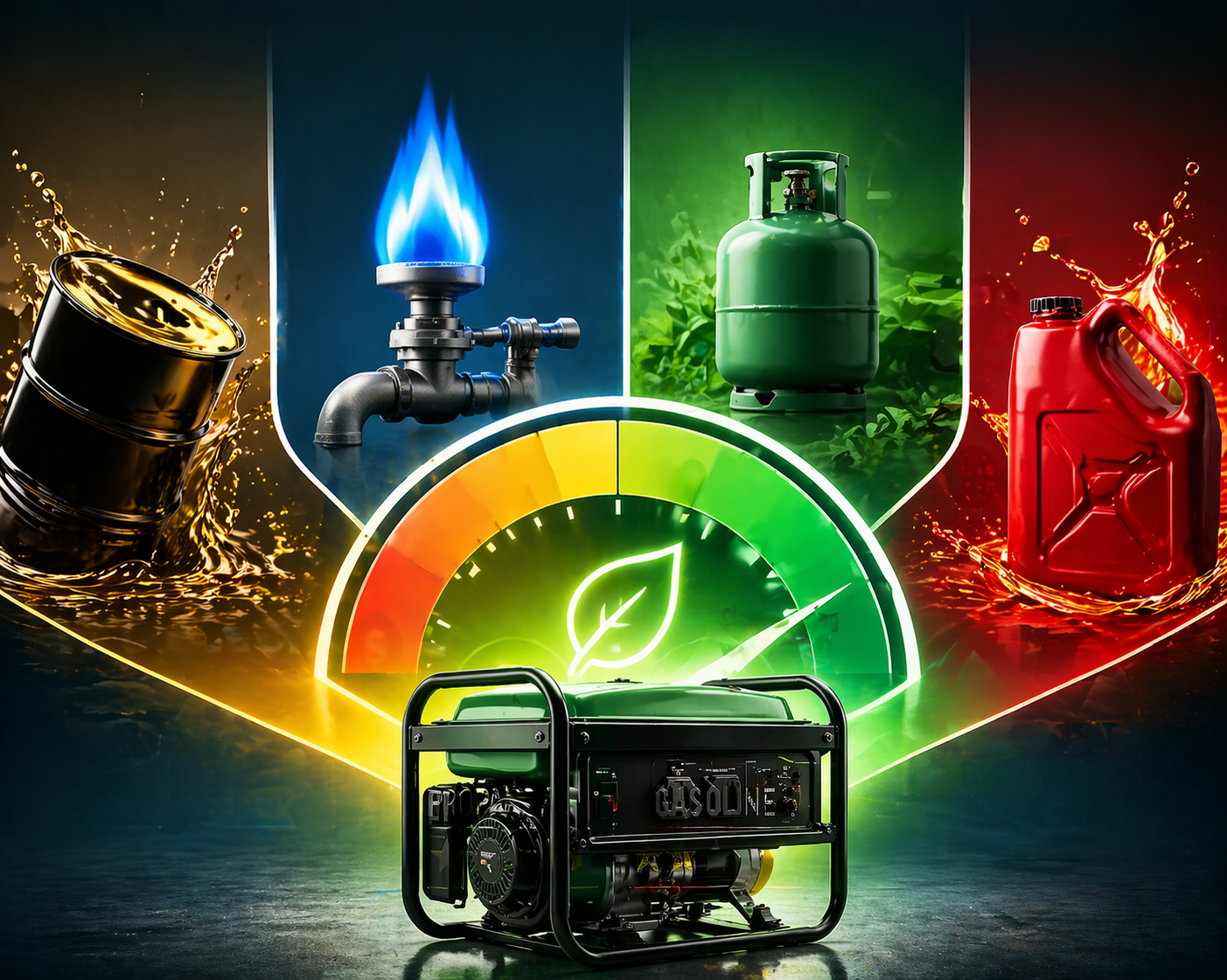
Principaux facteurs qui affectent le rendement énergétique du générateur
La productivité maximale du générateur ne dépend pas seulement du type de combustible, mais aussi sur plusieurs autres facteurs.
- Puissance de sortie et capacité de charge: Si un générateur fonctionne à sa capacité de puissance maximale, le carburant brûlera rapidement. N'oubliez pas que les générateurs fonctionnent bien à environ 50-75% de leur puissance maximale.
- Type de générateur (Onduleur vs conventionnel): Les générateurs traditionnels fonctionnent à un certain régime de 3,600. Ils ne subissent aucune influence sur la charge et fonctionnent à cette vitesse spécifique, gaspillant ainsi une grande quantité de carburant. D'autre part, les générateurs associés à un onduleur ajustent leur régime moteur en fonction de la charge électrique. Il préserve le carburant et améliore le budget de fonctionnement.
- Taux de consommation de carburant à différentes charges: Les générateurs utilisent du carburant à différentes concentrations, donner au graphique une forme de courbe. Ils changent leurs RPM en fonction de la charge ajoutée.
- Impact environnemental des différents carburants: Certains carburants contiennent une grande quantité de carburant non traité.. Encore, ils se dégradent avec des substances nocives. Il génère une grande quantité de carbone à l'intérieur et endommage le moteur interne ainsi que l'environnement..
Types de carburant couramment utilisés pour les générateurs
Chaque type de carburant a ses caractéristiques uniques qui déterminent ses conditions de travail, capacité, et l'adéquation.
Essence
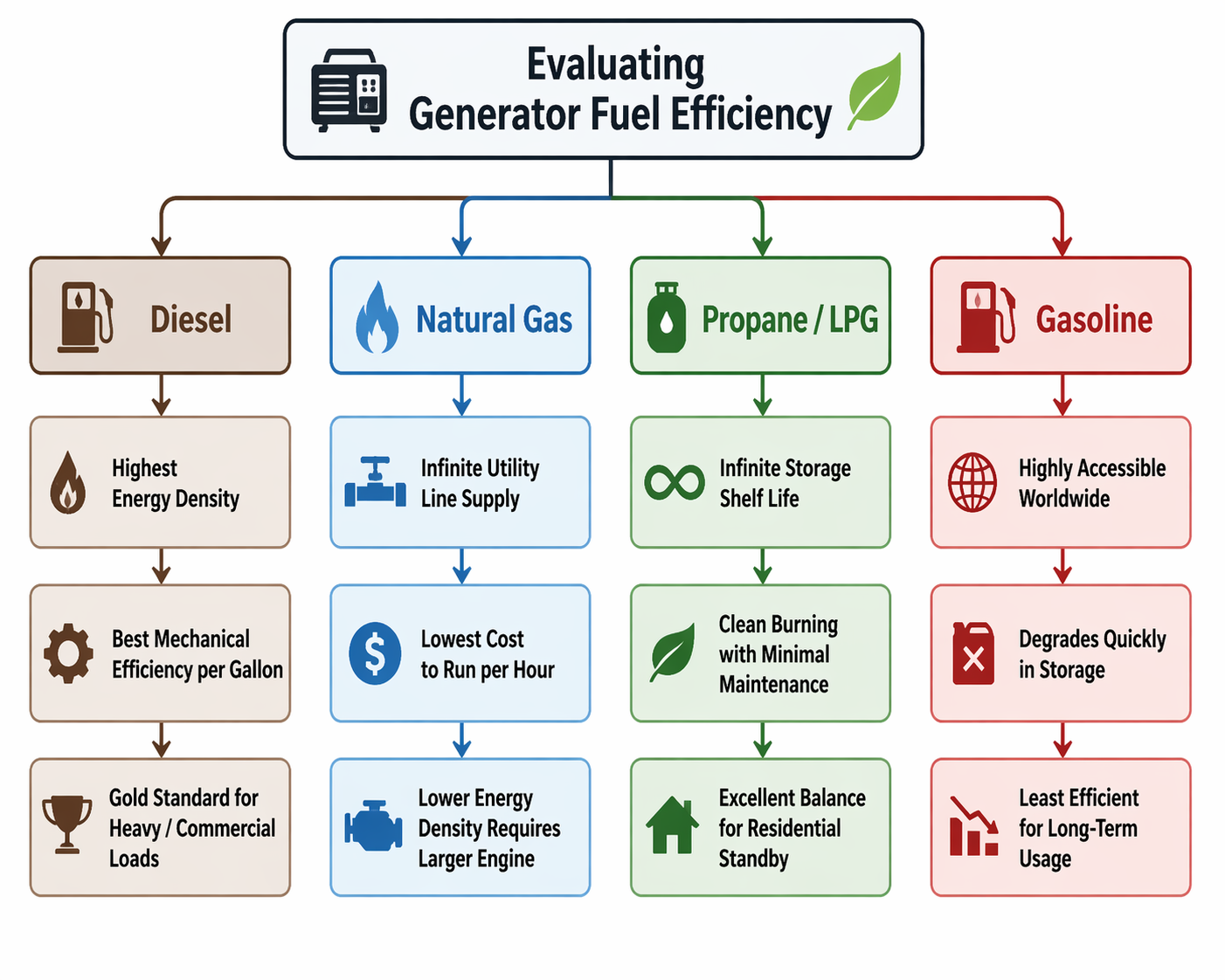
- Avantages: Disponible dans n’importe quelle station-service ou pompes à carburant, facile à brûler et à faire fonctionner des appareils et des moteurs dans des conditions difficiles, conditions climatiques froides.
- Limites: Durée de vie courte, allant de 3 à 6 mois s'il n'est pas stocké avec des stabilisants appropriés. Il ne se dégrade pas facilement par rapport au diesel et laisse des substances toxiques., comme le monoxyde de carbone.
- Applications: Des générateurs faciles à transporter pour les vacances, camping, camions de restauration, talonnage, et sauvegarde de faible capacité des maisons.
Diesel
- Avantages: Plus grand densité énergétique et offre une plus grande quantité de carburant non dérangé, parfait pour une utilisation à long terme. Il consomme moins de carburant, fonctionnant ainsi avec un faible budget opérationnel et étant durable pendant des années.
- Inconvénients: Cela semble irritant en raison de bruits mécaniques importants et de poids lourds. Il produit une grande quantité d’oxydes d’azote (NOx) si vous n'y intégrez pas de filtres résiduels.
- Cas d'utilisation appropriés: Bâtiments commerciaux, usines de fabrication, régions éloignées, et une grande capacité, option de sauvegarde longue durée.
Propane
- Avantages: S'allume proprement sans émissions toxiques. Les moteurs consacrent moins de temps à lutter contre la résistance et l'accumulation de carbone. Aussi, le propane ne se décompose pas avec le temps, ce qui permet de le stocker de manière confidentielle dans des conteneurs de stockage appropriés.
- Limites: Moins de densité énergétique avec une quantité minimale prête à l'emploi disponible dans chaque unité. Il consommera plus de carburant pour fonctionner à une puissance de sortie spécifique. En hiver, le propane est réticent à entrer dans les vapeurs et fait bien fonctionner les moteurs.
- Cas d'application parfaits: Maison-unités basées, lieux résidentiels éloignés, et de tels types d'emplacements nécessitant attendre générateurs et stockage de carburant pendant une longue période.
Gaz naturel
- Avantages: Abordable, excellent rapport qualité/prix, et écologique. Il fonctionne en relation avec l'approvisionnement en gaz municipal, étant le type de carburant le plus abondamment disponible.
- Inconvénients: Nécessite un technicien professionnel pour se connecter au réseau souterrain. La disponibilité dépend des conduites de raccordement au gaz. Lors de catastrophes naturelles, ces pipelines sont endommagés et coupent l'approvisionnement.
- Meilleurs cas d'utilisation: Générateurs d'alimentation électrique résidentiels à long terme et vastes bâtiments commerciaux dans les villes.
Biocarburants
- Avantages: Comprend la matière organique récupérable (comme l'huile végétale hydrotraitée, HVO) comme constituant principal. Les biocarburants fonctionnent sans résidus nocifs et produisent au contraire une grande quantité de gaz, parfait pour l'effet de serre.
- Limites: Moins de densité énergétique et faible disponibilité en dehors des zones industrielles et manufacturières.
- Meilleurs cas d'application: Entreprises durables, des centres basés sur les données avec une empreinte carbone nulle, et des pôles industriels et résidentiels modernes privilégiant le respect de l'environnement.
Comparaison de Efficacité énergétique de différents types de carburant
Si vous souhaitez mesurer la productivité du carburant, vous devez connaître la méthodologie impliquée derrière la densité énergétique du carburant et son impact sur les coûts opérationnels.
Densité énergétique
La densité énergétique du carburant fait référence à la quantité de capacité non régulée stockée à l'intérieur du carburant.. L'unité utilisée pour sa mesure est la British Thermal Unit. (BTU).
- Diesel emballe presque 137,000 BTU/gallon.
- Essence a un peu moins de capacité et des estimations autour 114,000 BTU/gallon.
- Propane a autour 91,000 BTU/gallon.
Lorsque vous interprétez les conditions ci-dessus, cela signifie que le moteur diesel fonctionne avec une faible consommation de carburant pour fonctionner avec la même charge de puissance par rapport à l'utilisation d'un volume de carburant plus élevé avec un moteur alimenté au propane..
Consommation de carburant à charges variables
Le carburant utilisé par différents types de carburant varie. Par exemple, un moteur diesel, lorsqu'il est utilisé à un 100% capacité, consomme du carburant à un rythme constant, taux de production dû à son étincelle d'allumage. Alors qu'un générateur à essence, lorsqu'il est exécuté à un 100% charger, brûle du carburant rapidement et devient très chaud. C'est pourquoi il est nécessaire de calculer les besoins électriques de votre région, puis d'ajuster le type de carburant et la taille du générateur..
Rapport qualité-prix des différents types de carburant
Les générateurs diesel nécessitent un coût initial élevé, mais fonctionne en consommant moins de carburant, il ajuste donc les coûts pendant le travail à long terme. Les générateurs au gaz naturel coûtent très cher au départ mais fonctionnent à moindre coût, raccordements de gaz disponibles localement. Ceux à essence coûtent très moins cher, mais le coût du carburant pendant les besoins opérationnels devient lourd pour la poche..
Quel est le carburant le plus efficace pour un générateur?
Vous ne pouvez pas désigner le meilleur carburant pour un seul type. Cela dépend des besoins de votre moteur.
- Diesel: Il répond aux besoins d'alimentation électrique constante des machines lourdes et s'avère être un choix fiable à long terme pour les critères opérationnels commerciaux..
- Propane et gaz naturel: Ils sont adaptés pour répondre aux besoins électriques des unités résidentielles. Ces types de carburant ont une longue durée de vie, moins de rejet résiduel, et aucun soutien externe au ravitaillement.
- Générateurs à onduleur fonctionnant à l’essence ou au propane: Ils constituent un choix parfait pour les unités mobiles, nécessitant une faible puissance pendant de longues heures. Ces générateurs ajustent la vitesse avec le temps et étendent la consommation de carburant à un maximum d'heures..
Comment sélectionner le type de carburant le plus efficace pour votre générateur
Calcul des besoins en énergie
Mesurez la puissance totale de fonctionnement ainsi que la vitesse initiale et la charge de puissance pour obtenir les plages optimales de tous les moteurs fonctionnant sur le générateur.. Si vous souhaitez sauvegarder l'alimentation électrique d'un bâtiment commercial, le diesel s'avérera durable. D'autre part, si vous avez juste besoin d’un remplacement minimal pour éclairer les quelques lumières de votre maison et un réfrigérateur, un générateur de 5 kW alimenté au gaz naturel ou un générateur à onduleur est un choix approprié.
Examen de la disponibilité du carburant
Il ne sert à rien de considérer le meilleur carburant pour votre générateur s'il n'est pas disponible dans votre localité.. Si vous résidez en zone rurale et n’avez pas d’approvisionnement en gaz naturel, optez pour le propane, car il ne laisse aucun résidu nocif. Si vous habitez dans une zone très commerciale, choisissez l'essence et le diesel car les deux sont disponibles en excès ici.
Impact environnemental et faisabilité
Si vous souhaitez sélectionner une option durable qui cause un minimum de dommages à l'environnement, vous devez adopter le gaz naturel et le propane, car ils fonctionnent avec moins de résidus. Pour une solution verte à long terme, optez pour des moteurs diesel modernes autorisés à fonctionner avec des options de biocarburant renouvelables (HVO).
Directives de maintenance et d’efficacité
Si vous ne prenez pas soin du générateur et le laissez dans des conditions dommageables, il ne s'avérera pas durable, quel que soit le type de carburant que vous utilisez.
- Calendrier d'entretien régulier: Suivez les instructions données par la société du générateur concerné. Lisez le livret pour connaître les périodes de temps recommandées pour remplacer les bougies d'incendie., filtres, et du carburant. N'oubliez pas que l'utilisation de carburant frais minimise les bruits du moteur., résistance causée par les pièces mobiles, et pertes d'énergie.
- Stockage adéquat du carburant et excellente qualité: Placez le carburant dans un état approprié et placez-le avec des stabilisateurs de premier ordre pour maintenir son efficacité opérationnelle. Aussi, traiter avec des biocides pour empêcher la croissance de champignons et d'algues dans le carburant stocké. Le vieux, le carburant instable ne brûlera pas correctement.
- Conditions de nettoyage appropriées: Nettoyer et dépoussiérer les filtres à air ainsi que les ventilateurs de refroidissement externes. Si votre moteur n'a pas d'oxygène et essaie de refroidir tout seul, cela gaspillera une grande quantité de carburant pour atteindre les régimes optimaux.
Note finale
Si vous avez une requête courante, ça dit: Quel est le carburant le plus efficace pour un générateur, le guide ci-dessus répondra à toute votre confusion. Si vous souhaitez connaître le type de carburant le plus productif pour faire fonctionner un générateur, vous devez calculer les besoins électriques du générateur puis ajuster les conditions de travail pour augmenter son efficacité.
Différents carburants compensent différents types de générateurs. Le diesel convient à une utilisation continue et de longue durée. Alors que, le propane et le gaz naturel sont parfaits pour une configuration de travail propre pour éclairer vos maisons 24/7. Si vous connaissez la charge maximale de votre localité, capacité de puissance, conditions environnementales, et disponibilité régionale du carburant, vous pourrez bénéficier d'un système de secours systématique qui ne dépassera pas votre budget. Contacter HuaQuan aujourd'hui!
FAQ
Quel est le type de carburant le plus efficace pour un générateur?
Si vous changez fréquemment d’emplacement d’un générateur, utiliser un générateur associé à un onduleur. Il est considéré comme le plus fiable pour ajuster la charge en fonction de la vitesse de fonctionnement. D'autre part, si vous avez besoin d'une alimentation constante et importante, optez pour un générateur diesel. Il a la densité énergétique maximale du carburant.
Le type de carburant affecte-t-il la puissance d’utilisation du générateur?
Oui, différents types de carburant ont des impacts différents sur le fonctionnement des générateurs. L'essence fonctionne de manière plus fiable que le propane en faisant bien fonctionner un générateur, utilisant moins de volume de carburant. La raison réside derrière sa plus grande densité énergétique et son plus grand nombre de BTU/gallon.. En revanche, le propane fonctionne sans résidus et ne se décompose pas sur une longue période de temps, ce qui en fait un choix parfait à long terme.
Si je fais fonctionner mon générateur à sa capacité maximale, va-t-il utiliser du carburant en excès?
Oui, ce sera. Si vous faites fonctionner un générateur à pleine capacité, il consommera plus d'électricité et absorbera plus de carburant que s'il fonctionnait à plein régime. 50% capacité. Dans cette situation, vous devez faire respecter l'efficacité énergétique. Pour ça, calculez la capacité de puissance précise de votre générateur, y compris les puissances de démarrage et de fonctionnement, puis décidez de la vitesse de fonctionnement à 50-75% de capacité totale.