Introducción
Have you ever come across various sources of energy? Diesel Generadores stand out because of endless timing and unlimited power depending on your needs. Sin embargo, diesel fuel storage matters a lot, as fuel can undergo degradation and might not be effective for your vehicles.
Do you want to know how you can optimize diesel fuel storage? We will learn about diesel fuel storage and understand how you can optimize the storage system. Let’s know!

Why Does Diesel Fuel Storage Matter?
Diesel Fuel can deteriorate if not properly maintained due to several reasons. Por ejemplo:
- Con el tiempo, contamination occurs that decreases the quality of fuel and renders it ineffective.
- Moisture buildup can cause faster corrosion of the storage facilities.
- Bacterial and algae growth speeds up due to moisture.
Diesel Fuel Storage facilities are very efficient in fuel storage and offer the following benefits.
- Maintain fuel quality
- Prevent fuel contamination
- Reduce engine maintenance costs
- Improve confiabilidad del generador
- Extend fuel shelf life
- Prevent fuel system failures
- Ensure emergency power readiness
- Protect investments in fuel inventories
Práctica #1: Choose the Right Storage Tank
The very first thing you could do is choose the right storage tank. Here are a few features of the storage tank.
- It must be durable and not undergo deterioration under stress.
- Design should be corrosion-resistant.
- Capacity should be as needed.
There are a few things discussed below.
| Factor | Recomendación |
| Material | Steel, acero inoxidable, or approved polyethylene |
| Construcción | Corrosion-resistant design |
| Capacidad | Sized according to fuel consumption needs |
| Proceso de dar un título | Compliant with local regulations |
| Security | Lockable access points |
| Durabilidad | Suitable for environmental conditions |
Práctica #2: Installation Space
How large is your tank? Do you want to avoid rapid damage? Tank placement can affect the overall storage conditions and cause quick damage.
You should consider options like:
- Choose a stable and even ground for stable support.
- It should be easily accessible and quick to refuel.
- There should be no chance of flooding.
- Keep it away from ignition sources to avoid any mishap.
- There should be proper access for maintenance and other troubleshooting issues.
Práctica #3: Consider Secondary Containment
Secondary containment is an add-on but very effective in preventing spills. If there is any leaked fuel, it captures and has the following benefits.
- There is less chance of contamination and better support.
- Corrosion chances decrease.
- Reduced chances of spills.
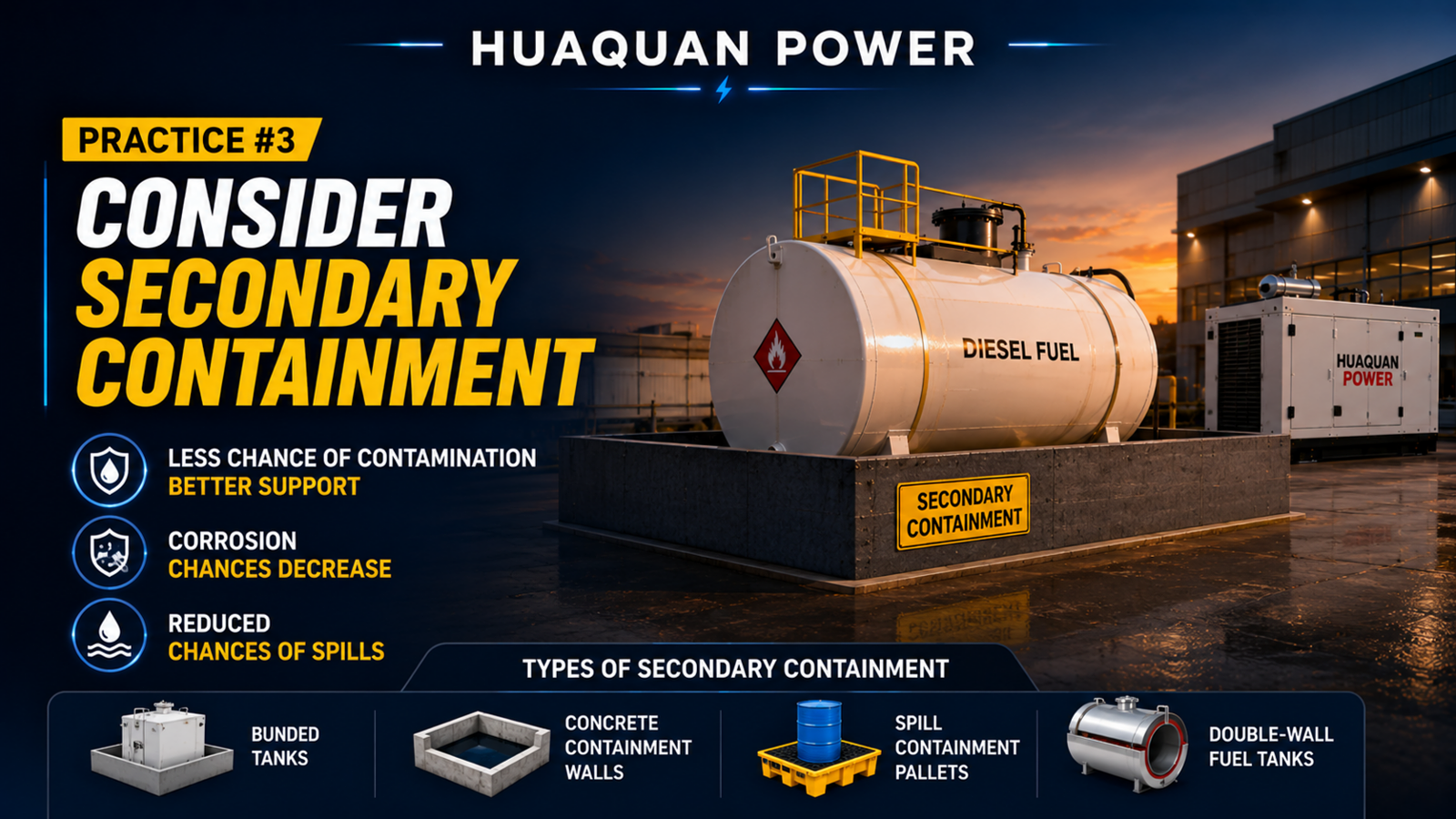
There are four types of secondary containment.
- Bunded tanks
- Concrete containment walls
- Spill containment pallets
- Double-wall fuel tanks
| Containment Type | Beneficios |
| Double-wall tanks | Built-in spill protection |
| Bunded tanks | High environmental security |
| Spill pallets | Suitable for smaller storage systems |
| Concrete barriers | Long-term containment solution |
Práctica #4: Reduce Water Contamination
You might wonder, but water is a powerful contaminant for diesel fuel. It enters the fuel systems through various methods, such as condensation, tank breathing, intrusion, or damaged seals.
Do you know the side effects of water contamination?
- It speeds up fuel deterioration.
- Bacterial and algae buildup occurs due to moisture.
- Corrosion of the storage tank occurs rapidly.
- Contamination of the fuel occurs.
The best practices? These include the following practices.
- Keeping tanks as full as practical
- Regularly draining water bottoms
- Inspecting tank seals
- Using water-monitoring systems
- Maintaining proper vent protection
Práctica #5: Eliminate Condensation Process Completely
Condensation is a process that occurs due to temperature changes, causing moisture buildup in the air.
The condensation process is highly harmful to fuels and relevant conditions. Por ejemplo:
- It contaminates the fuels and decreases their storage life.
- There is a high chance of moisture development and bacterial buildup.
To avoid condensation, you should consider the following best practices.
- Your storage tanks should be full. It prevents the available room for the particles to condense.
- Use desiccant breathers that will reduce the chances of condensation.
- Minimize empty tank space so there is no room left.
- Store tanks in stable environments without any aggressive temperature fluctuations. Temperature changes are the main culprit behind the condensation.
- Inspect tanks regularly and avoid any chance of water accumulation.
Práctica #6: Monitor Fuel Temperature
Do you know one of the main culprits behind the diesel fuel storage issues? Aggressive temperature changes in the same environment cause this issue.
Both high and low temperature conditions are highly dangerous for the fuel. Por ejemplo, a high temperature can cause:
- Speeds up oxidation and elevates chances of corrosion.
- Causes aggressive fuel degradation and early deterioration.
- Promotes microbial activity and increases contamination.
Low temperature conditions are also dangerous. They can cause:
- Fuel gelling and increased viscosity due to freezing temperatures.
- Reduced flow characteristics due to elevated gelling.
- Create wax crystal formation and ultimately disturb fuel quality.
If you are trying to combat such cases, you should practice the following tips.
- Monitor temperature and be prepared to handle aggressive temperature fluctuations.
- Install tanks in shaded areas to minimize temperature changes.
- Using insulated tanks to avoid heat exchange and improve overall conditions.
- Apply temperature monitoring systems to know when and how temperature exceeds the limits.
- Using cold-weather fuel treatments when appropriate
Práctica #7: Protect Fuel from Direct Sunlight
Direct sunlight causes several issues with fuel evaporation and oxidation. Por ejemplo, volatile components of the diesel vaporize faster. Además, there is early aging of the fuel, and performance goes down.
Entonces, you should prevent direct sunlight exposure and avoid its effects by following best diesel fuel storage practices.
- Wherever your storage section is, install shade over it.
- Use insulation surfaces to avoid the transfer of heat and excessive overheating.
- Optimize this process by using reflective surfaces.
Práctica #8: Apply Fuel Rotation Program
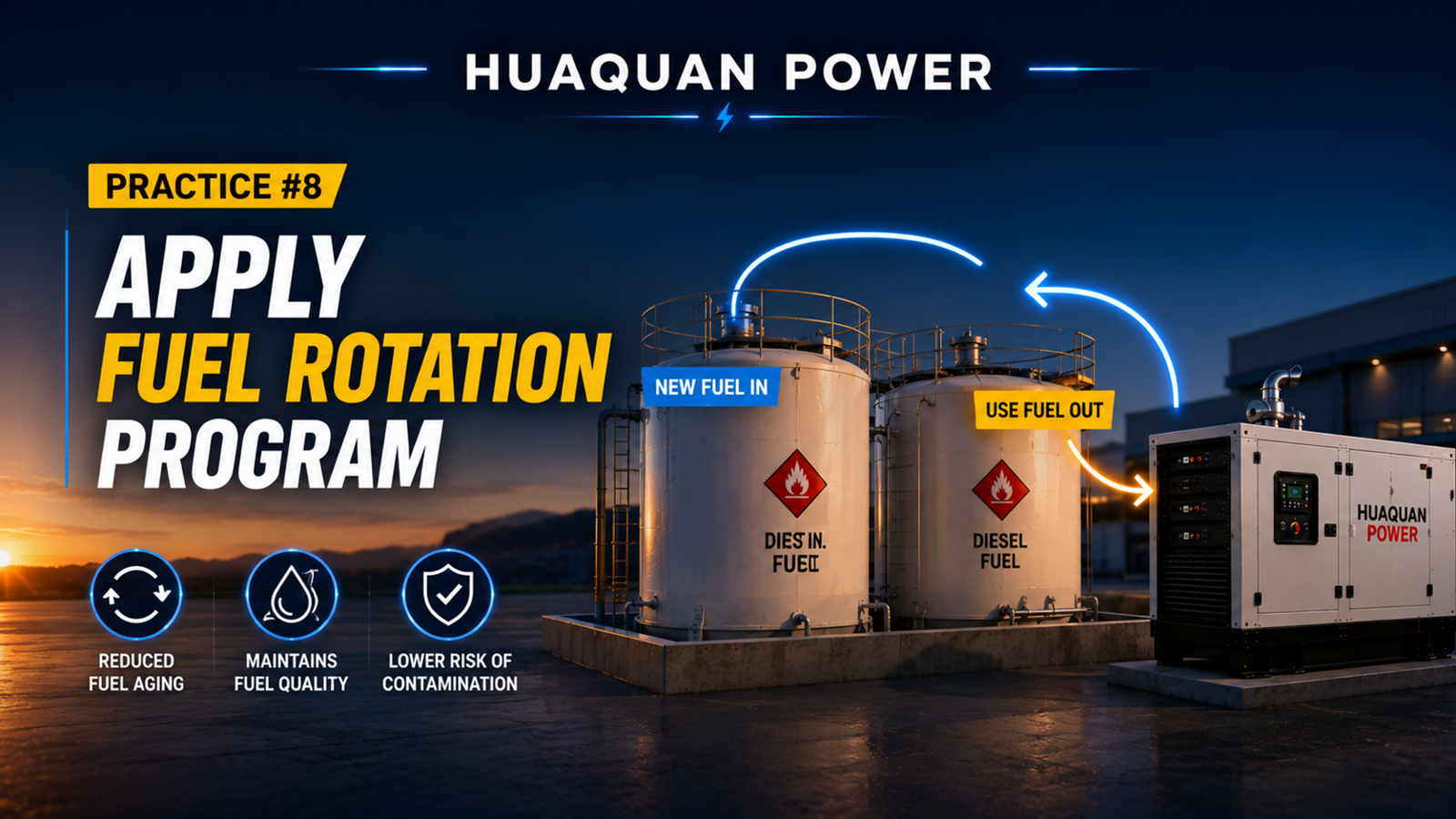
If you want to avoid long-term storage and maintain early usage, implement a fuel rotation program. It is like the first-in, first-out principle.
Your new fuel is sent to storage while the stored one is used for recent generator activities.
The benefits of doing such techniques are:
- Reduced fuel aging and positive rotation cycles of the fuel consumption.
- Fuel quality remains excellent as you are not storing fuel for extended periods.
- There is a lower risk of contamination and quick usage of the stored fuels.
| Fuel Rotation Practice | Beneficio |
| First fuel used first | Prevents long-term aging |
| Regular inventory checks | Improves tracking |
| Scheduled replenishment | Maintains freshness |
| Fuel testing | Verifies quality |
Práctica #9: Utilice estabilizadores de combustible
Fuel stabilizers are potential agents that stabilize fuel performance and avoid its early oxidation.
They slow down the degradation process in the long run. Sin embargo, fuel stabilizers are suitable only when:
- You are planning to store the diesel for extended periods.
- Planning to improve storage units.
- Protect fuel quality and prevent early degradation.
Práctica #10: Prevent Microbial Growth
One of the potential threats to diesel fuel storage is microbial growth. Bacteria and algae can grow inside the storage tanks and contaminate the overall quality of the fuel.
Common indicators of microbial growth include:
- Formación de lodos
- Filter clogging
- Corrosión
- Fuel discoloration
- Foul odors
The best diesel fuel storage practices include:
- Don’t let water accumulate. It helps avoid moisture and provides a safe environment.
- Go through a regular inspection phase
- For optimal results, you should do fuel testing and check the fuel quality.
- Use approved biocides.
- Maintain clean tanks or perform cleaning tasks for excellent cleaning.
Práctica #11: Fuel Testing
Fuel Testing is performed to check the quality of fuel and prevent it from deteriorating early. It evaluates several parameters.
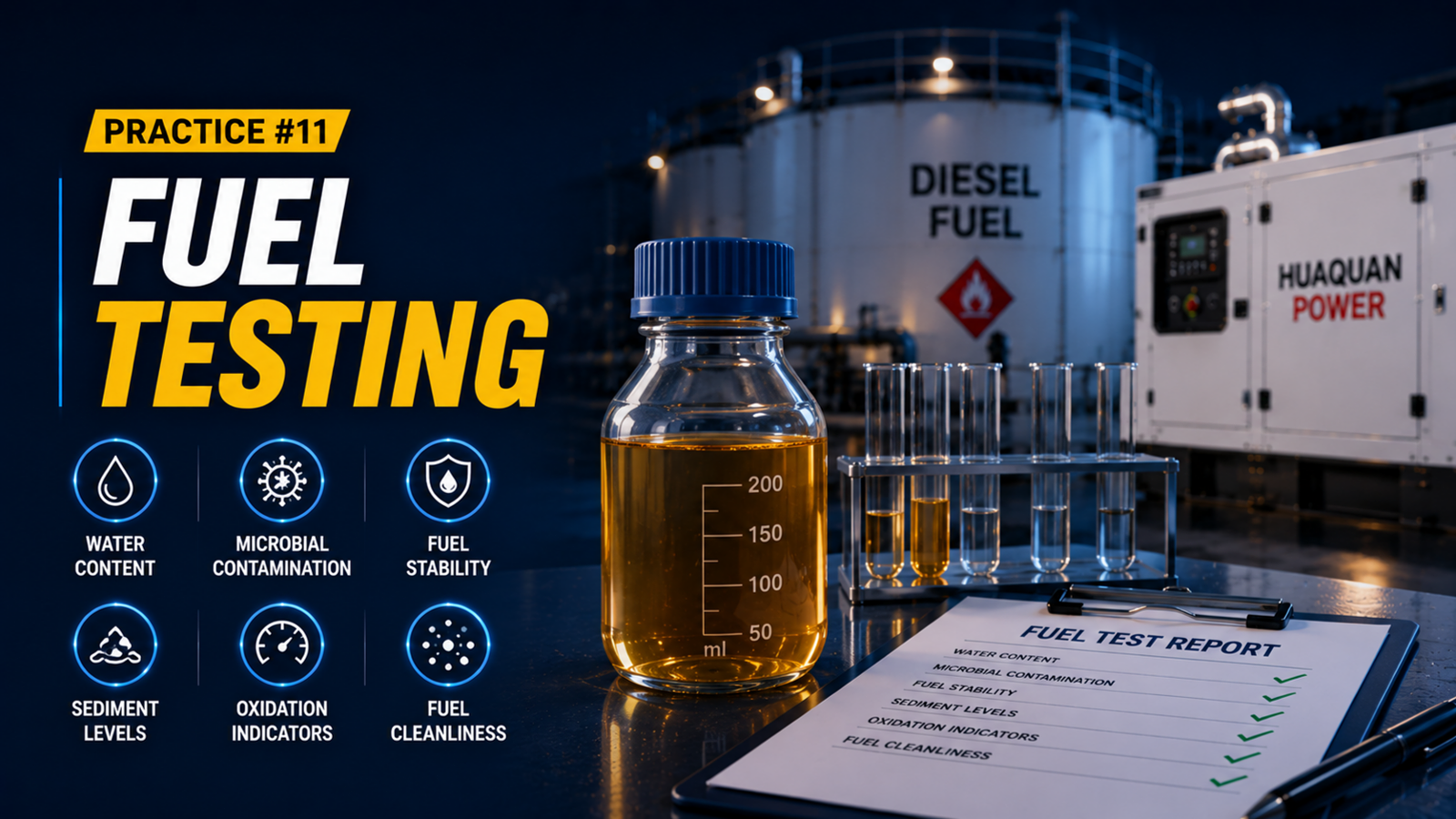
There are a few necessary aspects to test during fuel testing.
- Water content
- Microbial contamination
- Fuel stability
- Sediment levels
- Oxidation indicators
- Fuel cleanliness
You should perform regular fuel testing to optimize the fuel storage facilities.
Práctica #12: Keep Tanks Clean
If dust particles accumulate in the tanks, they may contaminate the fuel. As a diesel fuel storage option, you should perform regular cleaning and do the following.
- Check your tanks and clean them before fuel storage.
- Eliminate any water content and be prepared to fight microbial and fungal growth.
- Check for rust particles and sort them out before storage.
Once you have stored the fuel, always go through the minor to major inspections. Check the tanks for cleaning purposes!!
Práctica #13: Inspect Tanks Regularly
Tank inspection highlights several issues, such as condition of the fuel, calidad, and dust collection. You should perform tank inspection of various components as follows:
| Inspection Area | Qué comprobar |
| Tank exterior | Corrosión, dents, fugas |
| Conexiones | Loose fittings |
| Ventilaciones | Blockages |
| Gauges | Proper operation |
| Secondary containment | Damage or standing fuel |
| Tank supports | Structural stability |
Práctica #14: Maintain Proper Ventilation
Ventilation has several benefits. Por ejemplo:
- It reduces the chances of pressure buildup and improves the internal conditions of the tanks.
- Temperature fluctuations appear less aggressive in properly ventilated tanks.
- Moisture buildup chances are minimal.
- It increases safety.
Whenever you are planning to store the fuel in the tanks, always maintain proper ventilation and improve the quality of the fuel.
Práctica #15: Install High-quality Filters
Suppose your fuel has been contaminated and you don’t know about it. For safety purposes, you should install high-quality filters. What they’ll do is remove the water, polvo, and other impurities from the fuel tanks with the proper filtration processes.
Here are a few more benefits of such high-quality filters.
- Proper fuel cleanliness as fuel passes through the filters.
- Reduced injector wear
- Menores costos de mantenimiento
- Better engine performance
Práctica #16: Label and Track Fuel Inventories
It is not only about fuel contamination prevention but also about other tasks, such as labeling and tracking fuel inventories.
You should keep a record of your fuel inventories. They should be easier to track. Record:
- Fuel delivery dates
- Fuel supplier information
- Storage tank identification
- Fuel test results
- Actividades de mantenimiento
- Fuel treatment history
Práctica #17: Corrosion Resistance
En primer lugar, you should install those fuel tanks that have built-in corrosion protection. Además, the diesel fuel storage practices allow corrosion prevention with proper methods, como:
- Remove the moisture by water elimination.
- Use protective coatings
- Do regular inspections and cleaning.
Práctica #18: Train your Personnel
Your personnel might be the very first step for the fuel storage. You should prepare them and train them for fuel storage purposes.

Here is what they should be trained for:
- Fuel handling procedures
- Spill response
- Inspection techniques
- Safety protocols
- Contamination prevention
- Emergency procedures
Preguntas frecuentes
- What is the biggest threat to stored diesel fuel?
Stored fuel can experience several issues. Corrosión, crecimiento microbiano, fuel degradation, and equipment damage are the most prominent issues related to diesel fuel storage.
- How long can diesel fuel be stored safely?
Diesel fuel remains usable for 6-12 months if stored properly. If you want to further extend the storage lifespan, maintain the storage system and optimize it with best practices.
- How often should diesel storage tanks be inspected?
You should conduct a visual inspection daily. Sin embargo, for a detailed and comprehensive inspection, consider a monthly or yearly inspection depending on the situation.
- Why does microbial growth occur in diesel fuel tanks?
In diesel fuel tanks, moisture occurs that causes the growth of bacteria, algas, and fungi. Por lo tanto, you should properly maintain the internal environment to avoid such cases.
- Should diesel tanks be kept full?
Sí, you should keep the diesel tanks full for several reasons. Por ejemplo, it avoids moisture buildup and bacterial growth. There is less risk of corrosion and better storage.
- Can diesel fuel go bad during storage?
Sí. A proper storage environment with stable performance is essential. Sin mantenimiento adecuado, diesel fuel can oxidize, accumulate contaminants, absorb moisture, and develop microbial contamination.
- Can extreme weather affect stored diesel fuel?
Sí, extreme temperature fluctuations are highly dangerous for fuel storage facilities. They can accelerate fuel degradation or cause fuel thickening in very low temperature conditions.
- Is fuel testing necessary for standby generator fuel?
To assess the fuel integrity and performance for your vehicles, it is essential to test the fuel. It should help understand whether the generator fuel is feasible for use or not.
Conclusión
Generator fuel is a crucial component. If it doesn’t perform as expected, there may be issues with the storage facilities. Técnicamente, you should use proper diesel fuel storage facilities and optimize their conditions. Maintain temperature, go for fuel testing, and perform regular inspections and cleaning.
If you are looking for high-performance generators, Poder Huaquan is the ultimate solution. We have a variety of generator solutions ranging from high-performance diesel generators to gas generators and hybrid solutions. Check out our solutions right now!