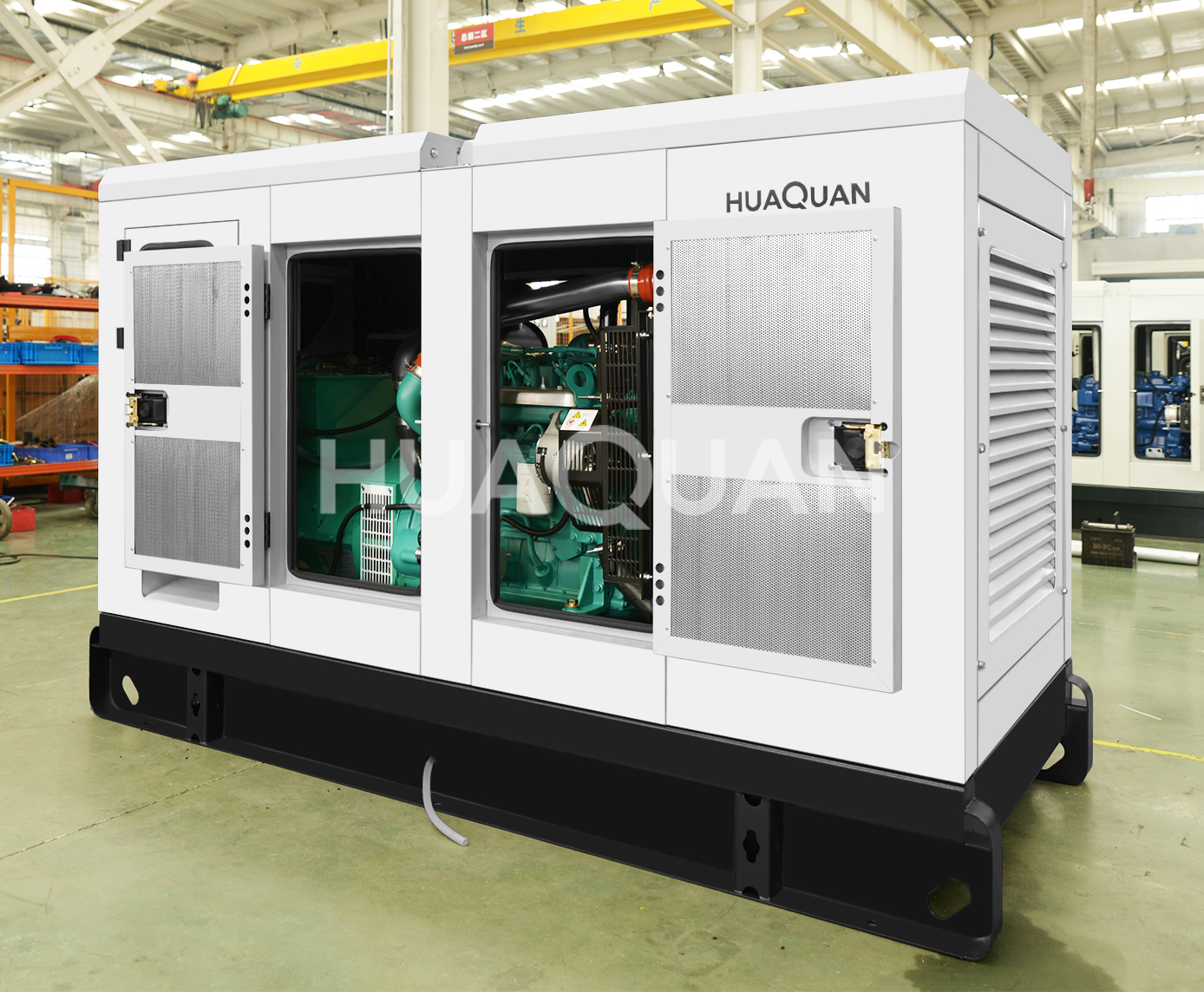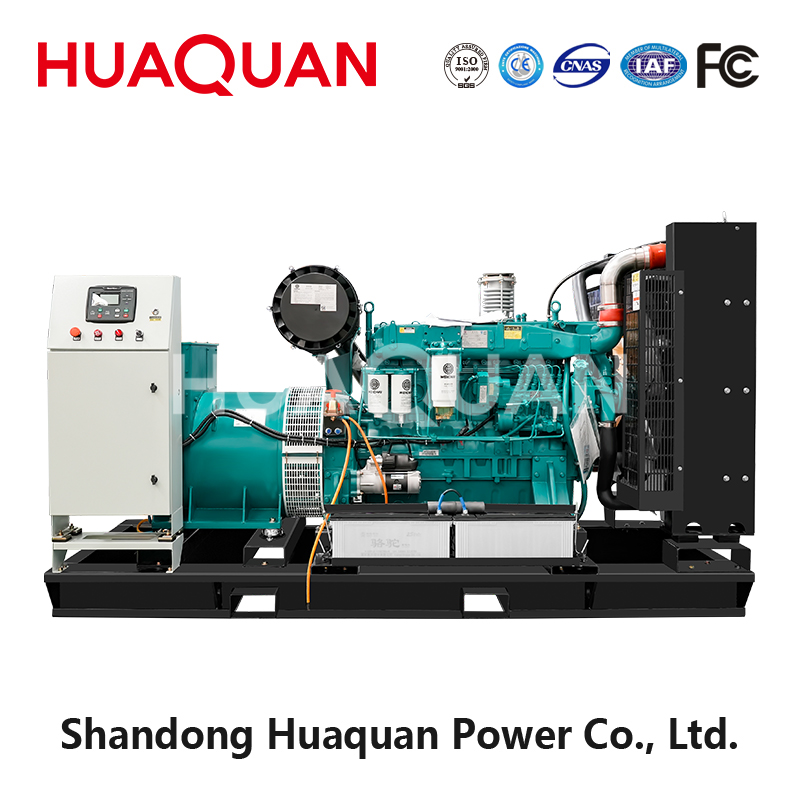
Reducing Generador diésel reducción de ruido is essential for compliance with workplace noise regulations, maintaining good community relations, and protecting the hearing of personnel working near the equipment. A typical unenclosed diesel generator produces 95-110 dB(A) at one meter, which exceeds occupational exposure limits and creates significant disturbance in residential and commercial areas. Through a combination of enclosure design, exhaust treatment, vibration isolation, and barrier placement, noise levels can be reduced to 65-75 dB(A) or lower.
How Loud Is a Diesel Generator?
Before implementing diesel generator noise reduction measures, it is important to understand the baseline noise output and its sources. The primary noise contributors are the engine combustion process (exhaust noise), cooling fan airflow, mechanical vibration from rotating components, and alternator magnetic noise. Each source has different frequency characteristics: exhaust noise is predominantly low-frequency (63-500 Hz), fan noise is mid-frequency, and alternator whine is higher-frequency (1-4 kHz). Effective noise control requires addressing each source with appropriate treatment methods.
Noise Levels by Generator Type
| Generator Configuration | Noise Level at 1m | Noise Level at 7m | Typical Application |
|---|---|---|---|
| Open set (no enclosure) | 95–110 dB(A) | 78–93 dB(A) | Remote industrial sites |
| Weatherproof enclosure | 85–95 dB(A) | 68–78 dB(A) | Commercial areas |
| Sound-attenuated enclosure | 70–80 dB(A) | 55–65 dB(A) | Residential areas |
| Critical-grade enclosure | 60–70 dB(A) | 45–55 dB(A) | hospitales, centros de datos |
How Do Sound-Attenuated Enclosures Reduce Noise?
The most effective diesel generator noise reduction solution is a purpose-built sound-attenuated enclosure that surrounds the generator with panels lined with sound-absorbing material. These enclosures typically use a double-wall construction with an outer steel skin, an inner perforated steel liner, and a cavity filled with mineral wool or fiberglass insulation. The absorptive lining converts sound energy into heat through friction within the fibrous material, while the mass of the outer panel blocks sound transmission. Critical-grade enclosures may incorporate multiple layers and acoustic doors with compression seals to achieve maximum noise reduction.

Enclosure Noise Reduction Performance
| Tipo de gabinete | Wall Construction | Insulation Thickness | Noise Reduction (dB) |
|---|---|---|---|
| Weatherproof | Single skin steel | 25mm mineral wool | 5–10 dB |
| Standard acoustic | Double skin, 50mm cavity | 50mm mineral wool | 15–25 dB |
| High-performance | Double skin, 100mm cavity | 100mm rock wool | 25–35 dB |
| Critical-grade | Triple skin, double cavity | 150mm total insulation | 35–45 dB |
What Role Does the Exhaust Silencer Play?
Exhaust noise is the single loudest source on an unenclosed generador diésel, often contributing 15-20 dB above the combined level of all other sources. A properly sized exhaust silencer reduces this noise by 15-40 dB depending on the silencer grade. Residential-grade silencers use multi-chamber expansion and resonance designs that target the low-frequency combustion pulses characteristic of diesel engines. Industrial silencers provide less attenuation but impose lower backpressure, making them suitable for applications where noise requirements are moderate.
Silencer Grade Selection
| Silencer Grade | Attenuation | Backpressure Impact | Application |
|---|---|---|---|
| Industrial | 15–20 dB | Bajo | Remote sites, fábricas |
| Comercial | 20–30 dB | Moderado | Commercial areas |
| Residencial | 25–35 dB | Más alto | Residential neighborhoods |
| Crítico / Hospital | 30–40 dB | más alto | hospitales, escuelas |
How Do Anti-Vibration Mounts Reduce Structure-Borne Noise?
Engine vibration transmitted through the generator base frame and into the building structure creates structure-borne noise that can be heard far from the generator room. Anti-vibration mounts are a critical component of diesel generator noise reduction because they isolate the generator from the supporting structure. Spring-type mounts provide the lowest natural frequency and best isolation, while rubber mounts offer adequate performance for smaller Generadores at lower cost. The mount selection must account for the generator’s operating speed, total weight, and the desired isolation efficiency.
Mount Selection Guide
| Mount Type | Natural Frequency | Isolation Efficiency | Mejor para |
|---|---|---|---|
| Rubber pad | 10–15 Hz | 70–80% | Pequeños generadores, light duty |
| Rubber-in-shear | 6–10 Hz | 80–90% | Medium generators |
| Spring mount | 2–5 Hz | 90–97% | Large generators, critical areas |
| Air spring | 1–3 Hz | 95–99% | Sensitive installations |
What Is a Noise Barrier and When Should You Use One?
When diesel generator noise reduction through enclosure and exhaust treatment is insufficient, a noise barrier wall can provide additional attenuation of 5-15 dB depending on its height, mass, and distance from the generator. The barrier works by blocking the direct line-of-sight path between the noise source and the receiver, forcing sound to diffract over or around the barrier, which reduces its intensity. Effective barriers must be constructed from dense materials (concrete, masonry, or mass-loaded vinyl) with a minimum surface density of 10 kg/m² and must extend sufficiently beyond the generator to prevent flanking around the edges.
Barrier Design Parameters
| Parameter | Minimum Requirement | Effect of Non-Compliance |
|---|---|---|
| Surface density | >10 kg/m² | Sound transmission through barrier |
| Height above source | 1.5× source height | Insufficient diffraction |
| Horizontal extension | 2× source width each side | Flanking around edges |
| Gap at base | Sealed to ground | Sound leaks underneath |
How to Measure Generator Noise Levels?
Accurate measurement is essential for verifying diesel generator noise reduction effectiveness and demonstrating regulatory compliance. Use a calibrated Type 1 sound level meter with both A-weighting and C-weighting filters. Take measurements at multiple positions around the generator at the standard distances of 1 meter and 7 meters from the enclosure surface. Record both the equivalent continuous level (Leq) and the maximum level (Lmax) over a representative operating period. Environmental conditions such as wind speed and background noise must also be documented to ensure measurement validity.
Preguntas frecuentes
How can I make my diesel generator quieter?
What is an acceptable noise level for a generator?
Does a canopy reduce generator noise?
How far should a generator be from a house?
Can I build my own generator sound enclosure?
For more information on noise control, visita Wikipedia’s noise control article, or explore Huaquan Power diesel generators y our soundproof generator solutions.