Introducción
Instead of relying on large-scale power grids, the world is moving toward a more independent energy system. One of the best options is the distributed energy resources.
It helps use multiple energy sources, produce energy locally, and fulfill all the energy needs. Hoy, we will understand the distributed energy resources in detail and know how they work with their various types and systems.
What are Distributed Energy Resources?
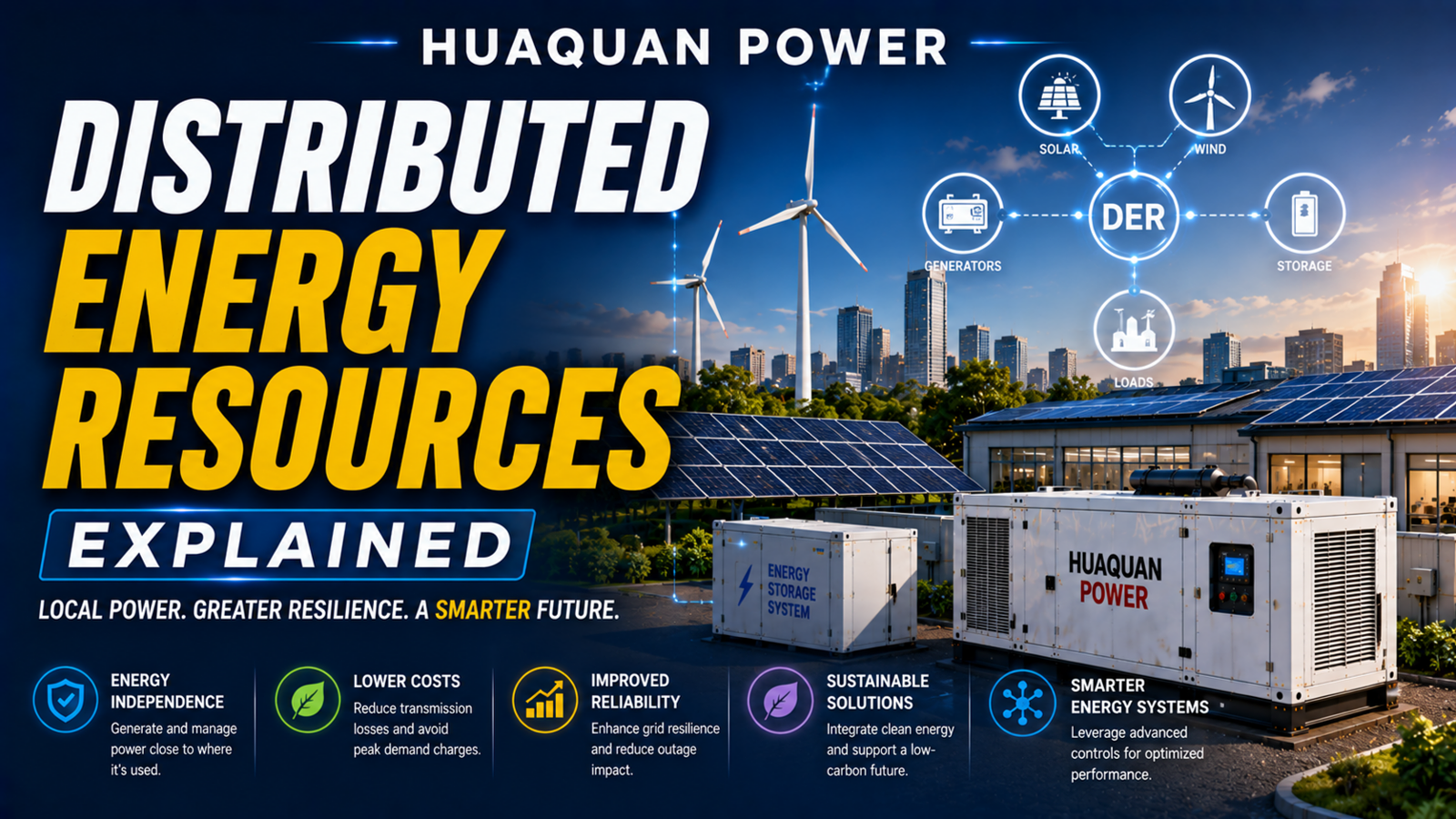
Distributed energy resources are small-scale but efficient energy storage setups that generate energy locally and help consume it. They often lie near the places where the energy is consumed. Por ejemplo, the local production factory has distributed energy sources to support itself.
It is a decentralized system without reliance on the local grid facilities. Además, such a system offers energy independence depending on the energy resources and storage setup.
The common examples of the distributed energy resources include:
- Diesel Generadores
- Generadores de gas natural
- Solar photovoltaic (fotovoltaico) sistemas
- Wind turbines
- Battery energy storage systems (BESS)
- Combined heat and power (CHP) unidades
- Electric vehicles (EVs)
- Demand response programs.
Why Are Distributed Energy Resources Important?
If we compare the distributed energy resources with the traditional setup, there is a clear-cut difference in the centralized energy production in the traditional systems.
The grid lies miles away, making it a little difficult to produce and provide energy to the industrial areas.
Por otro lado, distributed energy resources are becoming one of the most crucial sources because of:
- Rising electricity demand
- Growing adoption of renewable energy
- Increasing frequency of extreme weather events
- Higher expectations for power reliability
- Rising electricity costs
- Decarburization goals
- Smart grid modernization
Main Components of Distributed Energy Resources
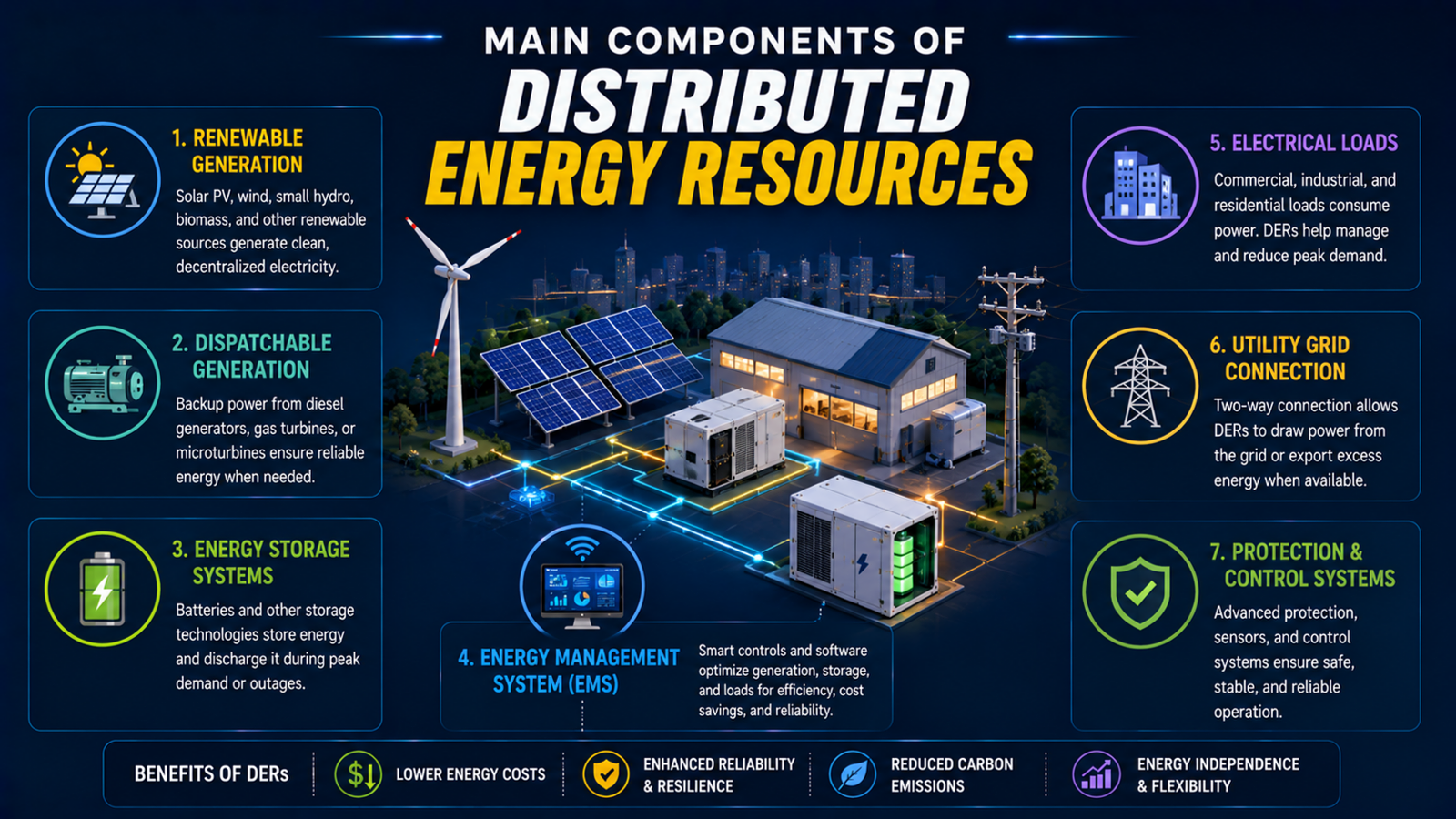
If you are wondering about the distributed energy resources and their main components, we have added details about all the key components here.
Distributed Power Generation
The very first is the power generation. There can be several tools and technologies involved in this power generation process.
Unlike the traditional systems, distributed Power generation systems have a nearby power production setup.
Here are a few methods.
- Solar photovoltaic (fotovoltaico) sistemas
- Generadores diésel
- Generadores de gas natural
- Wind turbines
- Microturbines
- Fuel cells
- Calor y energía combinados (CHP) sistemas
Depending on your choice and energy method, you can rely on any of these methods. A few of them are eco-friendly solutions.
Battery Energy Storage
Suppose you have installed a 100kW solar setup. How will you supply energy to your appliances?
There are two methods.
- Direct from the solar setup. It occurs during the daytime when the energy production is high. Inverters convert the DC from solar panels to AC to feed the appliances.
- Battery Storage. If the energy exceeds the limits of consumption, excess energy is stored in the battery storage systems.
This stored energy is useful during the power outage hours and provides a seamless energy source.
Smart Energy Management
Are you looking for the most economical and efficient energy usage system? Smart energy management directs and saves more energy by utilizing the right sources.
It helps monitor:
- Electricity production
- Energy consumption
- Battery charge levels
- Generator operation
- Grid availability
- Electricity prices
With the right energy source and consumption, we can easily understand whether you should use a grid or a battery system.
Intelligent Controllers
Smart controllers help automate the energy production and usage with the right sources. Por ejemplo, they direct the energy usage to the solar systems during the daytime. When a power outage occurs at night or on a cloudy day, the controllers help:
- Start generators automatically
- Synchronize multiple power sources
- Switch between grid and backup power
- Monitor system performance
- Prevent overloads
- Optimize energy usage
With intelligent controllers, it is easier to manage energy and optimize the efficiency of consumption.
Electric Vehicle Charging System
With the increased usage of electric vehicles, distributed energy resources have a new component. It is the electric vehicle charging system.
It does the following.
- Charge vehicles using solar energy
- Schedule charging during off-peak hours
- Reduce facility peak demand
- Support vehicle-to-grid (V2G) applications in advanced systems
Types Of Distributed Energy Resources
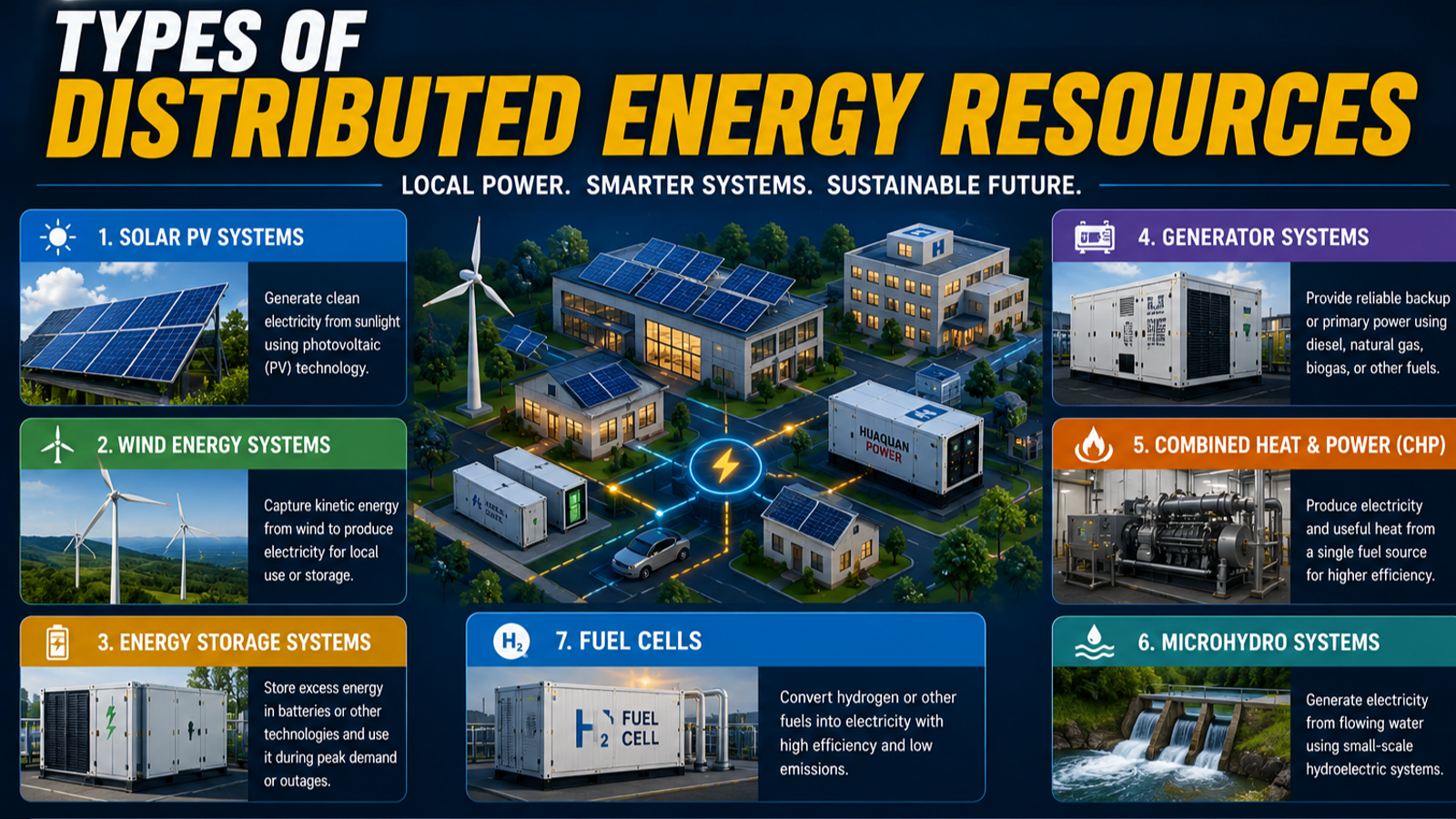
Distributed Energy Resources use different types of energy and sources. Here is an example of different technologies with their pros and cons in the DER.
Solar Systems
Solar systems have a sharp rising trend in the different industrial sectors. It is because of the unlimited energy source, less carbon emissions, and a more eco-friendly system.
This technology captures the sunlight and converts it into DC energy. Inverters transform energy and make it useful for home appliances.
The common reasons to support solar energy production are:
- Renewable energy source
- Low operating costs
- Minimal maintenance
- Reduced electricity bills
Generadores diésel
Solar systems generate energy only during the day. It can support your system during the daytime.
What happens on a cloudy day? Or how will you provide energy to your system in the power outage cases at night?
There are a few other solutions. One of them is the diesel generator. It provides non-stop energy and is an excellent source when used with the hybrid system.
Common benefits are:
- Operación confiable
- High power capacity
- Fast startup
- Long operating duration
- Suitable for heavy industrial loads
Generadores de gas natural
If you compare the gas generators with the diesel generators, the only difference is the fuel consumption. In the natural gas generators, the fuel is natural gas instead of diesel.
Here are a few benefits of such generators.
- Reliable energy source if there is a natural gas supply available.
- A cleaner source compared to the diesel generator
- Requires less maintenance
Wind Turbines
Wind turbines are not the best source of energy, especially if you have a system in urban areas. Sin embargo, they can help generate energy in the remote areas where the facility is available.
The common applications are:
- Rural locations
- Farms
- Coastal regions
- Remote facilities
Calor y energía combinados
In most energy production systems, the power loss occurs during the power production. This loss is in the heat form. Sin embargo, we can utilize this heat for several uses, como:
- Space heating
- Calentamiento de agua
This combined heat and power system is the one that produces the useful heat and power used in several applications.
Batería Sistema de almacenamiento de energía
A battery energy storage system is one of the crucial components that store energy from various sources.
Lithium-ion batteries are major components offering a long life and stable energy supply. It comes with the following use cases.
- Renewable energy integration
- Backup power
- Frequency regulation
- Afeitado de picos
- Load shifting
The benefits of the battery energy storage systems are:
- Backup supply is available to power your systems and batteries.
- It offers an eco-friendly energy production.
- Noise-free energy supply.
| DER Type | Energy Source | Main Use | Key Benefit |
| Solar PV | Sunlight | Electricity generation | Clean and renewable |
| Wind Turbine | Wind | Electricity generation | Low operating cost |
| Generador diésel | Gasóleo | Respaldo & peak shaving | Confiable, high power output |
| Natural Generador de gas | Gas natural | On-site power | Lower emissions than diesel |
| Battery Storage (BESS) | Stored electricity | Energy storage | Fast response, load shifting |
| Combined Heat & Fuerza (CHP) | Natural gas/biogas | Fuerza + calor | High energy efficiency |
Benefits of Distributed Energy Resources
Distributed Energy sources have several benefits for the energy production and utilization systems. Here is the list of benefits.
Improved Reliability
Do you want to rely on a traditional grid? If the grid goes offline, you won’t be able to power your systems.
With a distributed energy source, you get a pair of batteries that keep your energy stored. Durante el día, you can utilize solar energy, and at night, batteries are there.
Además, you have generators available to power your systems when the batteries get discharged.
Lower Transmission Losses
With a centralized energy production and grid distribution, transmission losses are pretty common.
It is because:
- The central grid lies miles away.
- With power transmission to your location, the energy losses occur due to distance.
Distributed Energy Resources offer localized energy production and storage. Por lo tanto, transmission occurs maximally at 100 o 200 metros de distancia, leading to minimal power losses.
Reduced Electricity Costs
If you are tired of high electricity charges, don’t worry at all. With a distributed energy source, you are getting lower prices in many ways.
- During the daytime, solar energy helps generate electricity that is totally free.
- At night or in a power outage, batteries help.
- Even if batteries get discharged, you have generators available as a backup plan to meet your energy needs.
Entonces, you get lower electricity charges with the net metering even if you have a utility grid available.
Greater Energy Independence
You have two options:
- Utility grid. en este proceso, you get energy from the grid during the power outage and supply it during the daytime. It keeps you grid-tied but offers a little energy independence.
- Off-grid setup. In this setup, you own a power generation and backup supply system. There is no reliance on the grid system.
Depending on personal choices, distributed energy resources offer both grid-tied and off-grid facilities.
| Característica | Grid-Connected DER | Off-Grid DER |
| Connected to utility | Sí | No |
| Backup power | Opcional | Básico |
| Can export electricity | Sí | No |
| Utility available | Sí | No |
| Battery storage | Opcional | Usually required |
| Generator support | A veces | Frequently required |
Beneficios ambientales
In the distributed energy resources, eco-friendly systems are integrated. Por ejemplo:
- The solar system generates clean energy.
- Batteries store and supply cleaner and noise-free energy.
- Natural gas generators are eco-friendly and provide a cleaner energy source.
This is why the distributed energy source is appreciated for its clean energy source.
Applications of Distributed Energy Resources
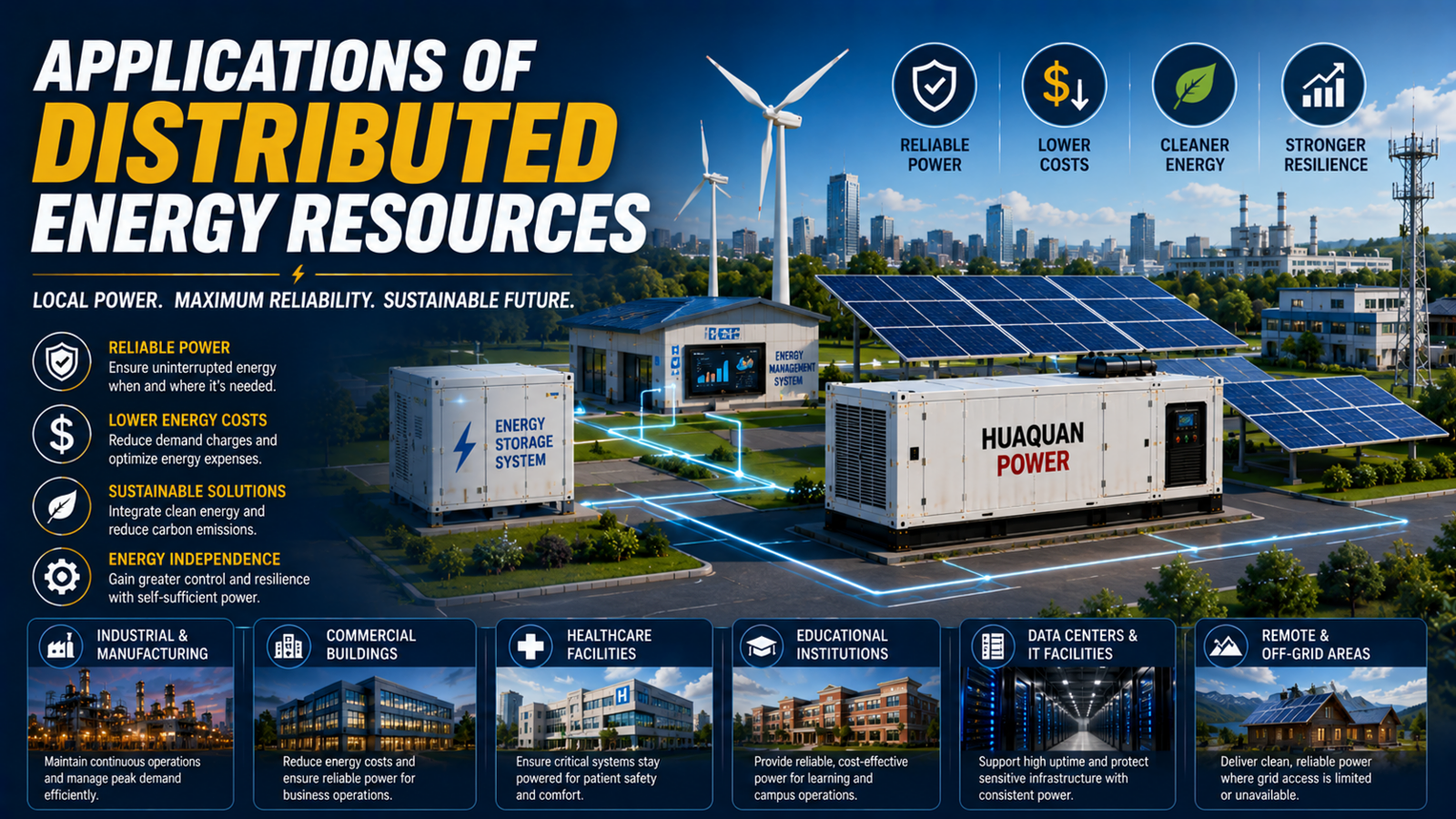
DER has several applications in various industrial settings. Let’s discuss a few prominent ones here.
Manufacturing Industry
The manufacturing industry operates various production lines simultaneously and needs a constant energy supply. Distributed energy resources can produce and supply energy instantly without any interruptions.
Cuidado de la salud
The healthcare industry has to operate various tools, como:
- Operation Theaters
- MRI and CT scan machines
- Emergency Facilities
DER also helps with the constant energy supply throughout the day and night with the right resources.
Centros de datos
Data centers also require a constant energy supply for data storage, distribution, and transmission through different channels. DER also helps handle all these tasks seamlessly.
Edificios Comerciales
Edificios comerciales, such as office buildings, centros comerciales, hoteles, aeropuertos, and business complexes, also use the DER for better energy production and control.
Preguntas frecuentes
- What industries benefit most from DER?
There are a few critical industries, such as manufacturing, cuidado de la salud, centros de datos, edificios comerciales, educational institutions, water treatment facilities, operaciones mineras, and remote communities.
- Can DER operate without the utility grid?
Sí. DER can operate independently without the need for a utility grid. It generates power with solar systems or generators while storing it in the batteries to ensure energy independence.
- What is the difference between distributed generation and centralized generation?
Distributed generation works locally and produces power near the usage areas. Por otro lado, centralized generation occurs miles away and can cause power losses due to energy transmission.
- Are diesel generators considered Distributed Energy Resources?
Sí. They play a crucial role as a backup supply in the distributed energy resources. Generators can provide energy during the long outages and decrease the peak power consumption with peak shaving.
- What technologies are considered DER?
There are various types of technologies considered in the DER system. These include solar PV systems, generadores diesel, natural gas generators, wind turbines, battery energy storage systems, CHP systems, fuel cells, and demand response programs.
- What is the future of Distributed Energy Resources?
Distributed energy resources would have more adoption in the future due to energy independence and benefits. The future includes smart grids, artificial intelligence, advanced battery technologies, hybrid energy systems, vehicle-to-grid integration, and greater use of renewable energy.
- What is a hybrid DER system?
A hybrid DER system combines multiple technologies in a single system. Por ejemplo, it combines solar system technology with diesel generators and battery storage systems for energy independence.
- How does battery energy storage support DER?
A battery energy storage system is an integral component of the distributed energy resources. It acts as a backup supply during a power outage, reduces energy stress, and improves energy independence for most systems.
Conclusión
Distributed Energy Resources offer greater energy independence and minimize energy losses. Sin embargo, it requires higher upfront costs depending on the tools and equipment you install in your system. Whenever buying and using the DER, always focus on the quality of the generators.
Are you looking for a premium range of generators? Look no further, como Poder Huaquan has a premium range of generators. Our generators have a higher energy production and a stable power supply. Contact our experts to get your quote right away!