

Introduction
In fact, you need a maintenance plan for diesel generators based on operating hours to ensure proper performance and longevity. However, maintenance based on operating hours is more accurate than calendar-based maintenance because it reflects actual usage conditions.
Moreover, this guide outlines practical steps and strategic maintenance intervals based on operating hours. With this plan, you can increase efficiency, avoid unexpected breakdowns and ensure safe generator operation.
Understand The Importance of Operating Hours Based Maintenance
First, it is important to understand why maintenance based on operating hours matters. Diesel generators can be either continuous or intermittent in operation depending on application.
However, calendar-based maintenance may not reflect actual wear and tear. Instead, operating hours provide a more accurate indicator of engine usage. Therefore, servicing components at the right time helps prevent premature failure. As a result, this approach improves reliability and reduces maintenance costs.
Determine Maintenance Intervals Using Operating Hours
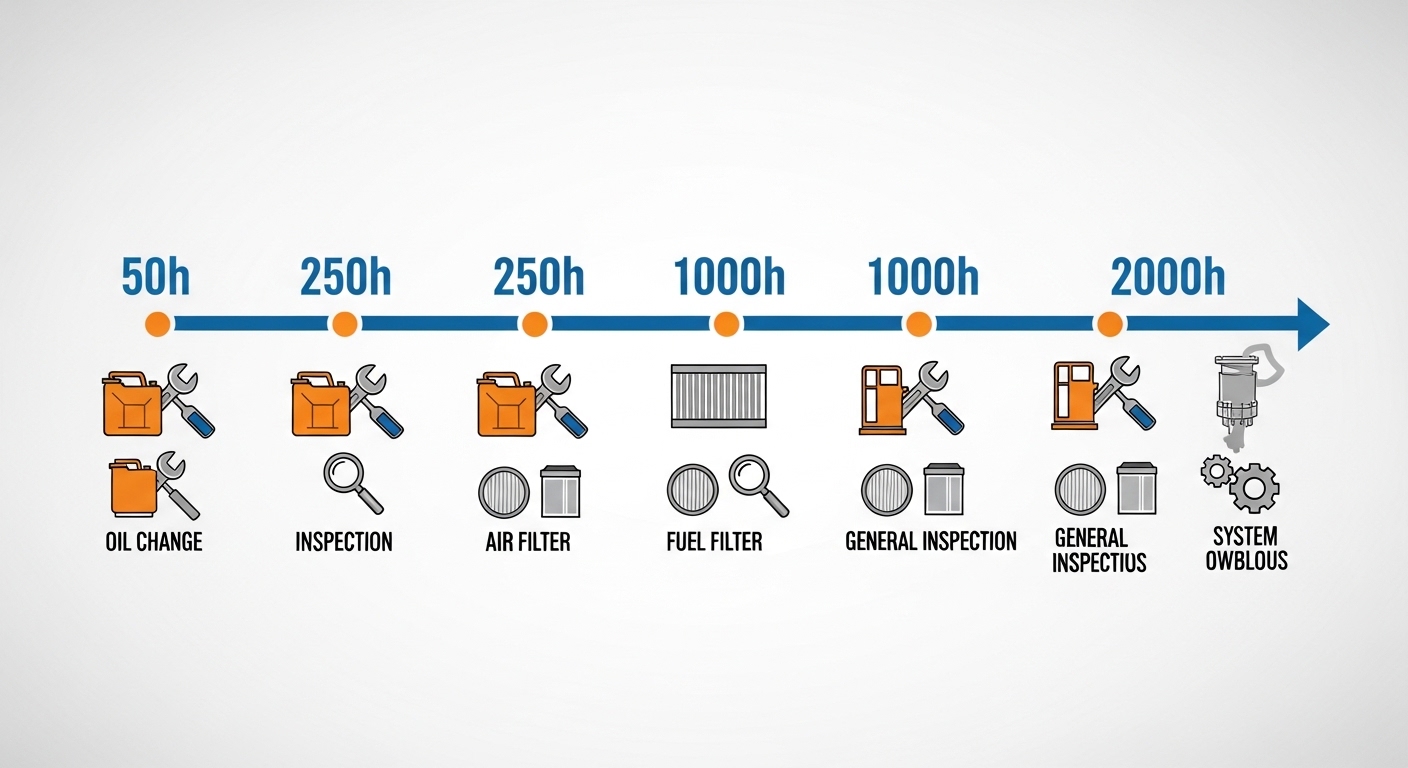
Therefore, you should define maintenance intervals based on generator operating hours. Common intervals include daily checks, 50 hours, 250 hours, 500 hours, 1000 hours and 2000 hours. In addition, each interval includes specific inspection and maintenance tasks. Therefore, following a structured schedule ensures that all components are serviced properly.
Carry Out Pre Start Daily Checks
Before starting, perform simple checks prior to each generator operation. These checks aren’t associated with hours but are critical to safe operation.
Check: fuel level, engine oil level and coolant level. Inspect for leaks, unusual noise or vibration. Make sure that control panel readings are normal. As a result, daily inspections help identify problems early.
Maintenance At 50 Hours Of Operation
At 50 operating hours, perform an initial inspection, especially for new generators. Check engine oil condition & level. Then inspect the fuel system and air filters. Finally, tighten bolts and connections. Early maintenance is key to proper system stabilization.
Maintenance At 250 Hours Of Operation
At 250 hours, complete routine maintenance tasks. Change the engine oil if needed. Inspect and clean air filters. Inspect battery condition and terminals. Inspect the cooling system and make sure there’s proper airflow. In this way, this interval helps maintain smooth operation.
Maintenance At 500 Hours Of Operation
At 500 hours, inspect the system in more detail. Engine oil and oil filter change. Inspect fuel filters, and replace them if necessary. Check the condition and connections of the alternator. Clean radiator and cooling components. Consequently, this improves performance and prevents overheating.
Maintenance At 1000 Operating Hours
At 1000 hours, deeper maintenance is needed. Replace fuel filters and check for fuel lines. Check the performance of the injection system. Inspect the cooling system thoroughly and replace coolant if necessary. Test insulation resistance of electrical components. Ultimately, this ensures long-term reliability.
Maintenance At 2000 Operating Hours
Finally, major maintenance should be performed at 2000 operating hours. Check engine parts for wear. Check piston, valves and fuel injectors. Replace worn parts as needed. Complete system inspection including alternator and control panel. This is a way to extend the life of the generator.
Maintain Fuel System Based On Operating Hours
Furthermore, fuel system maintenance is essential for engine performance. Inspect fuel tanks regularly for contaminants. Replace fuel filters based on operating hours. Drain water from the fuel tank as needed. As a result, clean fuel provides stable combustion and efficiency.
Maintain Lubrication System
Similarly, the lubrication system reduces friction and prevents wear of engine components. Check the oil condition regularly. Then replace oil based on operating hours. Also, inspect oil filters and replace them as needed. Proper lubrication leads to improved engine life and engine performance.
Furthermore, proper maintenance planning improves generator lifespan.
On the other hand, ignoring operating hours can lead to unexpected failures.
Maintain Cooling System
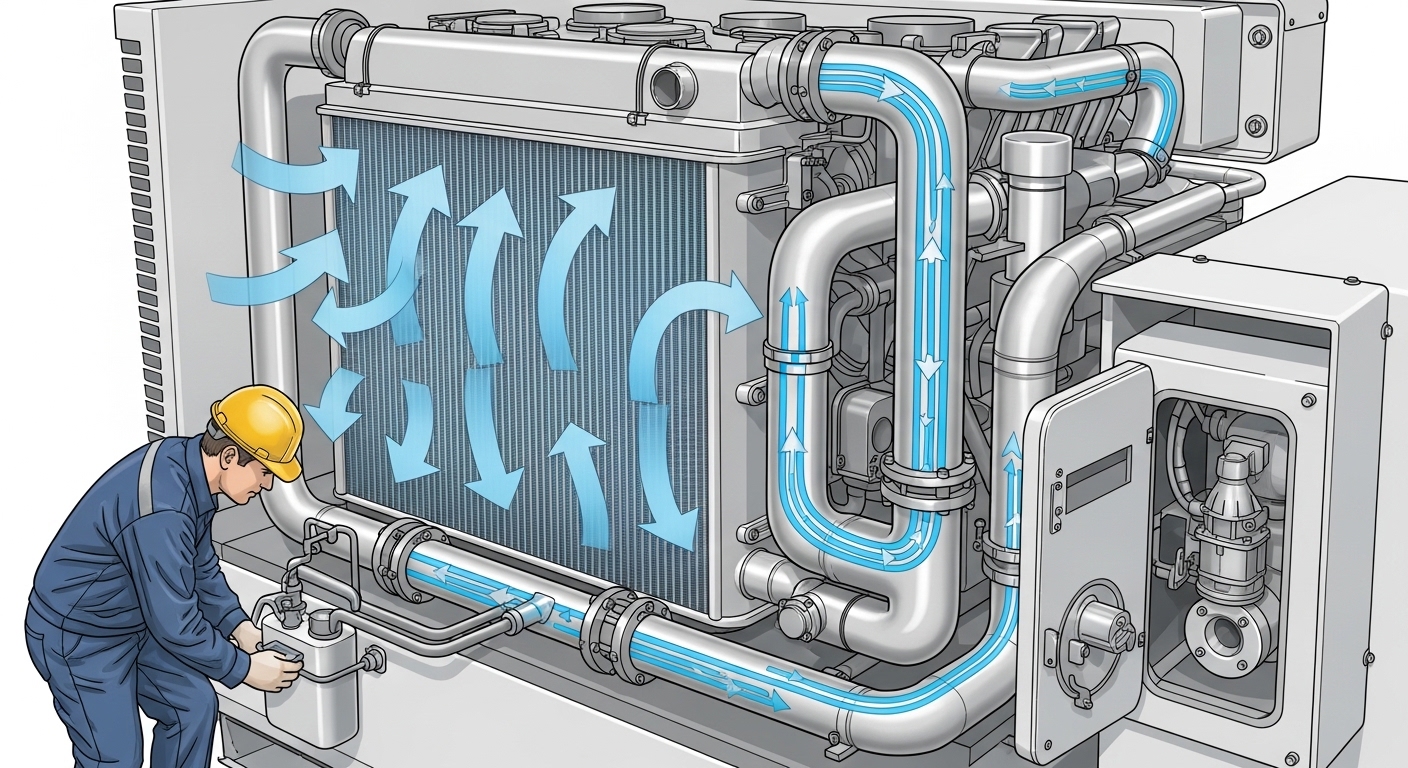
In addition, cooling system maintenance is required to prevent overheating. Check coolant level and condition regularly. In addition, clean radiator fins to maintain proper airflow. Also, inspect hoses and connections for leaks. Efficient cooling system to ensure stable operation.
Inspect Air Intake System
The air intake system influences the combustion efficiency. Inspect air filters according to hours of operation. Clean or replace filters, if necessary. Make sure intake ducts are clean and unobstructed. Clean air makes for a better running engine.
For example, operating hours help identify the right time for maintenance tasks.
In conclusion, maintenance based on operating hours ensures better planning and performance.
Inspect Electrical System Components
Likewise, the electrical system must be checked regularly to ensure reliability. Inspect alternator terminals and control panel wiring. Tighten loose connections and replace damaged wire. Check out the battery charging system. Therefore, a reliable electrical system helps avoid system failure.
Monitor Battery Condition
Additionally, battery performance directly impacts generator starting. Battery voltage should be checked regularly. Clean terminals and make sure it’s properly charged. Replace weak batteries when necessary. Good battery condition is important for a good start.
Conduct Load Testing At Regular Intervals
Load testing is a check of generator performance under actual conditions. Run the generator under load and monitor voltage, frequency and temperature. Consequently, load testing helps verify system readiness and efficiency.
Monitor for Generator Operating Parameters
You need to monitor some important parameters during operation and maintenance.
Some important parameters are:
- Engine temperature
- Oil pressure
- Output voltage
- Frequency stability
- Fuel consumption
However, abnormal readings may indicate potential problems. Early identification of failures prevents major failures.
Keep Generator Environment Clean
A clean environment helps to improve the performance of the generator and reduces maintenance issues. Regularly remove dust and debris. Make sure to ventilate around the generator. Clean surroundings support the efficient operation of.
Moreover, operating hours help you plan maintenance with greater accuracy.
In addition, regular servicing based on operating hours prevents unexpected failures.
Adjust the Frequency of Maintenance Based on Usage
Generators that are in heavy use will need more frequent maintenance. Increase the frequency of inspection in high load or harsh conditions. Adjust maintenance plan according to actual running hours. This yields better reliability and performance.
Maintain Records Based on Operating Hours
You should keep detailed records of all the maintenance activities.
Important records include:
- Operating hours
- Maintenance performed
- Inspection results
- Parts replaced
Accurate records are useful for maintenance and troubleshooting planning.
Train Maintenance Personnel
Proper training is the key to effective maintenance practices. Technicians should be familiar with maintenance schedules using hours of operation. Skilled personnel contribute to the reliability and safety of generators.
Follow Safety Procedures when Performing Maintenance
Safety is important when maintaining a generator. Turn electrical power off before electrical work. Use protective equipment as needed. Avoid coming in contact with hot components. Following safety procedures prevents accidents.
Conclusion
In fact, you should follow a maintenance plan based on operating hours for diesel generators in order to ensure that the generators operate reliably and last for a long time. Maintenance intervals based on use results in accurate servicing and minimizes the risk of failure.
Maintaining efficiency and safety is ensured by regular inspection, timely servicing and proper monitoring. A well-planned maintenance plan will ensure that your generator keeps running smoothly in any condition.
Frequently Asked Questions
1. Why Is Operating Hour Based Maintenance Important?
It provides accurate servicing based on actual usage and helps to prevent premature wear and failure.
2. What Are Common Maintenance Intervals?
Some common intervals are 50, 250, 500, 1000 and 2000 operating hours.
3. When Is It Time To Change The Engine Oil?
Engine oil should be changed according to the operating hours and manufacturer recommendations.
4. Why Do We Need To Perform Load Testing?
Load testing ensures performance of the generators under actual conditions and verifies the reliability of the systems.
5. How Do We Use Maintenance Records?
Maintenance records are used to help track usage, plan servicing and improve troubleshooting efficiency.
About Huaquan Power
Huaquan Power is providing professional diesel generator solutions for industrial and commercial use. You can choose reliable generator sets, customized power systems and comprehensive technical support.
Visit: http://huaquanpower.net/
You can research product information and service options based upon your power system requirements.

