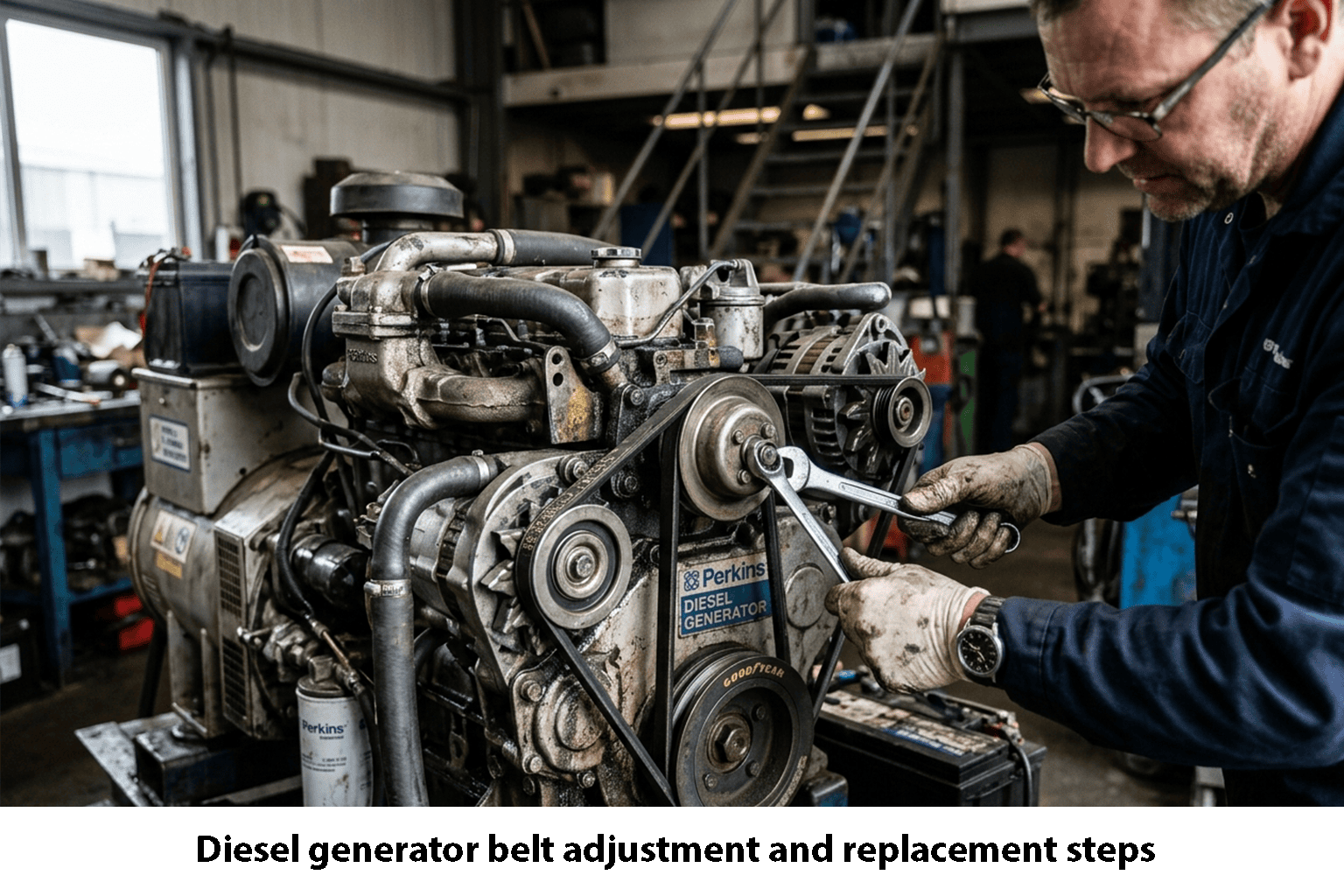
Diesel generator belt adjustment or replacement is crucial for maintaining proper operation, as it powers critical components such as the alternator, water pump, and cooling fan. If the belt is not working properly, the entire system is at risk.
And if you delay routine inspection and maintenance, it can turn minor issues into serious problems, including poor battery charging, overheating, or even a complete system shutdown in a short period of time. Routine inspection of the diesel generator belt is therefore essential.
So, how can you do it? This blog will show you – read on!
Indicators You Require Diesel Generator Belt Adjustment or Replacement
A regular inspection schedule should be in place in order to spot the warning signs early. Test the belt at least once a month or after every 250 working hours. It should also be checked before any critical or lengthy procedure. Furthermore, verify it after more than 30 days of storage, since even when the generator is not on, the condition of the belts may degrade.
In case of inspections, look at the warning signs that require immediate attention. When one hears squealing, chirping, or slapping, it is an indication of a slip or wrong tension in the belt.
Check between ribs, frayed edges, shiny or glazed surfaces, and exposed cords.
Examples of functional issues are flickering light, slow charging, battery problems, excessive heat, or sluggish performance of accessories. Also, physically inspect excessive slack, i.e., greater than 1/2 inch of deflection or a belt lying too deep or too high in the groove.
In case one of them appears, you need a diesel generator belt adjustment or replacement to eliminate future destruction and avoid spending more money on expensive diesel generator repair.
Tools and Materials Needed
After having realized that there is a need to do a diesel generator belt adjustment or replacement, ensure that you have all the required tools and materials in place. This will help you facilitate a smooth maintenance process.
Tools
- Ratchet and socket size
- Belt tension gauge
- Belt tensioner
- Torque wrench
- Flashlight, marker, or paint pen
Materials
- Replacement Belts (OEM or similar specifications)
- A wiping cloth to clean the oil and grease.
- Degreaser before inspection.
Safety Precautions Before Proceeding
Now that you know what tools and materials are needed for the diesel generator belt adjustment or replacement, it’s time to begin the process. But before it, don’t forget to follow these precautions:
- Switch off the generator and disconnect the negative connection of the battery.
- Let the cooling time rest for at least 15 minutes since even when switched off, belts and pulleys may remain hot.
- Install a lockout/tagout device (lockout) to ensure the generator does not restart automatically in case it is an auto-start.
- Look around the area in case of a leak of fuel, loose wiring, or debris.
- Avoid being exposed to exhaust fumes and must work in a well-ventilated place.
- Always avoid loosely dressed or jeweled clothes; jewelry can get stuck in pulleys.
Step-by-Step Diesel Generator Belt Adjustment
Once the safety measures have been observed, follow these diesel generator belt adjustment steps:
Step 1: Check The Belt Condition
The first thing to think about is a close inspection of the cover of the belt. Examine cracks, fringes, glaze, or dirt.
Step 2: Check Belt Tension
One-half way between the pulleys with your thumb or tension gauge, press the belt when the generator is inoperative. The goal deflection of 10-15mm should be light force so that it is not too loose; it is like a rag.
Step 3: Loosen Mounting Bolts
Loosen the bolts that are connecting the alternator, tensioner bracket, or pump a little. This will loosen the assembly to ease the tension of the belt.
Step 4: Adjust Tension
To be on the safe side, make the alternator or tensioner move in the lateral direction to provide tension to the belt. Adjust the adjustment screws or bolts on others and attain the appropriate tension. Do not torque too hard, or it will wear out the bearings very soon.
Step 5: Tighten And Align
Screw all holding hardware when the right tension is attained. Ensure that, using a straightedge, the pulleys are on the same plane. Otherwise, uneven wear and noise of the belt would take place.
Step 6: Test Run
Once it is adjusted, the generator can then be turned on and left running for 5-10 minutes. Check tension, listen to the vibration, squealing, or slipping, and recheck again.
Step-By-Step Diesel Generator Belt Replacement
During generator troubleshooting, a belt replacement may be required if installing and adjusting the belt does not resolve the problem. Here is how you can do so!
Step 1: Remove The Old Belt
Pull the pulleys closer to each other; it is easier to slide the belt off without pulling. Do not roll the belt over the top of a pulley or scrape it off with a screwdriver or other object, because this will no longer be one component.
Step 2: Inspect Pulleys
Having removed the old belt, examine all the pulleys to observe whether there are any marks of wear, grooves, or wobbles. Peculiarities of belts may shorten the life of new ones by using worn or misaligned pulleys. Therefore, wipe them and fix the issues, and then move on.
Step 3: Install The New Belt
Compare the new belt with the old one to make sure that the size and number of ribs are right. Drag it over the pulley way, and make sure that it fits into every groove. A good transfer of power is offered by the right positioning and prevents premature failure.
Step 4: Adjust Tension
Once the belt is installed, securely attach the belt by applying the method that you have learned. The tension is appropriate so that the belt does not slip or strain on bearings, and the shafts are not too high.
Step 5: Replace Full Belt Set
To replace a set of belts in your diesel generator, do not replace only one at a time. Old and new belts could create uneven tension and reduce the life of the belts.
Step 6: Final Testing
After installing and tensioning the generator, run the generator and hear whether there are any strange noises or vibrations.
Post-Installation and Maintenance Tips
The regular maintenance will maintain the long life of the diesel generator belts and make sure the generator works well after carrying out the diesel generator belt adjustment. The significance of a break-in period is that new belts will naturally creep into pulley grooves in the first one to two hours of operation. Therefore, just by rechecking the tension after the initial run and tightening it where needed, you can prevent a lot of early belt failures.
Secondly, conduct visual checks each week or approximately every 50 working hours to check cracks, wear, and looseness as part of regular generator service and maintenance. Moreover, perform an official tension check within one month or 250 hours, and be prepared to change the belt when there is the initial sign of any damage or as required by the manufacturer.
Last but not least are the pitfalls that you should avoid, such as over-tensioning and combining a new belt with the old belt. In addition, it is important to maintain a record of maintenance containing installation dates and operating hours, which would forecast further replacement.
Conclusion
You have now learned diesel generator belt adjustment and replacement steps; you can easily resolve some fundamental generator troubleshooting, eliminate unnecessary, expensive downtimes, and maintain your generator on track. And in case you need more professional support and a more desirable performance, contact Huaquan Power. We specialize in generator equipment and have vast experience in diesel generator repair and maintenance. Get your quote now!
Frequently Asked Questions
1. How Do I Know I Have the Right Tension On My Diesel Generator Belt?
Test the deflection of the belt by pushing along the mid-range of the longest span. The majority of V-belts ought to deflect at an average pressure of 10-15mm.
2. What Is the Recommended Frequency For Diesel Generator Belt Replacement?
Examine belts every 500-1000 running hours or at least after every six months. The replacement of the diesel generator belts usually has to be done after 2-3 years, depending on the consumption, loading, and environmental conditions.
3. Does Pulley Alignment Of Diesel Generator Belt Adjustment?
Yes. Even the belts that are properly tensioned fail to move or run out of service too soon unless the pulleys work on the same plane.