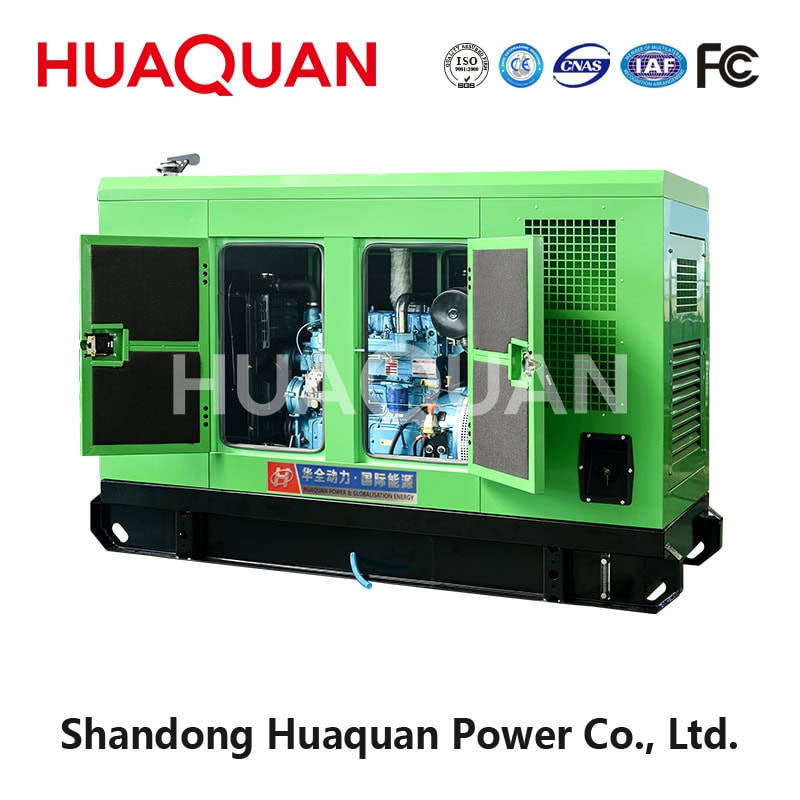
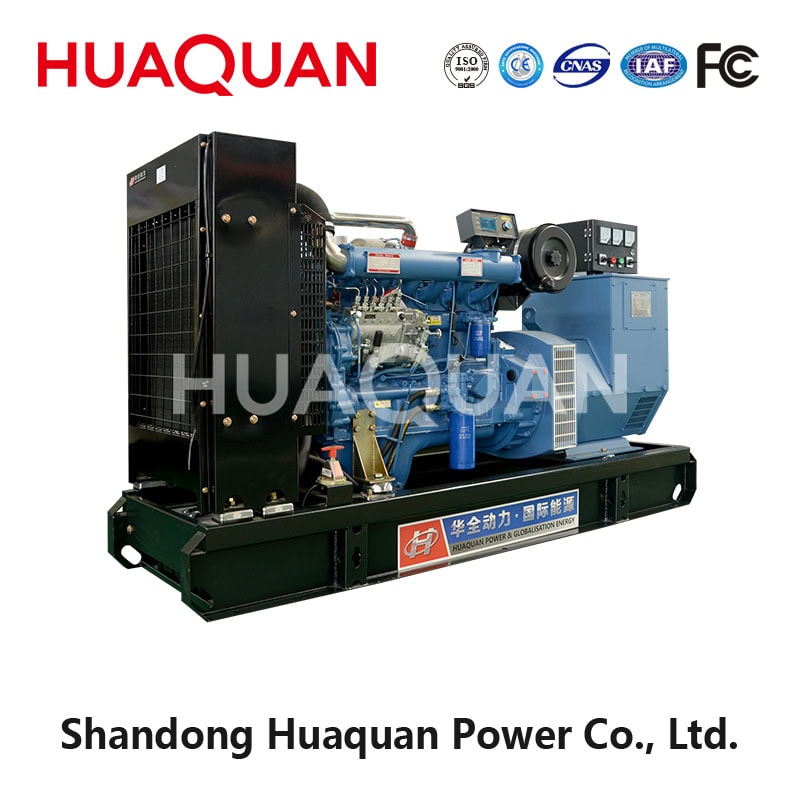
Diesel and natural gas are two important fuels for generators. They are beneficial specifically in the event of a power outage. To determine whether a natural gas generator or a diesel generator is the right choice, you need to consider several factors. The extensive breakdown of these factors is given below.
How To Choose The Right Generator For Yourself?
The following are the factors to keep in mind when choosing a generator for yourself.

- Cost Overview
The initial cost for owning the equipment for both is almost the same. However, you have to consider a lifecycle cost analysis. This is because the total cost during the life of the generator depends on the initial purchase price, installation, maintenance, and fuel costs.
Now, due to global fluctuations in diesel prices, the fuel may cost more in a diesel generator, while maintenance and service will cost less. In natural gas generators, on the other hand, service and maintenance may cost more than the fuel price.
- Installation Requirements
Diesel generators are compact, and they require little space. On the other hand, natural gas generators require extensive emissions and air exchange control systems. If you have extra space, a natural gas generator is a good choice.
However, if you are short on space and require a smart, compact power solution, a diesel generator would be a good choice.
- Fuel Supply And Storage
Diesel generators require a tank of diesel (usually installed under the generator) called a belly or sub-base tank. Some diesel tanks can also be placed above ground (near the generator). You can select the storage tank depending on its capacity, safety features, and design. However, these diesel storage tanks require annual cleaning and fuel polishing.
On the other hand, natural gas is supplied directly through utility lines and requires a dedicated piping system for the generator. However, here the availability depends on the local gas distribution network.
A natural gas generator is a good choice if its supply is ample.
- Productivity Comparison
The productivity of diesel and natural gas generators depends on the type of engine used. The engines used in diesel generators are highly efficient due to their high compression ratio. They have the highest efficiency of 75%, as the energy used for combustion is turned into useful energy.
Whereas natural Gas engines convert 50% of energy into power needed to run the generator, and the remaining is lost as heat.
Hence, a diesel generator is a smart choice when engine efficiency is a priority.
- Environmental Impact
The carbon dioxide emission levels from diesel generators are higher than those of natural gas generators. Diesel releases 163.45 pounds of CO2 (per million Btu), while natural gas releases 116.65 pounds. Hence, natural gas generators are 25-30% more environment-friendly than diesel engines.
As for noise, natural gas generators produce less noise. Whereas diesel generators produce more noise, some generators come with advanced soundproofing systems, though. If you are looking for an environmentally friendly choice and a quieter environment, a natural gas generator is an ideal choice.
- Lifetime Of The Generator
Diesel generators typically have a longer lifetime than natural gas generators. They are more reliable in tolerating extreme temperatures than natural gas generators. Moreover, they are usually liquid-cooled and are designed to manage high power demands. This liquid cooling is more efficient, lessens equipment wear, and extends the lifespan of diesel generators.
On the other hand, natural gas is a dry fuel. Over time, the plugs and valves in the natural gas generator recess due to decreased lubrication, declining the overall efficiency of the engine. If you’re considering the longevity of a generator, a diesel generator is a strong choice.
- Maintenance Requirement
Diesel generators generally require less frequent maintenance. They lack sophisticated spark plugs and valves. The only maintenance required is keeping the diesel filters clean and changing them after a recommended time period.
Natural gas generators, however, require frequent maintenance as gas can clog the plugs. Moreover, in case of natural disasters, the utility pipeline may get disrupted, requiring repairs or replacement, which will cost you even more.
The bottom line is that Natural gas generators have higher maintenance costs.
Temperature Impact and Cold Start
Lower temperatures cause diesel gelling, making it difficult to cold-start. Filters also get clogged due to high moisture. Conversely, high temperatures lead to varnish formation, fuel expansion, and reduced energy per unit, necessitating polishing of the diesel stored in tanks.
On the other hand, Natural gas is proven to be a reliable source in areas with longer power outages. It is a good source of power generation in suburban areas.
Which Generator Is Safe?
Both the natural gas and diesel generators pose risks and are safe choices only if handled with care. Natural gas is highly volatile and can catch fire due to the use of spark plugs in a generator. On the other hand, diesel generators pose a risk of electrical short circuits. However, Proper care, maintenance, and regular checks make them reliable to use.
Reminder: Don’t forget to use Personal Protective Equipment (PPE) when handling both types of generators.
Compatibility With Automated Transfer Switch (ATS)
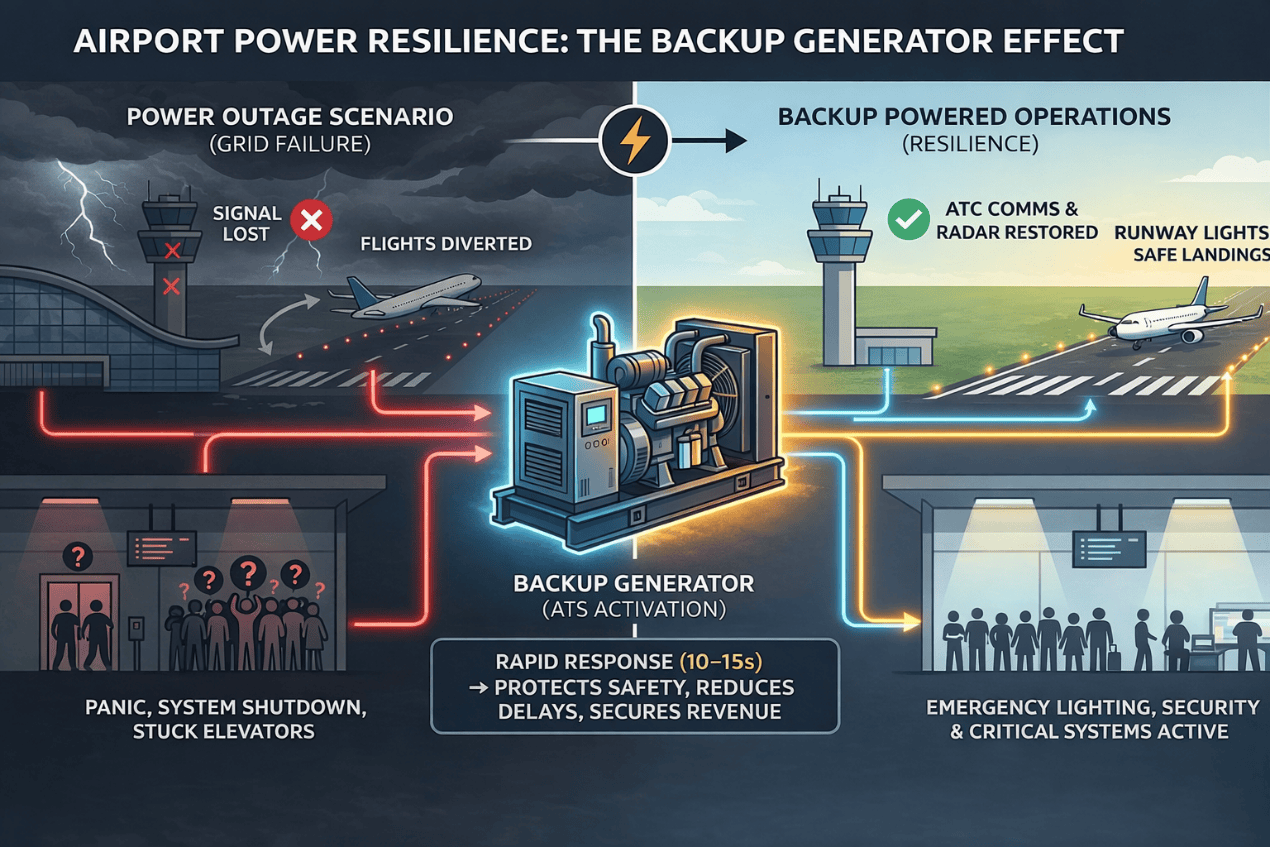
Diesel generators are highly compatible with ATS systems and can start immediately during a power outage. In contrast, natural gas generators require careful coordination between gas pressure sensors and the ATS, as low gas pressure can delay load transfer.
When considering reliable automated power transfer, diesel generators are the preferred choice.
Which is the Better Choice? A Diesel Generator Or A Natural Gas Generator
Based on the information given above, here is a concise overview of choosing between two power alternatives
| Specifications | Natural Gas Generator | Diesel Generators |
| Environmental Impact | Eco friendly | Greater noise and emissions |
| Cost | Capital cost is less | Capital cost is more |
| Size | Larger Size | Compact |
| Installation | Requires a pipeline system | Requires diesel tank space |
| Fuel Cost and Maintenance | Reduced fuel cost | Fuel requires annual polishing |
| Reliability | Dependent on the availability of pipelines | Good for use in remote areas |
| Load Handling Capacity | Good for small-scale units | Ideal for large-scale |
| Life | A shorter lifetime | A longer lifetime |
| Cold Start | Compatible with cold start | Less compatible |
| Safety | Safe if handled with Care | Safe with careful Handling |
Choose a Diesel Generator
Choose a diesel generator if you are looking for:
- Cost-effective fuel
- Steady Power Supply
- Longer life
- Useful in remote areas
- High Capacity Use
Choose a Natural Gas Generator
Choose a natural gas generator if you want:
- Eco-friendly choice
- A reliable natural gas supply
- Less maintenance cost
- Occasional Use
- Small unit and lighter machinery
Conclusion
To select the right generator, first carefully assess your requirements and situation. Natural gas generators are quieter and good for small units. Diesel generators, on the other hand, are good for heavy machinery and long-term use.
See what fits best for you. You can then easily move to a reliable and cost-effective power solution that will maintain efficiency during extended outages.
Pro Tip: If you want a diesel generator but with advanced noise-cancellation technology, you can consider a silent diesel generator.