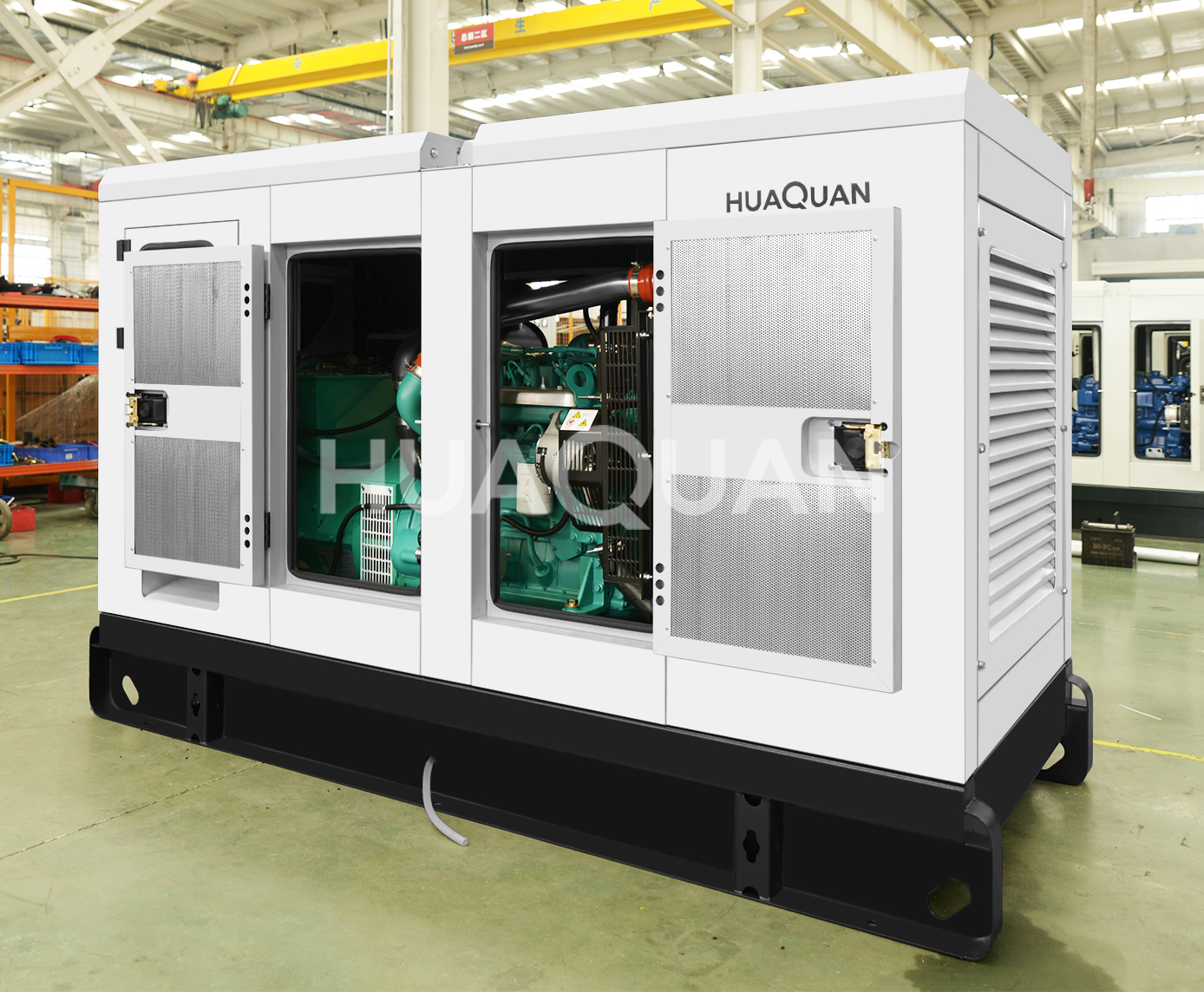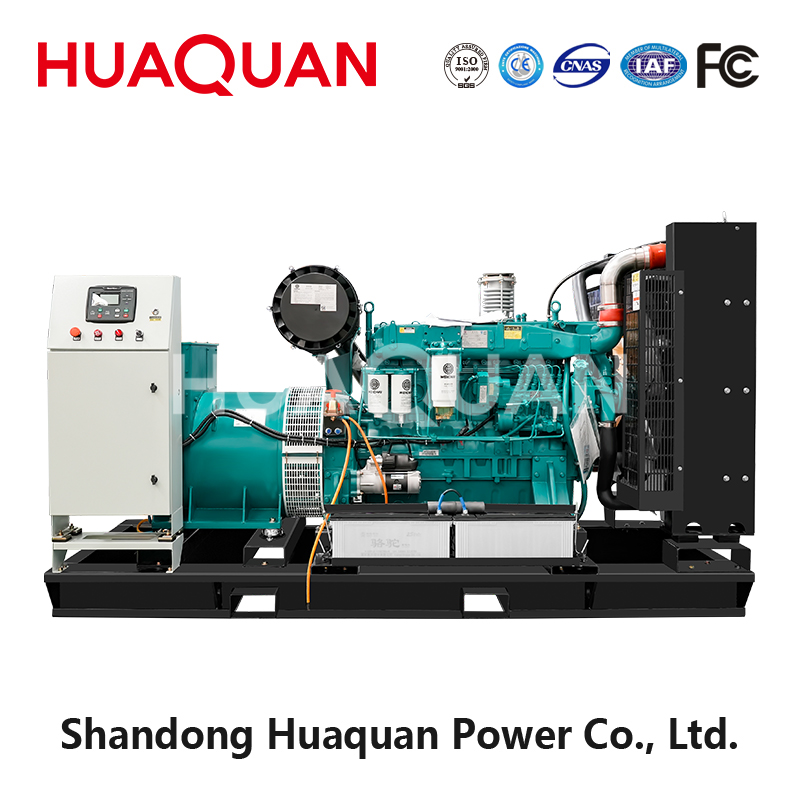
The rated current of a Dieselgenerator defines the maximum electrical current it can safely deliver continuously without overheating or damaging components. Huaquan Power hat diesen detaillierten Leitfaden zur Berechnung des Nennstroms zusammengestellt, Faktoren, die die aktuelle Leistung beeinflussen, und praktische Anwendungshinweise.
What Does Rated Current Mean for Diesel Generatoren?
Rated current represents the continuous current-carrying capacity of a generator at its rated power output, Stromspannung, and power factor. Außerdem, this value determines the maximum load a generator can sustain indefinitely under standard reference conditions. Speziell, Huaquan Power generators display rated current values on the nameplate and in technical documentation for easy reference during installation planning.
Relationship Between Power, Stromspannung, and Current
The rated current calculation depends on whether the generator produces single-phase or three-phase power. Zusätzlich, power factor plays a critical role in determining actual current flow in AC systems. daher, understanding these relationships ensures proper generator selection and electrical system design. Darüber hinaus, Huaquan Power technical engineers always verify current requirements during project consultations.
| Parameter | Single-Phase Formula | Three-Phase Formula |
|---|---|---|
| Rated Current (A) | I = P / (V × PF) | I = P / (√3 × V × PF) |
| Beispiel: 100 kW, 400V, PF=0.8 | 312.5 A | 180.4 A |
| Beispiel: 500 kW, 400V, PF=0.8 | 1562.5 A | 902.1 A |
| Beispiel: 1000 kW, 400V, PF=0.8 | 3125 A | 1804.2 A |
How Is Rated Current Calculated for Three-Phase Generators?
Three-phase generators dominate industrial and commercial applications, and their current calculation follows specific electrical principles. Außerdem, the formula accounts for the phase relationship between voltage and current. Folglich, engineers must consider both active and reactive power components when sizing conductors and protective devices. Zusätzlich, Huaquan Power provides pre-calculated current tables for all standard models.
Step-by-Step Current Calculation Process
Erste, identify the rated apparent power in kVA from the generator nameplate. Zusätzlich, note the rated line-to-line voltage, which is typically 400V for three-phase systems in most regions. daher, apply the three-phase current formula: I = S / (√3 × V), where S is apparent power in VA and V is line-to-line voltage. Zum Beispiel, A 625 kVA generator at 400V produces approximately 902A rated current.
| Generator kVA | Stromspannung (V) | Rated Current (A) | Cable Size Recommendation |
|---|---|---|---|
| 30 kVA | 400 | 43.3 | 10 mm² |
| 100 kVA | 400 | 144.3 | 50 mm² |
| 250 kVA | 400 | 360.8 | 120 mm² |
| 500 kVA | 400 | 721.7 | 240 mm² |
| 1000 kVA | 400 | 1443.4 | 2×240 mm² |
| 2000 kVA | 400 | 2886.8 | 4×240 mm² |
What Factors Affect the Rated Current Output?
Several variables influence the actual current a generator delivers beyond the nameplate rating. Außerdem, understanding these factors prevents Überlasting and ensures reliable operation under various conditions. Wichtig, Huaquan Power designs generators with adequate margins to accommodate these variables safely.
Power Factor Impact on Current
Power factor directly determines how much of the total current performs useful work. Zusätzlich, lower power factor means more current flows for the same real power output. Folglich, Motoren, Transformatoren, and other inductive loads reduce power factor and increase current demand. daher, Huaquan Power recommends power factor correction capacitors when the overall power factor drops below 0.85.
| Leistungsfaktor | Current for 500 kW (A) | Scheinbare Leistung (kVA) | Efficiency Impact |
|---|---|---|---|
| 1.0 | 721.7 | 500 | Optimal |
| 0.9 | 801.9 | 555.6 | Gut |
| 0.8 | 902.1 | 625 | Standard |
| 0.7 | 1031.0 | 714.3 | Arm |
| 0.6 | 1202.8 | 833.3 | Sehr schlecht |
Temperature and Altitude Derating Effects
Ambient conditions significantly affect the current-carrying capacity of generator windings. Außerdem, higher temperatures reduce the cooling effectiveness, requiring current derating. Zusätzlich, altitude above 1000 meters reduces air density, which diminishes both cooling and insulation performance. Folglich, Huaquan Power applies derating factors during system design for installations in challenging environments.
| Zustand | Derating-Faktor | Effective Current Reduction |
|---|---|---|
| Standard (25°C, sea level) | 1.00 | Keiner |
| 40°C ambient | 0.96 | -4% |
| 50°C ambient | 0.92 | -8% |
| 1000m altitude | 0.97 | -3% |
| 2000m altitude | 0.91 | -9% |
| 3000m altitude | 0.85 | -15% |
How Do You Select Overcurrent Protection for Generator Circuits?
Proper overcurrent protection safeguards both the generator and connected equipment from damage during fault conditions. Zusätzlich, protective device settings must coordinate with the generator’s short-circuit current characteristics. daher, Huaquan Power provides detailed protection coordination guidelines with each generator delivery. Darüber hinaus, incorrectly sized protection devices can cause nuisance tripping or, worse, fail to clear faults.
| Schutzart | Setting Range | Zweck |
|---|---|---|
| Overcurrent relay (51) | 110-150% bewertet | Überlastschutz |
| Instantaneous trip (50) | 200-400% bewertet | Short circuit protection |
| Ground fault (51G) | 5-20% bewertet | Ground fault detection |
| Rückwärtsleistung (32) | 5-15% bewertet | Reverse power protection |
| Überspannung (59) | 110-120% bewertet | Voltage surge protection |
What Are the Common Mistakes in Generator Current Sizing?
Many installation errors stem from misunderstanding current requirements and their influencing factors. Außerdem, these mistakes lead to undersized cables, häufiges Stolpern, or generator overload conditions. Folglich, Huaquan Power emphasizes proper current analysis during the planning phase to avoid costly corrections later. Wichtig, motor starting currents require special attention since they can reach 5-8 mal dem Nennstrom.
| Common Mistake | Folge | Correct Approach |
|---|---|---|
| Ignoring motor starting current | Spannungseinbruch, trip events | Account for locked-rotor kVA |
| Using kW instead of kVA | Undersized generator | Always size by kVA demand |
| Ignoring power factor | Overloaded conductors | Measure actual PF at site |
| Not considering future expansion | Insufficient capacity | Hinzufügen 20-25% Marge |
| Skipping derating calculations | Overheating at altitude | Apply derating per conditions |
Häufig gestellte Fragen
Q1: How do I calculate the rated current for my specific generator model?
A1: Divide the rated apparent power (kVA) by the square root of 3 times the line voltage for three-phase systems. Zusätzlich, for single-phase systems, simply divide kVA by voltage. Außerdem, Huaquan Power includes current ratings on every generator nameplate and in the technical data sheet.
Q2: Why does my generator deliver less current than the rated value?
A2: Reduced current output typically results from high ambient temperature, altitude effects, or a leading power factor condition. Zusätzlich, engine performance degradation from poor maintenance can limit the mechanical power available. daher, Huaquan Power recommends verifying all operating conditions before assuming a generator fault.
Q3: What happens if the generator current exceeds the rated value?
A3: Exceeding rated current causes winding overheating, Verschlechterung der Isolierung, and potential alternator failure. Außerdem, sustained overcurrent trips the protective relay and shuts down the generator. Folglich, you should never operate a generator beyond its rated current for extended periods without confirming the short-time overload rating.
Q4: How does motor starting current affect generator selection?
A4: Motor starting current can reach 5-8 times the motor’s rated current, creating a momentary heavy demand on the generator. Zusätzlich, the generator must supply this inrush current without excessive voltage dip. daher, Huaquan Power recommends sizing generators to handle the largest motor starting kVA while maintaining voltage dip below 15%.
F5: Can I connect multiple loads whose total current equals the rated current?
A5: Ja, provided all loads operate simultaneously and the power factor remains within the rated range. Jedoch, motor starting sequences matter because simultaneous motor starts create combined inrush currents. Zusätzlich, Huaquan Power suggests staging motor starts to manage transient current demands effectively.
Huaquan Power Recommendations: Always calculate rated current based on actual site conditions including altitude and temperature derating. Zusätzlich, verify motor starting kVA requirements before finalizing Generatorkapazität. Außerdem, install properly sized overcurrent protection devices coordinated with generator characteristics. Contact Huaquan Power at +86-159-0536-0210 or visit huaquanpower.net for professional generator sizing and current analysis services.