Fabriken benötigen eine kontinuierliche Stromversorgung, um Verzögerungen bei Produktion und Lieferung zu vermeiden. Es verhindert letztendlich ihren finanziellen Verlust. This is the primary reason why different industries install industrial-specific Generatoren as a power backup system.
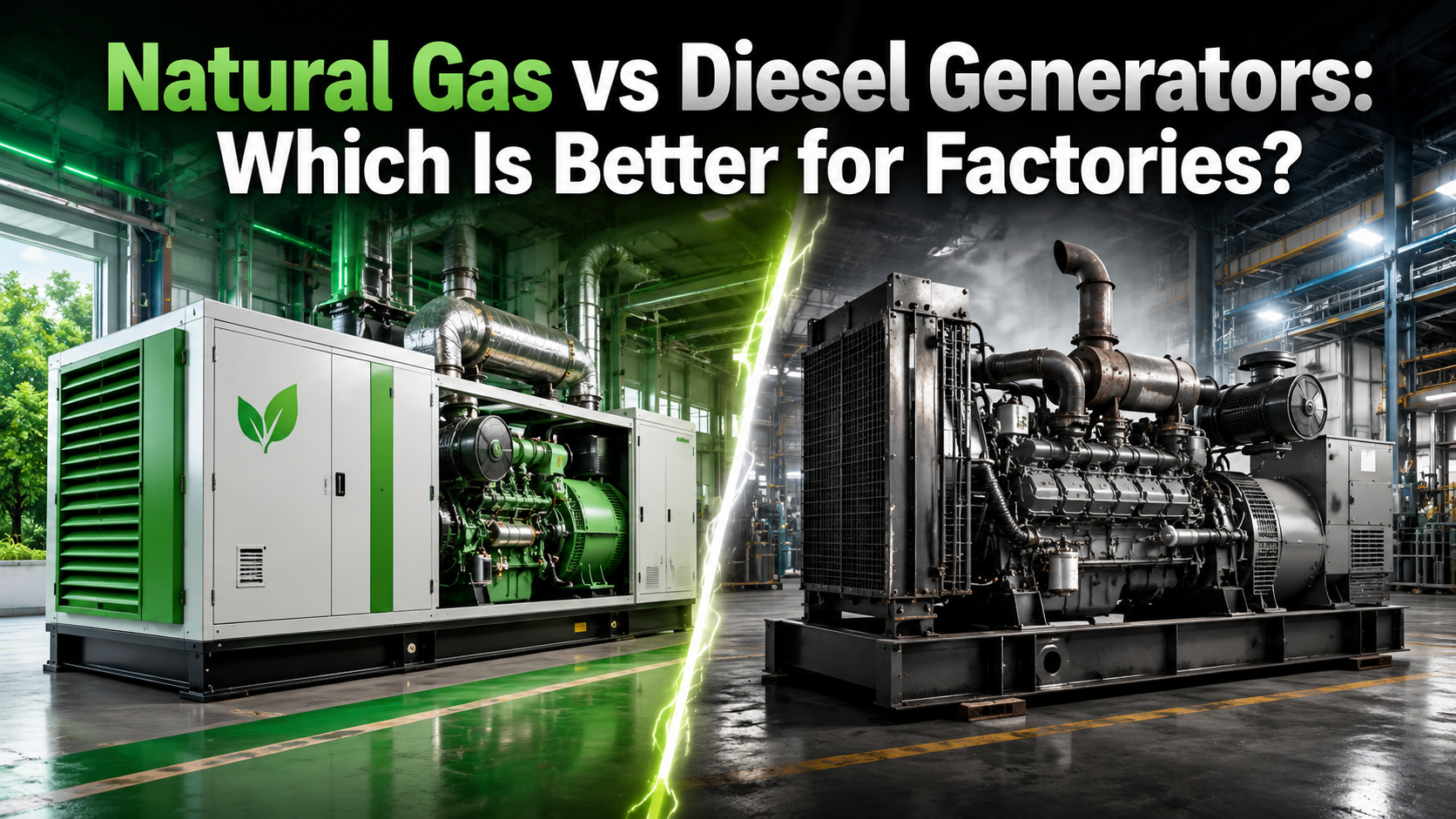
Wenn Sie über Generatoren für Fabriken nachdenken, you must compare a natural Gasgenerator vs diesel generator. In this comparison, you must focus on different features. These include fuel prices, Kraftstoffeffizienz, maintenance scheduling, toxic emissions, und Haltbarkeit. Natural gas-powered generators are famous for clean working and minimal fuel costs. Wohingegen, diesel-backed generators give maximum power results and a fuel-dependent electricity backup supply.
In diesem Artikel von HuaQuan, you will read a detailed comparison between gas and diesel generators. It will help you decide the better type for your factory.
What Is a Natural Gas Generator?
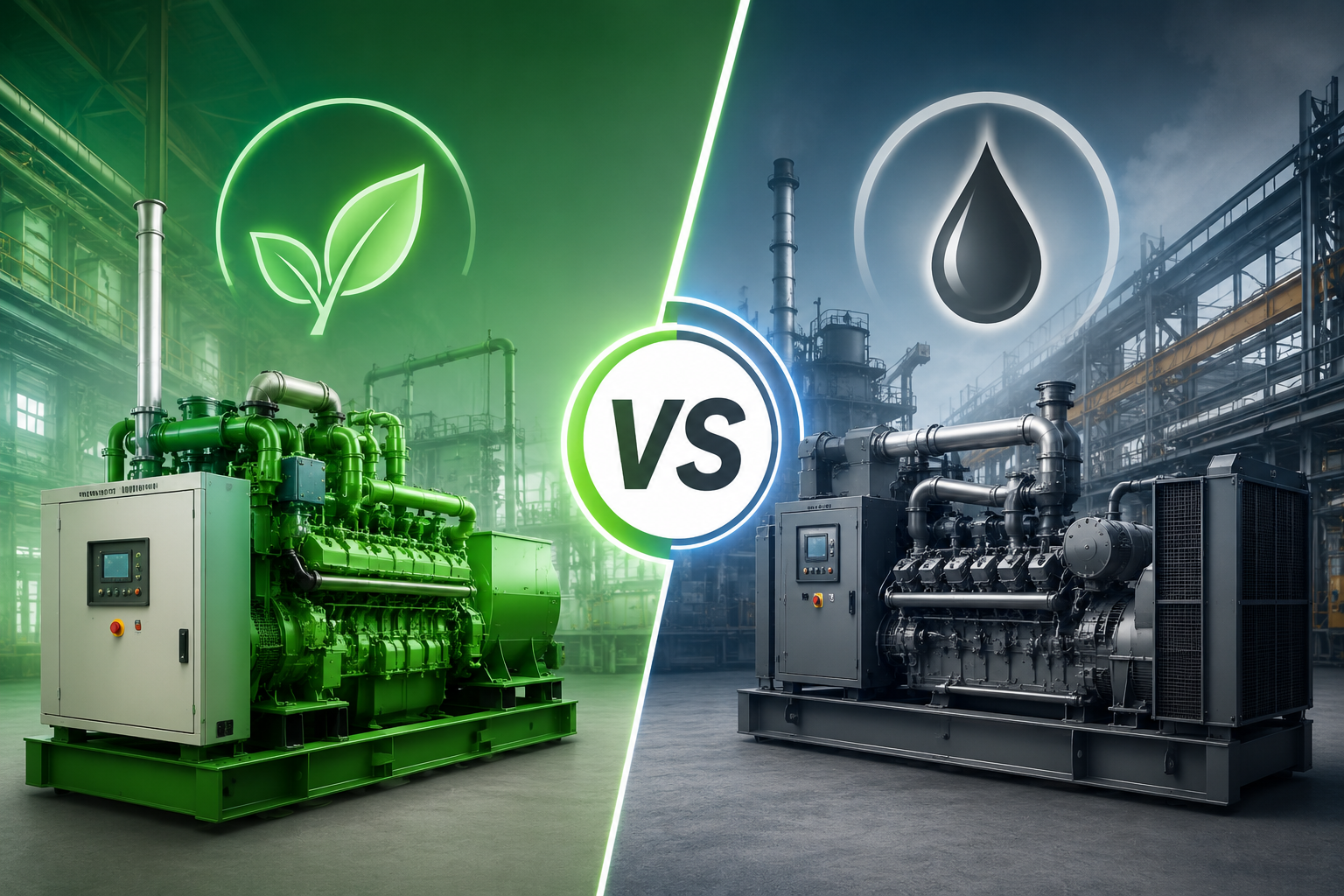
A natural gas generator is a type of industrial power supply system. It utilizes natural gas as a fuel to produce electricity. This generator holds applications in different factories, manufacturing facilities, mills, and commercial power plants.
The plumbers or technicians connect the natural gas-based generators to a gas utility or fuel supply system. It allows the generators to generate power for long, continuous periods without the need for constant refueling. These generators are famous for having cleaner emissions, noise-free working, and cheap fuel pricing.
The majority of industries install natural gas-powered generators because they offer long-term power with less working costing and reduced fuel expenses.
Was ist ein Dieselgenerator??
A diesel-powered generator is a type of power supply system that utilizes diesel to generate electricity with the help of a heat engine. In this combustion engine, the electricity is generated by burning diesel using air in the combustion compartment. This generator holds applications in wide construction sites, Krankenhäuser, major factories, and industrial power plants due to its greater power output and long-term working.
Diesel-powered generators hold special importance as a power backup source. They can start immediately after the main grid’s electricity is powered off. Auch, they handle heavy electrical capacity efficiently. Manufacturers design these generators with the aim of handling rough conditions. You can also use this type of generator in off-site locations where you won’t find any natural gas supply.
Diesel generators demand regular scheduling for proper maintenance and fuel storage tanks. Trotzdem, they are the most preferred power supply system for factories and high-capacity industrial operations.
Natural Gas Generator vs Diesel Generator: Major Differences
Choosing between a natural gas and a diesel generator depends on fuel availability, operating costs, maintenance needs, and factory power requirements. Both generator types offer solid industrial power, but they perform differently in diverse areas.
| Charakteristische Merkmale | Natural Gas-Powered Generator | Diesel-Backed Generator |
| Fuel Costing | Relatively lower and extra stable power | Usually higher and fluctuates during operation |
| Kraftstoffversorgung | Constant municipal supply | Demands on-site fuel storage tanks |
| Emissionen | Cleaner with almost no toxic emissions and environmentally sustainable | Major carbon-based emissions |
| Noise Level Range | Noise-free working | Louder during running time |
| Maintenance Scheduling | Less maintenance requirements | Demands a more frequent maintenance schedule |
| Operational time | Perfect for long-term, continuous operation | Suitable for continuous backup and heavy electrical loads |
| Startup Speed | Usually lower startup velocity | Very fast and high velocity startup |
| Leistungsabgabe | Stable performance with no fluctuations | High heavy-load operation |
| Installation Costing | Requires a gas pipeline system for connection | Smooth installation in far areas |
| Suitable for | Constant industrial power supply without any interruption | Emergency system backup supply |
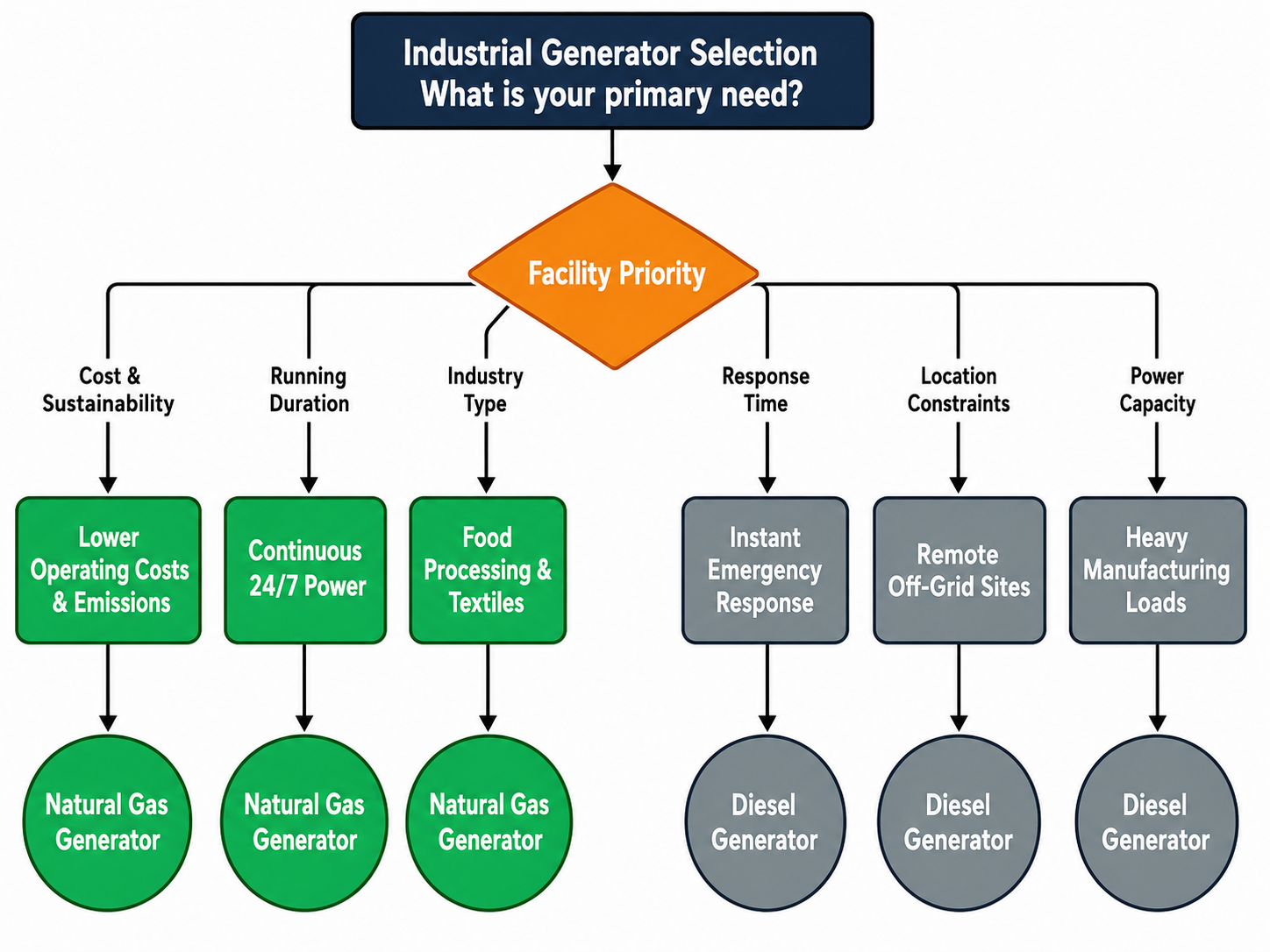
Natural gas-based generators are suitable for those factories that are considering lower operational costs and a clean power supply system. Whereas diesel-powered generators are a top choice for industrial operations that require fast-starting systems with large power output during emergency situations.
Fuel Costing Comparison for Factories
One of the major operational costs in factories is fuel expenses. When you compare a Erdgasgenerator vs. Dieselgenerator, you must consider prices of fuel to manage your long-term operational costs.
As Erdgas is available in bulk in municipal lines, it is affordable and has stable prices. Those factories that utilize natural gas can easily lessen their fuel delivery and storage tank costs. Infolge, natural gas generators become a perfect option for effective cost management in long working hours.
Diesel generators have higher fuel costs. The prices of diesel fluctuate due to constantly changing oil prices. When the prices of fuel increase, the fuel delivery cost also increases. Darüber hinaus, factories store diesel nearby which increases its maintenance requirements. Also, diesel generators are more expensive to operate in the long-term. But they prove to be an excellent solution for a durable power supply system.
The factories that focus on decreasing on-site working costs must consider natural gas-related generators.
Power Efficiency and Performance
Both natural gas and diesel-powered generators provide a continuous power backup supply. But there is a major difference in their work due to different industrial requirements.
Diesel generators are famous for their greater power output and capacity to manage heavy electrical loads. They hold applications in factories, especially those that require high starting surges and instant power supply during emergency conditions.
Natural gas generators are preferred due to stable fuel delivery and efficient power supply. They are applicable for those sites that demand a long-hour backup system. Advanced systems now utilize natural gas more efficiently and produce clean electricity.
Diesel generators hold significant importance for high-capacity industrial sites. They show greater performance during short-term work. Those factories that require long-hour working with fuel efficiency must prefer natural gas generators.
Environmental Impact and Emissions
The environmental policies for factories and industrial sites are becoming highly complex day-by-day. Most businesses consider the generator models according to their emitted substances and their contribution to sustainability.
Natural gas-based generators generate clean electrical power with fewer emissions. These include small ranges of carbon dioxide, Stickoxide, and accumulated toxic matter. Infolge, they become a friendly option for the environment.
Wohingegen, diesel-powered generators release large amounts of emissions. These include smoke, odor, and toxic particles that affect the environment greatly. Modern models have now introduced emissions-regulating technologies that produce less number of pollutants than the natural gas systems.
If you are a factory owner and want to limit the environmental impact of generators, you must prefer natural gas-powered systems for a long-term solution.
Wartungsanforderungen
Maintenance is a significant factor whenever you are selecting the type of generator for your facility. The regular maintenance includes higher operational costing that has a great effect on long-term costing, life of the generator, and the overall value.
Natural gas-related generators require less maintenance scheduling as they burn fuel in a relatively cleaner way. The cleaner oxidation decreases carbon accumulation and other toxic buildup inside the engine. Infolge, it increases the life of the machinery and the scheduling intervals. These generators have smooth working systems with less fuel problems.
Diesel generators demand more maintenance schedules with less intervals. These include oil and fuel changes, air filter replacement, and in-depth system cleaning. The storage silos of diesel also lead to toxic contamination or fuel deterioration if you do not manage the stored fuel properly.
Those factories that demand lower industrial costing and cleaner engine working must opt for natural gas-based generators.
Reliability During Power Breakdowns
The factories need a continuous power system to prevent operational and financial losses during power outages. The industrialists prefer diesel-powered generators for their instant response to emergency situations. They start instantly after the main grid refuses to provide electricity. Auch, the users can continue using diesel as they store it in the facility.
Natural gas generators also lead to long-term performance without any interruption. If there is any issue in gas supply connection, it will interrupt the working of the generators also. Also, the working of this type of generator depends on the gas pipelines that may face issues during natural catastrophic conditions.
Those factories that require backup systems for critical activities prefer diesel generators due to their quick response and independent diesel storage.
Which Generator Is Better for Different Factory Types?
Different industries run by demanding diverse power needs. In diesem Szenario, you have to choose the type of generator carefully.
Manufacturing Power Plants
The manufacturing plants and construction sites prioritize diesel-powered generators as they can handle high-capacity electrical load more efficiently.
Food Processing Factories
Natural gas-based generators have become a first choice for food production and processing industries as they operate with less toxic emissions and support backup systems for long hours.
Textile Industries
Natural gas-powered generators suit the textile factories as they require less fuel costing and efficient working.
Continuous Industrial Operations
Those factories that require power supply 24/7 go for natural gas systems due to their stable supply and less operational finances.
Remote Industrial Sites
The remote sites that demand power supply must utilize diesel-powered systems as these sites might not have natural gas pipeline connections.
When Should Factories Choose Natural Gas-Based Generators?
The factories should adopt natural gas systems when they require any of the following:
- Decreased long-term fuel and operational costs
- Clean industrial solutions with fewer emissions
- Constant electricity generation
- Noise-free generator’s operation
- Access to natural gas pipeline utilities
Zusamenfassend, natural gas systems are suitable for those industries that focus on efficient and sustainable systems.
When Should Factories Choose Diesel-Powered Generators?
Diesel-backed generators are a popular selection for those factories that need any of the following:
- Instant backup power in emergency situations
- Heavy-load performance
- Continuous operation in remote sites
- On-site fuel storage tanks
- Greater short-term power results
Heute, they remain a strong recommendation for industrial power supply systems.
Cost Analysis: Initial Investment vs Long-Term Savings
The total price of a generator includes equipment, Installation, fuel utilization, and maintenance schedules.
Natural gas-based generators have higher installation prices as the technicians have to connect the generator to the underground gas pipelines. Aber, they have long-term lower fuel costs and less maintenance expenses.
Diesel generators are easy to use and require less complexity to install. But the higher diesel costs and frequently required maintenance services lead to greater operational costs over time.
The factories should consider their own needs and site requirements to decide on the type of generator in terms of costs.
Schlussbemerkung
Selecting between a Erdgasgenerator vs. Dieselgenerator depends on the factory’s operational requirements, Kraftstoffeffizienz, fuel accessibility, financial budget, and power demands.
Natural gas-based generators employ less fuel, fewer working toxins, are noise-free in operation, and have greater efficiency for long-term industrial use. Im Gegensatz, diesel generators provide higher power output, a strong response in emergency conditions, and continuous working in tough environments.
Those factories that want long-term savings and sustainable systems should prefer natural gas-based systems. While those industries that demand higher electrical load should prefer diesel-based generators.
Before investing a significant amount of money in an industrial-specific generator, factory owners should consider features, wie zum Beispiel Strombedarf, operational specifications, and durable, sustainable goals to select the most appropriate type of generator. Kontaktieren Sie uns Heute
FAQs
Which type of generator (natural gas or diesel) requires less operational costs?
Natural gas-powered generators demand less working costs because their fuel is available in excess in municipal pipelines.
Are natural gas-based generators more sustainable?
Ja, natural gas-related generators generate fewer toxic emissions and have less hazardous environmental effects.
Which generator is a good choice for 24/7 factory backup power?
Natural gas-based generators are more appropriate for a constant power supply due to cheaper fuel costs and toxic-free working.
Why are diesel generators more preferred for power supply systems?
Diesel-backed generators start instantly and result in a greater power output during emergency conditions. Due to this major reason, they become a top choice.