Einführung
Have you faced sudden power outages in your commercial buildings or during business hours? A backup power supply is not a luxury but a necessity during load shedding and affects the whole business structure. Do you know the solution? A standby generator of the right size is the ultimate powerhouse.
Today we will dive deep into the selection of a standby generator and understand several tips to choose a generator. Let’s know!
What is a Standby Generator?
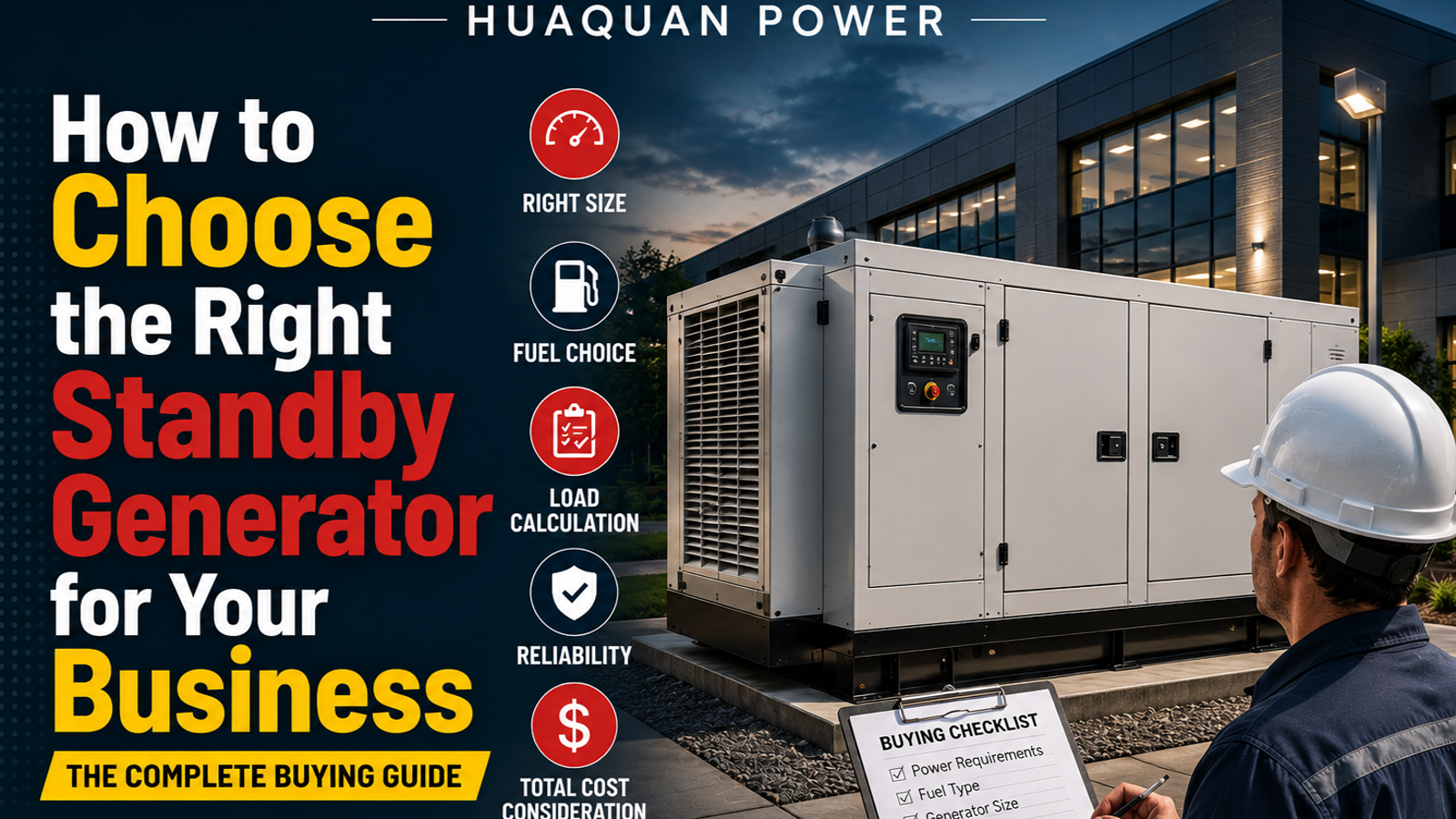
A standby generator is a permanent installation during power outages that provides sufficient energy supply during the load shedding period.
It often comes with an Automatischer Transferschalter and enables the seamless transfer between the grid and generator system in case of a power outage.
Tipp #1: Measure your Power Requirements
The very first step is to measure the overall power load you have on your system. Many buyers make a mistake here by calculating and adding the overall power load.
It is a wrong technique and requires several right options.
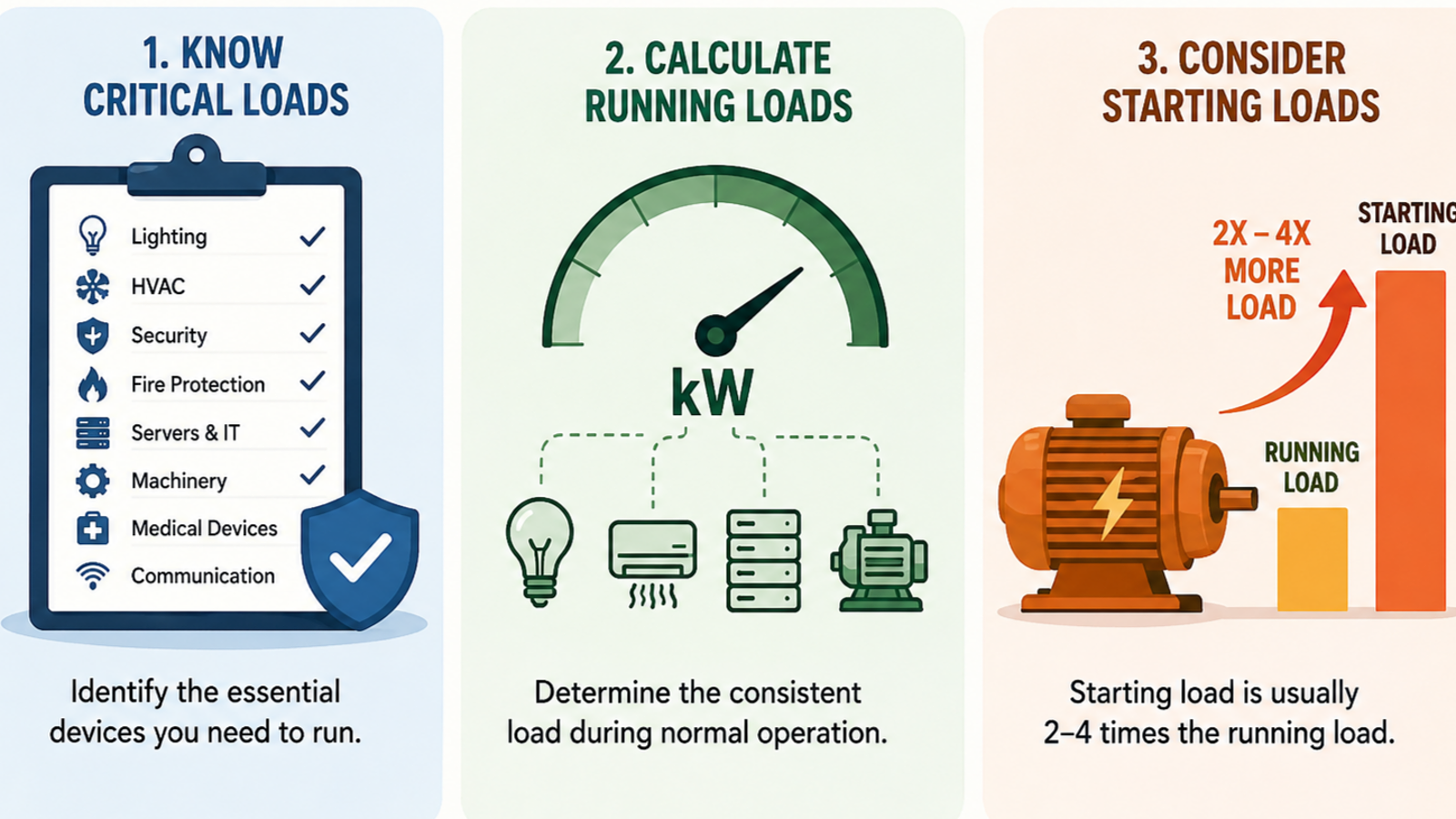
Know Critical Loads
Critical load includes all the necessary devices you want to operate. You might have ten to twenty devices in your system but want to operate only ten during the power outages.
The power load required to operate these ten devices is the critical load. Here is the list of critical load devices.
- Beleuchtungssysteme
- HVAC equipment
- Sicherheitssysteme
- Fire protection systems
- Elevators
- Servers and IT infrastructure
- Production machinery
- Refrigeration equipment
- Medical devices
- Communication systems
Calculate Running Loads
Running Load is the consistent load of the devices. It is calculated during the normal operations of your equipment and includes the following power loads for various devices.
| Ausrüstung | Laufleistung (kW) |
| Beleuchtung | 15 |
| HVAC | 40 |
| Server | 10 |
| Security Systems | 5 |
| Manufacturing Equipment | 80 |
| Kühlung | 20 |
| Gesamt | 170 kW |
Consider Starting Loads
When you try to run a device, there is a need for the starting load. It is often two to four times more load than the running load.
Here are a few examples.
| Ausrüstung | Lauflast | Startladung |
| Luftkompressor | 20 kW | 60 kW |
| Chiller | 30 kW | 90 kW |
| Large Motor | 15 kW | 45 kW |
| Wasserpumpe | 10 kW | 30 kW |
Tipp #2: Consider Whole Facility or Essential Backup Supply
There are two backup strategies, and you have to choose between them. Dazu gehören:
Option 1: Whole-Building Backup
Whole building backup offers the power supply to the whole system. Zum Beispiel, if you want to run all the equipment on the generator in your hospital, it is the whole building backup.
It has a few advantages.
- You have sufficient energy available to power your devices.
- There is no power disruption.
- With ATS, seamless energy switching enables easier supply.
Option 2: Essential Load Backup
In essential load backup, you are operating only essential devices. It also has a few advantages.
- The cost of energy production decreases compared to the whole facility.
- There is a low investment required as you buy smaller Generatoren and save installation costs.
Tipp #3: Understand Generator Capacity
If you have calculated the required load and want to buy a generator, consider factors like:
- Add a safety margin when buying a generator.
- Go for higher capacity than required based on your future expansion and plans.
Beispiel:
Suppose you have calculated the overall capacity needs of 200kW. Instead of buying 200kW, you should consider a 230-250kW system for your future expansion or current power system.
Tipp #4: Select Fuel Type
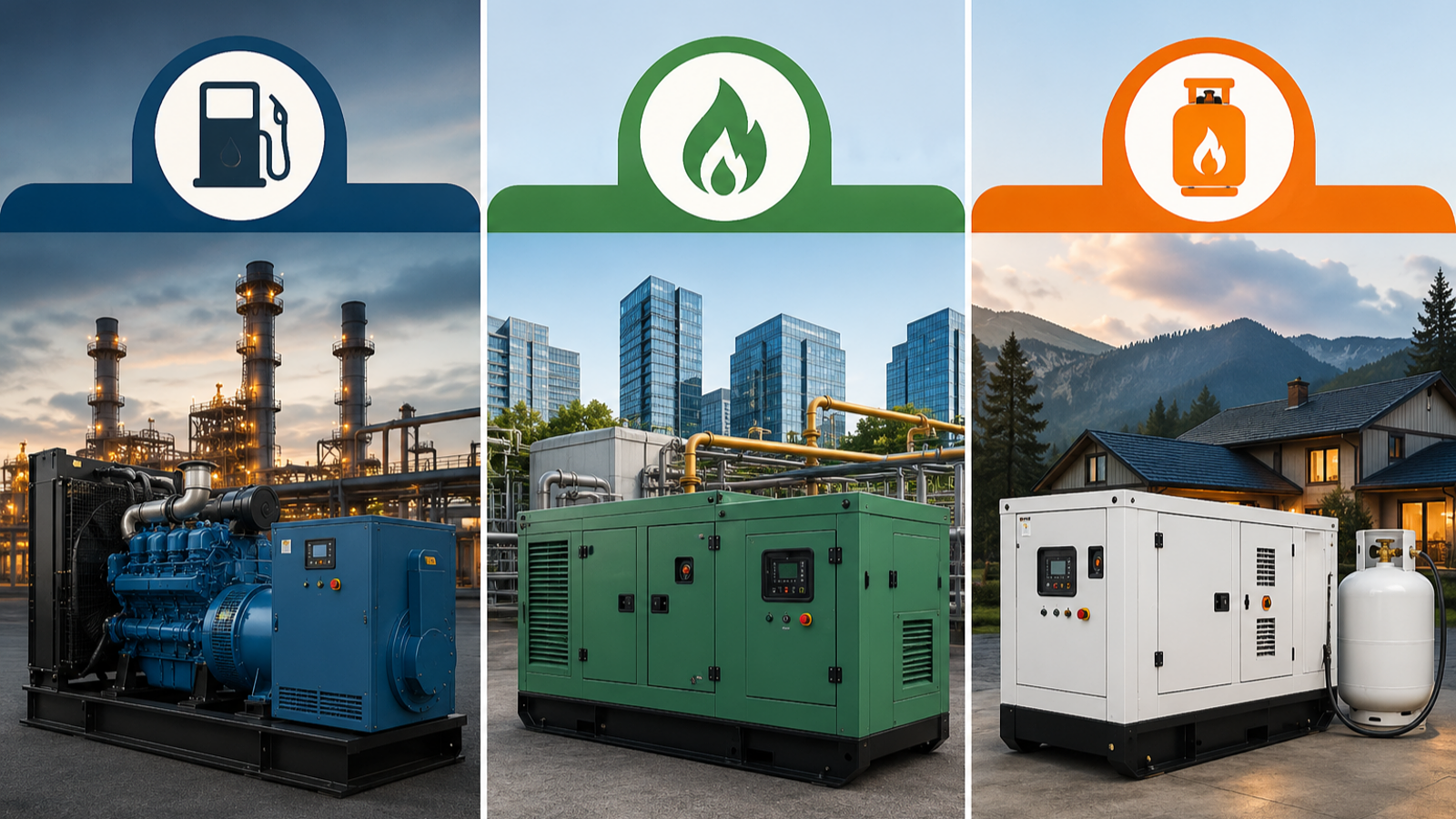
Power generators have several types and use different types of fuels based on their system. We have evaluated three fundamental types here.
Dieselgenerator
Diesel generators are one of the most used and powerful systems for your backup supply. It offers seamless energy and is useful for the following facilities.
- Manufacturing facilities
- Krankenhäuser
- Rechenzentren
- Large commercial buildings
They offer a wide range of benefits, such as high reliability, excellent fuel efficiency, and long service life.
Natürlich Gasgenerator
Compared to diesel generators, there is another type that uses natural gas. It is suitable for the following applications.
- Urban commercial facilities
- Bürogebäude
- Educational institutions
Natural gas generators help with lower emissions, continuous power supply, and a more economical system.
Propane Generator
Propane generators are suitable when there is no gas available. They offer better fuel combustion and long life to your power backup supply system.
Tipp #5: Understand Site Conditions
Where are you going to install the generators? Local installation conditions matter a lot, as the space might be limited or there can be consequences of environmental conditions. Let’s take an overview.
Available Installation Space
For easy installation and accessibility, you must have sufficient space available for your generators. There should be plenty of space for:
- Generator set
- Kraftstofflagerung
- Maintenance access
- Exhaust routing
- Cooling airflow
Make sure your technicians can easily access the installation space.
Noise Restrictions
If your business is located near buildings, the building codes might apply to you. Most authorities require noise reduction enclosures to avoid excessive noise pollution.
Umgebungsbedingungen
Environmental Conditions can aggressively impact the performance of your generators.
Here is the list of environmental factors affecting the generator performance and overall conditions.
- Hohe Temperaturen
- Hohe Luftfeuchtigkeit
- Dust exposure
- Coastal corrosion
- Große Höhe
You should choose the generators based on the overall environmental compatibility.
Tipp #6: Evaluate Standby Power Ratings
Not all generators have the same power and performance. You should check their peak and continuous load performance. There are three basic types to know.
Standby rating
Standby rating offers variable load support and helps in emergency conditions. You should select it as your emergency generator for the selected operations.
Prime rating
Prime rating is for primary generator conditions. Zum Beispiel, you are working on a construction site and don’t have access to a power supply. You can use the generators as your primary source of power.
Continuous rating
Continuous rating is the constant load support of the generators for several hours or a specified period of time. It offers good support but is not ideal for the standby generators.
Tipp #7: Choose Automated Transfer Switch
For the seamless energy supply and transfer of the energy from the grid to the generators, you need special switches called the automated transfer switches(ATS).
They enable easy generator functionality. You must consider the following factors when choosing ATS for your standby generators.
- Response time should be faster and automatic.
- ATS rating must match the generator capacity and provide flawless performance.
Tipp #8: Determine Required Runtime
Runtime is sometimes a crucial factor. You have to choose whether you need longer support, such as the whole day or a few hours.
We have added a few devices with their required runtime.
For longer runtimes, you should consider:
- Larger fuel tanks for longer operations
- Fuel management systems with efficient fuel consumption and results.
- Refueling plans should be in place if your standby generator runs out of fuel suddenly.
| Business Type | Typical Runtime Goal |
| Retail Store | 8–24 Hours |
| Office Building | 12–24 Hours |
| Hotel | 24–72 Hours |
| Krankenhaus | 48–96 Hours |
| Manufacturing Plant | 24–72 Hours |
| Rechenzentrum | 48+ Std |
Tipp #9: Define Local Codes
Do you want a safe installation of your generators? Follow the local rules and regulations for smooth installation.
In Betracht ziehen:
- Building permits
- Fire codes
- Environmental regulations
- Noise ordinances
- Fuel storage requirements
- Electrical standards
For installation purposes and to understand the rules, you might consult experts and local authorities.
Tipp #10: Evaluate Generator Enclosures
Generator Enclosures act as a protective material in outdoor spaces. They can prolong the life of generators and even reduce the noise depending on their types. There are three most common types of generator enclosures.
Open-Type
Such enclosures are cheaper and suitable for indoor installation rather than outdoor conditions.
They are best for:
- Generator rooms
- Mechanical spaces
WeatherProof
In outdoor conditions, weather fluctuations are common. Weatherproof generator enclosures ensure stable performance in outdoor conditions and are suitable for the following conditions.
- Commercial properties
- Lagerhäuser
- Industrieanlagen
Sound Attenuated
Sound-attenuated enclosures offer dual features. They can protect you from the outdoor environment while keeping the sound levels very low. For buildings and areas with strict rules for noise, these generators are the best options. Zum Beispiel:
- Urban environments
- Residential-adjacent businesses
- Hotels and offices
Tipp #11: Assess Manufacturer Reputation and Support
A standby generator should perform for the long run, as you plan to buy once in a decade. Dafür, manufacturers’ reputation matters a lot.
You should choose those manufacturers that offer:
- Reliable generators with clear-cut specifications and long-term support.
- Know the after-sales support and warranty coverage of your products.
- Check prices and quality. Compare multiple suppliers for better choices.
Tipp #12: Examine Control and Monitoring Features
Generators often come with advanced control systems. You should examine and know the monitoring features for efficient testing and results.
Here are a few things to consider:
- Fernüberwachung
- Mobile alerts
- Automatic testing
- Fault diagnostics
- Fuel monitoring
- Lastmanagement
Tipp #13: Future Expansion
Are you going to expand your generators in the near future? Not necessarily, but most businesses often upgrade their generator systems.
For future expansion, you should consider a few tips.
- Buy multiple smaller generators rather than a single larger one.
- Keep an additional capacity than required to meet the needs with expanding business tools.
Tipp #14: Consider Costs and Budget
You might have tight hands on budget and go for an affordable standby generator solution. Jedoch, you should not sacrifice the quality for the sake of budget.
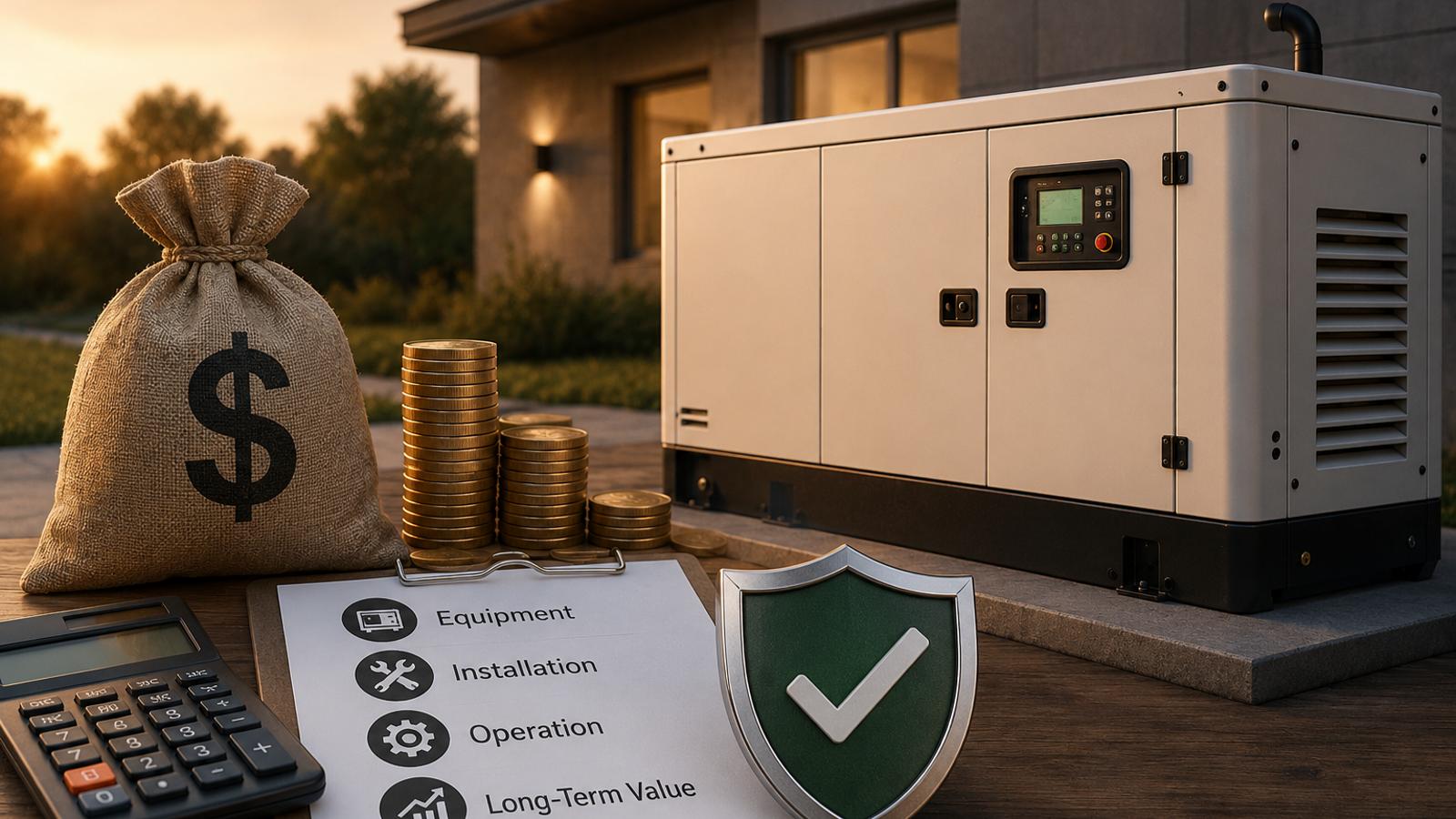
There are a few common costs involved with the standby generator installation.
- Equipment costs
- Installation costs, especially if you hire the experts to install your generators
- Operational costs
- Long-term costs
Choose those generators that offer long-term performance but at a cost-effective price.
Tipp #15: Work with Professionals
Generator installation and management is more technical. daher, it is wise to work with professionals offering easier support for your generators. Here are a few entities to involve in your generator projects.
- Electrical engineers
- Generator distributors
- Installation contractors
- Fuel system specialists
- Compliance consultants
FAQs
- What size standby generator does my business need?
It depends on your business needs. Technisch, you should measure the power required, starting, and running loads of your equipment before finalizing the right size of your generator.
- Should I prefer a natural gas or diesel standby generator?
The selection depends on the availability of natural gas. If you live and install in urban areas with gas infrastructure, you should choose natural gas. Industrial sectors often consider diesel generators for their operations.
- What factors affect generator installation costs?
There are several factors that can impact the generator installation costs. These include site preparation, electrical work, transfer switch installation, Kraftstoffsysteme, permits, enclosures, concrete foundations, and compliance upgrades.
- Is it better to power the entire facility or only critical loads?
This is your choice whether you want the generator only for the critical loads or the entire facility. Jedoch, entire facility generators can work for the whole setup rather than limited loads.
- How much reserve capacity should a standby generator have?
Calculate the required power load and keep an additional 10-25% of your maximum power required. It helps with the right standby generator selection and provides better coverage of your power requirements in the event of an outage.
- How long can a standby generator run continuously?
There is no definite runtime. A few generators can work for several hours with adequate fuel supply, tank size, Lastniveau, and maintenance schedules. You should consider these factors for a better runtime.
- Do I need an automatic transfer switch (ATS)?
If you want automated switching of the energy from the grid to the generator during power outages, then an automatic transfer switch is a good idea. It provides a seamless power supply and better automation.
Abschluss
Whenever choosing a standby generator, you must calculate your power requirements. Ask yourself a few questions:
- What devices are you going to operate?
- Sum up the power of all the devices.
- Set a safety margin of 10-25%
Choose only top-notch generator solutions from the top suppliers.
Are you looking for reliable generator suppliers? Kontakt Huaquan-Kraft. We have a variety of standby generators for different events and industrial sectors. Our high-efficiency solutions save your money and meet your business needs. Choose from our selection right away!
⚡ Entdecken Sie verwandte Lösungen
- 🏭 500kW-Dieselgenerator
- 🏭 1000kW-Dieselgenerator
- 🏭 500kW YC-Dieselgenerator
- 🔧 KMS (Cummins/Doosan) Serie
- 📋 Dieselgeneratorsätze
- 📋 Bestellvorgang – So kaufen Sie
- 📋 Kontaktieren Sie uns
💡 Benötigen Sie eine maßgeschneiderte Lösung?? Kontaktieren Sie unser Engineering-Team für projektspezifische Empfehlungen.