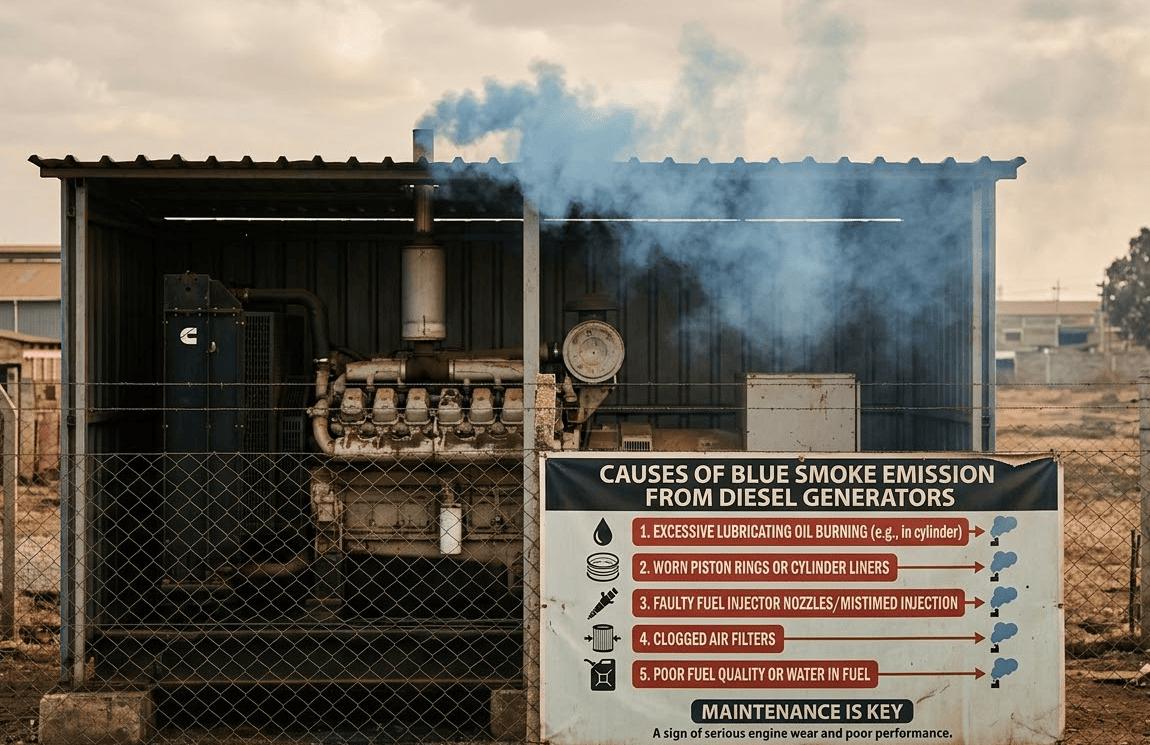
Imperfect diesel-fuel firing results in black smoke from diesel generators rather than the expected blue smoke emission. It is a danger sign of the diesel generator’s uneven fuel firing and low performance. The presence of soot around diesel generators in manufacturing, business firms, large machine users, and building companies suggests fuel wastage and associated losses.
1. Black Smoke Emission from Diesel Generators Description
Engine oil burning results in black smoke emissions. Using aged parts in the generator contributes to black smoke emissions. Apart from minimising engine output, diesel consumption increases, and wear and tear on parts increase. Prolonged black smoke emission harms the environment and incur regulatory surcharges.
2. Reasons for Black Smoke Emission from Diesel Generators
An essential reason for blue smoke emission from diesel generators is a mismatch between the diesel input and the oxygen-rich air volume. Another reason is engine oil burning due to seepage into the chamber. Insufficient firing occurs when excess fuel enters the firing chamber without sufficient oxygen. Blocked air filters, turbocharger issues, defective injectors, soot deposits, and incorrect injection intervals are factors that cause black smoke emissions from diesel generators.
2.1 Prolonged Idling Effects
Extended diesel generator operation without load results in low heat levels, and underloading decreases firing completeness. Operating diesel generators at low heat levels and keeping them in standby mode both lead to incomplete fuel combustion. Incomplete combustion and engine oil burning result in the release of black smoke. Prolonged standby mode in diesel generators results in the formation of soot in the spray unit and discharge units.
2.2 Low Ambient Temperatures
Decreased heat levels around a diesel generator running affect optimal diesel combustion. Low heat levels interfere with firing cylinder efficiency, leading to poor diesel combustion. Low spray formation at low heat levels results in inadequate firing, leading to black smoke in diesel generators. Users in low-heat-level weather conditions must use cold-flow grade diesel and install engine block heaters to maintain conducive heat levels for optimal operations with blue exhaust smoke.
2.3 Incomplete Combustion
Inadequate diesel combustion and engine oil burning are the leading causes of blue smoke emission from diesel generators. It happens when the volume ratio of diesel and oxygen in the firing unit is uneven. Inadequate combustion supports air, overflow of diesel into the firing chamber, diesel overspray, or interference with complete diesel burning.
2.4 Worn Piston Rings
Aged piston rings reduce firing force in the firing unit, destabilizing flame initiation. Reduced pressurization prevents the fuel from igniting properly, leading to inadequate firing and the release of blue smoke emission in diesel generators. Worn-out rings increase the likelihood of engine oil burning in the firing unit, promoting the formation of carbon particles and further engine deterioration.
2.5 Carbon Buildup
Soot accumulation or carbon build-up in the firing units, injectors, and emission units hinders oxygen flow and interferes with diesel injection. Soot accumulation occurs slowly over time, particularly if the diesel generator frequently operates under load or has inconsistent service practices.
2.6 Damaged Intercooler
An intercooler defect or leakage and low oxygen intensity minimize the oxygen volume required for sufficient firing. Reduced oxygen levels and engine oil burning cause reduced diesel combustion and increased black smoke emissions in diesel generators. In addition, loose points, cracks, and blocked cooling fans affect the proper functioning of the cooling unit.
Routine checks of tubes, clamps, and cooling points restore super-oxygen flow to the combustion unit. Fixing or replacing defective intercooler unit parts restores ideal oxygen flow, enhances firing efficiency, reduces carbon residue formation, and promotes blue exhaust smoke emission during full-load operation.
2.7 Intake Leaks
Leaking at oxygen intake points interferes with standardised oxygen volumes needed for complete firing. Tube seepage, channels, and stoppers allow excess oxygen inflow or minimize inflow tension, destabilizing oxygen-diesel ratios. The destabilization leads to inadequate firing and emission of black smoke in diesel generators. Also, dust and debris pass through defective inlet points, accelerating engine aging.
2.8 Clogged Air Filters
Blocked air sieves control the volume of high-quality oxygen entering the diesel generator, minimizing the required air for perfect firing. Blocked air sieves reduce the purity, pressure, and volume of oxygen flow into the firing chamber. Low oxygen delivery results in black smoke emissions from diesel generators.
2.9 High Injection Pressure
Too much spray force can disrupt the diesel injection sequence in the firing unit. Even though sufficient fuel force favours optimal firing, excessive force causes erratic spreading and confined diesel overflow. Excess diesel flow into the chamber leads to incomplete combustion and the accumulation of black smoke.
2.10 Incorrect Injection Timing
Injection timing determines when fuel enters the combustion chamber relative to piston position—spraying diesel too early or too late results in incomplete combustion. Late spraying of diesel results in black smoke emissions from diesel generators. Timing miscalculations arise from poor servicing practices, aged timing gogs, and faulty detectors.
2.11 Clogged Injectors
Blocked injection units stop complete diesel burning, interrupt the diesel dispensing sequence required for complete firing, and can cause engine oil to burn. Residue from poor-quality diesel, impurities, and soot can clog dispensation tubes. Uneven diesel spraying and imperfect firing cause black discharges from diesel generators.
2.12 Sudden Load Changes
Sudden load changes call for a quick increase in fuel delivery to the engine, equal to the increase in power demand. Abrupt load variations demand a sharp rise in diesel flow into the engine to match a sudden increase in power requirement. At this moment, the diesel delivery is likely to surpass the airflow, resulting in inadequate firing and brief black smoke spikes.
2.13 Engine Overloading
An engine’s excess loading occurs when a diesel generator strains to deliver a load beyond its installed delivery rating. The diesel unit sprays extra fuel, trying to satisfy the demand without the corresponding oxygen volume for full firing. Increased load increases engine speed, which causes engine oil burning.
2.14 Low Cetane Number
To ensure blue exhaust smoke with peak performance of diesel generators, manufacturers provide recommended cetane number ratings to guide users on the diesel quality best suited to their environments.
Users must rigorously evaluate diesel quality and procure it from dealers with integrity. Diesel improvers, depending on the region’s environmental conditions, help improve ignition and minimise black smoke emissions from diesel generators.
2.15 Fuel Contamination
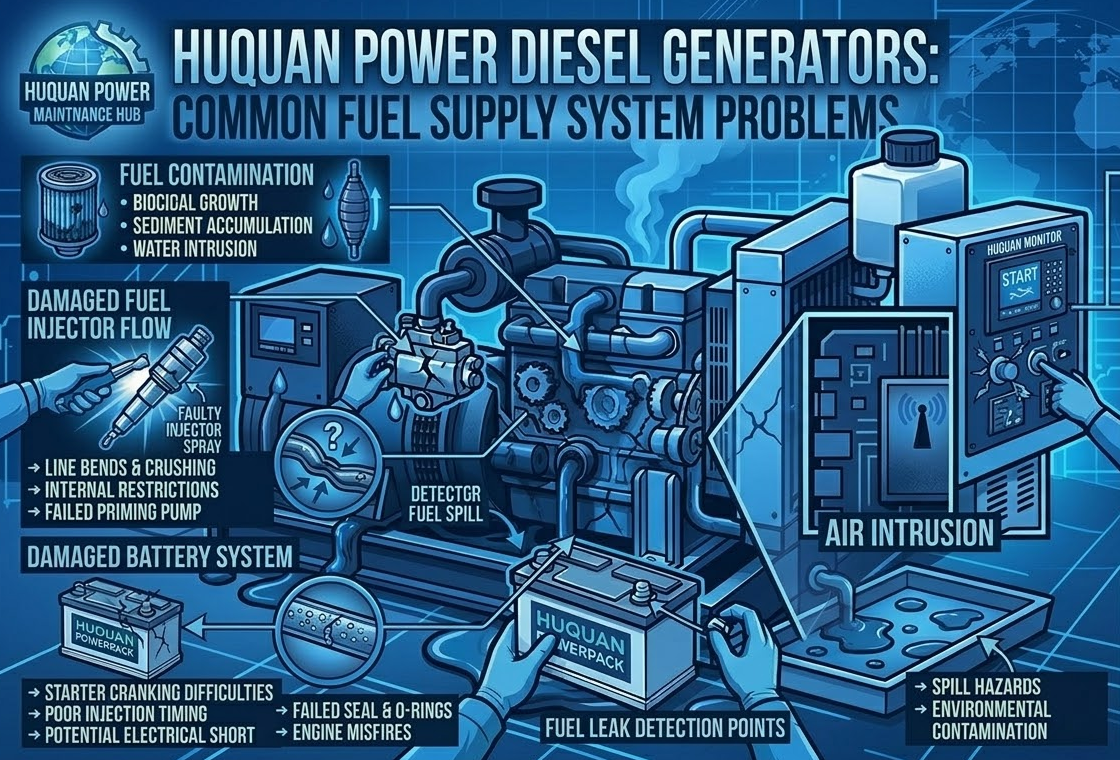
Diesel integrity can be compromised when oil, debris, water, rust, bacteria, and fungi enter the surrounding area, hindering complete firing. These elements block filters and corrode fuel tanks. Oil leaks into fuel channels, causing engine oil burning. Contaminants also cause injector malfunctions, poor combustion, rough starting, and power losses.
These factors eventually lead to incomplete burning and black smoke emission from diesel generators. Scheduling diesel testing ensures standards and minimizes defects in parts. A standard storage environment helps Business and manufacturing users to avoid diesel contamination.
2.16 High Sulfur Fuel
Diesel contains sulphur elements. High sulphur content in diesel poses significant environmental harm. Similarly, it is a health risk to staff and neighbours. Increased generator wear and tear, spray pump blockages, high servicing costs, and output misses. When using high-sulfur diesel, generator durability and sustained blue exhaust smoke become a dream.
2.17 Turbocharger Failure
Turbochargers are highly important for achieving sustainable diesel generator efficiency, reducing inadequate combustion, and achieving blue exhaust smoke. Turbochargers enhance oxygen delivery for complete firing. They therefore minimise incomplete combustion and black smoke emissions from diesel generators. Engine noise, abnormal diesel consumption, and reduced performance are among the risks of turbocharger failure.
Reasons for turbocharger failures include faulty sleeves, dust and dirt, poor oiling, and delayed routine servicing. Scheduled inspections of pressure units, grease systems, and ventilation systems reduce turbocharger failures and engine oil burning. Routine servicing of oxygen intake networks and replacement of defective parts help in complete firing and a stable power supply.
2.18 Excess Fuel Injection
Excess fuel injection results from defective detectors, faulty digital devices, an aging spray pump, and improper adjustments.
Similarly, excess diesel filling can strain the engine. Thorough examination and regular adjustments of fuel units are essential for sustaining the normal functioning of spray units. Rectifying surplus diesel flow restores a normal diesel-oxygen balance, enhancing performance and minimising soot formation for users in the manufacturing and construction sectors. It also promotes blue exhaust smoke emissions.
3. Repairs for Black Smoke Emission from Diesel Generators
The maintenance crew must check possible engine oil burning, the oxygen sleeves, inlet vents, diesel spray units, and turbocharger units. Substituting or cleaning of blocked sieves, fixing seeps, adjusting spray unit ratings, and eliminating soot revitalizes the performance of diesel generators. The physical aging of parts or units, such as piston rings or fuel sprays, requires immediate replacement.
3.1 Operational Best Practices
Observing and maintaining set working protocols is an essential step towards sustaining blue exhaust smoke emissions from diesel generators. To realize sustained complete diesel firing, prevent long idling incidents, keep within ideal heat levels, and comply with approved loading limits. Practice phased loading instead of abrupt load increases.
3.2 Exhaust After-Treatment
Exhaust after-treatment systems are helpful. They detect any engine oil burning, reduce the formation and discharge of black smoke from diesel generators. Appropriate recycling systems are essential for avoiding sieve clogging and sustained production. Routine examination and washing away of after-treatment elements enhances high performance.
3.3 Engine Technology Solutions
Advanced engine systems support maximum diesel firing and promote blue exhaust smoke. Digital diesel spray units precisely control spray timing and volume, improving the oxygen-to-diesel ratio. Increased pressure single-pipe units support clean-diesel firing. Advanced engine control units (ECUs) continuously monitor performance limits and adjust effectiveness in real time.
3.4 Fuel Quality Improvement
The diesel grade significantly affects firing effectiveness and the achievement of blue exhaust smoke. Clean diesel burns quickly and gives complete combustion. Using top-grade diesel sieves and recommended water separators keeps the system clean.
3.5 Proper Generator Sizing
Choosing the right generator size is vital to avoid incomplete diesel combustion, engine oil burning, and related exhaust emission challenges. Given a user’s need, a low-capacity diesel generator will remain running in excess-load mode. The situation results in excess diesel spraying, incomplete firing, and black smoke emissions, thereby reducing cost-effectiveness.
4. Troubleshooting Black Smoke Emission from Diesel Generators
Assessing load situations to confirm that the generator is not on excess load or running at low load. Check the diesel purity and ensure there are no impurities, dirt, or incorrect calibrations. Examining the condition of emissions at ignition and loading intervals gives essential guidance on the next remedial steps.
4.1 Blue Smoke Emission Advanced Monitoring Techs
Modern checking systems increase the chances of detecting trouble areas in diesel firing. Electronic units and sensors check compliance to set limits for diesel spray force, desired air pressure, heat level of emissions, oil leaks, and loading, collecting data immediately.
4.2 Blue Smoke Emission Opacity Testing
Smoke opacity testing assesses the heaviness of exhaust releases to analyse soot density. Expert devices review emission affects lighting using documented facts from records. Regulatory organisations prefer this examination approach to check compliance levels and to inform servicing action.
4.3 Visual Inspection Methods
Physical checking is a hands-on initial step in analysing black smoke releases from diesel generators. Technicians must see exhaust smoke color at ignition, during slow speed, and when the load varies..
4.4 Filter Smoke Number (FSN)
Filter Smoke Number (FSN) checking provides an exact way to quantify the contents of emissions. At testing time, emissions pass through special filter material that retains particles in blue smoke emission. The darkness of particles trapped is measured to estimate smoke intensity.
5. Black Smoke Emission from Diesel Generators Impacts
Nature deserves care for our good health, and operating with blue exhaust smoke emissions is ideal. Limiting blue smoke emission from diesel generators is a responsibility worth considering by all users. Soot readily mixes with elements in our environment, including water, air, and even food.

5.1 Water Contamination
Achieving blue exhaust smoke emissions involves minimizing soot and black smoke from diesel generators. It helps avoid water contamination. Adhering to health regulations in our regions is paramount. Standard emission management, routine servicing, and accountable generator operation minimize smoke release.
5.2 Air Pollution
Black smoke emissions from diesel generators contribute a lot to water pollution. Targeting sustainable blue smoke emission can minimize water pollution. Every operator must make an effort to maintain air quality for a sustainable, healthy life.
5.3 Occupational Health Risk
Occupational health risks are potential hazards that workers may encounter in their work environments. It refers to all diseases affecting or related to the breathing system.
5.4 Cardiovascular Diseases
These diseases include heart attack, coronary artery disease, stroke, and arthritis. Soot residue found in black smoke emissions from diesel generators can cause cardiovascular illnesses in people’s health. Ensuring consistent blue exhaust smoke emissions from diesel generators reduces these health risks.
6. Black Smoke Emission from Diesel Generators Conclusion
Blocked air sieves, diesel spray defects, engine oil burning, excess loading, and low diesel quality are among the many factors contributing to excessive soot formation. Immediate identification, routine servicing, and management practices are essential to resume optimal diesel firing.
7. Buy Without Black Smoke Emission from Diesel Generators Huaquan Power!
Are you in need of reliable, high-output diesel generators with will blue smoke fail emissions? Huaquan Power guarantees you truck emissions image blue truck smoke. Get your advanced, stable power system today and experience efficient, compliant, cost-effective, and durable diesel generators engineered for reliability.