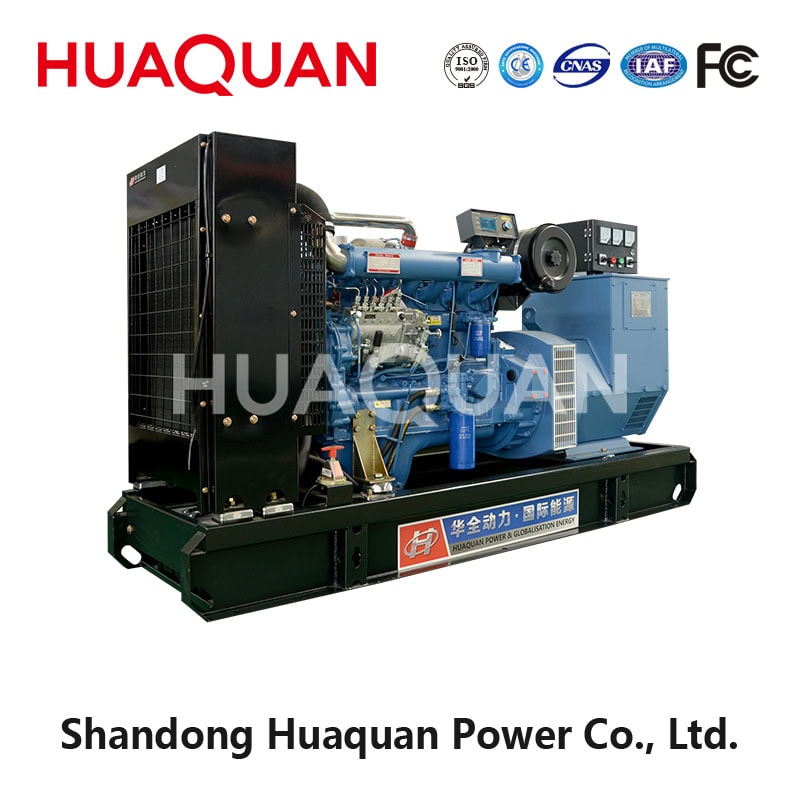
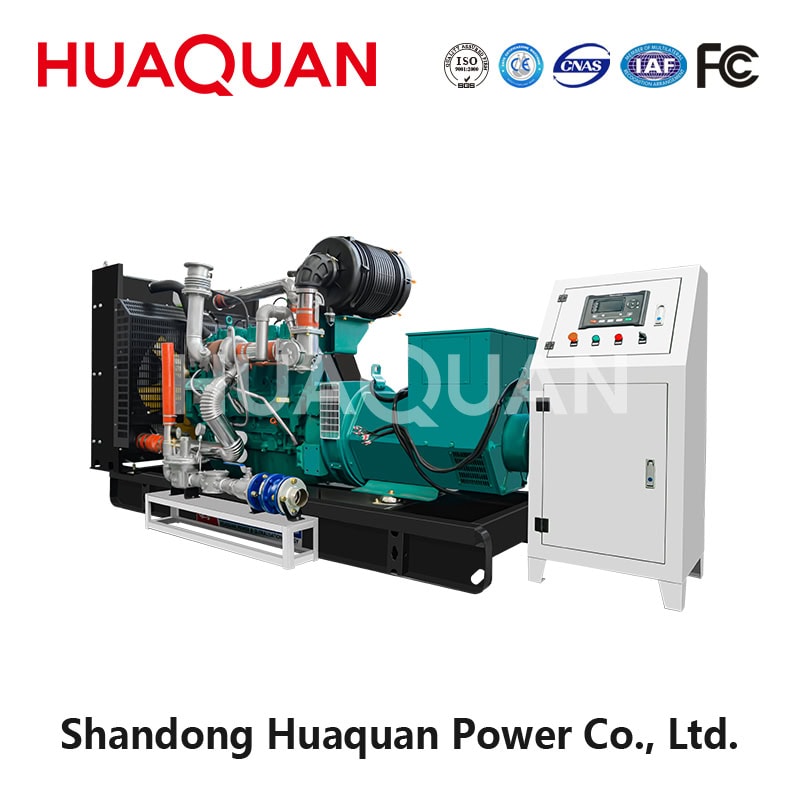
The engine is one of the most important components of a diesel generator set and is the source of power.Due to the complex structure and poor working conditions of the engine, it has the highest failure rate and often becomes a key diagnostic and testing object.The changes in the technical condition of the engine are mainly manifested in an increase in faults, deterioration of performance, and increased losses.The main parameters used to evaluate the technical condition of an engine include output power, fuel consumption, oil consumption, cylinder pressure, oil pressure, engine temperature, abnormal noise, and vibration.

1 Overview
1.1 Abnormal Noise Types: Generator set abnormal noise is an abnormal noise generated by the engine, mainly including mechanical noise, combustion noise, and aerodynamic noise.
1.2 Reasons for abnormal noise
1.2.1 Mechanical noise of the generator set is mainly caused by excessive clearance between the moving pairs or damage to the mating surfaces, resulting in impact and vibration during operation.When the clearance between the motion pairs is too large due to wear or improper adjustment, impact and vibration sound waves will be generated during operation, such as crankshaft main bearing noise, connecting rod bearing noise, camshaft bearing noise, piston cylinder knocking noise, piston pin noise, valve foot noise, timing gear noise, etc.
1.1.2 If the generator set produces abnormal combustion noise, it is mainly caused by abnormal combustion of the engine.When a diesel engine works rough, extremely high pressure waves are generated inside the cylinder, which collide with each other and produce a strong abnormal sound similar to knocking metal.
1.2.3 Aerodynamic Noise Aerodynamic noise is mainly caused by the vibration of airflow in the intake, exhaust, and running fans of diesel generator sets.
1.3 To determine the influencing factors and diagnostic conditions of abnormal noise in diesel generator sets, the abnormal noise is related to the engine speed, temperature, load, and lubrication conditions.
1.3.1 In general, the higher the speed, the stronger the mechanical noise.However, at high speeds, various noises are mixed together in the generator set, and some abnormal noises are difficult to distinguish by auscultation.So, diagnosing the speed does not necessarily mean high speed, and specific abnormal noises should be treated accordingly.When auscultating valve sounds and piston knocking sounds, they can be heard very clearly at idle or low speeds;When the main bearing noise, connecting rod bearing noise, and piston pin noise are severe, they can also be heard at idle and low speeds.In short, the diagnosis of abnormal response should be carried out at the speed with the most obvious sound, and as much as possible at low speeds.
1.3.2 Some abnormal temperature sounds are related to the temperature of the generator set. In mechanical noise diagnosis, special attention should be paid to the thermal condition of the engine for mating pairs with high thermal expansion coefficients. The most typical example is piston knocking.The sound is very noticeable during cold start of the engine.So, the diagnosis of this noise should be carried out at low engine temperatures.Engine temperature is also one of the influencing factors of combustion noise.When a diesel engine is too cold, it often produces a sound of ignition and knocking (rough operation).
1.3.3 Many abnormal noises are related to the load of the engine.The sounds of crankshaft main bearings, connecting rod bearings, piston knocking, cylinder leakage, etc. all increase with increasing load and decrease with decreasing load;The knocking sound of diesel engine ignition decreases with increasing load.However, there are also a few abnormal noises that are unrelated to the load, such as valve noise.
1.3.4 Lubrication Conditions: Regardless of any mechanical noise, when the lubrication conditions are poor, the noise generally appears severe.
On the generator set, the vibrations generated by different components, parts, and working conditions of the sound source are different, resulting in different abnormal sounds in terms of pitch, pitch, frequency, intensity, location, and frequency.We can use these characteristics and patterns of abnormal noise to diagnose the engine’s abnormal noise under certain diagnostic conditions.
2. Abnormal noise of main generator sets and manual diagnosis method based on experience
2.1 Noise from crankshaft main bearing
2.1.1 Phenomenon: When the engine suddenly accelerates, it will make a heavy and powerful “hard, hard, hard” metal knocking sound, and in severe cases, the body will vibrate greatly.The sound increases with the increase of engine speed and load, and the location of the sound is in the crankcase at the lower part of the cylinder block.When a single cylinder misfires, there is no significant change in the sound, but when adjacent cylinders misfit simultaneously, the sound will significantly decrease.The sound remains unchanged when the temperature changes.The oil pressure has significantly decreased.In addition, the rear bearing makes noise, which is generally dull and muffled;The front bearing makes a noise, which is light and brittle.The sound caused by the axial movement of the crankshaft can be heard at low speeds using a slight shaking of the throttle valve, resulting in a heavy “clack” and “clack” sound, similar to the sound of an iron wheeled vehicle walking on uneven stone roads.
2.1.2 Reasons
(1) The fixing screws of the main bearing cover are loose;
(2) The main bearing wear-resistant alloy is burned or detached;
(3) The main bearing and journal wear are too severe, and the axial thrust device wear is too severe, resulting in excessive radial and axial clearances;
(4) Crankshaft bending;
(5) The oil pressure is too low or the oil has deteriorated.
2.1.3 Diagnostic methods
(1) Listen carefully.If the sound increases with the increase of the generator set speed, and the sound is more obvious at the moment of refueling when shaking the throttle valve, it is generally due to loose main bearings;If the sound of the generator set is more obvious when idling or running at low speeds, and appears messy at high speeds, it may be due to a bent crankshaft;If there is significant vibration of the engine body and a significant decrease in oil pressure at high speeds, it is generally due to severe looseness, burning, or detachment of the main bearing or wear-resistant alloy.
(2) Listen carefully at the oil inlet of the generator set.Open the oil filler cap, listen carefully from the refueling point, and repeatedly change the speed of the generator set for testing.If it is the sound of the main bearing, a heavy and powerful metal knocking sound can be clearly heard.
(3) Use a stethoscope to auscultate.Place a stethoscope or a self-made simple stethoscope rod on both sides of the crankcase of the engine body, which are flush with the crankshaft axis, while continuously changing the throttle opening to perform auscultation. The area with the strongest sound is the main bearing that makes the sound.
(4) Fire test.Loosen the high-pressure oil pipe joint. If the noise significantly decreases after the first cylinder is shut off, it is the first main bearing noise;If the noise significantly decreases after the last cylinder is cut off, it is the last main bearing noise;If the sound of any two adjacent cylinders simultaneously shutting down is significantly reduced, it is the main bearing sound between the two cylinders.The sound generated by the axial movement of the crankshaft remains unchanged when a single cylinder is shut off.
(5) Step on the clutch pedal test.Press and hold the clutch pedal steady. If the noise decreases or disappears, it is caused by the axial movement of the crankshaft.
(6) Deceleration test of generator set.When diagnosing the main bearing noise of a diesel engine, in order to avoid the interference of fire knocking sound, the method of increasing the stroke of the fuel supply rod and then quickly retracting it can be adopted. When the engine slows down, if you hear a solid and heavy “hard, hard, hard” sound, it may be the main bearing noise.At the same time, the oil inlet cap should be opened, supplemented by auscultation and cylinder oil cut-off methods for diagnosis.