Inleiding
Have you experienced the sudden storms and anticipated environmental disasters? In such a case, a power outage is the common and most critical issue to be addressed. A resilient power system is the ultimate solution that prevents any major outage through the right planning.
We will discuss the resilient power system, understand how it works, and explain more details on this topic. Laat ons weet!
What is a Resilient Power System?
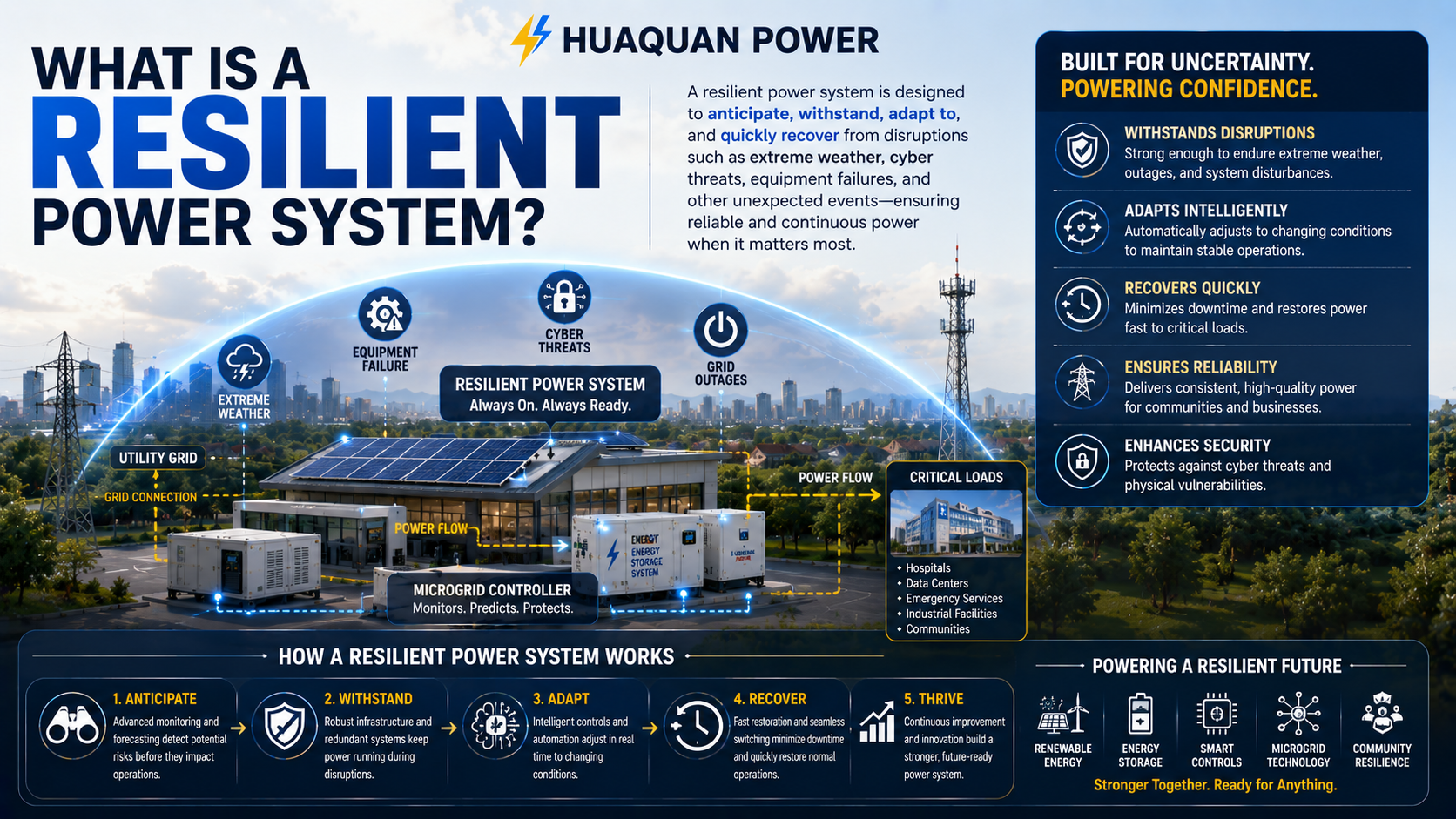
A resilient power system is an electrical infrastructure dedicated to keeping the electrical supply on during sudden power outages. During natural disasters, storms, and cyclones, power outages occur in the utility grids.
Resilient Power systems act during that time and restore the electrical supply to the system without any interruptions. They predict, plan, and restore the electrical supply for the users.
Real-World Example
Suppose a 300 kW power-supplied hospital experiences sudden storms or cyber attacks. Grid gets an outage leading to the stoppage of major actions:
- Operation theaters get closed.
- MRI/CT machines no longer work.
- There is no lighting system on due to the outage.
In such a case, a resilient power system is there to restore the whole supply with all its different components.
Components of a Resilient Power System
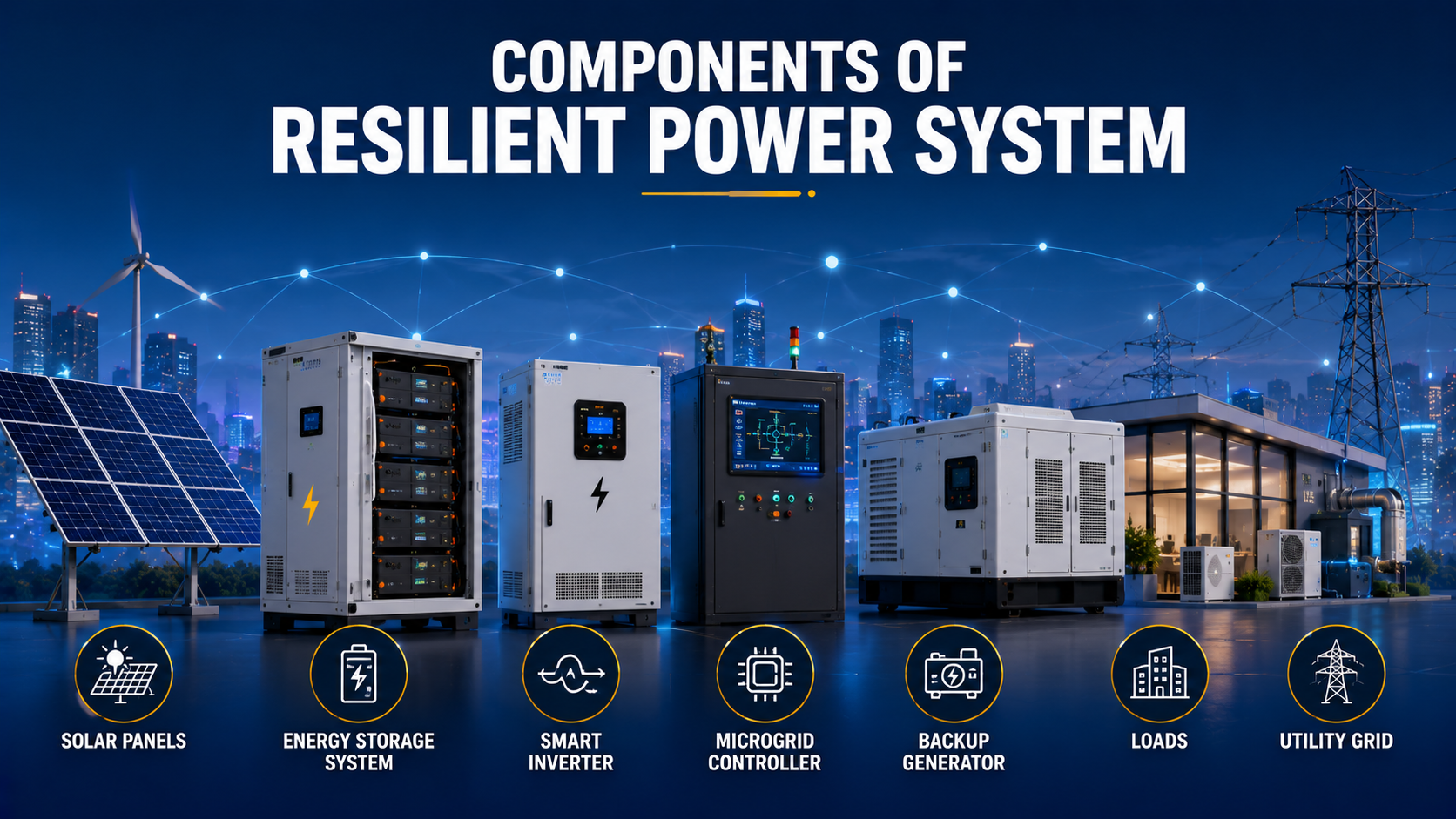
Do you know how the resilient power system works? It relies on various components for its working mechanism. Let’s have a list of key components.
Utility Grid Connection
If you don’t want energy independence or want to save some bucks with net metering, a utility grid connection should be there. It provides energy during the renewable energy outage.
Here are a few things to know.
- Grid shutdown can cause the whole system to shut down for safety.
- Use the net metering policy to feed the grid during excessive energy production and get energy during system outages.
Battery Storage System
A battery storage system is the primary backup supply after a utility grid outage or solar energy unavailability. It does the following tasks.
- Helps store the energy in the DC and uses inverters to feed it to the devices.
- Provides instant energy to the system without interruptions.
- Lithium-ion batteries are durable, more efficient, and provide an energy supply.
Diesel/gas Kragopwekkers
What will you do if your batteries run out of energy? After battery discharge, you have an endless source of energy.
It is the diesel generator. Here are a few key features:
- They don’t get discharged and provide energy throughout the process.
- Generators feature an endless supply as long as the fuel is available.
- You have to maintain them for high performance and operate at 70-85% load for fuel efficiency.
Renewable Energy Sources
There are several types of energy resources used nowadays. The most common methods for renewable energy are:
- Solar power
- Wind power
Solar power is being used on a large scale due to instant energy availability during the daytime. There are a few benefits of renewable energy resources.
- The source is unlimited. Daarom, there is no worry of running out of energy.
- It is an eco-friendly energy production setup.
- There are no carbon emissions or footprints.
Mikroroosterbeheerder
The microgrid controller is the brain of the
stelsel. It performs various tasks during this energy production and usage. Here are a few tasks:
- It supports renewable energy generation and monitors the load.
- Transfers the load between different components and machinery.
- Coordinate generation, berging, en laai.
Beskermingstelsel
Have you got a short circuit? Soms, improper load or inability to handle the required load can lead to circuit issues.
The Protection system is there to do the following tasks.
- It detects the faults inside the system and provides better management.
- Shut down the system during the machine failure.
- Handles critical failures by isolating the components.
Critical Load Management
Whenever you get an emergency, a critical load management system works on the frontline to manage the electrical supply. Byvoorbeeld:
- It detects and monitors the systems with the overall load.
- Check the critical equipment you should power.
- Supplies power to the critical tools only during emergencies.
- Supplies power to less essential tools when there is no outage.
How Does a Resilient Power System Work?
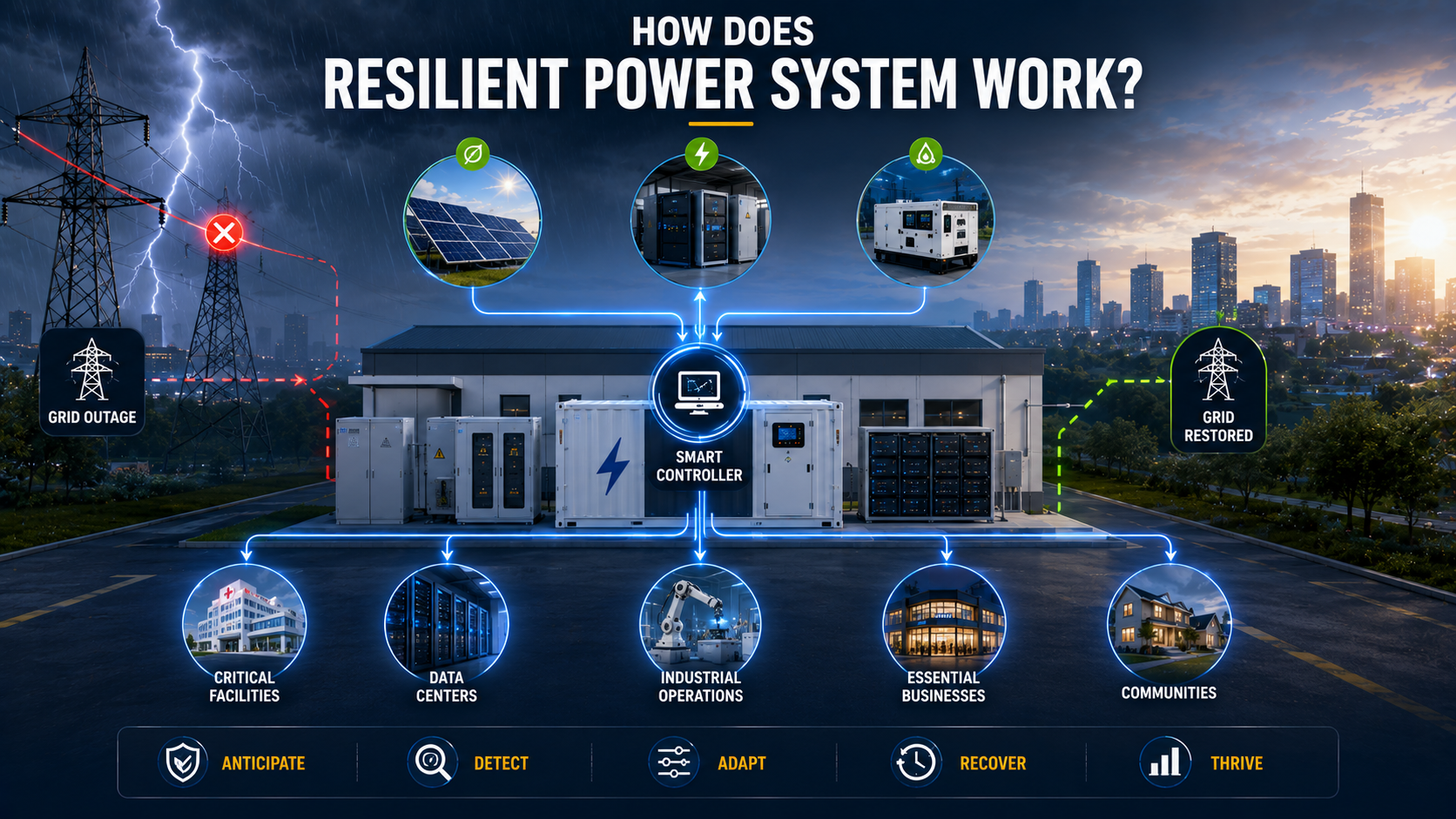
Based on the different components of the power systems, here is the step-by-step guide to understanding how energy production, transmission, and usage occur.
Stap 1: Normal Operations
In normal situations, the main source of energy is the solar/wind power system. The working mechanism is as follows:
- Gedurende die dag, solar power is produced and fed to the appliances after conversion.
- Batteries store the energy.
- During cloudy days or outages, the grid supplies the power.
- Generators remain in standby mode until they are required.
Stap 2: Disturbance Occurs
Due to any circumstance, the disturbance occurs in the system.
- Utility Grid goes offline.
- The Protection System acts in the outage.
Stap 3: Immediate Response
The very first response comes from the batteries.
Here are the batteries.
- If your batteries are full, they instantly supply the energy to your devices.
- Critical devices are kept on while shutting down unnecessary or secondary importance devices.
- Automatic transfer switches work to operate and streamline the energy source transmission.
Onthou, during daytime or sunlight, solar power is still the primary source to feed the power to the system. When both grid and solar outages occur, batteries operate in such conditions.
Stap 4: Extended Operations
Batteries are ideal only for a few hours of power outage. Byvoorbeeld, an outage of 4-6 hours can discharge the batteries depending on their power.
For extended operations, the power system works differently.
- Generators come into action. They consume fuel and provide energy to all your devices. Egter, if you want to shed unnecessary devices, jy moet.
- Solar/wind power systems should supply energy during the daytime or as conditions are feasible.
Stap 5: Recovery
When the grid power returns, the normal operating system resumes as follows.
- Grid takes control, and the main focus is on the renewable energy sources and the utility grid supplies.
- The system synchronizes and shifts from emergency mode to normal operating conditions.
- Generators shut down.
Types of Threats Against Which Resilient Power Systems Work
A resilient power system can work against several types of threats and provide a seamless power supply. Here are a few threats.
Natural Disasters
Natural disasters are pretty common if you reside in areas prone to disasters. There can be several types of disasters against which a resilient system provides protection.
- Hurricanes
- Floods
- Earthquakes
- Wildfires
- Ice storms
- Heat waves
Grid Failures
Grid failure most often shuts down the whole system until you have a resilient power system. It changes the source of energy from the grid to batteries and generators.
Common causes of grid failures are:
- Transmission line faults
- Substation failures
- Voltage instability
- Frequency disturbances
- Cascading blackouts
Equipment Failures
During equipment failures, resilient power systems work and provide the systems with the required energy. Here are a few examples of equipment failure.
- Transformer failure
- Generator malfunction
- Switchgear faults
- Cable failures
- UPS failures
Cybersecurity Threats
A resilient power system is a powerful candidate during cyber attacks. It provides the necessary energy.
- Malware attacks
- Ransomware
- Unauthorized access
- Control system manipulation
- Communication network disruptions
Fuel Supply Interruptions
A resilient power system can also act against fuel supply issues. Here are a few examples.
- Diesel shortages
- Natural gas disruptions
- Transportation delays
- Supply chain failures
Reasons Why You Should Install the Resilient Power System
If you are wondering whether you should install the resilient power system or not, don’t worry at all. We have added a few reasons why a resilient power system can be a good choice.
Improved Reliability
Power interruptions are the major setbacks for businesses. If you own a factory and production lines get stopped, it will be a total disaster for your business.
A resilient power system acts in such cases and leads the system with the following benefits:
- Continuous operation of critical equipment
- Reduced production downtime
- Protection of ongoing processes
- Improved customer service
- Greater operational stability
Verbeterde veiligheid
A resilient system provides power in the event of a power outage, but has the safety systems activated in case of failure. Byvoorbeeld, if your equipment fails, it shuts down the system and provides safety from major issues.
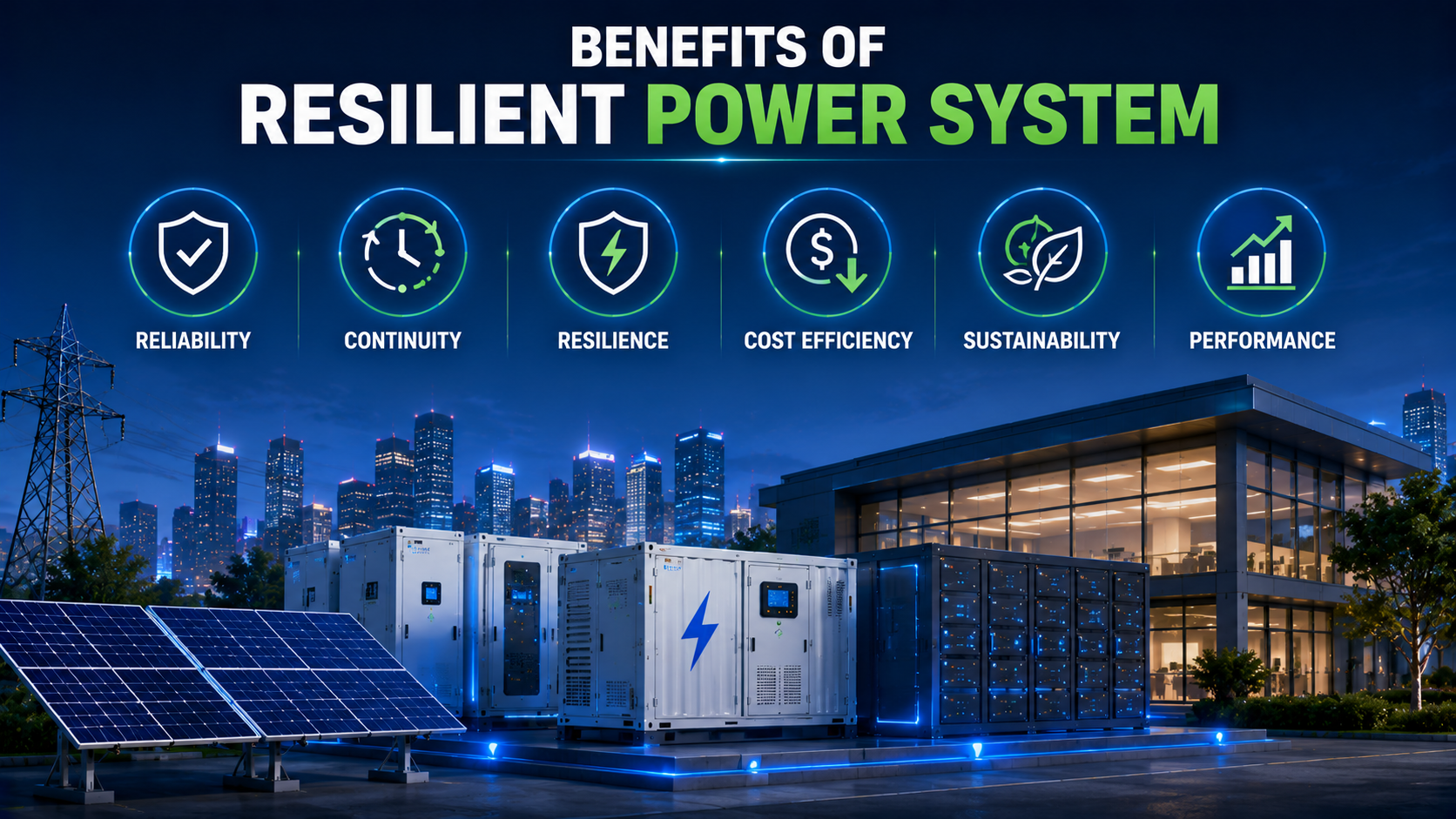
The common benefits are:
- Emergency lighting
- Fire detection and suppression systems
- Sekuriteitstelsels
- Emergency communications
- Ventilation and life-support equipment
Reduced Losses
Whenever your factory shuts down, multiple production lines also go down. In such a case, there are higher financial losses due to operational stoppage.
A resilient system is the ultimate solution by providing the necessary energy. It prevents losses due to the following conditions.
- Production stoppages
- Dataverlies
- Toerusting skade
- Product spoilage
- Contract penalties
- Emergency repair expenses
Better Power Quality
Sudden ups and downs in the power voltage are extremely dangerous for your appliances. Ook, low-quality power can interrupt and cause machine failures.
In addition to power supply, a resilient system focuses on the quality of power. It supplies the system with high-quality energy through the following improvements.
- Stable voltage levels
- Consistent frequency
- Reduced voltage sags
- Fewer power surges
- Lower harmonic distortion
- Protection against electrical transients
Greater Energy Security
If you install the solar panels with batteries, they may run out of energy on long nights. Net so, a single generator can’t offer fuel efficiency and affordable prices throughout the day.
A resilient power supply combines multiple durable energy sources and minimizes the costs.
It offers high energy security by providing energy through:
- Utility grid
- Diesel kragopwekkers
- Aardgas kragopwekkers
- Solar photovoltaic systems
- Windturbines
- Battery energy storage systems
- Gekombineerde hitte en krag (WKK)
Faster Recovery After Disruptions
Unlike a traditional system, a resilient power system doesn’t require manual intervention. It supplies instant energy after a shutdown and recovers the system faster after disruptions.
The common automation features are:
- Foutopsporing
- Automatic transfer switching
- Generator startup
- Battery support
- Load restoration
- System synchronization
Resilient vs Reliable Power System
| Kenmerk | Reliable Power System | Resilient Power System |
| Primary Goal | Consistent operation | Continue operating during disruptions |
| Handles Equipment Failure | Ja | Ja |
| Handles Natural Disasters | Beperk | Uitstekend |
| Supports Island Operation | Usually No | Ja |
| Uses Multiple Energy Sources | Soms | Frequently |
| Recovery Speed | Matig | Vinnig |
| Backup Power Integration | Opsioneel | Noodsaaklik |
| Focus | Betroubaarheid | Betroubaarheid + Recovery + Aanpasbaarheid |
Gereelde vrae
- What role do batteries play in a resilient power system?
Batteries are crucial components of resilient power systems. They store energy and make it available during the outage.
- Can renewable energy improve power system resilience?
Ja, 100%, it can improve the power system by offering an energy source during the outages. Byvoorbeeld, during the daytime, solar energy is available whether a system outage occurs or not.
- Which industries benefit most from resilient power systems?
There are various industrial sectors that rely on resilient power systems. The examples are:
- Gesondheidsorg
- Datasentrums
- Vervaardiging
- Telekommunikasie
- Lughawens
- Utilities
- Oil and gas
- Defense
- Water treatment
- How is a resilient power system different from a backup generator?
Backup Generator is a single source, while the resilient power system is a comprehensive source of energy. It combines batteries, the grid, solar systems, and diesel generators to provide the system with a comprehensive power solution during an outage.
- What is the main purpose of a resilient power system?
A resilient power system acts to provide energy during an outage. Its sole goal is to combat the environmental disasters or upcoming threats with a non-stop energy supply to the system.
- Can small businesses benefit from resilient power systems?
Ja, small businesses can act during power outages and provide the system with resilient power. It helps support the system better and lets the outlets or businesses run smoothly.
- How often should resilient power systems be tested?
Critical facilities follow a regular testing system for emergencies. In this testing process, they check generator load tests, battery inspections, UPS testing, en Outomatiese oordragskakelaar verification.
- Is a resilient power system expensive?
Ja. A resilient power system has several components. Daarom, the upfront cost is pretty high compared to the traditional systems.
Gevolgtrekking
When installing the resilient power systems, you must understand your requirements and system compatibility. Always bring compatible, betroubaar, and high-end solutions for your systems and enjoy a seamless energy with the batteries. Include a renewable energy source for the free energy during the outages.
Do you want to buy the backup supply with the generators? Huaquan Power has both diesel and gas generators. Bowendien, our generators are portable and offer easy installation and high efficiency. Contact our experts to get a quote for your projects right away!