The runtime of a generator on a single tank of fuel depends on three variables: brandstoftenk kapasiteit, enjin brandstofverbruik rate at a given load, and the percent load you’re actually drawing. By 50% load — the standard benchmark — most portable Kragopwekkers run 8–15 hours on a full tank. But the actual range is much wider: a small 1,000W inverter running at 25% load on a 1.1 gallon tank can run over 10 ure, while a 10kW portable burning gasoline at full load might run only 4 hours on a 6 gallon tank.
Runtime Formula
Looptyd (ure) = Tank Capacity (gal) ÷ Brandstofverbruik (gal/hr at {laai}% laai)
To calculate your specific runtime, you need the fuel consumption curve for your generator model. Most manufacturers publish consumption at 25%, 50%, 75%, en 100% laai. If you only have full-load consumption, multiply by 1.5–2× for half-load runtime (generators burn significantly less fuel at lower loads only if they’re inverter-type; conventional generators burn nearly the same at all loads).
Runtime Comparison: 14 Popular Generator Models
| Model | Brandstof | Tik | Tank (gal) | Runtime at 25% laai | Runtime at 50% laai | Runtime at 100% laai |
|---|---|---|---|---|---|---|
| Honda EU1000i | Petrol | Inverter | 0.6 | 8.3 hr | 5.8 hr | 3.8 hr |
| Honda EU2200i | Petrol | Inverter | 0.95 | 10.2 hr | 8.1 hr | 5.2 hr |
| Champion 2500W Dual Fuel | Petrol | Inverter | 1.6 | 14 hr | 11.5 hr | 7 hr |
| Champion 2500W Dual Fuel | Propaan | Inverter | 1.6 | 8 hr | 6 hr | 4 hr |
| Westinghouse iGen4500DF | Petrol | Inverter | 3.4 | 18 hr | 14 hr | 8 hr |
| Generac GP5500 | Petrol | Konvensioneel | 6 | 7 hr | 6 hr | 4 hr |
| Honda EU7000i | Petrol | Inverter | 5.1 | 13.5 hr | 10.5 hr | 6.3 hr |
| Champion 100519 (7,650W) | Gasoline/Propane | Konvensioneel | 8.0 | 9 hr (gas) / 5 hr (LP) | 7.5 hr (gas) / 4 hr (LP) | 5 hr (gas) / 3 hr (LP) |
| Generac 18kW Standby | Aardgas | Standby | NVT (piped) | Onbeperk (NG) / ~48 hr on 500 gal LP | Onbeperk / ~36 hr | Onbeperk / ~24 hr |
| Cummins QSJ20-G (20kW diesel) | Diesel | Standby | 30 | 70 hr | 55 hr | 38 hr |
Why Runtime Is Longer at Lower Loads — But Not for All Generators
This is one of the most misunderstood points in generator operation. Inverter generators vary their engine speed according to load — at 25% laai, the engine might be running at 2,000 RPM in plaas van 3,600 RPM, burning proportionally less fuel. Conventional fixed-RPM generators, egter, run at a constant 3,600 RPM regardless of load — they burn almost the same amount of fuel at 25% load as at 100% laai (typically 85–95% of full-load consumption).
Practical implication: If runtime at partial load matters for your use case (bv., overnight power while campers sleep), an Inverter Generator is vastly superior. A conventional 3,600 RPM generator running a 500W refrigerator load still burns nearly as much fuel as it would running a 5,000W load — you’re paying for full-power fuel consumption while drawing only 10% of rated output.
Extending Runtime: Practical Tips
- Match generator size to load: A 7,000W generator powering a 500W load is wasting fuel. Use a smaller inverter generator for low-load situations.
- Use propane for long runtime: Propane generators can be connected to large bulk tanks (250–1,000 gallons) for multi-day or multi-week runtime.
- Parallel small inverter generators: Two 2,000W units can be run independently — use one for low-load periods, combine both when needed.
- Install an auxiliary fuel tank: Aftermarket fuel tank kits add 2–5 gallons to most portable generators via a quick-connect hose.
- Outomatiese afskakeling: Some generators offer low-fuel shutdown that prevents air from entering the fuel system — easier to restart after refueling.
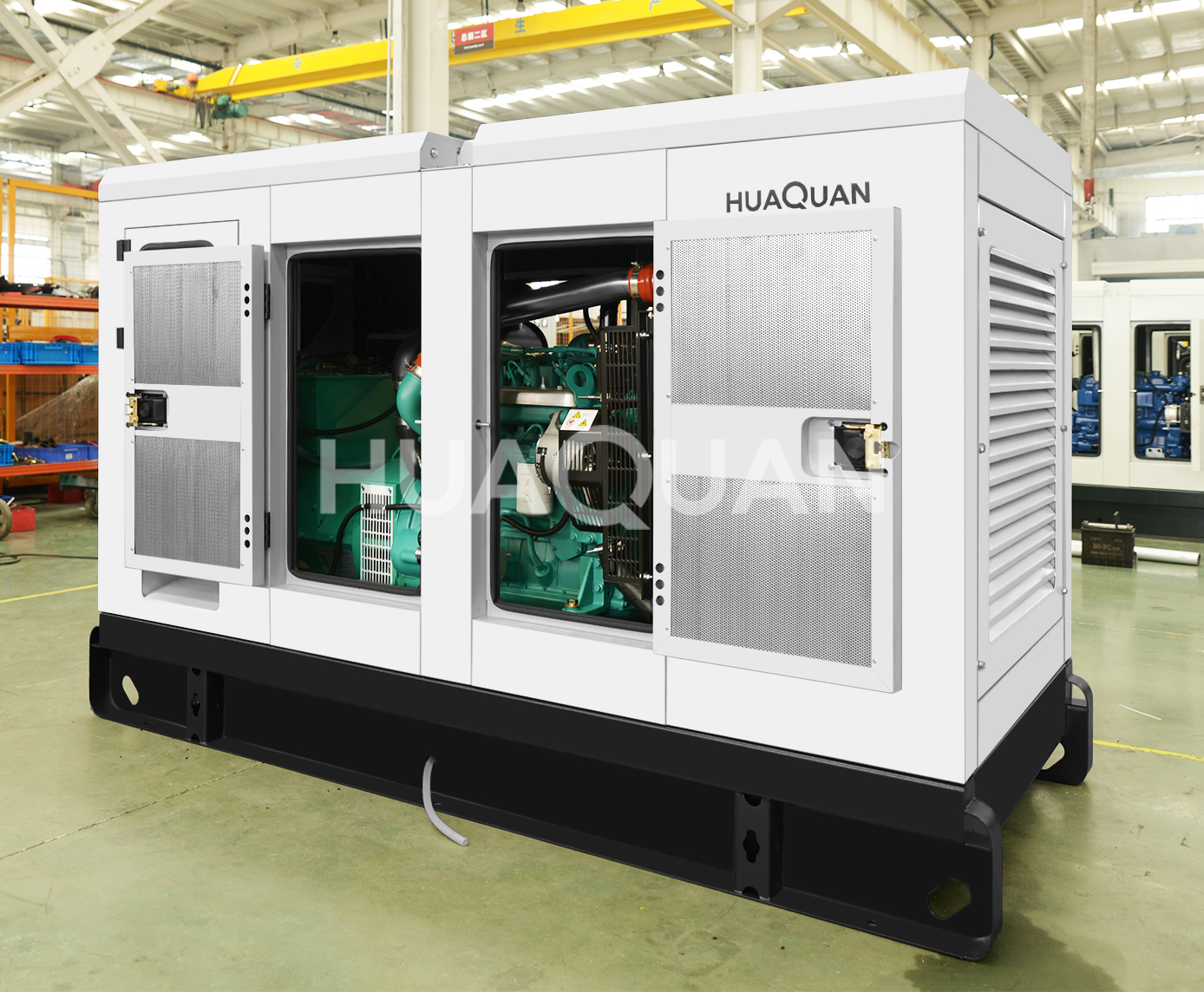
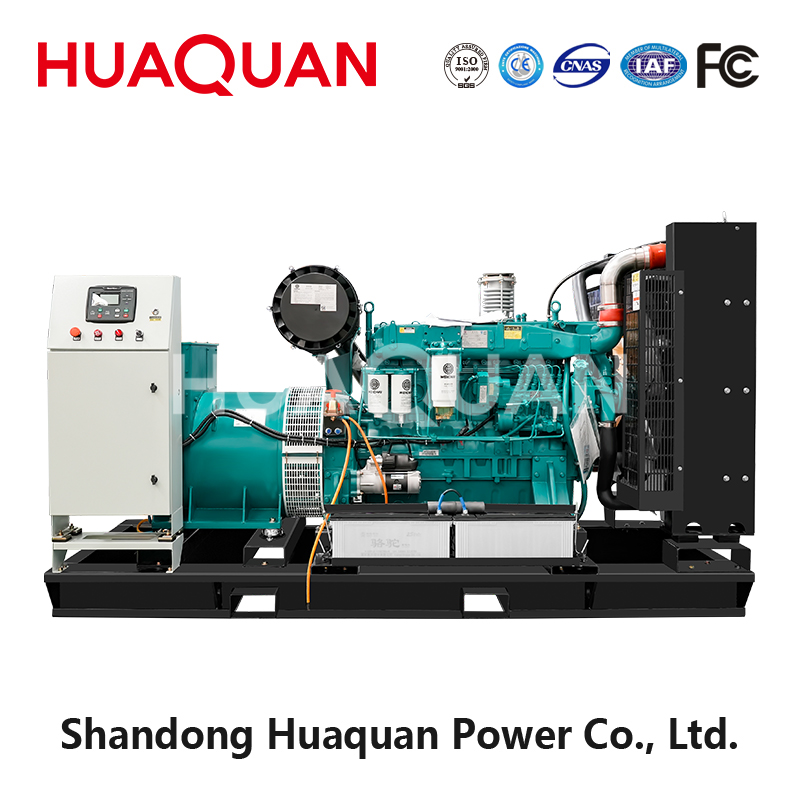
For industrial-grade generators that deliver 24+ hour runtime on a single tank of diesel, Huaquan Power’s 1,800 RPM diesel generators feature large integral fuel tanks (tot 300 liter) for extended autonomous operation.