As nywerhede, besighede, en gemeenskappe het 'n deurlopende toevoer van elektrisiteit nodig om te funksioneer, wêreldwye energievraag bly groei. Terselfdertyd, brandstofpryse bly styg, en omgewingsbekommernisse word steeds ernstiger. Daarom, maatskappye soek nou meer omgewingsvriendelike en volhoubare brandstofopsies.
Bowendien, tegnologieë vir hernubare energie speel nou 'n toenemend belangrike rol in die sakewêreld namate volhoubaarheid en energiedoeltreffendheid belangriker word. Onder hierdie oplossings, die biogas kragopwekker staan uit as een van die beste en mees eko-vriendelike opsies vandag.
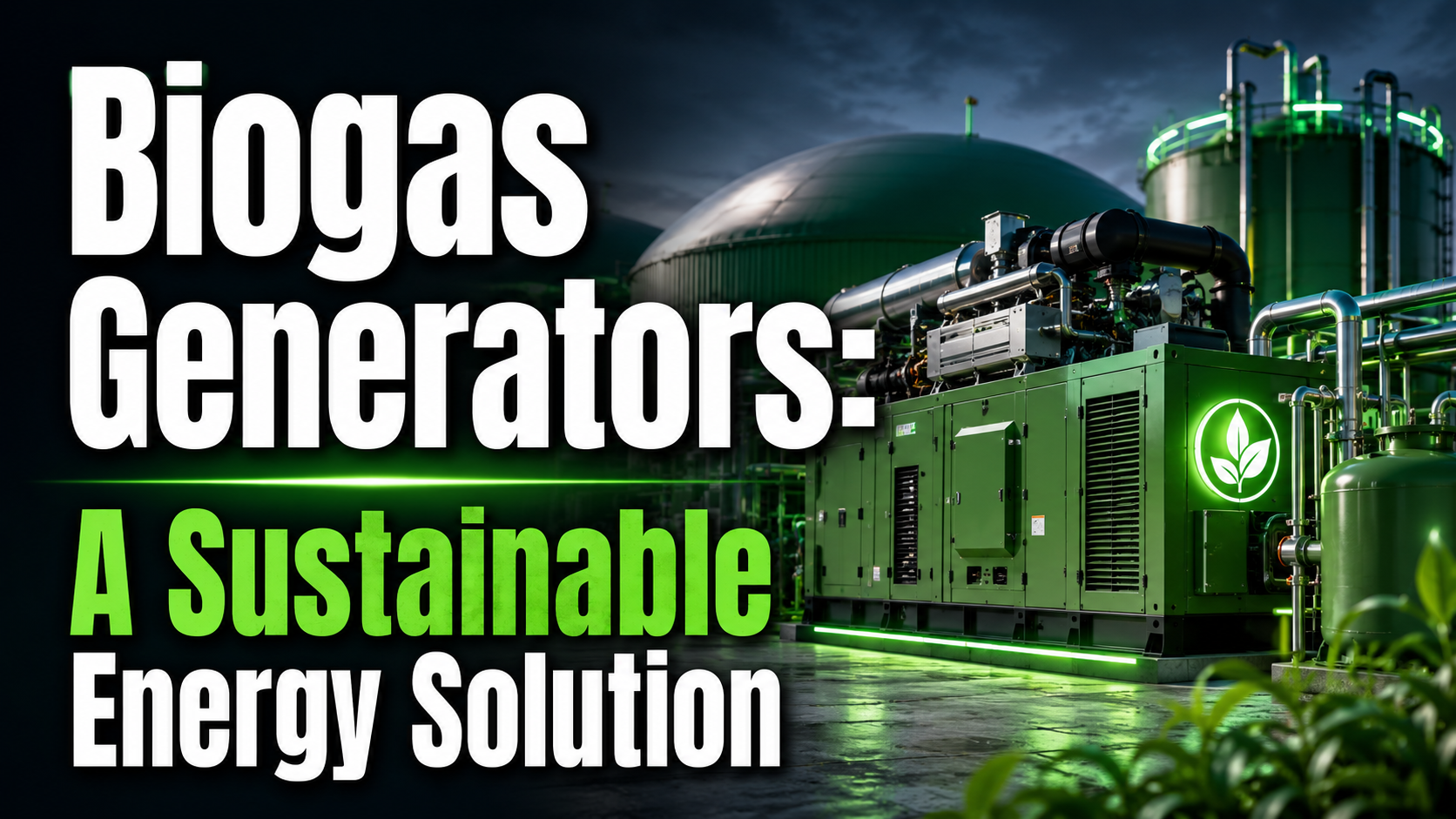
’n Biogasopwekker bied ’n lewensvatbare oplossing deur omgewingsbeskerming te kombineer, afvalbestuur, en kostebesparings. As gevolg hiervan, biogas kragopwekking is besig om vinnig gewild te word oor moderne nywerhede, van plase en voedselverwerkingseenhede tot hotelle en ander nywerhede. Hierdie gids deur HuaQuan sal biogas bespreek Kragopwekkers in detail.
Wat is 'n biogasgenerator?
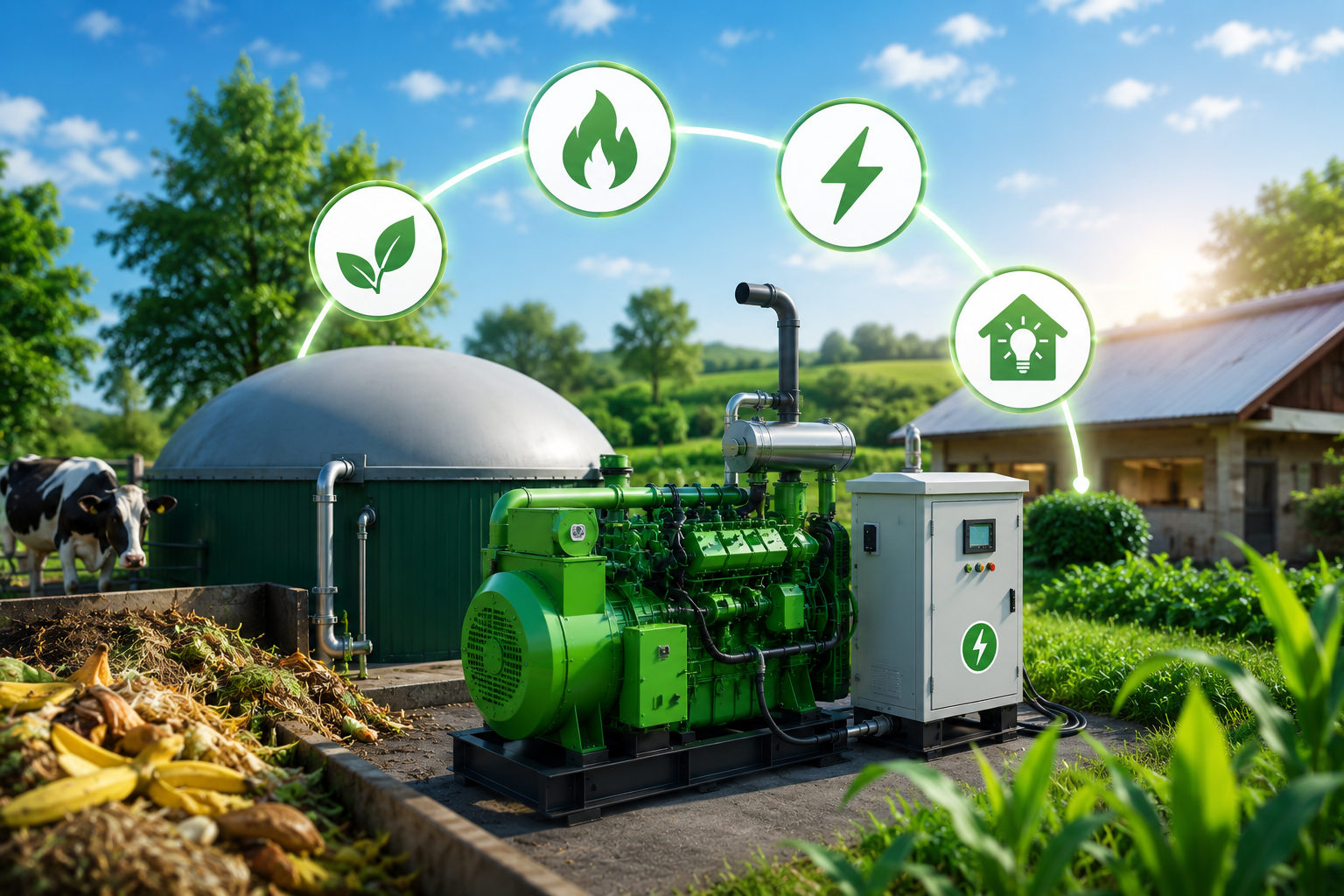
'n Biogasopwekker is 'n kragopwekkingstelsel wat biogas in elektrisiteit omskep. Biogas is 'n hernubare energiebron wat geproduseer word wanneer organiese materiaal afbreek, soos landbou-afval, diere-afval, voedselvermorsing, en riool.
Die kragopwekker gebruik hierdie gas as brandstof om 'n binnebrandenjin te bedryf met 'n alternator wat elektrisiteit opwek. Daarby, nywerhede en kommersiële ondernemings met hoë organiese afval gebruik gewoonlik biogas-opwekkers.
Hoe biogas geproduseer word
Biogas vorm deur 'n natuurlike proses bekend as anaërobiese vertering. In hierdie proses, mikroörganismes ontbind organiese materiaal in 'n suurstofvrye omgewing. Soos die afval ontbind, dit stel gasse vry wat hoofsaaklik bevat metaan en koolstofdioksied.
Die organiese stowwe wat normaalweg vir biogasproduksie gebruik word, is:
- Dieremis
- Oesreste
- Voedselafval
- Rioolslyk
- Organiese industriële afval
Verder, die gas wat in hierdie proses geproduseer word, bevat 'n groot hoeveelheid metaan, sodat besighede dit kan insamel en vir kragopwekking gebruik.
Hoe 'n biogasgenerator werk
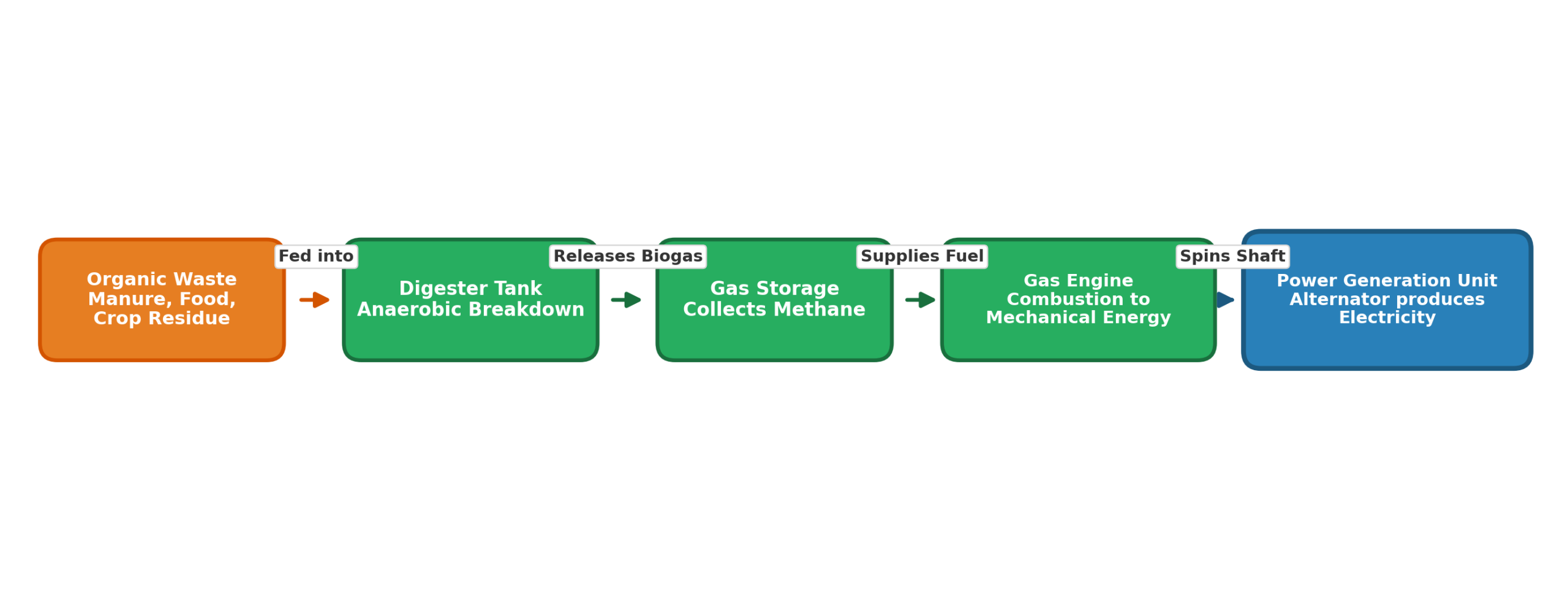
Die werkingsbeginsel van 'n biogasopwekker is eenvoudig. Eerstens, die stelsel voer biogas in 'n gasenjin in. Toe, die gasenjin verbrand die biogas en produseer meganiese energie. Daarna, die alternator skakel hierdie meganiese energie om in elektrisiteit.
Hoofkomponente van 'n biogasopwekkerstelsel
Verteertenk
’n Verteertenk is die hoofgedeelte waar organiese afval afbreek. Dit bied 'n beheerde, suurstofvrye omgewing wat ondersteun anaërobiese vertering.
Gasbergingstelsel
Die gasbergingstelsel versamel en berg die biogas wat geproduseer word voordat dit na die kragopwekker gevoer word. Goeie berging help om 'n bestendige toevoer van gas en die kragopwekker se werkverrigting te handhaaf.
Gas enjin
In 'n gasenjin, die energie van die brandstof word omgeskakel na meganiese energie. Ontwerp op 'n spesiale manier om doeltreffend en veilig op biogas te werk, wat ryk is aan metaan.
Kragopwekkingseenheid
Die kragopwekkingseenheid sluit die alternator en elektriese beheerstelsels in. Dit skakel meganiese energie om in elektrisiteit, watter nywerhede en kommersiële fasiliteite vir hul bedrywighede kan gebruik.
Bronne van Biogas
Landbouafval
Plaasafval, strooi, en oesreste is baie goeie grondstowwe vir biogasproduksie. Boere kan hul wegdoeningskwessies tot die minimum beperk en hernubare energie met landbou-afval opwek.
Dieremis
Veeplase produseer aansienlike hoeveelhede mis, wat biogas kan produseer na behandeling. As gevolg hiervan, melkplase en pluimveeplase gebruik dikwels biogasstelsels vir elektrisiteitsopwekking.
Voedselafval
Restaurante, hotelle, en voedselverwerkingsaanlegte genereer elke dag organiese afval. In plaas daarvan om hierdie afval na stortingsterreine te stuur, biogasstelsels kan dit in nuttige energie omskakel.
Munisipale organiese afval
Munisipale afvalaanlegte installeer biogasstelsels om stedelike organiese afval in elektrisiteit om te skakel in plaas daarvan om dit toe te laat om die omgewing te belas.
Afvalwaterbehandelingsaanlegte
Sludge with high organic content is generated in wastewater treatment plants. Biogas generators are installed in many treatment plants to reduce energy consumption and operating costs.
Voordele van die gebruik van 'n biogasgenerator
Hernubare en volhoubare energie
Hernubare organiese materiale, wat deurlopend aangevul kan word, word in 'n biogasopwekker gebruik. Generating biogas is not only environmentally friendly but also sustainable in the long term as compared with fossil fuels.
Verminder energiekoste
Generating power from waste materials on-site can help businesses greatly cut down on their electricity costs. Bowendien, Dit verminder die afhanklikheid van duur energie en brandstof wat deur die kragnetwerk gelewer word.
Oplossing vir afvalbestuur
Biogasstelsels is 'n metode vir doeltreffende bestuur van afval deur organisasies. Bowendien, Organiese afval kan deur besighede gebruik word om waardevolle energie te produseer in plaas daarvan om na 'n stortingsterrein gestuur te word.
Verminder KHG-vrystellings
Biogasopwekkers help om metaanvrystellings van ontbindende afval te verminder. Aangesien metaan 'n kragtige kweekhuisgas is, vaslegging en gebruik daarvan help om die omgewing te beskerm.
Verminderde afhanklikheid van fossielbrandstowwe
Die gebruik van biogas as 'n bron van energie verminder die behoefte aan steenkool, diesel, en aardgas, help om energie meer skoon en volhoubaar te produseer.
Toepassings van Biogas Generators
Plase en Landbou
Landboubedrywighede gebruik biogasopwekkers om diere-afval vir verskeie doeleindes in elektrisiteit om te skakel, soos om plaasmasjinerie aan te dryf, besproeiing, en beligting.
Voedselverwerking nywerhede
Voedselfabrieke genereer organiese afval wat hulle vir energieproduksie kan gebruik. Deur biogas te gebruik, hierdie kragopwekkers kan afvalverwyderingskoste verminder en besighede help om energiekoste te bespaar.
Hotelle en restaurante
Voedselafval word elke dag by hotelle en restaurante geproduseer. Bowendien, Biogasstelsels kan tot hierdie besighede bydra deur hernubare energie te maak en hul volhoubaarheid te verbeter.
Munisipale Afvalfasiliteite
In munisipale afvalaanlegte, biogasstelsels word geïnstalleer om stedelike organiese afval wat andersins die omgewing sou belas in elektrisiteit om te skakel.
Nywerheidsaanlegte
Biogasopwekkers word in industriële aanlegte gebruik om elektrisiteit te produseer wanneer daar geen netwerktoevoer is nie of om dit voortdurend te laat loop om energiedoeltreffendheid te verbeter en bedryfskoste te verminder.
Biogas Generator vs Diesel Generator
Brandstof Koste
Tipies, biogas-opwekkers het laer brandstofkoste, aangesien hulle afvalmateriaal gebruik wat geredelik beskikbaar kan wees. Bowendien, Die bedryfskoste van dieselbrandstof kan aansienlik verskil.
Omgewingsimpak
Biogasopwekkers sal laer vlakke van giftige gasse vrystel as dieselopwekkers. Hulle help om koolstofdioksiedvrystellings en lugbesoedeling te verminder.
Onderhoudsvereistes
Oor die algemeen, gereelde instandhouding is nodig om goeie kwaliteit gas en doeltreffende enjinwerking in die biogasstelsel te handhaaf.
Doeltreffendheidsvergelyking
’n Moderne biogasopwekker het hoë doeltreffendheid en kan vir deurlopende kragopwekkingstoepassings benut word. Bowendien, Die diesel kragopwekkers sal vinniger krag verskaf, maar hulle sal nie so koste- en emissiedoeltreffend wees nie.
Ekonomiese voordele van biogasopwekkers
Langtermyn kostebesparings
Alhoewel daar aansienlike aanvanklike koste verbonde is aan installasie, biogasopwekkers kan mettertyd aansienlike geld bespaar op brandstof- en elektrisiteitskoste.
Inkomste uit afvalherwinning
Daar is 'n geleentheid vir besighede om bykomende inkomstestrome te skep en op wegdoeningskoste te bespaar deur afval te verwerk.
Omgewingsimpak van biogasopwekkers
Verminderde koolstofvoetspoor
Biogas kragopwekking verminder KHG's en bevorder klimaatbeskerming.
Verbeterde afvalherwinning
Daar word geen afval in stortingsterreine gestoor nie, maar waardevolle energie word uit afval gegenereer.
Volhoubare Energieproduksie
Hierdie gebruik van die biogas-opwekkers help om skoon en omgewingsvriendelike energie te produseer, en sodoende die omgewing te beskerm.
What are the challenges of biogas power generation?
Aanvanklike installasiekoste
Die biogasopwekkingstelsel moet geïnstalleer word, wat belegging in verteerders vereis, opgaartenks, en kragopwekkertoerusting.
Biogasbergingskwessies
Geskikte berging en hantering moet voorsien word om gaskwaliteit te handhaaf en veilige werking te verseker.
Kundigheid in onderhoud en tegniese vaardighede
Daar is 'n behoefte aan geskoolde mannekrag om biogasstelsels behoorlik te bedryf en in 'n goeie werkende toestand te hou.
Toekoms van Biogas Generators
Toenemende vraag na hernubare energie
Met toenemende wêreldwye energievraag, nywerhede sal waarskynlik hul beleggings in hernubare energiebronne verhoog, soos biogasstelsels.
Tegnologiese vooruitgang
Verbeterings in kragopwekker doeltreffendheid, outomatisering, en gassuiweringstegnologieë maak biogasstelsels meer betroubaar en kostedoeltreffend.
Wêreldwye volhoubaarheidsdoelwitte
Regerings en nywerhede regoor die wêreld neem die eerste stappe in die rigting van koolstofvermindering en volhoubare ontwikkeling, die gebruik van biogas-opwekkers aan te moedig.
Gevolgtrekking
'n Biogasopwekker is 'n goeie, eko-vriendelike oplossing vir huidige energiebehoeftes. Bowendien, Hierdie stelsels genereer elektrisiteit uit organiese afval, besighede te help om op energiekoste te bespaar, afvalbestuur te verbeter, en kweekhuisgasvrystellings te verminder.
Biogas kan gebruik word vir kragopwekking en is 'n potensiële oplossing vir volhoubare, doeltreffende energieproduksie, aangesien dit gewild raak onder nywerhede en gemeenskappe met 'n voetspoor om te verminder.
Biogasopwekkers het al hoe belangriker geword in die wêreld van hernubare energie, met belowende ekonomiese en omgewingsvooruitsigte. Kontak ons vandag.
Gereelde vrae
Wat is die nut van 'n Biogas Generator?
'n Biogasopwekker produseer biogas wat nuttig is in nywerhede, die kommersiële sektor, die landbousektor, en vir munisipale aansoeke.
Wat is die doeltreffendheid van die biogasgenerator?
Moderne biogasopwekkers is hoogs doeltreffend en kan deurlopend en betroubaar krag opwek as dit behoorlik onderhou word.
Is dit moontlik om nywerhede te bedryf met behulp van biogas-opwekkers?
Ja, biogasopwekkers is nuttig in verskeie nywerhede om rugsteunkrag en deurlopende elektrisiteitsopwekking te verskaf.
Watter een van die volgende afvalstowwe kan vir die produksie van biogas gebruik word?
Dieremis, voedselvermorsing, landbou-reste, rioolslyk, en organiese munisipale afval kan nuttig wees om biogas te produseer.
⚡ Verken verwante oplossings
- 🏭 500kW diesel kragopwekker
- 🏭 1000kW diesel kragopwekker
- 🏭 500kW YC Diesel Generator
- 🔧 Gasopwekkerstelle
- 🔧 KMS (Cummins/Doosan) Reeks
- 🔧 SC (SDEC) Reeks
💡 Benodig 'n pasgemaakte oplossing? Kontak ons ingenieurspan vir projekspesifieke aanbevelings.