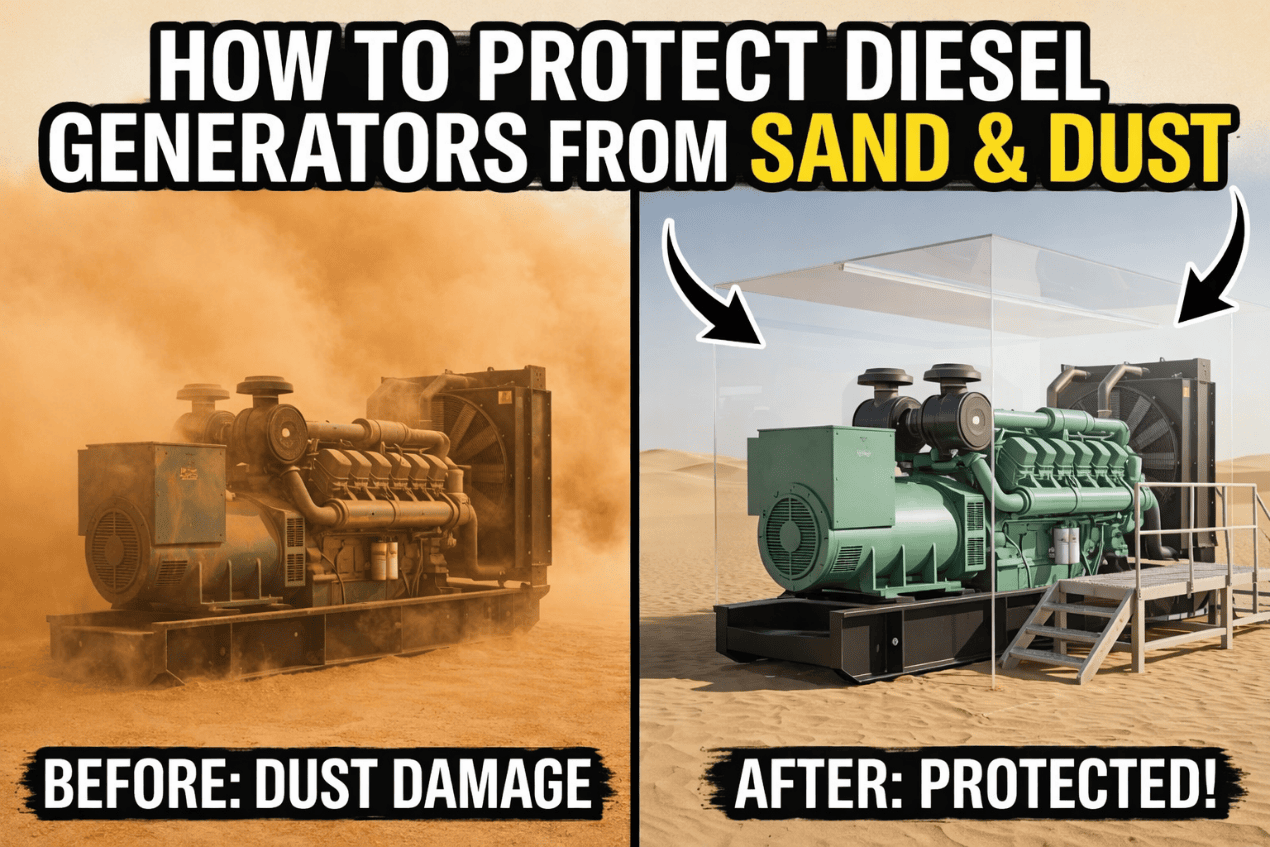
From mining deserts to remote work sites and construction projects, nobody can deny the power of backup generators. However, facing harsh environmental conditions, diesel generators face a constant and damaging enemy in the form of sand and dust. The tiny sand particles clog filters, overheat the components, and ultimately bring excessive engine wear and tear, leading to sudden system shutdowns and costly maintenance.
This guide covers how you can follow practical strategies to keep your generators in the best possible condition. Maintain a high-quality filtration process with proper system enclosures for reliable performance in extreme weather conditions.
Why Sand And Dust Are Dangerous For Diesel Generators
Sand and dust particles create a mess inside your engine, causing unexpected engine failures. Usually, these tiny particles damage the diesel generators in three specific areas, including:
- Air Intake Contamination
Your generator engine is a huge vacuum pump. The engine pulls in large amounts of air for the combustion process. When the air contains dust, the particles instantly clog the air filter. Ultimately, clogged filters restrict the proper air flow inside the engine. The fuel-to-air ratio raises than a standard amount the engine starts emitting black smoke. Also, during this process, more fuel than necessary is consumed. What if this heavy, dusty air bypasses the filter? It enters into the next component, known as the combustion chamber.
- Overheating Issues
Dust, being an insulator, creates a thin lining over the radiator fins. Dust and sand particles block the air flow so the cooling fan can no longer pull the air towards the clogged radiator core efficiently. The engine struggles, and the temperature rises. This overheating leads to broken seals and improper oil breakdown.
- Mechanical Wear
Have you ever thought about how these tiny sand particles can cause unexpected mechanical wear and tear? Fine sand particles are usually harder than steel. Once they enter the engine cylinders, they work like sandpaper. Due to the friction, these particles grind down the piston rings and cylinder liners. All this process worsens the system compression, causing permanent engine damage. These particles sandblast the turbocharger plates, completely destroying the overall engine aerodynamics efficiency.
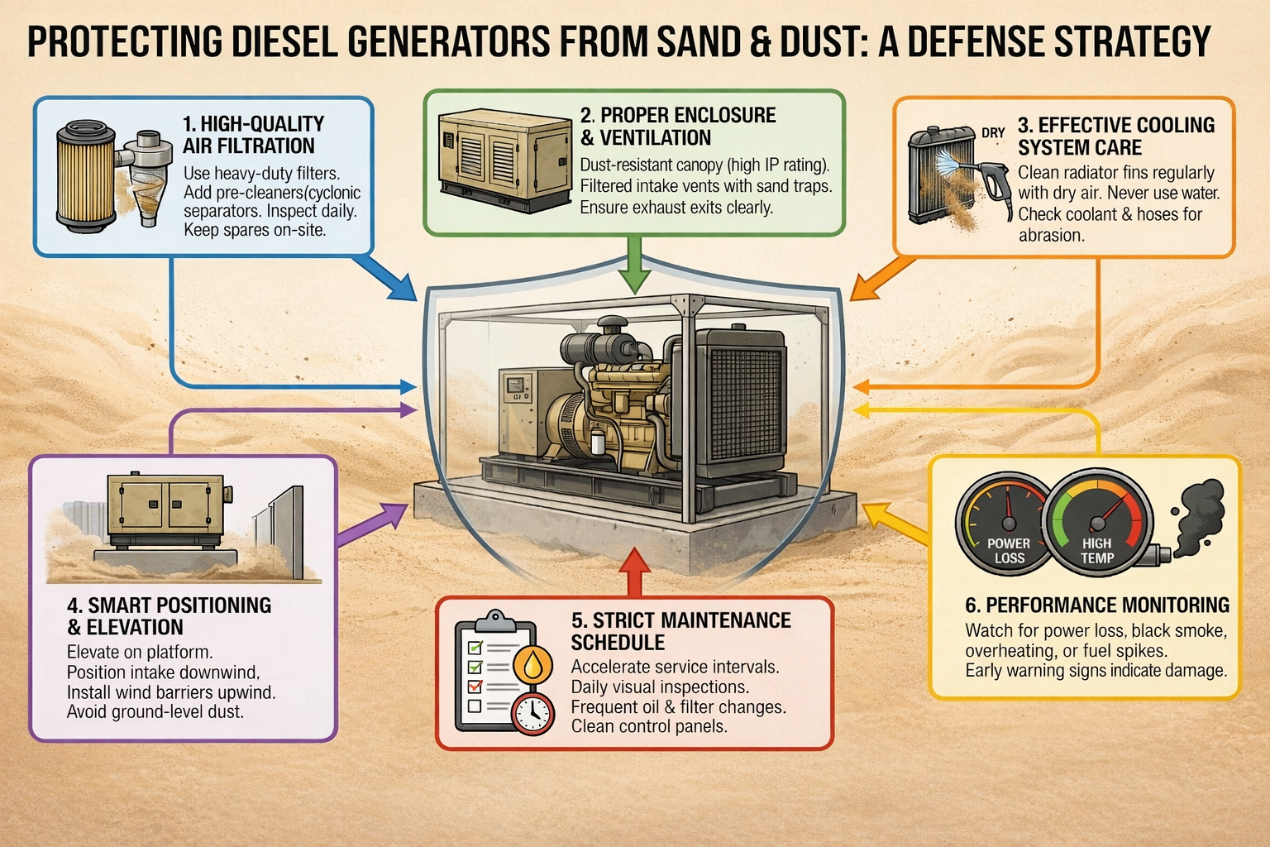
Install High-Quality Air Filtration Systems
In extreme desert conditions, the standard air filters fail quickly. Thus, you must invest in a high quality, premium, and reliable filtration strategy to easily tackle these high amounts of dust loads.
- Heavy-Duty Filters
Make sure to replace the standard paper materials with high quality filters designed for dusty environments. These durable filters effectively hold higher amounts of dust. This simply traps the tiny particles to avoid any unexpected air flow restrictions.
- Pre-Cleaners and Cyclonic Separators
Try installing some pre cleaners inside the air intake pipes. Mechanical engineers design these devices specifically to ensure air spinning with centrifugal force. Following the laws of physics, the heavy duty spinning throws all unnecessary heavy sand particles out even before they reach your engine mail filter. With cyclonic separators and pre cleaners you can add some extra years to your expensive diesel generator filter parts.
- Inspection And Replacement
The more you maintain your engine and generator, the longer its life will be. Keep an eye on your filters and check if they’re working on a regular basis. Install an air flow restriction indicator, so you have an alert reminder when it’s time to change your filters. Always have some extra filters on your site. Do not try to clean a filter forcefully by throwing it on the ground. This way, you can end up damaging or tearing the seal or paper media. And, never turn on your generator without a filter, even for a minute.
Use Proper Generator Enclosures
Sandstorms are a threat to open frame generators. It is essential to install a physical barrier to avoid any damage and shield your engine from the driving sand and dust.
- Dust-Resistant Canopies
Protect your diesel generators by placing them inside specialized, sealed containers. Search and install canopies with high IPS (Ingress Protection) ratings. These closed settings have sealed doors and gaskets to avoid any fine dust particles entering your generator.
- Filtered Air Vents
Although it is necessary to put your generator inside a closed container. But your engine still needs to access cooling air. Make sure to go for an engine enclosure that has large exhaust and air intake vents. Connect these vents with louvres and sand traps. The sand traps smartly allow the cooling air to enter the closed compartment while forcing heavy, big sand particles to drop outside.
- Proper Ventilation Design
Design your engine compartment in a way that never recirculates the hot air. The cooling fans most efficiently push all the hot air outside the canopy. If any of the sand particles block the exhaustion, the engine will start building up heat inside the compartment. It’s better not to use open frame generators in such harsh, extreme weather regions. These generators have no protection against sandstorms.
Maintain An Effective Cooling System
Once a sandstorm hits, the first victim of your engine is its cooling system. You must keep it secure and clean to avoid unexpected, sudden thermal failure.
- Clean Radiator Fins
Check out the radiator core daily. Over time, dust starts building between the radiator fins. When this happens, the fins block and instantly stop the smooth heat transfer process. You can use highly compressed air to blow all this dust outside the canopy. When using compressed air, always blow this air in the opposite direction to normal air flow, from the inside to outward direction.
- Avoid Water Cleaning
Never use water for cleaning your dusty radiators. Whenever the dust combines with water, it creates a sticky, mud like material. Which ultimately hardens, and it turns into a cement structure. If it happens, it is quite impossible to remove it from the fins. So, it’s better to use dry, compressed air only for your system cleaning.
- Check Coolant and Hoses
As time passes due to friction and sand abrasion, the rubber hoses wear down. Monthly, inspect your engine coolant and hoses to evaluate the signs of rubbing or thinning. Keep an eye on the water coolant, as if the cooling system is not working at full capacity. Your engine will no longer handle the extra heat emitted in dusty environments.
Elevate And Position the Generator Correctly
Now the question is, does your generator’s position and placement play a key role in deciding how much dust and sand it can ingest? Of course, yes. A small change in your engine positioning can make a huge difference.
- Raise The Platform
The closer your system is to the ground, the more sand and heavy dust particles will enter your generator. Make sure to place your generator over concrete pads or create a raised steel platform. With this minor elevation of a few feet, you can easily avoid unnecessary ground level dust intake.
- Wind Direction
Monitor the wind direction at your site. Place your generator in a way so that the radiator’s exhaustion points downward. Nobody wants unnecessary sand directly entering the generator engine from the air intake ducts or cooling fans.
- Wind Barriers
For a more professional and better system, you can install a physical wall or an upwind barrier around the generator. It blocks the direct wind force, creating a shadow zone that makes the air less dusty. This simple hack can amazingly reduce the extra sand and dust load on your air filters.
Follow A Strict Maintenance Schedule
When operating in desert conditions, a standard maintenance manual is no longer of use. So, you must upgrade your maintenance service schedule.
- Daily Visual Inspections
After every shift, walk around your diesel generators for daily inspection. See if there is any dust accumulated on the alternator windings. Check out the restriction indicator installed on the air filter housing. On time cleaning of the control panel helps you avoid unnecessary dust from entering through electrical switches.
- Oil Changes
The dust contaminates your diesel or engine oil, turning it into a sticky, grinding paste. If it happens, you must immediately change the oil and oil filter. If, in your generator manual, the manufacturer recommends the oil usage up to 500 hours in severe dust conditions, reduce it to 250 hours (about 1 and a half weeks).
- Electrical Connections
If your engine or generator is in contact with fine dust particles, it becomes a good electricity conductor in moist conditions. This can cause short circuits inside the control panel. Thus, it’s better to blow air at low pressure inside your electrical boxes regularly. Make sure all your control panel doors are properly sealed and tight.
Monitor Performance for Early Warning Signs
The engine asks for help and sends signals once it starts deteriorating. It’s better to keep an eye on these signs before your engine completely fails.
- Loss of Power: If the generator can no longer carry the load, it points towards restricted air flow due to clogged filters.
- Excessive Smoke: Engine emitting black smoke? It is a sign that your engine is no longer receiving proper air. Blue smoke points towards the dust have completely worn out the piston rings, and the engine oil is burning.
- Rising Temperature: Keep an eye on your temperature gauge. Any sudden rise in temperature suggests that the radiator is clogging over time.
- Fuel Consumption: Has your generator started consuming extra fuel suddenly? It means the engine is putting out more power than necessary. Make sure to fix the issue immediately if you notice any of these signs.
FAQs
How often should I change my generator air filters while working in desert conditions?
Do not follow the standard service manual. Check the filter restriction indicators daily and replace your filters every 250 hours or weekly.
Can I simply clean my dusty air filters with compressed air instead of replacing them?
It is not recommended. Unnecessary, high pressure air can destroy your paper filter media, creating holes that allow the sand to enter the engine. It’s better to replace the filter than risk your entire engine.
What are the common signs that indicate dust is damaging my backup generator?
Black exhaustion smoke means the air flow is restricted. Any power loss or increased oil consumption, or blue smoke are the common signs that indicate dust is damaging to your generator. If you see any of these signs, immediately shut down the unit and evaluate your intake system.
Conclusion
Maintaining smooth operations with diesel generators in sandy conditions becomes quite challenging if you do not maintain them on time. Unprotected machines do not survive long enough as the sand’s abrasive nature destroys the generator engines faster than imagined.
Thus, always implement a multilayered, secure defense strategy. Install high quality filtration to avoid unnecessary dust ingestion. Use sealed tanks to avoid wind blown grit. Follow a proper maintenance schedule, as on time maintenance not just protects your system. It helps you increase your machine life with on time project timelines and less budget. A properly maintained generator ensures you have the power when you need it the most. Are you looking for a generator that can survive in harsh desert conditions?
For long term, reliable power generators for industrial units, explore HuaQuan’s powerful generator range now.