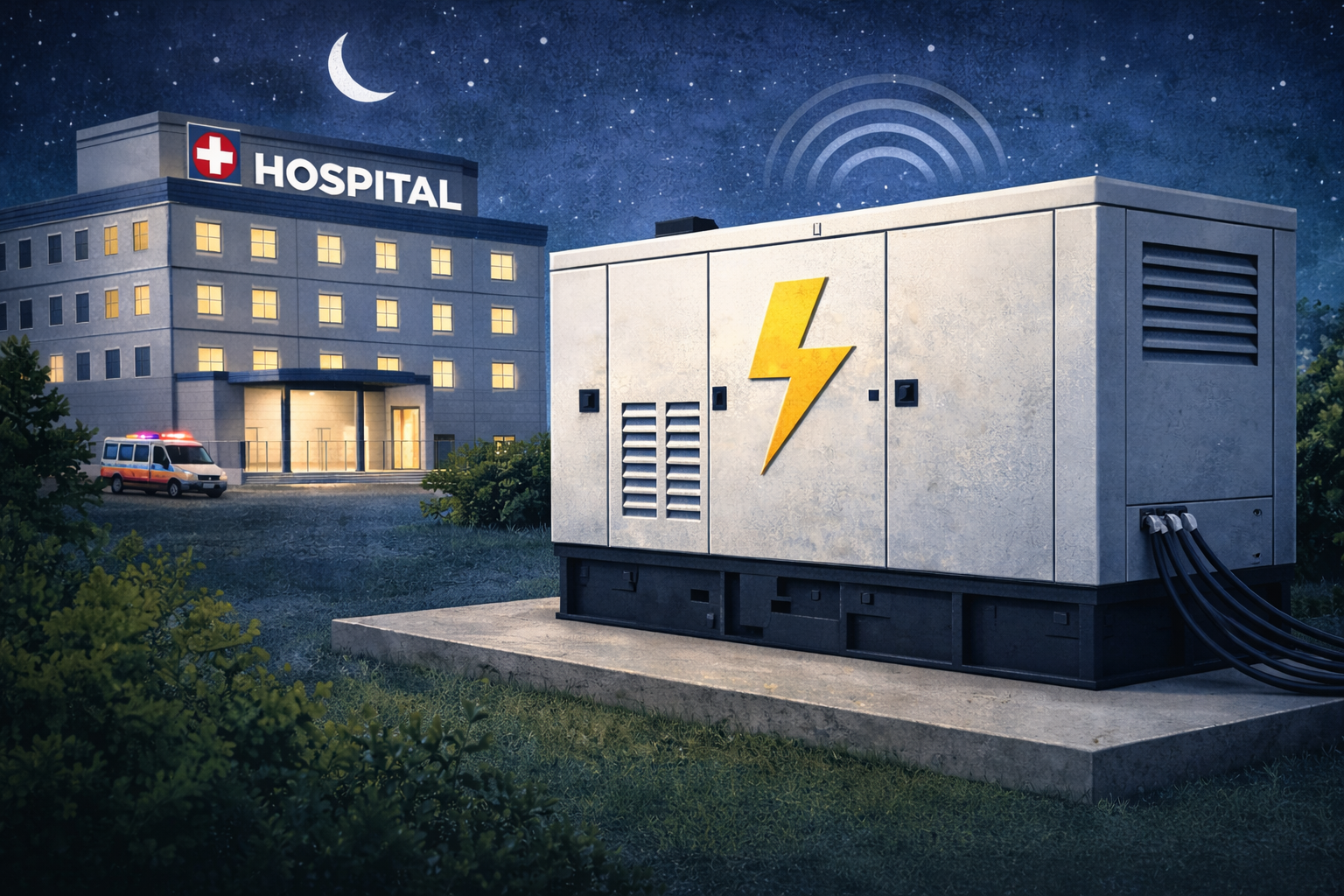
In hospitals, life and death rely highly on power. What if a grid unexpectedly fails? The operating theatres turn dark. The ventilators stop, and all monitoring systems shut down. Thus, owners prefer reliable Generators for hospitals for the maximum infrastructure output in any healthcare facility.
However, simply backup power is not enough to handle the hospital’s electricity usage. Hospitals struggle with highly complex and unique challenges. Every hospital must strictly adhere to the legal standards, such as NFPA 11, regarding startup times. They must comply with the local noise regulations, as patient recovery should not be compromised by roaring engines.
In this guide, we will see how modern silent generators are leading the industry in terms of regulatory compliance and patient comfort. How can you make the hospital safe, quiet, and fully operational during unexpected emergencies?
Why Reliable Generators Are Critical for Hospitals
For hospitals, a continuous electricity supply is necessary. A reliable hospital backup power system makes sure:
- Lifesaving Equipment Dependency: Ventilators, dialysis machines, and anesthesia monitors; everything runs without any interruption.
- Operating Rooms & ICUs: Surgeons can never pause a critical operation just because the lights flicker. So, it’s necessary to have a backup power source.
- Data & Communication: Electronic Health Records (EHR) and nurse call systems must always stay online for smooth patient care coordination.
- Legal Compliance: Those facilities and hospitals that are unable to provide maximum backup power struggle with fines, accreditation laws, and legal liabilities.
What is NFPA 110 and Why It Matters
The National Fire Protection Association (NFPA) 110 is the bare minimum standard for emergency and standby power systems. For hospitals, it’s better if you have full knowledge about different system levels to evaluate power consumption.
Level 1 vs. Level 2 Systems
- Level 1 (Critical): It is necessary for systems where any sudden power failure could result in loss of human life or serious injury. From emergency rooms to ICUs and life safety lighting, the backup power is a must have.
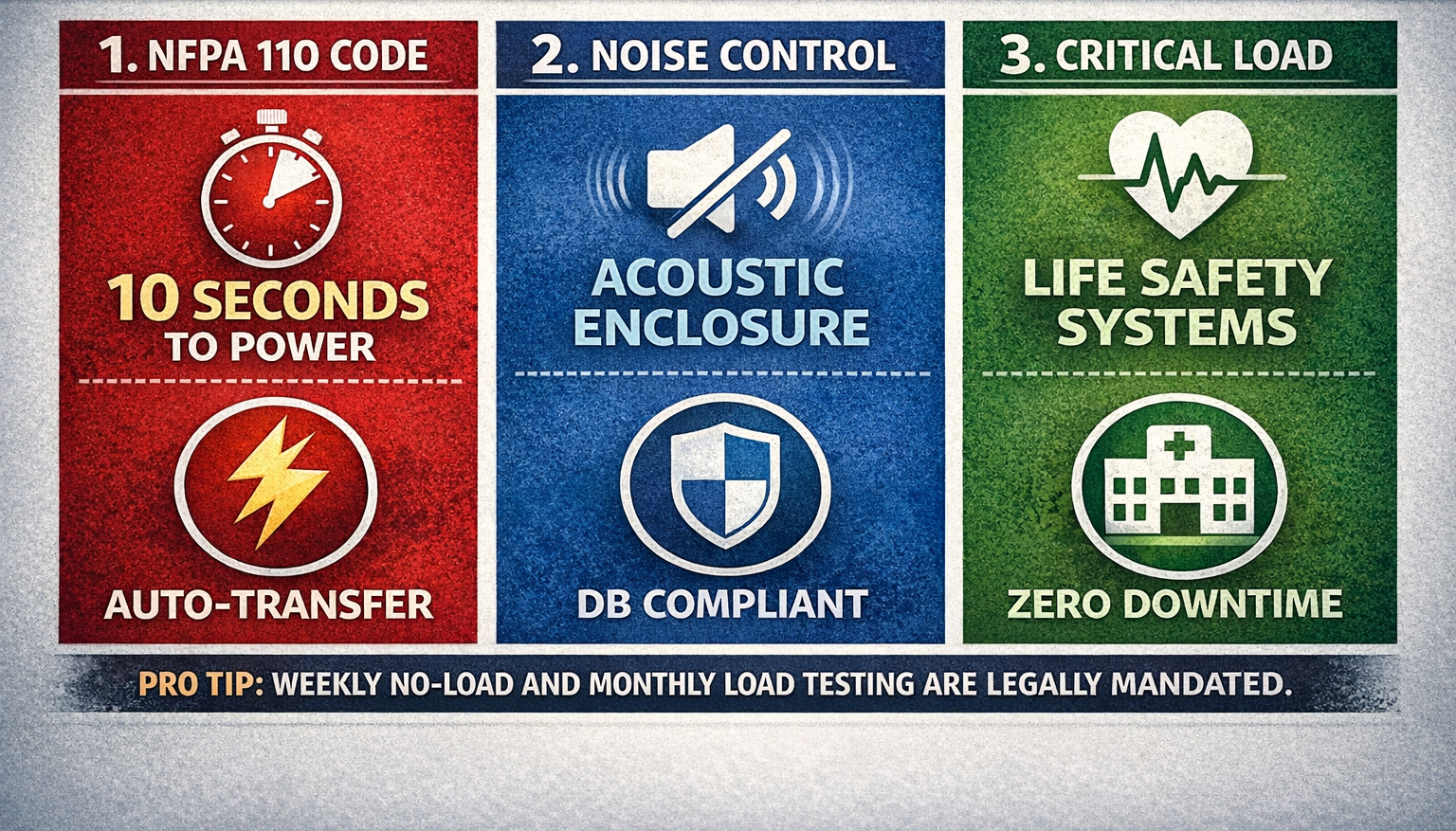
- Requirement: The generator must instantly pick up the load within 10 seconds of a grid failure
- Level 2 (Less Critical): Level 2 is for systems where any sudden failure is less critical for human life, like general heating or office lighting.
Compliance & Testing
NFPA 110 asks hospital facilities to maintain strict testing schedules. Healthcare facility generators for hospitals must all be tested monthly under at least 30% load of the nameplate rating to avoid unnecessary wet stacking.
Noise Regulations for Hospital Generators
Although power is the number one priority, making noise control the second priority. Those hospitals that are in residential areas with strict noise regulations and internal noise can overall impact the patient’s recovery mode.
- Patient Recovery Environment: According to some research and studies, excessive noise increases the patient’s blood pressure and stress level, and lessens the recovery time. A standard diesel generator can produce noise pollution exceeding 100 dBA, equivalent to a jet taking off. It is totally unacceptable near any patient’s wards.
- Local Environmental Laws: In some municipalities, authorities restrict noise levels to 70 dBA or lower during the day. At night, the noise restriction level is 50 dBA.
- The Solution: Quiet generators feature soundproof enclosure systems that comply with these standards without compromising power output.
Features of Silent Generators for Hospitals
Modern silent or super silent generators are designed to fit in sensitive environments.
- Soundproof Enclosures: Heavy duty steel canopies with high density sound absorbing acoustic forms help cut down unnecessary engine noise.
- Advanced Mufflers: Hospital grade or critical rate silencers help owners reduce the exhaust noise by 25 to 35 dBA.
- Vibration Isolation: Use rubber mounts and flexible piping to cut down engine vibrations. No more unnecessary low frequency humming noise being transferred to the building structures.
- Acoustic Louvers: Install special air intake and exhaust vents for proper cooling. Also, these louvers trap sound waves inside the enclosure.
Types of Generators Suitable for Hospitals
Diesel Generators
- Pros: These generators offer high torque and fast startup. They run within 10 seconds of a power outage. You can easily store the fuel on sites, making it extremely durable.
- Cons: You must follow a smart fuel storage management strategy with high, louder exhaust issues.
- Verdict: Owners prefer it as the industry standard for hospital emergency generator requirements.
Natural Gas Generators
- Pros: Natural gas generators have unlimited fuel supply pipelines, clean emissions, and quiet power generation.
- Cons: Sometimes, the pipelines break during earthquakes; it completely relies on utility infrastructure. Also, these generators have a slow startup response.
Hybrid Backup Systems
- Pros: Hybrid backup generators for hospitals combine battery storage power with the generator. As the batteries can handle immediate load, also known as instant UPS, the generator can gear up smoothly.
- Cons: The owner must invest in a higher initial cost for the proper setup.
How to Choose the Right Generator for a Hospital
While choosing the right power backup generator unit, be smart and:
- Power Capacity Calculation: Evaluate the size of your generator to handle inrush current for large motors like elevators and HVAC chillers. Make sure any sudden voltage dip does not reset your sensitive medical equipment.
- Fuel Availability: NFPA 110 standards ask for 96 hours (about 8 days) of onsite fuel storage. For this purpose, diesel tanks are the best, most reliable solution.
- Runtime Requirements: Does your hospital facility need to run power for 24 hours or two weeks?
- Compliance Certifications: Make sure your power generator is UL 2200 listed and EPA Tier 4 Final compliant for emissions.
Installation and Maintenance Best Practices
No matter how efficient your generator is, if you install it poorly, it will fail soon.
- Routine Testing: Automate your weekly no load test. Keep an eye on monthly load bank tests to ensure NFPA compliance standards.
- Remote Monitoring: Install high quality systems that immediately alert your facility managers via phone or e-mail if your fuel level drops or a fault alarm triggers.
- Professional Installation: Professional installation of a generator is necessary. Make sure the generator is installed away from the patient’s windows to avoid exhaust intake. While installing, ensure it easily handles flooding or weather events.
Benefits of Investing in Silent Generators
- Patient Comfort: A quiet, safe environment speeds up patient healing with higher satisfaction scores.
- Staff Productivity: Doctors and nurses do not need to communicate while shouting over the roaring of the surrounding engine.
- Regulatory Compliance: You do not have to pay fines for local noise ordinances and ensure Joint Commission accreditation.
- Community Relations: Be a good neighbor by reducing noise pollution to enhance your overall hospital reputation.
Cost Considerations and ROI
Although diesel generators for hospitals are expensive due to enclosure and silencer, the ROI is clear with maximum results.
- Avoiding Penalties: Noise evaluation and accreditation failures are costly.
- Downtime Prevention: The overall budget for one hour of downtime in a hospital, including lost surgeries and liability, far exceeds the price of a premium generator.
- Longevity: Silent canopies protect the engine from weather, adding extra years to your power backup device’s life.
Future Trends in Hospital Backup Power
- Smart Generators: IoT enabled generators can self diagnose issues before they even bring you system failures.
- Renewable Integration: Hospitals nowadays are pairing diesel generators with solar microgrids for redundancy.
- AI Monitoring: Artificial intelligence helps the owners predict load spikes and optimize the generators’ fuel consumption.
Conclusion
When lives are on stake, compromising is not an option. Generators for hospitals must be smart, compliant, and silent. If you adhere to NFPA 110 standards and invest in the best quality silent modern technology generators, healthcare facilities ensure patient safety and silence in a coexisting environment.
At HuaQuan Power, we build high quality, silent diesel generators specifically for the healthcare sector. Our units are tested to meet level 1 emergency standards.
Are you ready to upgrade your hospital backup power? Contact the HuaQuan Power team today for an NFPA 110 compliance silent generator solution consultation.
FAQs
What kind of generator do hospitals usually prefer?
Hospitals use industrial diesel generators because of their durability, quick startup time within 10 seconds, and they can easily store huge amounts of fuel on site. Some hospitals also use natural gas or biofuel generators for longer runtimes.
What is the 20/20/20 generator rule?
This is one of the maintenance rules that keeps your generator healthy. Make sure to run your generator for 20 minutes or 20% load every 20 days. It helps the moving parts from unexpected jamming and burns off any unnecessary moisture in the engine.
Can a 4.5 kVA Generator carry AC power?
Yes, a 4.5 kVA generator can easily run a one-ton inverter AC or a standard one-ton window unit. However, it becomes difficult to handle an old 1.5 ton non inverter unit due to its high starting watts power to kick start the generator’s compressor.
How many kVA is necessary for a one-ton AC?
A one-ton AC consumes from 1.2 to 1.5 kVA of power while running. Although the electric motors need a kick start power surge to run, make sure your generator is rated at 3.5 kVA or higher to start it safely without tripping the breaker.
What is a gene set in a hospital?
Genset is a short form for a generator set. In hospitals, it refers to complex backup power unit plans like the engine plus the alternator that automatically kicks into power for lifesaving equipment like ventilators and operating theatres during an emergency blackout.
⚡ Explore Related Solutions
- 🏭 500kW Diesel Generator
- 🏭 1000kW Diesel Generator
- 🏭 500kW YC Diesel Generator
- 🔧 KMS (Cummins/Doosan) Series
- 🏥 Data Center Generator Solutions
- 🏥 Hospital Generator Solutions
- 🏥 Silent Generator Solutions
💡 Need a customized solution? Contact our engineering team for project-specific recommendations.