The reliable backup Diesel Generator offers backup power where you cannot afford system failure in emergencies. Trusting backup Geradores in Hospitals saves lives and protects critical data in data centers. You need a stable power source for both areas. That’s why we made this detailed guide so you can pick the right backup diesel generators.
Key Takeaways: How to Choose a Backup Diesel Generator?
You need to pay attention to minor details while purchasing reliable backup diesel generators for hospitals and data centers:
- Match the overall load requirements and peak demands while picking the generator.
- Generators which startup within the first 10 seconds after a power outage are reliable.
- Figure out the fuel autonomy and backup duration requirement for a strong generator choice.
- Buy backup diesel generators from trusted and reputable manufacturers.
- Find the generator with fast startup (<10 sec) with enough fuel backup (95+ hours)
- Engine should meet compliance protocols for safety (NFPA 110) and support critical equipment (HVAC, lighting and data centre systems)
- Match the generator size, ensure scalability and N-1 redundancy for stable power generation.
Why Backup Diesel Generators are Critical
The backup diesel generator automatically starts running in case of sudden emergency power loss in hospitals or data centers. You cannot afford a power loss situation during critical situations in hospitals. Neither can you compromise billions of data transfers and updates in data centers.
You need a 24/7 power supply in hospitals for patients’ safety, emergency machines and lights. Additionally, data centres highly depend on a consistent power supply to manage data, cooling systems and network infrastructure.
Hospital Backup diesel generator Requirements: Safety Comes First
Let’s talk about what type of backup diesel generator you need for hospitals for quick startups and patients’ safety:
Quick Response and Compliance
Hospitals are crucial spots where you immediately need a power supply during downtime. The ideal time, according to NFPA 110 standards, a generator should start and supply power within the first 10 seconds. That’s how you restore power for life-saving equipment and keep them running without disturbance.
Fuel Capacity and Runtime
The average fuel storage capacity for hospitals is usually 96 hours. Meanwhile, this limit can be exceeded in high-risk or remote areas. You need strong fuel management in case of a power outage or a disaster situation.
Redundancy and Reliability
Many hospitals rely on an N-1 configuration to deal with sudden emergencies. In short, they use an additional backup diesel generator just in case the first one fails to start on time. You can make sure public safety during backup generator malfunctions and keep operations running.
Environmental Considerations
Próximo, you have to maintain a noise-free environment, especially in hospitals, so pick an enclosed backup diesel generator. For hospitals, most generators come with soundproof enclosures to make them quiet for patients and staff.
Data Centre Backup diesel generator Requirements: Performance and Stability
Here are the key considerations you need to keep in mind while selecting a backup diesel generator for data centres:
Continuous Power Capability
You have to select the backup diesel generator for data centres based on their DCC ratings. DCC stands for Data Centre Continuous ratings, which actually measure constant operations under high loads. During long-term energy loss, reliable standby generators keep data centres updated.
Handling Dynamic Loads
Data centres constantly go through rapid load fluctuation. That’s why you need a backup diesel generator which easil deals with unpredictable load changes. Only stable power during load spikes protects heavy machinery and expensive IT devices.
Harmonic Control and Power Quality
Latest IT systems usually generate harmonics, which might impact the power quality. That’s why you need advanced backup diesel generators with alternators and regulators for a clean and smooth power supply.
Scalability for Growth
As the data centers keep expanding with time, you need modular backup diesel generators to support new power demand. You can increase the load capacity and get flexibility without major replacement with modular generator systems.
.
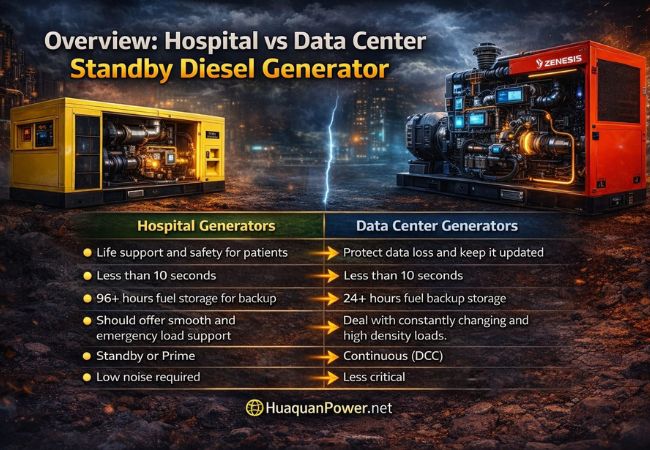
Visão geral: Hospital vs Data Centre Standby Diesel Generator Needs
| Requirements | Hospital Generators | Data Centre Generators |
| Primary Objective | Life support and safety for patients | Protect against data loss and keep it updated |
| Start Time | Less than 10 seconds | Less than 10 seconds |
| Runtime Requirement | 96+ hours of fuel storage for backup | 24+ hours of fuel backup storage |
| Load Type | Should offer smooth and emergency load support
| Deal with constantly changing and high-density loads. |
| Power Rating | Standby or Prime | Continuous (DCC) |
| Noise Priority | Low noise required | Less critical |
| Redundancy | Mandatory (N+1) | Highly recommended |
Key Factors to Consider When Selecting a Backup Diesel Generator
To choose the right type of backup diesel generator, you need to follow these tips:
Load Calculation and Sizing
You have to precisely calculate the generator power requirement for a backup diesel generator. Small size generators fail under high pressure. Meanwhile, with large size generators, you get poor efficiency, and they cost more. Keep in mind the peak load demand and future expansion while choosing the generator.
Automatic Transfer Switch (ATS)
Always select the standby generators with ATS systems for hospitals and data centres. Because automatic transfer switches let the generator startup within the first 10 seconds after power loss. You can avoid delays and human errors with proper ATS systems.
Fuel Type and Storage
You should always prefer diesel for generator fuel type because of its energy density and stable storage. Moreover, to maintain long operations in emergencies, you need reliable fuel management.
Maintenance and Testing
Make a regular schedule for maintaining backup diesel generators in hospitals and data centres. You need to monitor engine performance, load testing, find and fix faults in time to avoid component damage
Installation and Ventilation
To achieve stable efficiency during operations and generate safe power, you have to install generators carefully. Avoid an overheating environment because it can damage the standby power generator’s components.
When Power Fails: Real Causes Behind Generator Breakdowns
There are different reasons behind generator failure, such as poor maintenance, choosing the wrong size or a lack of redundancy. Only slight delays and unstable power supply can cause huge damage during critical operations in hospitals and data centres. That’s why follow these expert suggestions:
- Regularly clean the generators and replace faulty components.
- Make sure proper redundancy with an additional standby power generator.
- Delays in startup cause trouble in hospitals, and voltage fluctuations are harmful for data centres.
- Use high quality generator component for stable operations.
- Test the controller readings with regular testing.
- You need to manage the fuel to avoid startup issues.
- Keep eyes on fuel levels and separate fuel/water regularly.
Avoid These Costly Generator Mistakes
- Never rely on cheap backup diesel generators; they might put you in trouble in emergencies.
- Don’t buy sensitive generators that cannot handle high loads.
- Ignoring plans for the scalability of the power supply.
- Never choose an engine that needs heavy repairs.
- Weak generators that struggle to deal with rapid load spikes in data centres.
Conclusion:
You need a clear understanding of the hospital and data centre energy needs before choosing a backup diesel generator. For hospitals, you need to prefer fast startups and a safe power supply. Meanwhile, for data centres, you need a strong backup diesel generator that easily deals with rapid load peaks.
Get in Touch with the most reliable diesel generator manufacturers, Poder Huaquan.
FAQs
How do I calculate the right generator capacity for hospitals and data centres?
To calculate the load requirement for standby generators, add peak load demand, startup surge and equipment voltage. Later, add 20 per cent additional load capacity for future scalability.
What standards and reliability requirements must generators meet?
If you want stable, quick and reliable backup power for hospitals and data centers then you need strict standards like:
- Hospitals: NFPA 99 & NFPA 110 compliance
- Power backup within 10 seconds
- Minimum 96 hours of fuel backup
- Data Centres: ISO 8528 G3 power quality
- Fast startup with stable voltage and frequency
- Specially made for DCC or Data Centre Continuous
How to make sure stable power restoration with a backup diesel generator?
You need to install diesel generators with soundproof enclosures in hospitals to avoid noise production. Keep checking for oil replacement or component upgrades in the system for smooth power generation.