People prefer installing diesel Générateurs for full power backup. But when you install a power backup generator, there is a hidden issue that silently damages your power savior over time. Generator wet stacking, under light loads, results in carbon deposits inside the engine and other generator components. Usually, people do not notice it until the overall performance drops, and the technician asks for expensive repairs.
This Blogue covers what generator wet stacking is. Why does it happen? How to know the wet stacking warning signs? And what are the best ways to prevent it, so the generator stays reliable in the long run?
What Is Generator Wet Stacking?
In power generators, the unburned fuel and carbon accumulation inside the exhaust system is known as generator wet stacking. Standby and emergency power systems complain about this problem frequently. People misunderstand it until it causes extensive damage.
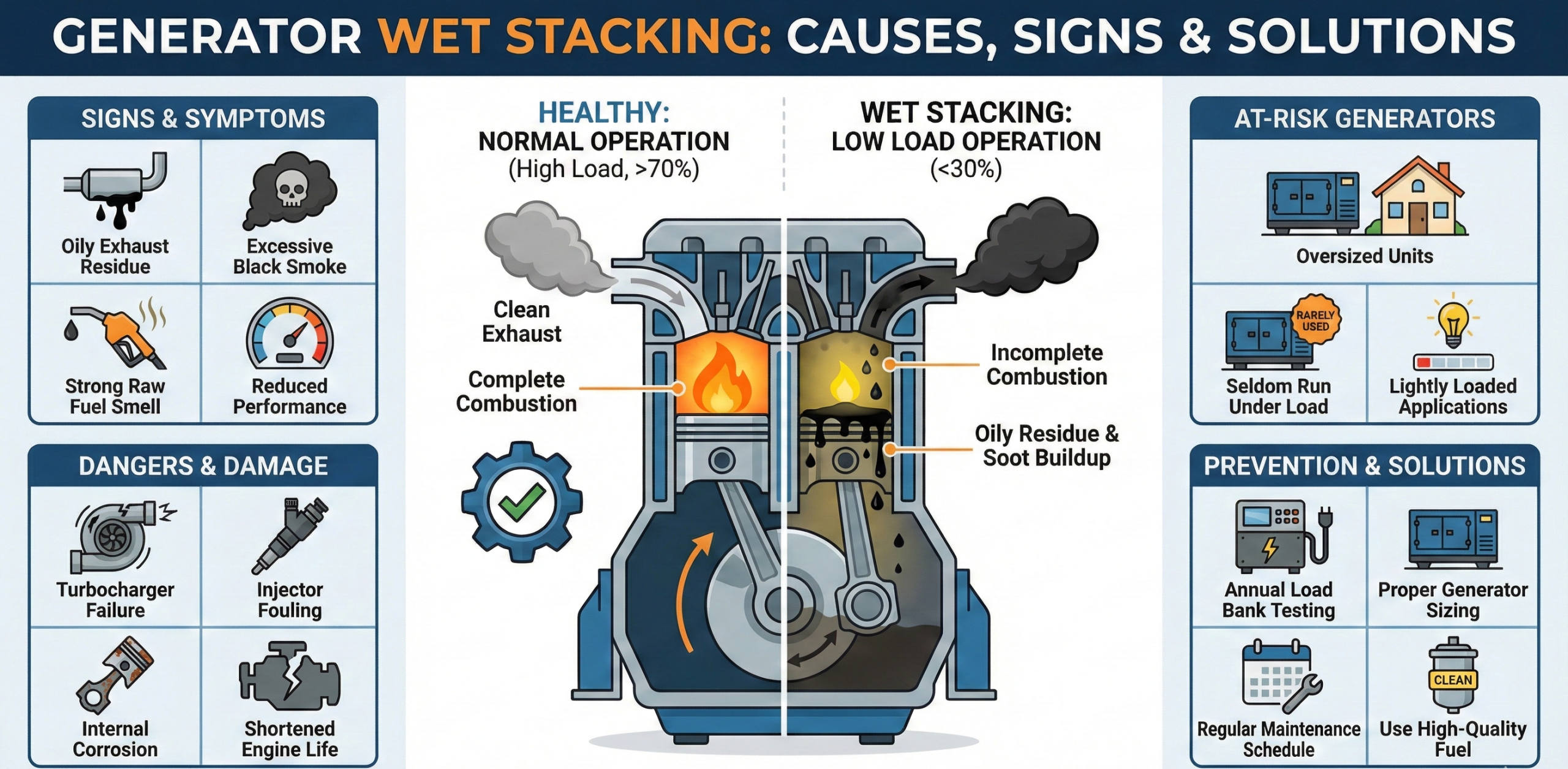
Wet stacking happens when you run the engine below the optimal operating temperature. Usually, manufacturers design diesel engines to operate under heavy loads ranging from 70 to 80% of their overall capacity. When they run at a lower load level or sit idle for long periods, they do not get hot enough to burn all the fuel injected inside the cylinders.
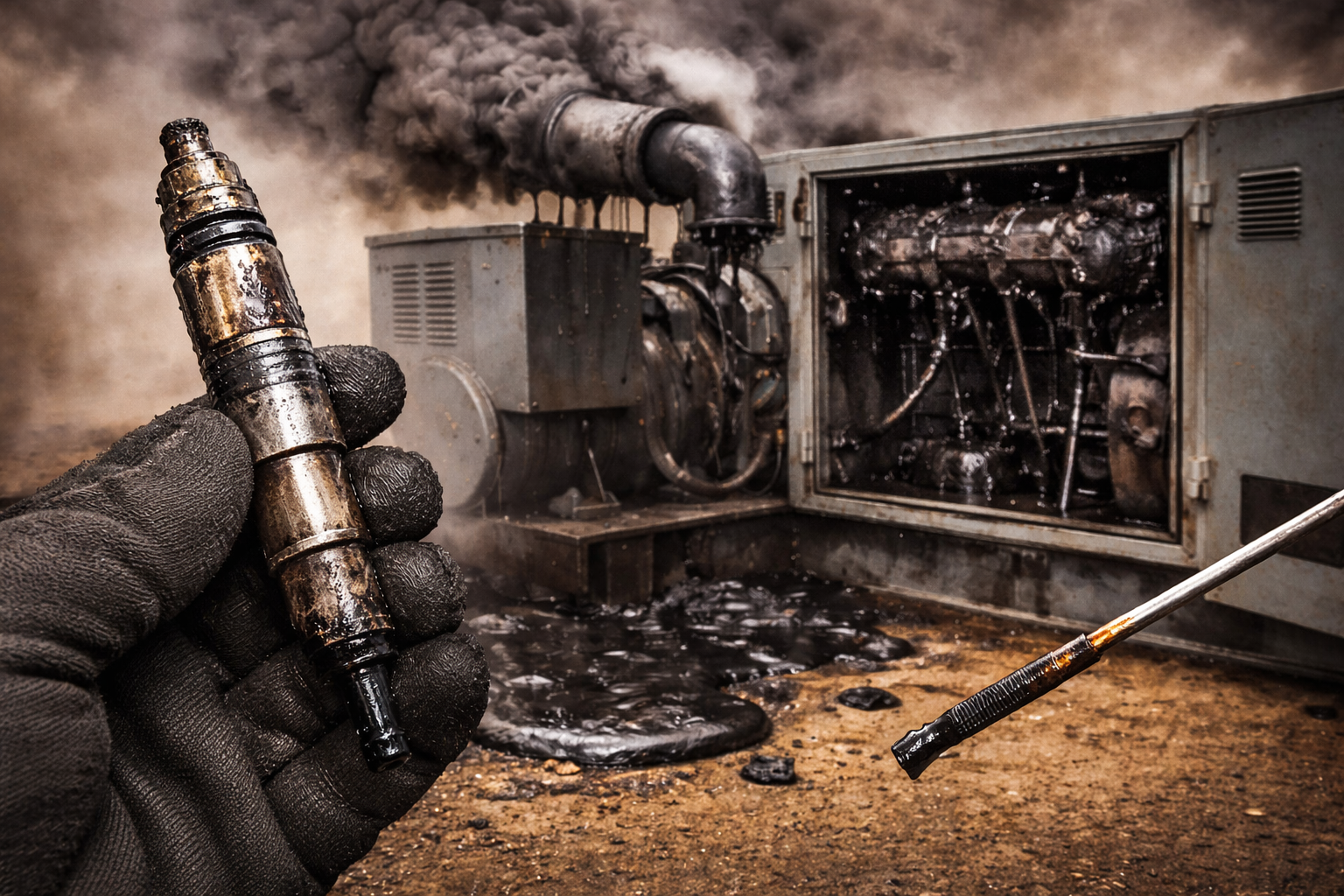
Finalement, an oily substance, a mixture of unburned diesel and soot, stacks up in the exhaust pipes, walls, and the turbocharger. If not treated on time, this buildup severely impacts the engine performance and leads to permanent failure.
How Generator Wet Stacking Happens
To know why wet stacking occurs, let’s look inside the combustion cycle of a diesel engine.
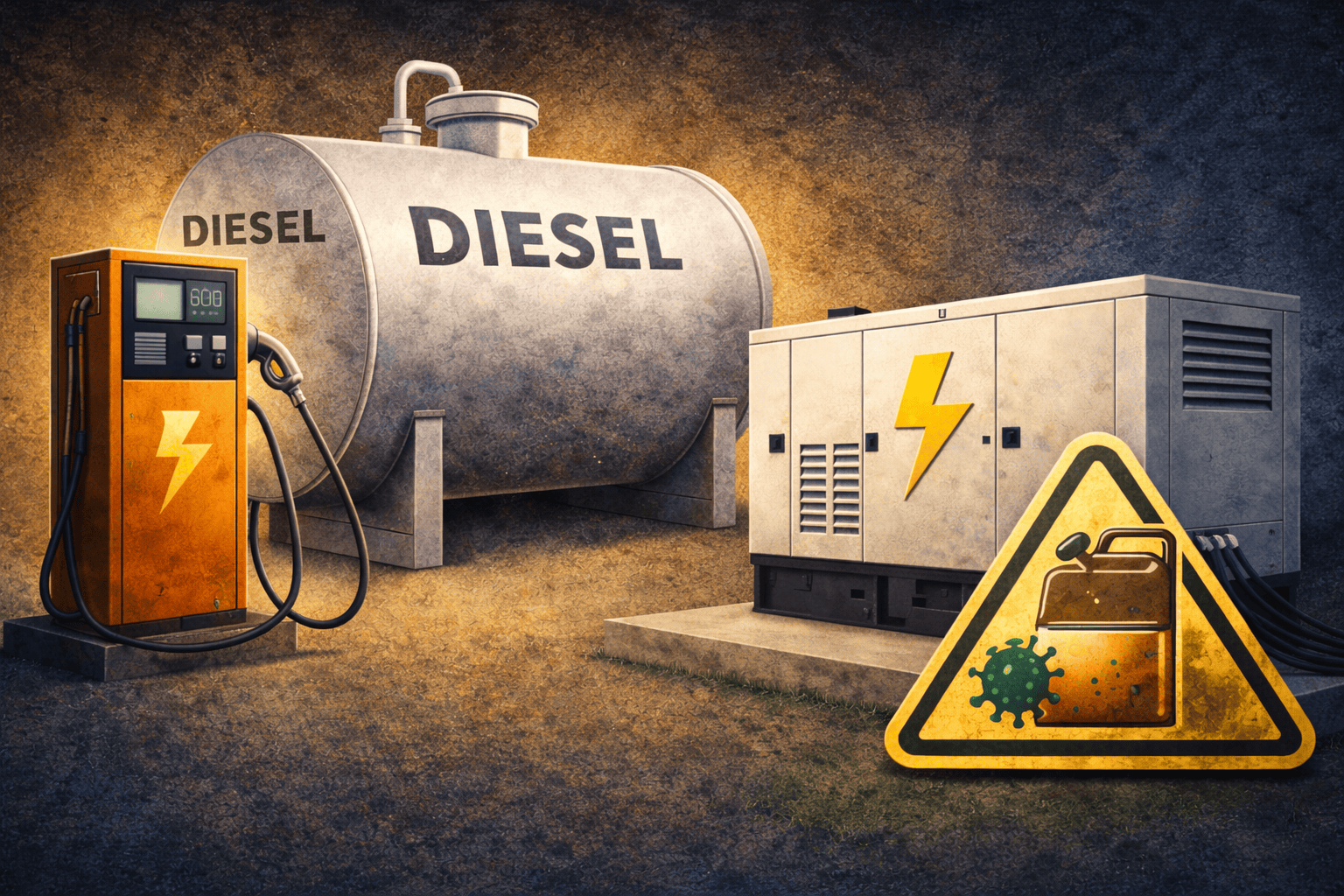
- Engine Runs at Low Load: When you run a generator with no electrical or little load connected, the internal cylinder temperature is still low.
- Incomplete Combustion: Diesel fuel needs high pressure and heat to burn and vaporize completely. Without maximum heat, the fuel does not ignite fully.
- Unburned Fuel Escapes: Due to low pressure, fuel instead of turning into hot gas and power is pushed out of the cylinder into the engine exhaust system.
- Accumulation: Over time, the vapors cool down and condense into a thick, oily black liquid. This sludge deposits inside the exhaust, turbocharger blades, and muffler.
- Leakage: Eventually, these black sticky liquid drips come out from the exhaust pipe connectors, pointing towards a severe generator wet stacking issue.
Signs and Symptoms of Generator Wet Stacking
Be proactive enough to find out about generator wet stacking early. It helps you save thousands of dollars in repair costs. Keep an eye on these visible warning signs during routine generator inspections.
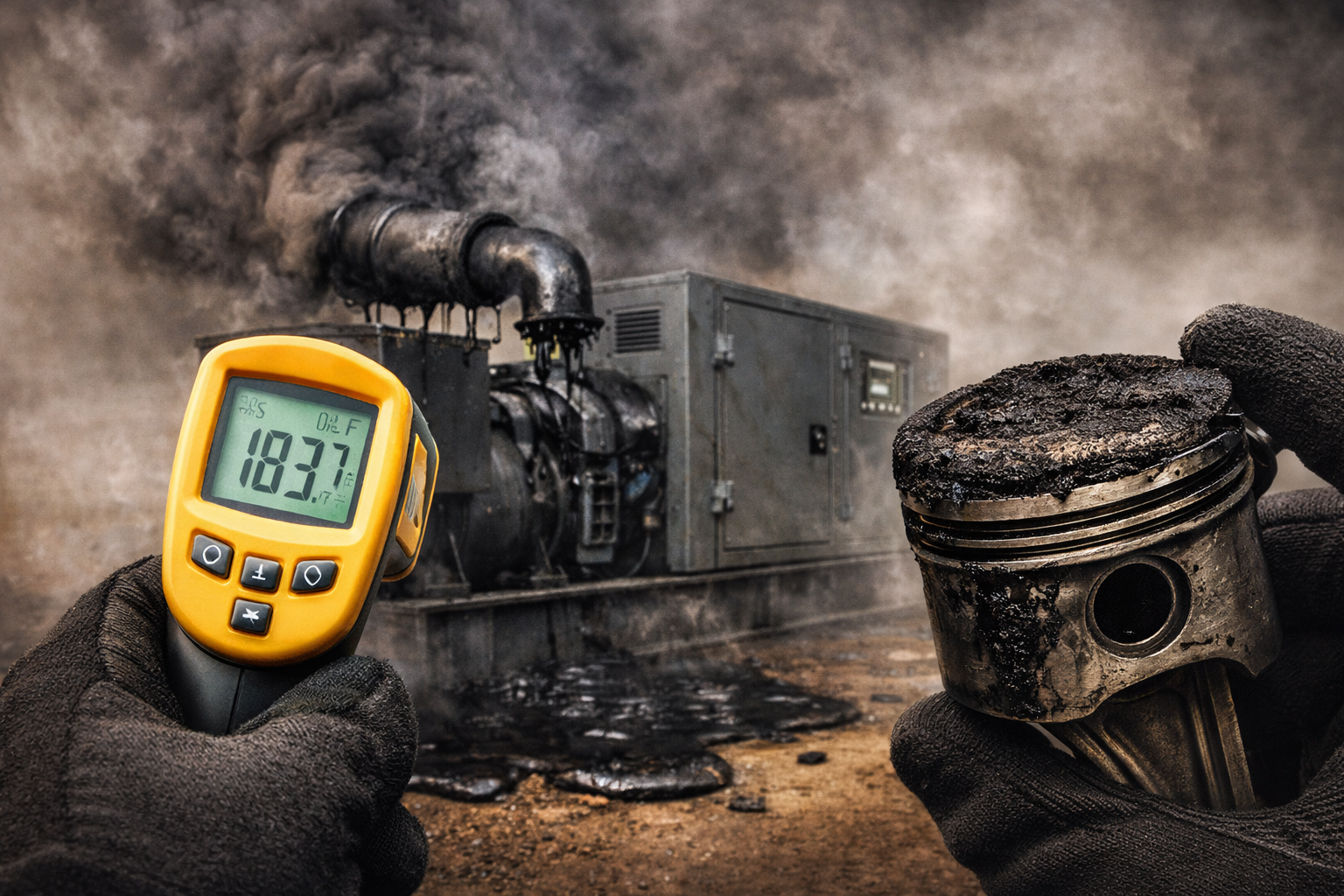
Black, Wet Exhaust Residue
Suppose you notice a thick, black substance oozing from the exhaust pipe joints or turbocharger. Unlike dry normal soot, this residue is oily and wet, highlighting that the fuel is not fully in the exhaust.
Excessive Black Smoke
Although a puff of smoke during generator startup is normal, if you notice continuous black smoke from the generator exhaust while running, the engine is over fueling. Or, the fuel is not burning efficiently, a classic problem that could turn into wet stacking if not fixed on time.
Sluggish Generator Performance
Sometimes, the exhaust walls or turbochargers have carbon deposits, and the engine cannot properly breathe. If this happens, the generator struggles to accept the full power load and sounds rough while running.
Fouled Injectors and Spark Arrestors
Remember, the carbon buildup never stays in place inside the exhaust. It proceeds towards the combustion chamber, fouling the fuel injector tips. Making the situation worse, it leads to more unburned fuel patterns.
Strong Diesel Smell Around Generator
If your diesel engine is running exceptionally well, it has a specific exhaust smell. But remember, it should never feel like raw fuel. Any unburned diesel odor near the exhaust stack is a clear warning sign of wet stacking in diesel generators.
Why Generator Wet Stacking Is Dangerous
Never try to ignore wet stacking. This is not just a mere cosmetic issue. It is a mechanical problem that can destroy your power system in no time.
- Carbon Buildup Damages Turbocharger: Soot accumulation inside the turbine blades causes a drastic imbalance, leading to a seized generator.
- Clogged Injectors: Carbon deposits on injector nozzles turn the fuel spray pattern upside down, making a power loss mess with hot spots on pistons.
- Reduced Fuel Efficiency: As the fuel does not burn completely, the system sends it towards the exhaust. Finalement, the generator burns more diesel for less power.
- Increased Maintenance Costs: When owners try to fix severe wet stacking problems, they must either look for a complete engine overhaul or ask some professionals for an expert cleaning service.
- Shortened Engine Lifespan: Chronic low load operation increases the cylinder glazing. It destroys the compression system. People end up paying for a complete engine rebuild.
Generators Most at Risk of Wet Stacking
Sometimes, low load diesel generator problems occur in specific models more than in others.
- Oversized Standby Generators: Suppose you buy a 500kW generator, and your building consumes only 50kWh of power. The engine will never reach its maximum operating temperature. It is one of the most common oversized generator issues.
- Units That Rarely Run Under Load: Power backup generators that do not exercise for 10 minutes a week without a load bank are easy targets for wet stacking.
- Emergency Backup Generators in Buildings: Sometimes, people install emergency generators for future expansion or fire pumps that rarely run. These units, which are idle or lightly loaded for years, are at a high risk of wet stacking.
- Lightly Loaded Rental Units: Owners who use rental generators for small events or light Lighting Towers complain of wet stacking as the generators often run below their overall rated capacity.
How to Prevent Generator Wet Stacking
Now, the question is, how do you avoid wet stacking? Simply, the heat is the cure. Make sure to get your engine hot enough to burn off any carbon deposits available.
Run Generator at Proper Load
Manufacturers always recommend running diesel generators at a minimum of 30 to 50% of their rated load. This is how the cylinder temperature rises high enough to ignite the complete combustion process.
Perform Regular Load Bank Testing
Always perform a generator load bank test. Connect a portable load bank with your generator and artificially apply 100% load. It speedily increases the exhaust temperature, burning out the wet stacking residue, and cleaning your entire system.
Avoid Oversizing Your Generator
Are you purchasing a new unit? Consult with HuaQuan Power engineers to have the right size. A small generator running at 75% load is far healthier and more efficient than installing a massive generator running at merely 10% load.
Follow a Diesel Generator Maintenance Schedule
Make sure to follow a standby generator maintenance routine so you can easily find any issues early with stacking symptoms.
Use High-Quality Diesel Fuel
Poor quality fuel with low certain ratings burns slower and cooler. It plays a key role in carbon deposit buildup; it’s better to use fresh, clean diesel.
How to Fix Generator Wet Stacking
Is your generator just showing wet stacking signs? Can you fix it? Of course, yes. But the method depends on how severe the wet stacking issue your generator is struggling with.
- Load Bank “Burn Off”: For mild cases, run your generator at 75 to 100% load for two to four hours. Usually, it burns all the accumulated carbon and cleans the exhaust system.
- Fuel Injector Cleaning: If there are foul injectors, run a premium diesel cleaning additive. Or remove the cardboard residue with professional ultrasonic cleaning.
- Exhaust System Cleaning: For severe cases, if your muffler is clogged with sludge. Or the exhaust piping is blocked. You must disassemble the engine, manually clean or replace the affected components.
- Professional Servicing: If there is cylinder glazing, you must install new piston rings along with an engine horn, and simply switch to rematching of cylinder walls.
Generator Wet Stacking vs Normal Exhaust Smoke
En général, owners misunderstand normal exhaust smoke in a cold start to avoid the wet stacking problem. Use this comparison chart to find the issue.
| Feature | Normal Operation | Wet Stacking Indicator |
| Exhaust Color | Light gray/white on startup; clear when running. | Continuous thick black smoke or heavy white vapor. |
| Exhaust Output | Dry soot (dusty). | Wet, oily residue dripping from pipes. |
| Smell | Standard exhaust odor. | Strong smell of raw, unburned diesel. |
| Fuel Usage | Normal consumption. | High fuel consumption with low power output. |
| Turbo Condition | Clean blades. | Coated in black sludge/carbon. |
FAQs
Does wet stacking permanently damage a generator?
Yes. Long term carbon deposit buildup damages the turbochargers, exhaust systems and injectors if not treated on time.
How long does it take for wet stacking to occur?
Wet stacking begins after repeated low load operations over months.
Does wet stacking only occur in diesel generators?
Yes, it primarily damages diesel engines. As diesel fuel ignites at low temperatures, generators struggle with wet stacking.
How often should I run a load test on my generator?
Experts always recommend annual load bank testing. If you have lightly used standby units, you can’t run load bank tests frequently.
Can the process of wet stacking be reversed?
Yes, in early stage wet stacking, it can be diminished with proper load testing and on time maintenance.
Final Thoughts: Generator Wet Stacking
Generator wet stacking is a preventable problem. If not spotted early, it kills the diesel engines quietly. Simply, diesel engines love to work hard. If you run them on light loads, it will start depositing carbon buildups, leading to severe wet stacking cases.
Make sure to follow proper sizing and run at least 30% plus load. Schedule annual load bank tests to keep your HuaQuan Power generator reliable for decades. Are you looking for professional generator testing or maintenance services? Do not let wet stacking affect your backup power setup. Contact the service team today for instant load bank testing and expert advice.