
Don’t rely on guesswork when buying a generator for your Hogar or factory. Calculate the power of a diesel generator needed to run heavy equipment such as motors, pumps or sensitive machines. Although you can find a diesel generator size calculator online, today we will explore the detailed process for selecting the right generator in this guide.
Conclusiones clave: Calculate the Power of a Diesel Generator
You will not need any diesel generator size calculator after reading this guide. En breve, you can calculate the power of a diesel generator by following these steps:
- Make a list of currently running devices and add their loads in KW.
- Add the maximum number of starting surges in KW.
- Later, agregar un 20 a 30% safety margin while calculating the power.
- You can even convert KW to KVA if needed by following this method: kVA = kW ÷ 0.8 (power factor)
Calculating the right generator size ensures a stable and reliable power supply for your sensitive machines in factories.
What Does Generator Power Mean?
Generator power refers to how much electricity a generator can supply to multiple devices, measured in Kilowatts (kilovatios) or Kilovolt-amperes (KVA).
KW is the actual power available to the equipment. Mientras tanto, KVA is called apparent power, which represents the total energy supplied and helps you calculate the generator’s size. You can convert KW into KVA, as many generator manufacturers rely on that.
Step-by-Step: How to Calculate the Power of a Diesel Generator
Let’s calculate the power of a diesel generator with easy and clear steps:
Paso 1: List All Electrical Loads
List down all the devices that will operate on the generator’s power after a grid failure. Sin embargo, common equipment in homes and factories includes:
- Lighting systems
- Air conditioners
- Machines and motors
- Computers and electronics
You have to add up all these devices’ running power.
Example (Small Setup):
- Lights: 1 kilovatios
- Computers: 1.5 kilovatios
- AC units: 3 kilovatios
- Machinery: 5 kilovatios
Total Running Load = 10.5 kilovatios
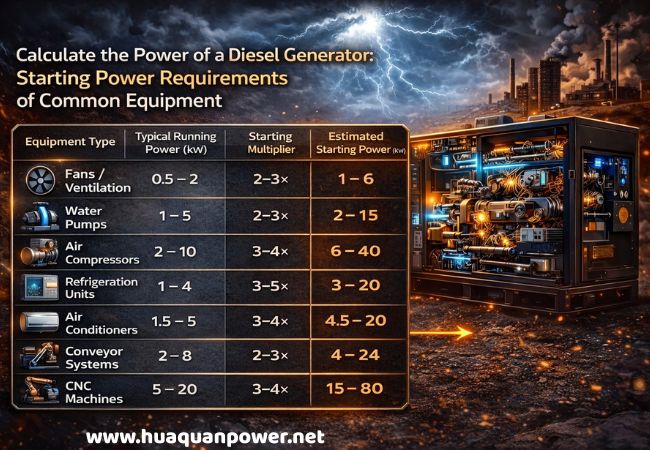
Calculate the Power of a Diesel Generator: Starting Power Requirements of Common Equipment
You can easily calculate the power of a diesel generator once you understand how devices behave during startup. Here is a brief, detailed analysis of different machines and equipment with their power levels:
| Equipment Type | Typical Running Power (kilovatios) | Starting Multiplier | Estimated Starting Power (kilovatios) |
| Fans / Ventilation | 0.5 – 2 | 2–3× | 1 – 6 |
| Water Pumps | 1 – 5 | 2–3× | 2 – 15 |
| Air Compressors | 2 – 10 | 3–4× | 6 – 40 |
| Refrigeration Units | 1 – 4 | 3–5× | 3 – 20 |
| Air Conditioners | 1.5 – 5 | 3–4× | 4.5 – 20 |
| Conveyor Systems | 2 – 8 | 2–3× | 4 – 24 |
| CNC Machines | 5 – 20 | 3–4× | 15 – 80 |
Add the running load demand, multiplier and real starting surge, and you can precisely calculate the power of a diesel generator.
Paso 2: Add a Safety Margin
To prevent any unwanted overloading or future expansion issues, agregar un 20-30% safety margin to the total required power to calculate the power of a diesel generator.
Formula:
Required Power (kilovatios) = Total Load × 1.2 a 1.3
Example:
10.5 kW × 1.3 = 13.65 kilovatios
Entonces, you should buy a generator with at least 14 kilovatios.
Paso 3: Convert kW to kVA
Different Generadores use KVA ratings to describe their power levels. But you can convert KW to KVA:
Formula:
kVA = kW ÷ Power Factor (usually 0.8)
Example:
14 kW ÷ 0.8 = 17.5 kVA
Final Selection: Choose an 18 kVA generator
Key Factors That Affect Generator Power Size Calculation
1. Type of Load
Never ignore the different types of load when calculating the power of a diesel generator. The first type of load is a resistive load, such as a light or a heater, which is much more stable. Sin embargo, the inductive loads, such as motors or AC, have a higher starting surge.
2. Load Simultaneity
You cannot start up all the devices at once; it’s called the simultaneity factor. That’s why you can turn on the lights continuously but start up machines in multiple phases. You can reduce the required generator size by smart planning.
3. Environmental Conditions
Próximo, you need to manage the ambient temperature because it can affect the generator’s power efficiency. Mientras tanto, you may reduce the engine power upto 3 a 5% per 300m at higher altitudes. You may need a larger generator under these conditions.
4. Generator Load Range
Lastly, if you want minimal load capacity, then select a load range from 30% a 40%. Sin embargo, the ideal load capacity is 70-80%. Never operate at 100% load continuously for extended periods. You face issues like fuel inefficiency when operating with too many loads.
Diesel Generator Size Calculator
If you are searching for “diesel generator size calculator” online, then here is one short formula for you:
Generator Size (kVA) = (Total kW × Safety Margin) ÷ 0.8
Where:
- Safety Margin = 1.2 a 1.3
- Power Factor = 0.8
Home Generator Sizing: How to Calculate the Power of a Diesel Generator for Residential Use
Generalmente, residential places run on both low and medium loads. Different home devices include motors, lights, refrigeradores, AC and fans. Entonces, calculating the power of a diesel generator is much easier:
- List down different home appliances like: lights, fans, fridge, AC, and basic electronics.
- Add the entire running load in kW
- Calculate the highest power surge of the AC or refrigerator.
- Add a safety margin of 20 a 30%
- Finalmente, you can buy generator power for the home within a range of 5 a 15 kilovatios.
Factory Generator Sizing: How to Calculate the Power of a Diesel Generator for Industrial Use
Sin embargo, to calculate the power of a diesel generator for factories is much more critical than for homes. Because industries rely on heavy machines and expensive equipment, you cannot take risks:
- List all types of machinery, from motors, HVAC systems, a Equipo de producción
- Calculate total running load (kilovatios) for all active devices.
- Depending on all machines, add up to 3 a 5% highest starting surge.
- You cannot start all the devices at once, so include the load sequencing.
- Then you need an extra 20 a 30% safety margin for a smooth power supply in heavy loads.
- You can convert the final number of load from KW to KVA to find the right generator for factories.
Final Verdict
Now you understand how to calculate the power of a diesel generator for homes and factories. All you need is a list of the equipment’s load requirements and their starting surge, plus an extra 20 a 30% for safety or future expansion.
Get in touch with Energía HuaQuan for durable and high-performing diesel generators.
Preguntas frecuentes
What is the main difference between running watts and starting watts?
Running watts means the power you constantly need to operate systems like lights, computers or TVs. Mientras tanto, some devices, such as motors, AC and refrigerators, require extra power at startup, which is called starting watts.
How do I convert total watts (kilovatios) into kVA for generator sizing?
To convert kW to kVA, divide the total required load, including the surge, by the power factor. Por ejemplo:
Formula:
kVA = kW ÷ 0.8
You get the right generator power size with this formula.
3. What is a safety margin, and why is it important?
Safety margin is the extra power you should add to the total load requirement before selecting the generator. Generalmente, a
calculate the power of a diesel generator it ranges from 20% a 30%, and you need it to avoid overloading or overheating. Además, a reliable safety margin in addition to the total power requirement:
- Extends generator lifespan
- You can run more appliances or machines in the future.
- Compensates for efficiency loss in heat or high altitude
Rule of thumb:
You need to multiply the total load by 1.2 a 1.3 before selecting the required generator power size.